Tag: Writing freely. Just write. Writing Prompts. The Write Spot Blog.

  • The Seasons of Being A Writer

    Guest Blogger Megan Aronson writes about the seasons and cycles of life and being a writer.

    “I’ve been lost and reclusive of late as I deal with the most recent iteration of my grief-growth cycle,” my friend Candace Cahill, author of Goodbye Again, wrote in an online writing group I belong to. “Learning—the hard way, mostly—new things about myself and the challenges still ahead.”

    My eyes hovered over her words as her thoughts echoed my own. I wasn’t the only one who’d stopped at the words “grief-growth cycle.” Soon the comments were flooded with replies like, “Grief-growth cycle. I feel that. Never thought of it that way before.”

    In two sentences, Candace had fully encapsulated the collective experience of being a writer. Continually turning ourselves inside out on the page and off, we each instantly recognized the “grief-growth cycle” as the intersection of life affecting our writing, and writing affecting our lives. I know this cycle: it courses through periods of personal doubt and professional rejection, retreating underground, nurturing the seeds of ideas for another creative phase, and harvesting acceptances and accolades.

    “Where are we at in the cycle right now, each of us?” I wondered as I read my friend’s comments.

    Lately, I’ve been thinking about the seasons of being a writer and how we cycle through them personally and professionally. I know from experience (and science) that when difficult life circumstances trigger my brain into fight or flight mode, the limbic system switches on its red alert button and my creative center is more difficult to access. I know stress can impact my creativity, and a broken heart can either open the flow for writing, or completely dam it. I’ve also seen how a round of rejections on my writing can paralyze me in life, sending me into a phase of reclusiveness that I must slowly nurse myself out of again. It can wreck my confidence not just as a writer, but as a mom, wife, and friend.

    Productivity is often praised over personal growth and satisfaction in our society. We’re pressured to relentlessly produce, hustle, grind, and go. But the writer’s life demands time not just to harvest—we also need periods of renewal, recovery, and growth.

    Recently, I’ve found comfort in Julia Cameron’s insightful and lesser-known book “The Sound of Paper.” After a series of challenges triggered another grief-growth cycle, I needed time to tend my personal and professional wounds. Julia gave me permission to embrace my place in the cycle with her powerful words: “I am resting, I am gathering steam,” she wrote. “I am in a low cycle, a time of dormancy, a period in which I will come to know exactly how much and how deeply I love the art I am not at the moment able to practice.”

    Last week, I ran into a writing friend and instantly recognized on her face the look of panic I’d also been wearing during my months of “dormancy.”

    “I haven’t been able to write,” she said, her eyes ablaze. “I’m caretaking my mom full-time. I can’t get myself to put a thing on the page.”

    I told her how I’d just barely escaped this space myself, and how, paradoxically, the only thing that had sped it along was not speeding it along at all. My heart and mind needed time to heal, to wander in the woods, to walk the stacks at the library and grab anything that piqued my interest. As we spoke, I remembered the existential angst I’d felt in her shoes. I wished I could have granted myself the peace of accepting my season of recovery, rather than fighting against it the whole way.

    I want to live the kind of artist’s life that flows gracefully through its seasons and honors the needs of my creative nature. When I’m incubating ideas for a new book, I live in curiosity—not producing, but gathering notes, ideas, life experiences, and reflections. An ideas file may be scraps and shards of random, unhinged scribbles, but those scribbles will become the words of an essay or book one day. I need time to be unhinged. I need time to wander and weed the corners of my mind and life. The time to harvest and produce will come again soon.

    Moving forward now, I wonder: Can I be brave enough to continually honor where I am in the grief-growth cycle? Can we as writers grant ourselves a week, a day, or even a month (gasp!) to heal from life experiences before we write again? Can we go dormant for a winter and simply germinate our ideas, or celebrate a spring of creating just for ourselves, not for the world’s consumption?

    I hope we can. I hope my recent experiences have taught me to let life inform my writing gracefully, with time to heal between the living and the writing, embracing the seasons as they come.

    I’m coming out of my winter now, grateful for its lessons. The panic is subsiding as new ideas are beginning to burst forth again. Another spring is coming.

    Originally posted as “The Grief-Growth Cycle of Being a Writer,” August 30, 2023, Brevity Blog.

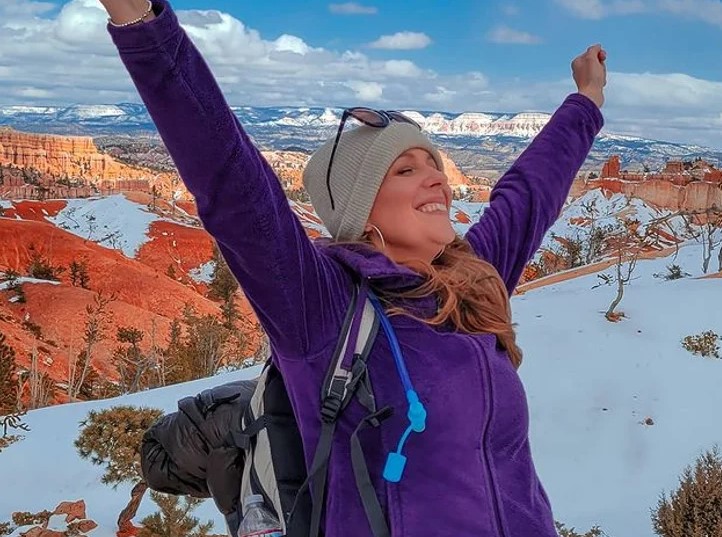
    Megan Aronson is a writer and public speaker who lives in the red rocks of Sedona, AZ.

    Excerpted from Megan’s website:

    I’m a writer, a speaker, an advocate, a mom of four, a #YOLOGirl (You Only Live Once) and a survivor of…just about everything.

    In 2011, I wrote a piece called Grim Reaper Girl that went viral, sharing how empathy saved my life after a string of 12 deaths had left me feeling like death followed me everywhere.

    Over the next few years, the slew of tragedy continued at a relentless pace. In total, we lost 30 people in 8 years. We moved 4 times. We lost a baby, our home, my daughter’s best friend…and then I discovered my husband’s deadly painkiller addiction had escalated, and we became a miracle in the WE’LL BE COUNTING STARS story. 

    But my story is not a pity-party-table-for-one-please story. It’s one of triumph in tragedy. Little triumphs that came slowly and carefully while I fought for my life, my joy, and my love.

    I’ve written myself through grief upon grief, and brought myself back to life again and again. I am still doing it now, and along the way, I’m sharing my journey, because I have become a self-certified Heal-Thyself Specialist (it’s a fancy title, I know, I earned it with 14 years at The School of Hard Knocks. Did you get a degree from there, too?!).

    I’m here to tell you, I see you, I get you, I’ve been through it, too, and here’s how we pick ourselves up and keep moving forward again and again, with our broken, open hearts. I’m here to remind you how to open when you’re closed, to soften when you feel yourself turn hard like callouses.

    I’m here to encourage you to dare greatly, even when vulnerability makes you quake in your boots. I’m here to urge you forward into unfolding again and again.

    I’m also here to remind myself, and YOU, not to take ourselves or this thing called life too seriously!

    Megan’s work has appeared in The New York TimesHuffPostThe Rumpus, and Creative Nonfiction’s Tiny Truths. She is currently seeking a publisher for her memoir, We’ll Be Counting Stars, which tells the powerful “love vs. addiction” story she lived with her husband, Kory, a survivor of the opioid crisis.
  • One Cup At A Time

    Memorable writing that sparks imagination. Lean in. Hear the writer’s voice on the page.

    One Cup At A Time

    By DSBriggs

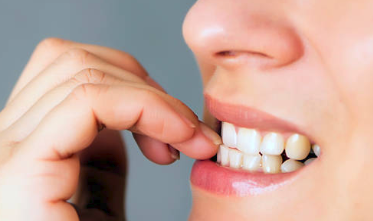
    Judith saw her hand reaching out and towards her mug. She noticed since her brain injury, she had to mentally plan any movement step by step.

     She closed one eye so that only one mug was in her vision.

    “OK. Lift the hand out of the lap. Make sure the arm isn’t taking a side trip of its own.

     All right, aim for the mug on the right. Uncurl fingers. That’s progress. No one has to unbend and stretch ‘em.”

    The knuckles on her hand were swollen and she noticed she was thinking in third person. 

    “My knuckles, my knuckles are swollen. I have crooked fingers too.”

    She watched her arm and hand work in unison as she reached for her mug. She mentally told herself to grab as tight as she could and to slowly slide the glazed stoneware cup off the table.

    It was heavy! Was it hot? She wasn’t sure. Her temperature gauge had been slow to return. 

    Judith watched the rim approach her face. She was quite relieved when her lips met the cup lip. The swallowing exercises had begun to pay off as only a little dribble from the left side slid down her chin to plop gently on her sweatshirt. 

    She couldn’t afford to get distracted, so she watched the mug slowly inch back towards the table. 

    She saw her hand begin to shake from the exertion of keeping herself from flinging. Overcompensating as the  Occupational Therapist would say.

    “Now lift! Dammit!” as she watched.  

    She let go of the breath she hadn’t realized she’d been holding. 

    “Good  job,” she told herself and began to cry again. 

    DSBriggs continues to reside in Northern California. Dog, quilts and good friends occupy her time in between bouts of reading and writing.

    She loves writing in short bursts and with prompts.

    She has felt honored to have been published in The Write Spot Collections: “The Write Spot to Jumpstart Your Writing: Discoveries,” The Write Spot: Possibilities,” and “The Write Spot: Writing as a Path to Healing. Available in print and as ereaders at Amazon.

  • Change . . . Scary or exciting?    Prompt #748

    Is change scary or exciting for you?

    With a palpitating heart, sweaty palms, and a fluttering stomach, I changed the name of my Facebook/Meta Writing Page from “Writers Forum” to:

    “Marlene Cullen’s Write Spot,”

    to better reflect what this Facebook page is about.

    But, I wonder, why was I nervous . . . okay . . . scared to do this?

    I think the answer is: Consequences.

    I didn’t know if it would trigger an avalanche of problems.

    I was willing to take my changes.

    Sometimes you just have to take the plunge and make a change.

    Writing Prompt:

    Is change scary or exciting?

    Or:

    Sometimes you have to take the plunge.

    Write about a time you took a chance and made a change. What happened?

    #justwrite #iamawriter #iamwriting

  • Hop, skip, jump . . . Prompt #746                 

    Below is a list of things you may have experienced.

    As you read the list, when a word causes a reaction . . . when you notice a feeling in your body . . . use that word or phrase as a writing prompt and start writing.

    Write about where you were and who was with you.

    If you ate it, played with it, read it, or wore it, write about it.

    Add sensory detail of texture . . . what did these things feel like?

    Add your memory of taste, smell, sound, and what the item looked like.

    And, of course, you may have also experienced these things as a teen-ager and as an adult.

    Just Write!

    Jello salad

    Hot Wheels

    Roller Skates

    Sugar Frosted Flakes

    Poodle skirt

    Hopscotch

    Petticoats

    Barbie dolls

    Marbles

    Jacks

    Skipping

    Nancy Drew books

    Jump rope

    Little League

    Drive-in movies

    Hula hoop

    Trampoline Parks

    Used a manual typewriter

    Watched dance shows on TV

    Sunday nights: Ed Sullivan, The Magical World of Disney

  • Childhood Stories . . . Prompt #745

    Stories from our childhood can be rich material to write about.

    Let’s start with going back in time.

    See yourself at 6 years of age, five years, 4 years.

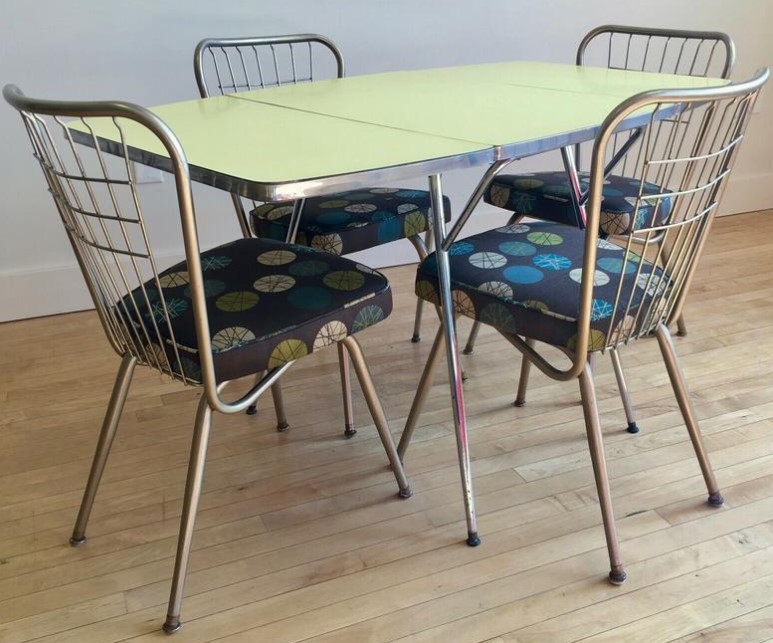
    See yourself at the kitchen table where you ate breakfast.

    Maybe swinging your legs because your feet couldn’t reach the floor.

    Listen. Hear the adult chatter. 

    Maybe there was no ‘round the kitchen table time for you.

    Maybe it was a picnic table, or a dining room table.

    Perhaps there was no table.

    Maybe family time was in the family room, or the TV room, the den, or the rumpus room.

    Possibly there was no family time. Friends might have been significant in your child life.

    Maybe most of your childhood was spent outside.

    Take a deep breath in. Let it out.

    See the room or the place where you spent a lot of time as a child.

    Write about that place.

    Describe the place.

    Why did you go there?

    When did you go there?

    What happened there?

    Step into it. What do you see? What do you smell? What do you notice?

    Just write!

    #amwriting #iamawriter #justwrite

  • Outside the Norm . . . Prompt #744

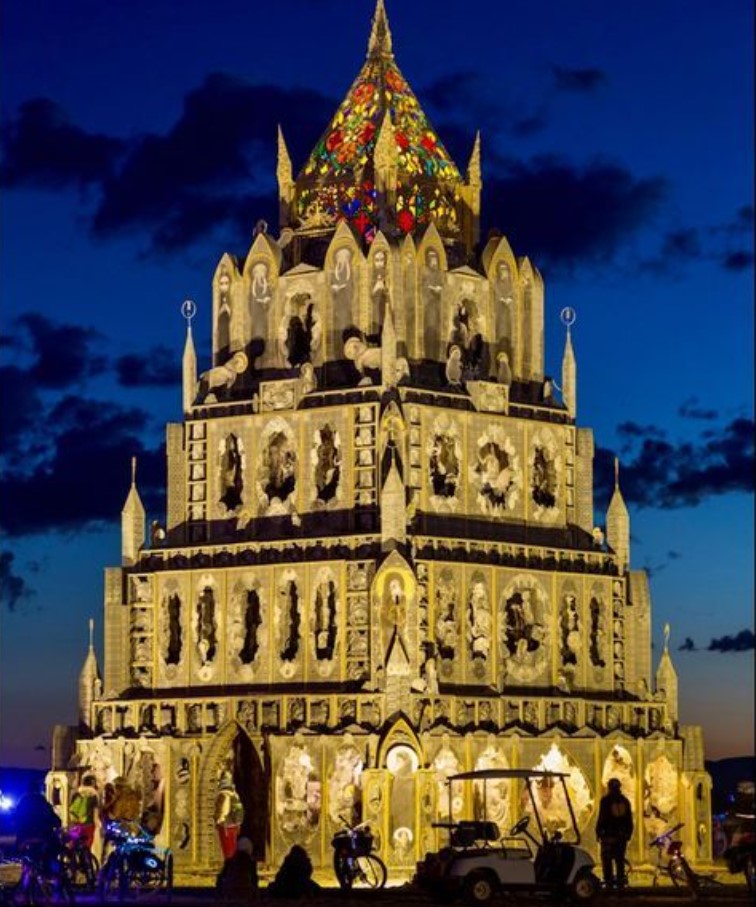
    “Totem of Confessions” by Michael Garlington at Burning Man

    What have you done that is “outside the norm?”

    Been to Burning Man in the Black Rock Desert?

    Burning Man is all about self-expression and the rejection of corporatism and capitalism. The experience of creating and viewing art and living in the moment is Burning Man’s purpose.” —Reno Gazette Journal, Aug. 31, 2022

    Or,  perhaps something like seeing the musical Hair, “where friends struggle to balance their young lives, loves and the sexual revolution, with their rebellion against the war, their conservative parents, and society.”

    Writing Prompt:

    Write about an experience you have had that is “outside the norm.”

    #justwrite  #amwriting  #iamawriter

  • All In Good Time

    Memorable writing that sparks imagination. Lean in. Hear the writer’s voice on the page.

    All in Good time

    By Lynn Levy

    “How do you work it?” Joe finally asked.

    Agnes smiled. It was one of her rules. No cell phones in the house. Not no phones, but by the time these kids got handed over to her, less-is-more turned out to be a good starting place.

    “What’s the phone number?” Agnes asked.

    Joe shrugged, which was not a surprise. Kids didn’t memorize numbers anymore. The phone stored them.

    “Alright,” Agnes said. “The first thing you have to do is memorize the phone number here. Get it down until you can say it by heart. It’s just 10 numbers. 304-555-0058. Say it back.”

    “Three oh four,” Joe started and faltered. “Can I write it down, at least?” Joe asked.

    Agnes shook her head, and repeated the number. This first test told her a lot about the child. The reward was to talk to a friend – an important act of connection. At that age, they craved their friends even if they couldn’t say why. She watched them overcome the small hurdle, to memorize her phone number and their friends’ – which of course Agnes had. She knew all the important numbers for the kids she took in. CPS was used to it by now, and her kids did well, and often asked to stay. Not always, but more than less, so they did as she asked and didn’t argue.

    Some kids got angry at the task. You could tell a lot about someone by how they dealt with frustration. The bright kids generally had no trouble memorizing, but they might react with boredom or annoyance or curiosity, or they might be matter-of-fact about it. All of that told Agnes something.

    Joe needed about 10 minutes to memorize her number, then he had the hang of it, of remembering the short bits instead of all 10 at once, and learning his friend Gabe’s number took only a moment. It was too soon for hugs, but Agnes patted the back of his hand.

    She angled the heavy phone toward him and took the receiver off the hook. “Here,” she said.

    Joe took it, his hand visibly dipping. He wasn’t expecting the weight.

    He held it for a second, and Agnes tipped her chin at him. He put the receiver up to his ear, gingerly. “What’s that noise?” he asked.

    “It’s called a dial tone. It lets you know the phone is ready to work.” Another thing lost with cell phones, that audible connection to the machinery of it all.

    She dialed the first digit of Gabe’s number, then the second and third.

    “Really?” Joe said.

    “You do the rest,” Agnes prompted.

    He finished the number, then looked a bit relieved at the familiar ringing tone.

    “Hey,” he said when Gabe answered. He stood up, as if to go somewhere else, and then realized he was tethered. She watched the implications play across his face. He couldn’t leave. He couldn’t speak freely with Agnes present.

    “I’ll just be in the kitchen,” she said.

    Being assigned to Agnes was like getting in a time machine, kids said. She had a bit of a reputation that way. Kids talked about her, but they didn’t really know what it meant until they got there.

    Agnes didn’t hate technology, not really, but she felt it made people dependent. And people who were dependent had a harder time climbing out of the mire of their own problems. So, she made her kids memorize phone numbers, so they would learn to retain important information. She made them talk to their friends, not text, so they would learn to pay attention to voices and inflection. She taught them to read paper maps, and navigate for her when they wanted a ride. And she taught them to use the typewriter, so they would slow down and think about what they wanted to say.

    Of course, eventually, they all left her, and rejoined the present, and the moment they did, they all went and got their own phones again, first thing, the thing they’d most longed for, most missed. But if they were with Agnes long enough, some of them, not all, but many, found it had changed. Found that it was easier, after all, to understand subtext in the tone of a friend’s voice than in their choice of emoji. Found that a drained battery was not a cause for panic. Found they felt more choice and control over when to attend to it, and when to ignore it.

    “You got Agnes?” the older kids would say to the younger ones. “She’s cool, but you won’t feel the same about your phone after,” they’d say.

    Of course, it wasn’t just the trip to the past, the Bakelite rotary phone and TV with 13 channels and manual typewriters that changed the kids. It was Agnes herself, and how she used her throwback world to help them reach themselves.

    “You won’t feel the same about your phone,” some would say, sagely. But the ones who really got it said, “You won’t feel the same about yourself.”

     Lynn Levy lives in Northern California with her husband, an overly familiar wild scrub jay called “Bubba,” and an enormous wisteria. She and the wisteria are in negotiations regarding ownership of the patio trellis.

  • Grandparents . . . Prompt #742

    What did you call your grandparents? Great-grandparents?

    If you didn’t know your grandparents, why is that?

    Do you know stories about them during their young years?

    Write about your grandparents and/or your great-grandparents.

    #justwrite #iamwriting #iamawriter

  • Intuition . . . Prompt #741

    Writing Prompt:

    Write about a time you paid attention to your intuition.

    Or, a time you didn’t pay attention.

    Just Write!

    More on Intuition: Calm Your Brain.

    #justwrite #imawriter #iamwriting

  • A building . . . Prompt #739

    Write about a building that has or had meaning to you.

    Describe the building.

    Where is it? Or, where was it?

    Write about the energy of the building or the place.

    Did you like being there, or going there?

    If you no longer go there, would you like to go back?

    If you continue to go there, what draws you to this place?

    In your mind’s eye, turn to the building. Wave good-bye.

    Tell it you will see it again, either in your imagination or for real.

    A Building,” by Cheryl Moore, might offer inspiration.

    #justwrite #iamwriting #iamawriter