Today’s Prompt: What I want to say . . .
Post your writing and watch for comments.

Today’s Prompt: What I want to say . . .
Post your writing and watch for comments.
Based on the poem, “Where I’m From,” by George Ella Lyon.
Learn more about this woman, with the unusual name (for a woman): George Ella Lyon.
“In the summer of 1993, I decided to see what would happen if I made my own where-I’m-from lists, which I did, in a black and white speckled composition book. I edited them into a poem — not my usual way of working — but even when that was done I kept on making the lists. The process was too rich and too much fun to give up after only one poem. Realizing this, I decided to try it as an exercise with other writers, and it immediately took off. The list form is simple and familiar, and the question of where you are from reaches deep.” George Ella Lyon
Watch and listen to George read her poem.
Note from Marlene: I had the good fortune to first hear this poem at a writing workshop with Pat Schneider. I’ve written on this prompt many times . . . each time I feel closer to the family I inherited.
I am from . . . Prompt #52

Prom, Tonga Room, Fairmont Hotel, San Francisco, 1965
Prompt #48 was about how to “Grow Your Character.” Prompt #49 was about setting the mood.
Today’s prompt is about “The Problem.” These series of prompts are based on Sheldon Siegel‘s 2011 Writers Forum workshop.
We’re working on how to write suspense, mystery, thriller. If that doesn’t interest you, you can also use these prompts to write memoir.
Write a one-sentence premise. What’s at stake? Why should the reader care?
If we follow along with Prompt #49: Our heroine is about to get into a limo to meet with Monsieur Blanchard. We know her father is concerned about her. We know she wants to look professional for this meeting. That’s about all we know.
Let’s play with this. What if our heroine is a contracted killer? What if she is meeting with Monsieur Blanchard to receive her next assignment? What if she needs the money because her father is in danger of losing their house for failure to pay back taxes? What if Monsieur Blanchard is about to blackmail her? What if she has information to blackmail him? All sorts of possibilities.
Premise: Our heroine, Monique, needs money to pay her father’s bills.
Stake: He could lose the house. She could lose her life.
Care: She will die.
When you are writing thriller, mystery or suspense, Sheldon says to know the enemy. Know who it is and what we’re scared of. Then you can manipulate the reader. Need to feel the enemy. Personified. Fear the murderer.
You can use your list of fears from Prompt #47 to incorporate with your character’s problem. Or you can think about your fears and work one of those into the premise.
Prompt: The problem is . . . Or, The problem was . . .
Note: If you are writing memoir, write what actually happened, as best remembered. Be sure to include details, such as character description and location. When writing about real people, they become “characters” in the story. Use sensory detail such as smell. Use the weather to mirror mood of character and of story.
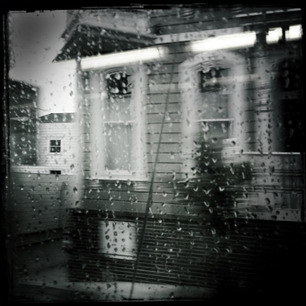
Photo by Sasha Oaks
Prompt #48 was about how to “Grow Your Character.” We’ll talk about location as character (exterior and interior) in this post and how to set the mood, or the tone of the scene.
Let the reader know right away where the scene is happening, include details such as place, year, season, weather, and perhaps time of day. Not in an information dump, rather, weave in these details.
Furniture tells a lot about a person. Sparse? Elegant? Are there cooking utensils on the kitchen counter? Neat and tidy? Cluttered?
The city (setting) can be a character in the story. Examples: Dashiell Hammett and San Francisco, Lisa Scottoline and Philadelphia.
The Christmas tree in The Nutracker becomes a character as it expands.
As you write details about the setting and location, try to use dialogue and action. Think Casablanca and the Maltese Falcon.
Elements of setting the mood:
Where does this scene take place?
City (real or mythical), urban, suburban, small town, hamlet, metropolis
Time of day
Season
Weather can match mood of story
Furniture
Example of a freewrite, using details to set the mood:
Martha pulled back the Coventry lace curtains, squinting past the newly pruned rose bushes, past the edged lawn and noted the weather. She raised her coat collar high above her ears, and picked up her fur-lined gloves from her bureau. One more look in the mirror to check if her seams were straight. It wouldn’t do to meet Monsieur Blanchard looking like a two-bit whore.
She walked downstairs.
“Good night, Father. Don’t wait up. I’ll be rather late.”
Mr. Edmonton lowered his reading glasses and glanced at his daughter.
“Setting out in this weather, are you?”
“Yes, Father, I have an important client to meet.”
“I don’t like the looks of this. Where are your rubbers? You aren’t dressed appropriately. You’ll catch your death.”
“I’m fine, Father. You worry too much.” She brushed his bald head with her lips and was out the door before he realized a limo had stopped in front of their flat.
Your turn: Write details about setting and location, using dialogue and action.
For more prompts on location:
A place where you find satisfaction. Prompt #25
Physical location and action and to describe emotion state Prompt # 12
Favorite place form childhood. Prompt #11
Location, or place as a character Prompt #8

Photo of hem of Coventry lace curtain
Grow your characters.
For the next three writing prompts, we’re going to build our repertoire, so that we’ll have characters, location and a problem leading us to write a scene.
One step at a time.
First step: Write a brief description of character or characters. If you have a work in progress, use this time to discover something new about your characters. If writing memoir, same thing . . . find a new way to describe character. Include flaw or flaws.
Example: Self-doubt, what would be challenging to character? What does the character fear? What big events molded character? Character’s likes and dislikes. What drives character? How does character react to pressure? Give your character a personality quirk, add internal conflict. These examples are from Sheldon Siegel’s 2011 talk at Writers Forum of Petaluma. Sheldon Siegel is one of my favorite authors.
Need more ideas? Fill in the blanks. Answer these questions for each of your characters.
Character’s name
Nickname
Personality trait character is most proud of.
How did character get this trait?
What do people like least about character?
What habit would character like to change?
If someone looked in character’s bathroom garbage right now, what would they find?
What scent does character like and what does it remind him/her of?
What scares the character?
Answer these questions for each of your characters (whether fictional or real). Real people become “characters” in your story once you start writing about them.
For more prompts about character:
Develop Character, put your character in an unusual situation and see what happens – Prompt #4
Interview Character – Prompt #6
Your Character Has A Surprise Secret – Prompt #7
Make a list of things you fear or have feared.
Using items from your list, write a story, poem or essay.

Step 1. Make a list of significant events that have happened in your life. Start with the year you were born . You can list important dates such as the year you graduated, got married, started jobs, vacations. Also, list emotional highs and lows: betrayals, losses, inspirations, revelations, epiphanies.
Step 2. Choose specific years from this list and research historical events that happened during those years.
Step 3. From your lists: Choose an event that you think people would want to know more about. Or, choose events that capture the essence of you.
Step 4: Write about the event. Include specific details and use anecdotes.* Tie in your personal events with historical events. For example: My junior high friends and I swiveled on cherry-red stools at Woolworth’s in 1962 in San Francisco, not realizing that folks with certain colored skin were not allowed the same privileges in other parts of the world.
*Anecdote: A short account of a particular incident or event, especially of an interesting or amusing nature.
Next step: Turn this freewrite into a personal essay. For ideas about personal essay, click on the Just Write category on The Write Spot Blog.
Imagine a room full of people, they are looking at a speaker behind a podium. They want to know more about the topic. In a way, they want to be entertained, even though it’s a somber occasion. They are talking about you . . . in the past tense.
Who knows more about you than you? Who best to talk about the essence of you, than you? For today’s prompt, write about you. Provide enough information so the reader or the person in that room has a view of your life. Write about high points, achievements, life markers. Write about what is important to you.
You can make a list in chronological order of events that have shaped you.
You can look up various years and discover what historical events took place in particular years. Write what your life was like during those historical events. Did they affect you?
Today’s prompt: Write about you. We can call it Life Changing Events or The Chronicles of [insert your name here]. Or we can call it your eulogy.
When using prompts for writing, you can answer from your personal experience, or from your fictional or real character’s point of view. Feel free to let your imagination meander.
If you only know where the trolley you got on would take you . . . What trolley did you get on, and where did it take you? What other trolleys were running then? What if you had taken one of them? Not had kids, had kids, chose to live on the Atlantic instead of Pacific, gave up art or gave up law, married him/her or didn’t. Tell us about your trolley.
Prompt: What trolley did you get on?
When using the freewrite style of writing . . . write freely with no worries about the end result. The editor that sits on your shoulder, the inner critic. . . out the door. Give ’em the boot. Not invited to this party.
It’s not about the writing . . . it’s about the process.
The process of letting go. Trust yourself. Go with your imagination. Go with what’s on your mind.
Today’s writing prompt: I stand on the edge of . . .