Tag: Your Mythic Journey

  • What if we could change the past? . . . Prompt #671

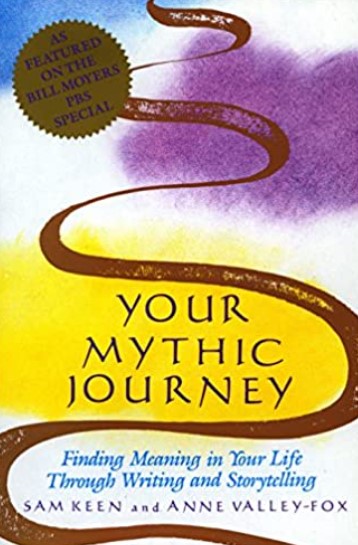
    What if we could change the past? According to Sam Keen and Anne Valley-Fox, in “Your Mythic Journey,”  we can change the past simply by retelling it differently than we usually do.

    “The past is open to revision because memory is a function of present intention. You can turn your story over (and over) and find new perspectives on past events and emotions.” —Sam Keen

    Think about some stories you have told over and over again. It could be a little thing or a big thing. It could be something that happened a long time ago, or recently. It can be repetitive thoughts you have.

    Choose one story or one repetitive thought.

    In your mind, “see” that story you have been telling and re-telling.

    Pause, while you choose a story.

    See this scene as if you are looking at a wide screen. You can see everything in this scene.

    Where are you?

    Who is in this scene?

    Are you hot or cold or can’t feel a thing?

    What is the dominant emotion?

    Where do you feel this emotion  in your body?

    Take a deep breath.

    What do you smell?

    Scan the entire scene, from left to right, top to bottom

    Now, drill down, zero in on one aspect of this scene. It could be a button on someone’s coat, or something someone is holding, or food someone is fixing.

    Or someone’s shoes, or an every day useful item.

    Prompt: I see . . .

    Or: I know . .

    Or: I think . . .

    Or: I remember . . .

    Please practice self-care when writing about difficult topics:

    How to write without adding trauma.

    Writing About Difficult Times In Your Life

    An excellent book to help with your writing: The Write Spot: Writing as a Path to Healing
  • Our Tribes . . . Prompt #273

    I’m thinking about our connections with one another. This excerpt seems timely.

    Your Mythic JourneyExcerpt from Your Mythic Journey by Sam Keen and Anne Valley-Fox

    “Pre-modern people didn’t think of themselves as individuals — they were members of a tribe as well as of a family. Ancient philosophers knew that human dignity begins with ‘We are a people, therefore I am.’ Modern people are tribal too but we call our tribes by different names —  churches, corporations, states, nations. Each of us was nurtured within and shaped by several corporate bodies, voluntary organizations and professional corporations that molded our values and behavior — schools, athletic teams businesses, clubs, temples, and local, national, and international governments.”

    Prompt:  I am from . . .

    Or: What uniforms or emblems have you worn?

    Or: What groups have you been a member of?  Brownies, Blue Birds, Daisies, Girl Scouts, athletic groups, sorority, secret clubs.

  • Memory is a trickster . . . Prompt #170

    Today’s prompt is inspired by Your Mythic Journey by Sam Keen and Anne Valley-Fox.

    “We love the present tense. Be here now. Yesterday is gone and best forgotten: our tradition is to have no tradition. We aren’t Europeans buried in ancient tombs and cathedrals and medieval ruins. We were born yesterday and we will be young forever. Over thirty is over the bridge. Age embarrasses us; remembrance is a function of senility. We exile the aged to Sun City leper colonies so they won’t impair our illusion of endless summer.

    But history is not so easily dismissed. Repressed memories, national or personal won’t stay down. To be alive is to have a past. Our only choice is whether we will repress or re-create the past. Childhood may be distant, but it is never quite lost; as full-gown men and women we carry tiny laughing and whimpering children around inside us. We either repress the past and continue to fight its wars with new personnel or we invite it into awareness so that we may see how it has shaped the present.

    The moment you begin to tell your stories you may find that memory is a trickster who picks and chooses scenes. What happened to you in the past has yet to be determined. Ninety-nine times you tell the story of the way you were whipped for stealing apples you didn’t steal. Then in the hundredth telling, you remember that you did steal them and the whole scene changes. Your memories of what happened to you in 1953 will be different in 1975, and again in the year 2000.”

    Getting ready to write

    Get comfortable. Rotate your head in a circle. Now rotate the other direction. Roll your shoulders. Now the other direction. Take a deep breath in. Hold. Whoosh it out. Take deep breaths as you write.

    Go back to a time when you were little… 6 or 7 or 9.

    A time when the world was still fresh to you. Filled with new sights, adventures and exploring.

    Think of a first time experience, whether it was the first time you sat on cool grass, or sat on Santa’s lap, or splashed in a river, or decorated a tree, sat on a warm rock, or ate watermelon, or candy.

    Think of a first time experience.

    What do you see?

    What do you hear?

    What do you smell?

    How do you feel?

    Prompt: Write about a first time experience.

    And when you’re ready, here’s another prompt. Write whatever comes up for you.

    Prompt: This is what really happened . . .

    red apple


  • My tribe. Prompt #138

    Today’s writing prompt is inspired from Your Mythic Journey by Sam Keen and Anne Valley-Fox.

    Cavemen.1“Pre-modern people didn’t think of themselves as individuals — they were members of a tribe as well as of a family. Ancient philosophers knew that human dignity begins with ‘We are a people, therefore I am.’ Modern people are tribal too but we call our tribes by different names — churches, corporations, states, nations. Each of us was nurtured within and shaped by several corporate bodies, voluntary organizations and professional corporations that molded our values and behavior — schools, athletic teams businesses, clubs, temples, and local, national, and international governments.”

    Prompt: I am from . . .

    Note from Marlene: You can write from your personal experience, or write from your fiction character’s point of view. You may have written on this prompt previously. It’s a good one that can be used repeatedly, new things may come up, or clarification about an event may surprise you.  Remember: Just write, no editing as you write, no judging, no critiquing. Just write!

  • The Past – from different perspectives.

    The following is inspired by Your Mythic Journey by Sam Keen and Anne Valley-Fox.

    Chapter 4, “The Past” It’s Still Happening.

    “We love the present tense. Be here now. Yesterday is gone and best forgotten: our tradition is to have no tradition. We aren’t Europeans buried in ancient tombs and cathedrals and medieval ruins. We were born yesterday and we will be young forever. Over thirty is over the bridge. Age embarrasses us; remembrance is a function of senility. We exile the aged to Sun City leper colonies so they won’t impair our illusion of endless summer.

    But history is not so easily dismissed. Repressed memories, national or personal won’t stay down. To be alive is to have a past. Our only choice is whether we will repress or re-create the past. Childhood may be distant, but it is never quite lost; as full-grown men and women we carry tiny laughing and whimpering children around inside us. We either repress the past and continue to fight its wars with new personnel or we invite it into awareness so that we may see how it has shaped the present.

    The moment you begin to tell your stories you may find that memory is a trickster who picks and chooses scenes. What happened to you in the past has yet to be determined. Ninety-nine times you tell the story of the way you were whipped for stealing apples you didn’t steal. Then in the hundredth telling, you remember that you did steal them and the whole scene changes. Your memories of what happened to you in 1953 will be different in 1975, and again in the year 2000.”

    Lola.200 Prompt:  Think of an incident that one or more people might see very differently.

    Tell the story beginning with the words, “This is how I see what happened…”

    Prompt: Write the story from the other person’s perspective.

    No matter whether you use these prompts or not . . . Just Write!