A Little Louder, Please

  • A Little Louder, Please

    Memorable writing that sparks imagination. Lean in. Hear the writer’s voice on the page.

    A Little Louder, Please

    Susan Zahl Bono

    Christmas 2005

    I must be going deaf. It’s the season when yuletide TV ads are louder and brighter than the shows they’re interrupting, but I don’t seem to be hearing their message. December is swinging into its second week and I haven’t bought any presents. Last weekend, my husband wrestled the fake tree into the living room and wrapped it with lights, but if that’s as far as we get, I’m not going to be heartbroken about it. At night with those little lights glowing, I can almost forget the ornaments are missing.

    These are my dark ages. My kids are too old to believe in Santa and too young to make grandchildren. They stopped caring about trees and holiday trappings about the time we gave in to their dad’s allergies and went artificial. As far as their gifts are concerned, there are only so many ways you can wrap money. My husband likes to order his own gifts, and all I really want are my closets emptied and my left eyelid to stop sagging enough to let me see out of it in the morning. I’m not inspired to do much baking. Everyone my age knows about the dangers of letting Christmas cookies into the house.

    A few days ago, a three-year-old took me to lunch. Her mother drove, but the little queen was obviously in charge. Giuliana, dressed like a Victorian monarch in a flouncy skirt and short velvet cape, issued orders from her crash-tested throne in the back seat.

    “A little louder, please,” she said, indicating the car stereo. The queen’s mum, like any good mother, pretended to comply by touching the volume knob.

    “A little louder, please,” our sovereign commanded, with only a trace of irritation in her voice. Soon, such seasonal favorites as “All I want for Christmas is My Two Front Teeth” and “Frosty the Snowman” engulfed us.

    I suspect Giuliana’s mother was afraid I would condemn her daughter’s musical tastes as well as her own lack of parental control. On the contrary. The sappy rendition of “Jingle Bells” took me back to yuletides past when my own kids demanded the volume cranked on Dr. Demento’s Christmas Novelties, payback for having tortured my own parents. As a child, my favorite holiday album featured Jack Benny’s halting violin and someone loudly lisping, “I thaw Mommy kith-ing Thanta Cloth.” Little ones really do know what Christmas is all about.

    “A little louder, please,” the Good Queen said again, this time for our benefit. She was having no trouble singing along with a relentlessly cheery “Deck the Halls,” and she wanted to make sure we heard the music, too. Any fool could see that her mom and I were so busy dissecting the past and worrying about the future we were completely missing out on the fa la la la la.

    A wiser woman would have joined in on a couple of verses of “The Twelve Days of Christmas” or “Rudolph, the Red-Nosed Reindeer.” I’m sorry, Giuliana. I wasn’t ready to listen.  But it’s not too late. Sadly, my own collection of holiday music is heavy on a cappella versions of “The Holly and the Ivy,” “O, Come, O, Come, Emmanuel” and carols played on antique German music boxes. But maybe if I play them loudly enough, I’ll start to remember what the fuss is all about.

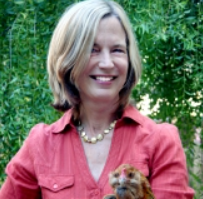
    Susan Zahl Bono is a California-born mother, teacher, writer, and editor who’s lived more than half her life with the same man in the same house in Petaluma. She published Tiny Lights: A Journal of Personal Narrative for twenty years. She facilitates writing workshops, including Jumpstart with Marlene Cullen. Her own work has appeared online, on stage, in anthologies, newspapers, on the radio, and in several Write Spot anthologies. Her book, “What Have We Here: Essays about Keeping House and Finding Home” was published in 2014. 

    #amwriting #justwrite #creativewriting #iamawriter
  • Dad

    By Susan Bono

    “That’s quite a sack of rocks you’re carrying, sweetie,” my father’s friend Bruce said more than once during phone calls last year. It was his way of acknowledging how heavily Dad’s poor health, hard-headedness and self-imposed isolation weighed on me. But I also took it as a tribute to Dad’s stubbornness and my strength, too.

    “Dumb as a rock” never made much sense to me, since stone strikes me as having its own unassailable intelligence. Its ability to endure illustrates its genius. I have never believed in the ability to factor equations or compose sonnets was proof of brain power, although I shared with Dad the idea that someone with rocks in his head was lacking in foresight and flexibility. Rocks may be smart, but they are slow. Time measured in stone is something else again.

    There were moments during my dad’s dying that were as slow as serpentine, sandstone, rose quartz, chert. His unseeing eyes were obsidian, and the pauses between breaths were long enough to form fossils. But just after that great wave rolled down from the crown of his head, darkening the air around him so his spirit glowed like a white shell at the bottom of a silty river, a tear slid from beneath his closed eyelids. That’s when the sack of rocks fell empty at my feet and I was surrounded by the tumult of released wings.

    Originally published in The Flashpoints 2008 issue of Tiny Lights. This issue was dedicated to the memory of Susan Bono’s father, Morris N. Zahl (12/24/24-3/22/09), whose light guides Susan.

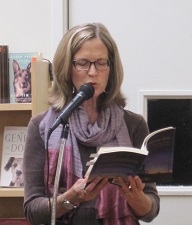
    Susan Bono, a California-born teacher, freelance editor, and short-form memoirist, has facilitated writing workshops since 1993, helping hundreds of writers find and develop their voices. Her work has appeared online, on stage, in newspapers, on the radio, and in anthologies, including The Write Spot series.

    Susan is the author of “What Have We Here: Essays About Keeping House and Finding Home.”

    From 1995-2015, she edited and published a small press magazine called Tiny Lights: A Journal of Personal Narrative, as well as the online component that included quarterly postings of micro essays and a monthly forum dedicated to craft and process.

    She was on the board of the Mendocino Coast Writers’ Conference for more than a decade and was editor-in-chief of their journal, the Noyo River Review, for eight years. Susan often writes about domestic life set in her small town of Petaluma.

  • When Tough Love becomes True Love

    stop-treat-to-do-list-as

    This past year has been difficult for me (Marlene), not just during the long month of November.

    I have been playing catch up all year, trying to whittle down my never-ending to-do list. Susan Bono’s guest blog post reminds me to stop, notice, and savor the moment.

    Susan writes:

    Even those of us who start the day with a list know what it’s like when unplanned-for events start coming our way. In spite of our intentions, we start tackling the unscheduled instead of working on what we had planned. Emergencies come up, of course; we can’t control everything. No one can plan for bad news or times we are suddenly needed. But the list of unanticipated tasks is endless, and after a while, we just start doing what comes to us, instead of what we had intended.

    You should have days when you follow your bliss. In fact, have them as often as you like, but the trick is in telling yourself right from the start, “Today I’m going to do whatever I feel like.” But a plan that’s been ignored is a sign of defeat, and most of us have long range goals—I  mean, who doesn’t? So whenever you miss an opportunity to complete an intended task, you are altering the look of your Big Picture.

    Whether you regularly schedule too much for yourself or sell yourself short, you’ll benefit from the TL list. TL stands for “Tough Luck,” because that’s what you say to anything that’s not on it. If you can complete your assigned tasks, then let the spirit of que sera, sera take over.

    So tomorrow, do whatever is in your power to follow your list. The more in control you become in this area of your life, the fewer details your list will need to contain, but for tomorrow, make a schedule of what you think will cover every hour of your day. Include meals, personal care, regular errands, like carpooling, time sinks like phone calls, TV, or email. Now fit your to-do list into that existing framework. How much time do you really have?

    Once you’ve made your list, do your best to stick to it. Each time you say, “Tough luck” to extraneous chores, you are giving yourself a big helping of Tough Love. You are proving to yourself and the world that the work you set out to do is important, and so are you.

    See if you can love yourself enough to use the TL list until you discover what your true desires and capabilities are. As you plan your list for each tomorrow, note any substitutions you made earlier that day. Did you trade a trip to the grocery store for a surprise phone call from an old friend? Did you not get the ironing done because you couldn’t  put down that exciting book you were reading at lunchtime? Were your “failures” or trade-offs satisfying, or did they leave you wishing you could have a do-over?

    It’s important not to beat yourself up, because maybe what you really need is to make room for more fun. You can start scheduling that in, too, as you transfer whatever’s undone from the day’s list onto tomorrow’s. And if you’ve really missed the boat on some assignment you’ve given yourself, give it a decent burial. If what you failed to accomplish alters the Big Picture, accept this change with grace and trust that you were meant to change course anyway. As you learn to work with the TL list, you will internalize its rhythms and you won’t need to write everything down. But when you feel yourself getting out of control, you can always use this method to get yourself on track again.

    We can’t control what life does to mess up our plans. But we can eliminate our own tendencies to sabotage  ourselves. You’ll know when the TL list is working when you stop being so mad at yourself and start building a list of your accomplishments. That’s when Tough Luck goes beyond Tough Love and becomes True Love.

    susan-bonoSusan Bono, author of What Have We Here: Essays about Keeping House and Finding Home, was once a high school English teacher, is now a freelance editor, and has been facilitating workshops, critique groups and free-writing classes for more than 25 years. She was the editor and publisher of Tiny Lights: A Journal of Personal Narrative from 1995—2014.


  • What do Contest Judges Look for?

    Notepaper.make a listRecently I was one of three judges for a writing contest. We didn’t agree during the first round of reading on the winners. It took re-reading and much discussion to select the three winners. So that got me to thinking. What do contest judges look for when choosing winning entries?

    My fellow judges and I came up with:

    Make sure to follow the guidelines. They aren’t arbitrary. The guidelines are specific for a reason.

    Make sure to follow the criteria of what genre the contest is. Don’t submit memoir if the contest is fiction. Even though the judges may not be able to tell for sure if something is fiction or memoir . . . if it feels like memoir, it probably is. And that won’t work in a fiction contest.

    The winning entries that stood out excelled in creative writing and well-crafted stories. The writing and stories were compelling, keeping reader engaged to the end.

    Proofread. I know this is obvious, but many of the entries had typos or punctuation errors.

    Have someone read your entry – both for feedback and to proofread.

    If it’s a fiction contest, make sure your entry is a story. Many of the entries were anecdotes, rather than full pieces (beginning, middle, end with a definable plot and fleshed out characters).

    Avoid clichés – in words, phrases and story line. This goes back to the unique story. Tell us something new, or write something old with an interesting twist.

    Understand and use correct point of view. Many entries jumped around with point of view, sometimes it was hard to tell who “he” and “she” referred to.

    Stay with the same verb tense, except when appropriate to use past or future tense. Stories got extra points from me when using present tense (because that’s harder to do than using past tense).

    Susan Bono shares her views on contests in her essay, A Thought or Two on Writing Contests, originally published in Tiny Lights, A Journal of Personal Narrative, 2/9/2007.

    More thoughts on entering writing contests:

    “Don’t assume the winners of a writing contest were the only ones to submit excellent work. There are only so many prizes available in any given contest. Winning may equal good, but losing does not always equal bad. Your turn will come.” —Susan Bono, author of What Have We Here: Essays about Keeping House and Finding Home, has judged many, many contest entries.

    “Make us see something about the world in a fresh way or remind us of something important that has an arguable public dimension.” — Dan Lehman, River Teeth, A Journal of Nonfiction Narrative

    “There is a difference between experience and meaning-making. If we are reading along and this happens and this happens, and we still don’t know why it is important, then we know the writer might not be up to it . . . just writing about something that has happened to you is never enough. It’s what the writer does with her own experience, what she makes of it that counts.” —Joe Mackall, River Teeth, A Journal of Nonfiction Narrative, (paraphrased from original quote by Judith Kitchen).

    River Teeth Journal, Editor’s Notes, Volume 17, Number 2, May 31, 2016

    Are you motivated? Ready? Enter!

    River Teeth Submissions

    Redwood Writers, a branch of The California Writers Club sponsors contests year-round.

    The Writer Magazine regularly calls for contest submissions.

    Writer’s Digest Magazine lists contests.

    Links to writing contests.

  • “Challenges always present themselves . . . “

    Susan Bono 3

    “Challenges always present themselves in any creative undertaking, but you’ll never get far if you let doubt rule you.”


    Susan Bono author of What Have We Here: Essays about Keeping House and Finding Home.