Writer Wounds and Scar Tissue

  • Writer Wounds and Scar Tissue

    By Rebecca Evans

    We tell stories. But before we tell them, we hold them, think them, sometimes, we thank them. We recall and carry and live with them in our bodies. We embody them. Sometimes, they embody us.

    Some of our stories are built from sandbox and rhyme-singing childhoods. Others, built from bullies beneath the monkey bars. Many are the stories told to us, about us, some true, though most are not. And still others, the most difficult ones, are born from experiences.

    Someone one asked how long it took to write my memoir. 55 years. Yes. All of my years, because I lived through the experiences first. The truth is that we don’t just live through our experiences. We also don’t “get through” or “get over” the tough stuff—grief, loss, trauma.

    They live in us.

    If we’re lucky and wield pens, we push them out and onto the page. This might be why many of us write: Not with the goal of publishing, but to make sense of the past, to understand and know ourselves.

    We live in flesh and filament built on our stories. Once written, the stories are not necessarily purged and all returns to normal. (What is normal after all?) Perhaps, our wound is re-opened and we’ve released a bit of poison or pleasure. And, much like caring for any opened gash, we should rinse, cleanse, and heal the body.

    Sometimes the wound has lived so long, it’s layered in scar tissue: fibrous cells and collagen rushing to the injury—trauma, surgery, disease—building, no, over-building a thick wall of protection.

    Some days I think I’m made only of scar tissue.

    I try to remember that this tissue started as necessity, perhaps even survival.

    Scar tissue forms in one direction, limiting movement, which, again, offers protection. After a time, joints and flesh stiffen, and now, on top of injury, there is new pain and discomfort. If left unattended, we wade through life much like mummies tightly swathed and cocooned, and, inaccessible. Inaccessible to rich experiences.

    Scar tissue is not only a physical response. I believe scar tissue exists spiritually and emotionally too. Whether physical, emotional, or spiritual, the same principles apply. If we cannot move properly, we become a barrier in our own existence. We cannot extend, stretch, touch vulnerability and beauty. There comes the moment scar tissue no longer serves but hinders our human experience.

    To heal, you need to work through scar tissue. If you’ve experienced the joy of breaking apart scar tissue with a physical therapist, you’ll respect the tearing it takes repairing, regaining adequate range of motion in the body. Or close to adequate.

    My grandmother used to say, “The way in which you heal determines the quality of your future life.”

    I should have listened to grandma more.

    Writing is much like a physical therapist, breaking emotional scar tissue. The page offers safe and trusted space, (like a therapist’s office) taking us through our limited range, moving through stiffness and discomfort. Eventually we find ease. We also find that where there are wounds and scars, there is permanent alteration. In our joints. In our hearts.

    We also become our own therapists in our writing practice and, because of this, we must approach our writing life with mindfulness. We must learn to care for the writer.

    I combine at-desk rituals that I’ve woven into my writing life. Here’s a few you might consider, and remember, check with your doctor/therapist/guide. These are not meant as prescriptions nor replacements for medical or emotional treatment. Any type of wellness/fitness advice should be taken into consideration with your individual and medical/emotional limits:

    • STRETCH ten minutes every hour you sit at your desk.
    • STRETCH your neck and your piriformis. We carry tension in these two areas, and you can easily incorporate seated stretches. Find simple, kind movements and do them. Do them often.

    NOTE: The piriformis is a flat gluteal muscle. Think where the thigh bone inserts into the hip bone. Many with piriformis flare ups experience sciatica as well.

    SECOND NOTE: When we say something (or someone) is a pain in the neck or a pain in the butt, well, there’s much truth to this. If it (or they) bring you stress, it (or they) may also encourage physical pain in your body.

    THIRD NOTE: It’s fun to say, “That’s (you’re) a pain in my piriformis.” Sometimes just saying that phrase relieves stress.

    • END ON A HIGH. Hemmingway offered this writing advice to avoid writing yourself out. Stop your writing at a place of high interest. My END ON A HIGH relates to writing something light, something easy on the heart towards the end of your practice. The deeper and darker you write, the more important this might become.

    You can also END ON A HIGH listening to lovely music. (I prefer cellos). Or dancing. Or walking in nature. Or reading someone else’s lighter work. Or watching comedy.  Or . . . you get the idea.

    • In Jewish culture, it is customary to place a bit of honey on the letters of the alef-bet when a child first learns Hebrew. The child licks the honey, associating the sweetness of letters with the delight of learning. As writers, we can model other cultural practices of gentleness and delightfulness in learning and rewarding.

    I’m aware these ideas push against the more frequent writerly advice, “Sit. Write. And write some more.” For many writers, the process might be more than producing a poem, an essay, a book. Writing sometimes feels like birthing or surgery. So caring for oneself as if recovering becomes critical if we want to continue writing (and healing).

    This is no easy feat for many of us. I’m no different. For the last twenty-plus years, I’ve been a decent caretaker, just not for myself. I’ve spent most of my life punishing my body—starvation, extreme fitness, binging, purging, and other forms of subtle torture. Maybe this was my attempt to release my most haunting stories. Maybe I thought I could starve out my memories. Or beat them down.

    Even as I offer writer-care suggestions, I should add, go gentle on yourself as you discover how to do this. The harder you’ve lived, perhaps the nicer you must be. I’m not sure. I’m still learning.

    Rebecca Evans

    I’m a memoirist, poet, and essayist. In addition to writing, I mentor high school girls in the juvenile system and teach poetry for those in recovery.

    In my spare time, I co-host a radio program, Writer to Writer, offering a space for writers with tips on craft and life.

    I’m also a decorated and disabled War Veteran, a Jew, a gardener, a mother, a worrier, and more.

    I have a passion for sharing difficult stories about vulnerability woven with mysticism.

    I’ve earned two MFAs, one in creative nonfiction, the other in poetry. I live in Idaho with my sons, my Newfie, and my Calico.

    My poems and essays have appeared in Narratively, The Rumpus, Entropy Literary Magazine, War, Literature & the Arts, The Limberlost Review, and a handful of anthologies. I’ve co-edited a forthcoming anthology of poems, when there are nine, a tribute to the life and achievements of Ruth Bader Ginsburg (Moon Tide Press, June 2022).

    I’ll be offering free workshops that revolve around caring for the writer. These will begin in July. Find out more at my website, Rebecca Evans, Writer, in the Musings and Movement section.

    Note from Marlene:

    “The Write Spot: Writing as a Path to Healing” offers more ideas for self-care when writing about difficult topics. Available at your local bookseller and as both paperback and ebooks from Amazon.

  • Writing contests. Yay or Nay?

    If you are thinking of entering writing contests, it’s important to research to determine if a contest is legitimate and reputable.

    But, how to find reputable contests?

    Go to trusted sources.

    Research websites, blogs, and social media by people you know and trust.

    Anne R. Allen, a trusted source, blogs about writing:

     “Writing Contests are Important: How To Tell the Good Ones from the Scams

     “Beware Bogus Writing Contests! Look for These 8 Red Flags.

    C. Hope Clark’s  Funds for Writers newsletter is a great source for announcements of vetted contests, and a handbook of writing contests.

    Writer Beware, the publishing industry watchdog group.

    If entering contests is in your writing budget, here’s something to consider:

    B. Lynn Goodwin, founder of Writer Advice: posted:

    “Too often writers submit to agents and editors without having any credentials, but winning a writing competition—especially a well-known one—gives you immediate credibility and something to add to your writing resume.”  —Brian Klems, writer, speaker, freelance editor, husband, softball player, perennial fantasy sports underachiever, Huffington Post contributor

    Reputable Resources for contests:

    The Redwood Branch of The California Writers Club hosts several contests a year.

    The current contest, the 2022 Poetry Anthology deadline is soon . . .

    November 15, 2021 at 9 pm (PST)

    Reedsy, online author services in the self-publishing industry, posts contest information.

    Post your writing contest experience on my Writers Forum Facebook Page, under this post.

    #amwriting #justwrite #writingcontests

  • Explore Characters . . . Prompt #557

    Create a character, or develop a character.

    ~ The character could be you . . . when you were younger, or looking ahead, you in the future.

    ~ Someone you know, dead or alive.

    ~ A fictional character you created.

    Give your character a name: 

    Younger Me.

    Older Me.

    Someone you know.

    Your fictional character.

    Woman in 1940s.

    Man on a Mission.

    Person in a foreign country.

    Get up and walk around your space, looking at things, touching things, as if you were that character. Look through the eyes of the character you are writing about. Say, or think, the name of your character as you walk around.

    Walk in your character’s shoes.

    Spend 3-5 minutes on this.

    When you return to your chair, respond to the prompt from your character’s point of view.

    Use one of these prompts as a springboard to write about a character of your choice.

    What did your character see that interested them?

    What does your character want to know more about?

    Write from your character’s point of view:

    I think . . .

    I suppose . . . I remember

    Thank you to B. Lynn Goodwin for the inspiration for this prompt.

  • Writer Advice wants your flash fiction

     “Flash Fiction is a story of 750-words or less that has a protagonist, a conflict, a setting, excellent use of language, and an ending that we didn’t predict when we read the first line. We enjoy stories with a discovery, complex characters, lovely language, and a tone that rings true.” — Writer Advice

    B. Lynn Goodwin, founder and proprietor of Writer Advice, suggests a winning formula is “A protagonist we care about, a distinctive voice, and a clear impact. Setting helps. So does conflict and resolution. We enjoy stories with a discovery, a surprise, and a tone that rings true.”

    I like Lynn’s attitude: “If the story feels squeezed at 750-words, don’t force it. There are plenty of journals where you can send your longer pieces.” 

    DEADLINE:  March 2, 2020. Early submissions strongly encouraged.

    PRIZES: First Place earns $150; Second Place earns $75; Third Place earns $40; Honorable Mentions will also be listed.

    Contest details

  • Writer Advice: Flash Fiction Contest

    Lynn B. Goodwin is the creator and producer of Writer Advice.

    Writer Advice’s Flash Fiction Contest 2019 Submission Information

     Writer Advice seeks flash fiction of 750 words or less.

    “Open our eyes. Help us see the world as your characters do.”

    Finalists receive responses from all judges.

    Everyone receives a detailed response from award-winning author B. Lynn Goodwin.

    What is Flash Fiction? 

    For Writer Advice, it is a story of 750-words or less that has a protagonist, a conflict, a setting, excellent use of language, and an ending that we didn’t predict when we read the first line. We enjoy stories with a discovery, complex characters, lovely language, and a tone that rings true. 

    PRIZES: First Place earns $150; Second Place earns $75; Third Place earns $40; Honorable Mentions will also be listed.

     Submission Details

     The contest closes on June 1, 2019

  • Writer Advice Scintillating Starts Contest

    Writer Advice Scintillating Starts Contest for Fiction, Memoir, and Creative Nonfiction is now open to anyone who has not signed a contract for the book (which the scintillating start is in).

    Submit up to 1000 words of your first chapter by 12/01/16. Details on Writer Advice.


    B. Lynn Goodwin


    Writer Advice (B. Lynn Goodwin) is known for their feedback and “would love to tell you what’s working and what an agent might say.”


  • Enter Writer Advice Contest And Receive Feedback.

    If you want your writing to be published, you have to submit.

    If you want to be a better writer, you need feedback.

    You can get both when submitting to Writer Advice contests.

    B. Lynn GoodwinB. Lynn Goodwin, founder of Writer Advice, reads every manuscript submitted. She will give you excellent feedback, tell you what’s working and identify anything that trips her up.

    I first met Lynn in a writing workshop in Berkeley, CA, summer of 2007. I admired her writing then and admire her editing skills now.

    Lynn’s tips on how to win a contest:

    Entice. Grab attention. Make the reader want to know more. Give reasons for the reader to care.

    Due by September 1: Scintillating Starts:  Middle Grade, Young Adult, or New Adult novels. 1000 words or less. Fee: $15. First prize: $160. Second prize. $50.

    Due by December 1: Scintillating Starts: Fiction, memoir, or creative non-fiction. 1000 words or less. Fee: $15. First prize: $160. Second prize. $50.

    Click on Contest Guidelines for complete rules for submitting to Writer Advice contests.

  • You are the person you are intended to be . . .

    “Do not obsess about flaws and shortcomings. You are the person you are intended to be . . . You were put here for a reason. No one else has your unique talents. No one else sees the world through your eyes and experiences. Be yourself and share with others. No one can tell your story but you.”   B. Lynn Goodwin, “Celebrate Your Uniqueness.” Originally posted in Inspire Me Today, January 2, 2014

    bookshawlNote from Marlene: Do not obsess about whether or not you are a writer. If you have something you want to write about . . . simply pull out a chair, sit down and . . . Just write!

    Lynn Goodwin is the owner of Writer Advice, www.writeradvice.com, which is currently holding its 10th Flash Prose Contest (deadline 4/21/15). She’s the author of You Want Me to Do WHAT? Journaling for Caregivers, and a YA called Talent, which Eternal Press will be publishing this year. Her short pieces have been published in local and regional publications.

    Lynn will be on a panel of editors at Writers Forum in Petaluma, California on May 21, 2015.

  • WriterAdvice seeks flash fiction, memoir and creative non-fiction

    WriterAdvice  seeks flash fiction, memoir, and creative non-fiction, 750 words or less. “Enlighten, dazzle, and delight us.” Finalists receive responses from all judges.

    DEADLINE:  April 21, 2015

    PRIZES: First Place earns $200; Second Place earns $100; Third Place earns $50; Honorable Mentions will also be published.

    FOR BEST RESULTS:  Include your name, contact information, and title in the cover letter, but only include your title in the submission so it remains anonymous.

    Indicate if the submission is fiction, non-fiction or memoir in the cover letter.

    Double-space your submission, 14-point font that is easy to read.  Times New Roman, Cambria, and Ariel all spring to mind.

    Submissions are read as blind submissions so put both your name and your title in your cover letter but leave them off your manuscript.

    SUBMISSIONS: All entries should be submitted through Submittable. Click here for the Submission Details.

    You may enter UP TO THREE stories, but each is a separate submission with a separate fee of $15.

    Names of all winners will be announced in the summer issue of WriterAdvice.

    B. Lynn GoodwinE-mail questions, but not submissions to editor B. Lynn Goodwin at Lgood67334@comcast.net

  • Your Story Is Buried Treasure.

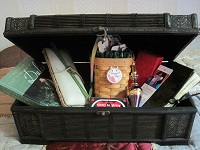
    Chest box“Writing is therapeutic. It saves lives. Your truths are eager to come out. Let them spill onto the page, and see what doors writing opens for you. Your story is buried treasure.

    One of the simplest, most private places to write is in a journal. It allows you to vent, delve into issues, and untangle messes. It lets you analyze or celebrate. It allows you to finish a thought without interruption. The journal validates your right to be who you are.” — B. Lynn Goodwin, “Celebrate Your Uniqueness” in Inspire Me Today.

    B. Lynn Goodwin is the owner of Writer Advice, which is currently holding its 10th Flash Prose Contest. She’s the author of You Want Me to Do WHAT? Journaling for Caregivers, and a YA called Talent, which Eternal Press will be publishing this year. Her short pieces have been published in local and regional publications.

    Lynn will be on a panel of editors at Writers Forum in Petaluma, California on May 21, 2015.