We all have an intuitive sense. . .

  • We all have an intuitive sense. . .

    I think we all have an intuitive sense, but we get side-tracked by what others think or we get distracted by all the “noise” both inside our heads and outside. It’s hard to get quiet and listen to what we think. But when we do, we experience the joy of discovering what’s going on for ourselves.

    A passage in Reading Water, Lessons From The River, by Rebecca Lawton, describes a situation when Becca was a white water rafting guide and had one person, a friend, in her raft. They capsized, lost the boat and nearly drowned. Becca managed to save the life of her friend.

    After it was all over, Becca asked her friend: “Do you regret running it?”

    Becca’s friend answered, “It might have been the right choice for you,” she said, “But from now on, I’m making my own decisions.”

    Here’s an idea for getting in touch with your intuition and writing deeply.

    You can use suggestions for relaxation from the June 24, 2014 Just Write Post, “Listen to your body as a way to creativity.”

    Settle comfortably in your chair. Breathe in deeply through your nose. Exhale loudly. Take a few deep breaths and let go. Release your worries. Let go of your fears. Just let go.

    Follow your inner sense, your intuition, your gut level feeling  …  pay attention, use what you’ve got. Don’t fight it. Relax into your own judgment and decision making.

    Choose a writing prompt and Just Write.

    Old meets new bridge.Jim C. March Old bridge meets new. Photo by Jim C. March.
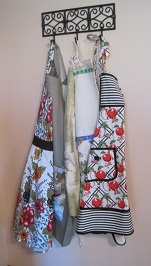


  • Aprons . . . Prompt #88


    ApronsMy grandmother put her apron on every morning right after she put on her house dress. She wore an apron every day, even to parties. She made all her clothes, including her aprons. She always chose a small flower design and used colorful seam binding for trim around the edges.

    I also wear aprons, but only when cooking and eating. . . saves many an outfit from food stains.

    Today’s prompt is: Aprons

    Thank you, Kathy Myers, for the inspiration to hang my aprons in the kitchen.

    Thank you, Pam Swanson, for emailing so many years ago, “The History of Aprons.”


                                            THE HISTORY OF APRONS

    The principal use of Grandma’s apron was to protect the dress underneath. Because she only had a few dresses, it was easier to wash aprons than dresses and they used less material, but along with that, it served as a potholder for removing hot pans from the oven.

    It was wonderful for drying children’s tears.

    From the chicken coop, the apron was used for carrying eggs, fussy chicks, and sometimes half-hatched eggs to be finished in the warming oven.

    When company came, aprons were ideal hiding places for shy kids.

    And when the weather was cold, Grandma wrapped her apron around her arms.

    Those big old aprons wiped many a perspiring brow, bent over the hot wood stove.

    Chips and kindling wood were brought into the kitchen in that apron.

    From the garden, the apron carried all sorts of vegetables.

    After the peas had been shelled, it carried out the hulls.

    In the fall, the apron was used to bring in apples that had fallen from the trees.

    When unexpected company drove up the road, it was surprising how much furniture that old apron could dust in a matter of seconds.

    When dinner was ready, Grandma walked out onto the porch, waved her apron, and the men knew it was time to come in from the fields to eat.

    It will be a long time before someone invents something that will replace that ‘old-time apron’ that served so many purposes, especially what many children and grandchildren received from the simple apron. . . Love!

    Adapted from:  The History of Aprons,  which may have been originally from  Grandma’s Apron.

    Writing Prompt:  Aprons

  • Your intangible treasure. Prompt #85

    What is the one intangible thing you treasure above all else?

    Intangible, meaning: you can’t touch it, feel it, smell it, hold it, see it . . . it may be a character trait, a personality trait, a quirk. . . a feeling. . . .

    Prompt:  Write about something intangible that you treasure.

    LifeJanePhoto by Jane Person


  • Right now . . . Prompt #83

    Ireland, photo by Jim C. MarchSet your timer for 12-15 minutes and write.

    No judging.   Shoo your inner critic away.     Just write.

    Today’s Prompt:  Right now . . .

    Photo taken in Ireland by Jim C. March

  • Balance. . . Prompt #79

    Today’s writing prompt. . . balance.

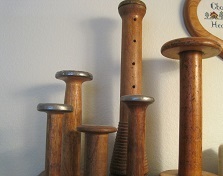
    Spools.Scheibach

  • What doesn’t tickle your fancy? Prompt #75

    What is your pet peeve? You know, those little, or big, things that drive you up the wall. What makes your hair stand on end? What ruffles your feathers?

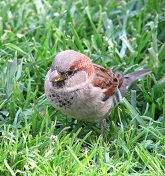
    Bird by Breana

    Prompt: Write about what doesn’t tickle your fancy!


    Photo by Breana Marie

  • It happened because . . . Prompt #72

    Set your timer for 12 minutes. Start by writing “It happened because”  . . . then write for 12 minutes without stopping.

    No thinking. No crossing out words.  Just write.

    WatchIt happened because . . .

  • Live in the world of your imagination and take young readers with you.

    Want to write books for children or young adults?  Here are some ideas for you.

    Excerpted from “Child’s Play,” Yvonne Coppard and Linda Newberry, March 2014 issue of The Writer Magazine.

    An author must find his or her own voice and style and use them to express concerns that are passionately felt and imagined. Good writing for children has the same qualities as good writing for any age group: What stands out is authority, the confidence to be what it is. It tells the reader that the journey will be worthwhile. To write well, an author must have an ear for rhythm, control of pace and awareness of what drives a story and engages a reader.

    The author needs the knack of evoking universal experiences from the particular, inviting the reader to share the trials and triumphs of the viewpoint character. There are no right ways to do this, and no wrong ways, either. What it takes is the commitment to live in the world of your imagination and the skill and persuasiveness to take young readers with you.

    Click here for information about: Writing Children’s Fiction: A Writers’ and Artists’ Companion (Writers’ and Artists’ Companions) by Yvonne Coppard and Linda Newberry

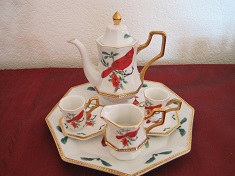
    child's tea setFor practice with this kind of writing: Write about a game you played as a child – Prompt #32, or An imaginary gift – Prompt #35 or an imaginary party – Prompt #64.

    Set your time for 12 minutes. Now, write. Just write.

  • Imagine you are invited. . . Prompt #64

    You're invited 2.2

    Imagine. . . . You receive an invitation to a party.

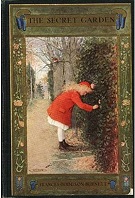
    The Secret Garden Book.1

    You are invited to dress as a character according to the book you are currently writing or reading.

    OR, you are invited to the type of party you’ve always wanted to be invited to . . .1950s cocktail? 1880’s garden party? Costume party? Bon voyage party? 


    Garden Party

    Options:

    ~Write about the invitation you received.

    ~Your thoughts, or your fictional character’s thoughts, as you or he/she anticipate the party. You're invited 1.1

    ~Write about a party you have attended.

    ~Write about a party you would like to give or attend.

    Invite.1

    Prompt: Imagine you are invited to a party . . .

    Invite.2