
Writing Your Parents’ Stories

  • Writing Your Parents’ Stories

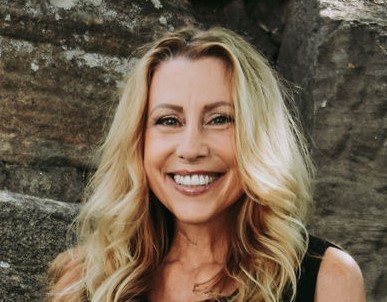
    Guest Blogger Laura Zinn Fromm writes:

    A few days ago, one of my students emailed. She had read an essay I’d just published about my father—dead now 19 years but still giving me plenty of juice to write about.

    The essay was about how volatile my Dad had been, and how loving—a love I rediscovered in letters he’d written to my mother at the end of their marriage. My mother had given me the letters during the pandemic, while she was cleaning out her house. I knew my parents had once loved each other fiercely and unambiguously, but the memory was an ancient one that predated my birth, and by the time I started to pay attention to how they treated each other, it was clear that love had been undone by disappointment and grief. They’d had a stressful marriage, and eventually moved on to other people—my father remarried, adopted a baby, divorced, became engaged to two other women and raised my half-sister alone; my mother moved in with another man for ten years, then left him and married someone else. Scads of boyfriends, girlfriends, semi-siblings and step siblings came and went; the only one I still talk to is my delightful half-sister.

    But my father’s letters to my mother, written in the middle of their marriage and then at the end, showed that there had been layers to their relationship. My father had been bipolar, suicidal and often cruel to my mother, but the letters gave me insight into his loneliness, confusion and remorse over what had happened between them.

    My student wrote:

    I loved your piece about your father. I wish I could get to the point where I can balance my mother’s flaws and good points in a balanced, detached way. Did you achieve your clarity and equanimity mostly through therapy? Any suggestions? When you get a chance. 

    This was an excellent question. Had I actually achieved clarity and equanimity? And if so, how?

    Of course, therapy helped—I’m 59 and had started seeing my therapist when I was 31; we had spoken about my parents at length. But it wasn’t just therapy that allowed me to consider my father from different angles. In addition to the letters, my mother also gave me journal entries my father had left behind, and home movies she had transferred to a thumb drive.

    The movies showed my parents when they were young and carefree, chic on safari in Africa, cavorting on beaches in Tahiti and the Jersey Shore. There was my father in swim trunks, sticking out his tongue and doing handstands on the beach, there was my mother looking like Audrey Hepburn, gorgeous in a red bikini and sunglasses. Long after their divorce, these props allowed me to imagine what they felt as they reveled in each other and the countries they explored together. I could hear my father teasing my mother, and my mother laughing and saying, “Oh, Steve!”

    The letters and movies allowed me to piece together what they had savored and surrendered.

    Some of the journal entries were hard to read (my father had some choice things to say about their sex life) and it took me three-plus years to write the essay I recently published. I would read a journal entry, squirm, then put it away, sometimes for months. When I finally returned to the letters and journal entries, I set a timer and wrote for 15 minutes, just enough time to reread and maybe write a few challenging sentences. Eventually, I was able to write for longer stretches and finish the story. Telling my parents’ story allowed me to exert some control over it, unlike the powerlessness I had felt as a teenager, watching their marriage implode at the dinner table.

    There was something else too that allowed me to write about the difficulties of love: meditation.

    I meditate 30 minutes every morning, sometimes outside. All the volatility I experienced as a kid melts away as I close my eyes, repeat my mantra, and reset my central nervous system. Meditation allows ideas to bubble up to the surface and is the most effective way I know to self soothe. Plus, it’s free. You don’t even need an app. I just set a timer on my phone and silently repeat my mantra (ima, Hebrew for “mother”), while thoughts ricochet around my brain and finally dissolve into something resembling clarity.

    I wrote back to my student:

    Yes, of course, therapy helps, but I think meditation and writing about my parents in a focused way helped even more. Just the process of thinking about them in a calm way (through meditation) allowed me to detach from how I felt about them and let me “observe” them from a safe distance. And then writing about them, and wrestling with their challenges but also forcing myself to find a way to deliver some message of hope and insight for the reader, also helped. So, I guess the short answer is yes, therapy helped, but meditation and focused writing helped even more. 

    My student wrote back: “Thank you for sharing what helped you with your parents. Writing is definitely therapeutic. I still have to try meditation.”

    If you are tackling difficult subjects, I recommend it all.

    Originally posted on August 26, 2024 Brevity as “Writing About My Father.”

    Check out our Substack: Sweet Lab Writing Workshops x Culture Vultures

    Laura Zinn Fromm is the author of Sweet Survival: Tales of Cooking & Coping (Greenpoint Press, 2014). She has an MFA in fiction from Columbia University and teaches fiction and creative nonfiction workshops through her company, Sweet Lab Writing Workshops.

    She has also taught at Columbia, Montclair State, the New York Public Library and through Kelly Writers House at the University of Pennsylvania.

    A former editor at Bloomberg Businessweek, she is a winner of the Clarion Award and the Newspaper Guild’s Page One Award for Labor Reporting. Her work has appeared in The New York Times, Huffington Post, Bloomberg Businessweek, The Forward, the Girlfriend, the Opiate, and elsewhere. 

  • Write What You Know: What Does That Mean, Exactly?

    Guest Blogger Dixie Somers writes:

    If you’re a writer, you’ve no-doubt heard the phrase “write what you know” in every workshop you’ve attended. But what does that actually mean? Should you only write about your personal experiences? Do you have to be an expert on a topic to write about it? Not necessarily! To get a better grasp on this common writing tidbit, I’m here to break it down and help you find what you “know.” So grab your pen and paper (or keyboard) and let’s dive into this together.

    What is “Knowing?”

    To start, let’s define what it means to “know.” The Merriam-Webster dictionary defines it as having a clear perception or understanding of something. So when we’re told to write what we know, it means writing about things that we have a good grasp on and can easily convey to others. This can include personal experiences, but it doesn’t have to be limited to just that.

    This also doesn’t mean that you should restrict yourself to writing about your everyday life. If that were the case, nearly all of our novels, movies, and TV shows would be about waking up, going to work, and grocery shopping. Not the most gripping content, for sure. While these activities are no less real, needful, and common, it doesn’t mean that “writing what you know” should be restricted to just the mundane. In fact, the more you transform “what you know,” the more potential you have!

    Personal Experiences

    Writing from personal experience is one way to incorporate the concept of “writing what you know” into your work. Your unique perspective can make for powerful and relatable storytelling. Bear in mind that you don’t have to limit yourself to just your own experiences, either. You can also draw from the experiences of those around you, such as family stories, or even the latest research and learn about new topics to incorporate into your writing.

    By incorporating personal experiences into your writing, you add a touch of authenticity to your words. Personal experiences hold emotions, details, and moments that can be difficult to fully capture unless dictated. This also allows readers to connect with your writing on a deeper level, as they may have gone through similar experiences themselves. Some examples could be the death of a loved one, a moment of clarity you’ve had, or an unforgettable experience. Adding personal touches in your writing can make your words more engaging for readers, so don’t ever think your life is “too boring” to draw from. No two people’s lives are the same: embrace that variety that makes your life yours.

    Research and Imagination

    Another way to write what you know is through research and your own imagination. Take the time to dive deeply into a topic that interests you, whether it be through books, articles, or interviews with experts. Then use your imagination to put yourself in different scenarios related to that topic and see where it takes you. Combining knowledge gained through research with your own creativity can lead to compelling and well-informed writing that’ll reach out and grab anyone who comes across it.

    While these two topics aren’t the be-all-end-all, science fiction and fantasy hold tremendous potential for cultivating your imagination. These genres often take real scientific concepts or historical events and add a creative twist, resulting in rich and intricate worlds. Authors such as J.R.R. Tolkien (with The Hobbit and The Lord of the Rings), Ursula K. Le Guin (Tales from the Earthsea), and Mary Shelley (Frankenstein) have crafted entire universes based on their own extensive research and imagination. They’ve shown that by incorporating what you know with your creativity, you can create captivating stories that transport readers to new and exciting places.

    Another way to write what you know is through your own dreams! Dreams can be an intriguing, if not bizarre, source of inspiration and can often reveal deep-seated thoughts, fears, and desires that you may not be aware of in your waking life. But by paying attention to your dreams and incorporating them into your writing, you can add layers of depth and complexity to your work. As any writer knows, there’s nothing greater than seeing the ideas in your head come to life on a page.

    Emotions and Empathy

    Writing what you know also means tapping into your emotions and empathy. Even if you haven’t experienced something firsthand, you can still write about it by putting yourself in someone else’s shoes and trying to understand their perspective. By connecting with readers on an emotional level, you can create powerful and impactful writing that comes from a place of understanding.

    To better connect with emotions and empathy, try some creative exercises. These can include writing from the perspective of a different gender, age, or cultural background than your own. You can also try writing in different genres to challenge yourself and explore new perspectives. By continuously practicing these exercises, you’ll not only improve your ability to write what you know but also strengthen your understanding and empathy towards others.

    Next time someone tells you to “write what you know,” don’t feel limited or stuck. Instead, think about all the different ways that you can apply this concept to your writing. Draw from personal experiences, research and imagination, and emotions and empathy to create work that is meaningful, authentic, and uniquely yours. Remember, there’s no one way to “know” something—it’s all about finding your own perspective and using it to connect with others through your writing. Happy writing!

    Dixie Somers is a freelance writer who loves to write for business, health, and women’s interests. She lives in Arizona with her husband and three beautiful daughters. You can find her on Twitter (X) and Facebook.

  • Failures as Opportunities

    “Life is trying things to see if they work.” — Ray Bradbury

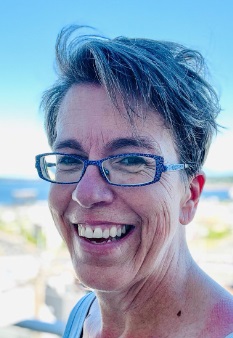
    Guest Blogger Suzanne Murray:

    I recently met a man in line for coffee who works for a company that offers technology for grade schools that allows learning to be personalized to the level of the individual student so each can get the specific support they need. I love hearing about such innovative practices.

    As we talked he mentioned a report about why gaming is so popular among the young. Even though they experience an 85 to 90% failure rate as they play, they learn from their mistakes and get better in the process. “It gives them a safe place to fail” he said.

    I love that idea. “That’s exactly like creativity,” I responded. It’s why as a creativity coach I encourage people to fall in love with the process. Just like the experience of gamers, when we relax and play with the process we learn and grow and that feels really good. It’s also the only way we can create something new, original and authentic.

    Our culture and educational systems teach us that mistakes aren’t okay; that there are real negative consequences to making mistakes; that we actually can fail. Yet the only way we learn is by our willingness to fail, and discover what works and what doesn’t.

    So how do we give ourselves a safe place to fail, when the world around us doesn’t support that. What if our heart and soul know the value of failure. What is the safe place to fail is the love, kindness and encouragement we can extend ourselves from that deeper place of knowing regardless of how the world sees it?

    From my own years of writing I have had countless pages of stories and poems that never really took off and were never finished. I always instinctively knew that this was part of the learning process of being a writer. Enjoying the process without being attached to a particular outcome gave me a safe place to learn and grow. This allowed me to finish pieces that gave me a deep sense of satisfaction.

    I love the story of Steve Jobs, who after being fired from Apple, went to work for Pixar films and entered into one of the most creative times in his life. Rather than seeing it as a failure he saw it as an opportunity. Can we learn to do that for ourselves? What does our safe place to fail look like? How can we create that to ourselves?

    Wishing you the joy of playing with your creativity, Suzanne

    Originally posted on Suzanne’s Blog, Creativity Goes Wild as “Giving Yourself A Safe Place to Fail.”

    Suzanne’s many talents: Creativity Coaching, Writing Process Coaching & EFT Sessions

    THE HEART OF WRITING COACHING

    Do you want to ignite your creativity and show up to your writing on a regular basis or go deeper into the process and craft?

    Suzanne offers online coaching to support you and coach you through any resistance or problems along the way. She holds the space of unconditional acceptance and support to nurturing your unique voice and work on the stories that are important to you.

    The Heart of Writing eBook

    Jumpstart the Process, Find Your Voice, Calm the Inner Critic and Tap the Creative Flow

    CREATIVITY COACHING

    Suzanne offers practical, emotional, and soulful strategies to help you uncover your creative gifts and support you in expressing them.

    EFT (Emotional Freedom Techniques)
    Combining Western psychology with Chinese acupressure, EFT works to rewrite subconscious patterns and limiting beliefs that keep us stuck.

  • Your Creative Self is Eager to Explore

    Today’s Guest Spot goes to Suzanne Murray.

    I recently watched a video of a 42-year-old neurosurgeon from California who dances for his patients to cheer them up during their check-ups. He gets them dancing too, including a young woman in a wheelchair seen waving her arms and shimmying her chair. I love that this doctor had found such a creative way to tend his patients spirits as well as their bodies. I imagine it’s a great help to their healing.

    It has me thinking more about how being creative can help heal our world. Creativity allows us to access new ways of looking at a problem and find fresh solutions. We touch expanded capacities and find ourselves capable of more than we think. We connect more to our heart and spirit. We are often surprised and delighted by the unexpected inspirations that arrive. We can learn to bring the creative process into every area of our lives to help ourselves, each other and the world.

    The simplest way to work with this process is to ask a question like “how can I help the world today” or “how can I bring more creativity into my life” or “how can this problem I am having in my life” and then let it go. Don’t try to figure out the answer with your mind. Rather let the response drop in as an awareness or intuition, a flash of insight or an ah..ha moment where you sense you are on to something.

    I do this all the time, especially when I don’t know what to do. Like with this newsletter. A few days before I planned for one, I had no idea what to write about. I felt completely uninspired. I silently asked the question “what’s my topic this month?” and let it go. The next day I saw the video about the dancing doctor. That inspired the subject of how to work with creativity to help each other and the world.

    When faced with the events in the world today and the constant bombardment of information we can easily feel overwhelmed and helpless to affect change. Knowing that our creative self is eager to assist us can help. Ask a question on an issue concerning you, someone or something you care about or the world at large, and see what comes. Then take some kind of action on the awareness, no matter how small. See where it takes you.

    Be willing to step out of your comfort zone. That’s part of being creative. We expand beyond who we think we are into more of who we really are. The rewards are many including an increased sense of empowerment and happiness. Play with this. The world, as you know, needs our gifts and inspirations now more than ever.

    Wishing you the joy of being creative, Suzanne

    Originally published as “Adrift” in the March 2006 of Sun Magazine.

    Suzanne Murray offers many opportunities to tap into your creativity:

    THE HEART OF WRITING COACHING
    Do you want to ignite your creativity and show up to your writing on a regular basis or go deeper into the process and craft? Online coaching to support you with any resistance or problems along the way: daily lessons and assignments hold the space of unconditional acceptance and support to nurturing your unique voice  and work on the stories that are really important to you.

    EFT (Emotional Freedom Techniques)

    Combining Western psychology with Chinese acupressure, it works to actually rewrite subconscious patterns and limiting beliefs that keep us stuck. I’ve had miraculous results and have been working with EFT in new ways that allow us to laser in on the issue and shift it at the core and change your life from the inside out. We often make significant shifts in a single session.

  • Why Follow Submission Guidelines?

    Guest Blogger Tish Davidson writes:

    Don’t Sabotage Your Submissions

    What is the first thing you do when you cook a new recipe? Read the directions to determine if you have the necessary ingredients. What is the first thing you do when you assemble a piece of Ikea furniture? Read the directions. So why do so many writers seem unable to read and follow the directions when submitting to a journal or contest?

    I’ve judged a lot of writing from independently published books to high school writing contests. I was an editor of the 2019 CWC Literary Review with responsibility submission intake as well as judging. What I’ve learned is how few supposedly literate people read and follow the submission directions. Maybe because they are called “guidelines” people consider them optional. Or perhaps the requirements seem overly picky or silly. Take fonts. Why use Courier as requested when your work will stand out from the crowd in Verdana? Well, one reason for a specified font is that all fonts are not equal. New Times Roman, for example, is proportional. Each letter takes up a different amount of space depending on its shape. Some fonts like Courier are nonproportional, meaning that each letter, like an “i” and an “m,” take up the same amount of space. Using the requested font helps the journal editor figure out how much space the work will take up on the page.

    Names are another issue. Some contests request the name only in the body of the email, not on the submission itself. Apparently many writers either 1) don’t read the directions; 2) forget to remove their name from the piece; or 3) are afraid the submission editor is incapable of keeping straight which submission goes with which person, so to feel secure, they include their name.

    Exceeding word lengths, block paragraphing rather than indenting (or vice versa as requested), using another person’s copyrighted song lyrics, subject matter inappropriate to the journal or contest, failing to observe the deadline or contest limitations such as age, or state/country of residence—all these will get your submission sent to the trash without being read, and as a judge evaluating a hundred or more submissions, less work is always welcome.

    Read and follow submission guidelines Don’t sabotage your work.

    Originally published in the Fremont Area Writers newsletter. Fremont Area Writers is a branch of the California Writers Club.

    Tish Davidson has published ten nonfiction books for children with Scholastic and Mason Crest and eight for adults published by Bloomsbury. Her creative nonfiction has appeared in collections published by Harlequin, Adams Media, and Scribe Press. She is a member of the Fremont branch of California Writers Club and was on the editorial team of the 2019 CWC Literary Review.

  • It’s All Grist for the Mill: Weathering the Ups and Downs of the Creative Life

    Photo Credit: Erin VonRuden

    Guest Blogger Mary Kole writes about the creative journey:

    As much as I wish this wasn’t the case, the creative life is full of ebbs and flows, highs and lows, and any other image you want to ascribe to the push and pull of the artistic temperament. Whether you admit or not, you are a writer, a creative, and an artist, whatever that means to you.

    If you find yourself grappling with writer’s block or struggling to reignite your passion for writing, fear not. This is perfectly normal, and every writer faces these challenges at some point in their creative journey. And it is a journey. Some writers are only interested in publication, and I can absolutely see where they’re coming from. But they will be in for a long and disappointing ride if they can’t derive pleasure, satisfaction, and fulfillment from the act of writing and the artistic state of being that writers sometimes occupy.

    But what if “the act of writing” and the “artistic state of being that writers sometimes occupy” isn’t happening for you right now? What if this is one of those ebbs? Those lows? In this article, I’ll suggest some ways to keep your creative spirit alive and thriving, even during dry spells. By reading, embracing some creativity development frameworks, freeing up a sense of play and inspiration, observing life through a writer’s lens, writing anything, and switching projects when needed, you can weather the ups and downs of the writing life with resilience and determination.

    Here are some suggestions, offered in no particular order:

    Read Like a Writer: When you aren’t writing, you could be reading. There’s nothing quite like reading like a writer, and seeing what your potential future peers are doing when they’re at the top of their game. Read inside your genre, category, and target audience, and also outside of it. Take note of techniques you find interesting, writing styles that appeal to you, and also those things you wouldn’t necessarily do. Sometimes negative inspiration—“I’d never do it like this!”—can be powerful, too. You can also read nonfiction about writing-related topics like creativity, habit formation, sociology, and psychology. These nonfiction fields have all taken off in the last few decades, with a lot of complicated concepts broken down to appeal to lay readers. Writers tend to collect information and seek to understand the human experience. Reading is a powerful way of doing so, even when you’re not currently creating.

    Revisit The Artist’s Way by Julia Cameron: The Artist’s Way is a renowned book that serves as a guide to unlocking creativity and overcoming artistic blocks. Through practices such as morning pages and artist dates, Cameron encourages writers to nurture their inner artist and establish a consistent creative routine. By incorporating these exercises into your daily life, you can cultivate a supportive environment for your creativity to flourish. The book acts like a guide and offers structure. If you haven’t read it before, it’s worth your while. If you haven’t read it in a while, you might find that you love slipping back into this warm and encouraging resource.

    Embrace Play and Inspiration: If you get into The Artist’s Way, you will be reminded that the state of being a writer isn’t just one you access while writing. You can take time to nurture yourself and seek inspiration off the page. Take yourself out on solo excursions to explore new environments, art galleries, museums, or nature spots—this is the “artist date” suggestion, described above. Engaging in activities that inspire and rejuvenate your spirit can spark fresh ideas and perspectives. If you invest in yourself, and make valuable time for self-reflection, you might find that this will allow you to connect with your inner muse. Seeking inspiration also divorces creativity from its product—you might not actively create anything when you take time to seek inspiration, but you also never know how your experiences will pay off. Creativity is like a well that needs constant replenishment. Seek out ideas and experiences that resonate with you—whether it’s listening to music, watching films, or engaging in hobbies and meeting new people. Surround yourself with beauty and ideas that stimulate your imagination.

    Observe Life as Writers Do: Writers are keen observers of the world around them. Pay attention to details, emotions, conversations, and experiences that unfold in your daily life. You could notice a snippet of dialogue, or be captivated by an interesting person at the grocery store. No wonder we call these individuals “characters,” they might be fodder for a piece of writing. By honing your observational skills, you can draw inspiration from seemingly mundane moments and infuse authenticity into your creative self-expression. After all, readers want to relate, and they want to recognize ideas and details from their own lives in the stories they consume. You need to live with your eyes and ears open to stock up on these potentially resonant nuggets.

    Write Anything: Even if you’re not writing the book of your heart at the moment, you can still keep up with writing anything to keep your engine block warm. Freewriting, poetry, journal entries, a “letter to the editor” that you don’t plan to send, a long caption for an Instagram post—all of these are valid outlets of written self-expression. Keep your creativity churning by writing, no matter what. It’s fine to skip days or weeks or even months, but if you’re doing the things on this list, you will feel like you’re making progress, even if you take your eyes off of your magnum opus for a bit.

    Switch Projects or Take a Break: Dovetailing with the above, if you’re feeling stuck on a particular project, don’t be afraid to set it aside temporarily or switch gears and work on something else. Sometimes shifting focus can reignite your passion for writing and bring fresh energy to your creative process. Remember that taking breaks or focusing on something else for a while is essential for recharging your creativity and preventing burnout, so don’t feel bad if you’re called to work on a different idea. (There’s obviously a balance to be struck between persevering with a project when the going gets tough and avoiding “shiny object syndrome,” which see you following a bunch of distractions.) The more you write and create, the better you’ll know yourself and can understand your behaviors and motives.

    As an aspiring writer navigating the highs and lows of the creative journey, you will want to prioritize self-care and balance, especially when things get tough. By implementing strategies like the above, you can nurture your creative spirit, no matter what else is going on in your life and work. Remember that creativity thrives when you’re able to offer yourself grace, resilience, and patience. If you can claim your identity as an artist, that’s one big step toward figuring out how to nurture yourself and take your dreams and passions seriously.

    Mary Kole
    As a former literary agent, I know all about the ins and outs of the publishing industry. But my favorite part has always been working directly with writers, so I founded Mary Kole Editorial in 2013 to provide consulting and developmental editing services to clients of all categories and genre

    Then I founded Good Story Company in 2019 with the aim of creating valuable content—like the Good Story Podcast, YouTube channel, and Good Story Learning classes and resources. My Story Mastermind small group workshop intensives helps writers level up their craft, and I offer done-for-you writing and ghostwriting at Manuscript Studio and marketing services with Good Story Marketing. I also develop unique and commercial intellectual property for middle grade, young adult, and adult readers with Upswell Media and Bittersweet Books (website forthcoming).

    I hold an MFA in Creative Writing and have worked at Chronicle Books, the Andrea Brown Literary Agency, and Movable Type Management. My blog, Kidlit.com has been going since 2009, and my book, Writing Irresistible Kidlit, a writing reference guide for middle grade and young adult writers, is available from Writer’s Digest Books/Penguin Random House.

  • Magic by Rebecca Evans

    Rebecca’s writing and her workshops are magical, showing what happens when we let go and are open to making discoveries.

    Magic by Rebecca Evans:

    I am an AI Rebutter.

    I am a Long-Hand-Writer Endorser.

    I pen pages each morning in a journal, jot a list of tasks to (almost) complete, scaffold essays and poems across composition notebooks. In separate journals, I copy beautiful lines from artists I love, wishing to transfer talent by osmosis.

    For me, magic begins within this first planting.

    I lean into an unfolding. Instead of writing towards an idea or theme or popular topic, I follow the words where they lead. It is from this space in my first drafts, I discover seedlings. Tiny sprouts. Sometimes one piece feels as though it could be in conversation with a piece of work I developed earlier. Other times, I might recognize the start of the poem. I rarely see the entire piece, near completion, in that first long-hand written scratch. And when I do, I most likely have been working out that essay or poem in my head and heart for some time. Perhaps decades.

    From these drafts, I transfer work—out of my notebooks and into my computer. I sort them, temporarily name them, file them, hope to return and flush them out and into some semblance of literary art. Some of them make it out alive. Many appear dormant. They are not. These are transplanted seeds now contained and, in their incubation, like a compost-covered perennial, they rest until ready to bloom.

    Every artist holds a process of their own. This is mine. And this early delicate care is critical for my art. This is the beginning. The revision and the polishing—the places I thin and prune or add nutrients—come much later. THAT process requires highlighters and research and sitting with my art as if I’m with an old friend from far away.

    The argument I’ve heard from my writer-friends who use Artificial Intelligence seems reasonable. One friend shares that she uses AI to get the first draft down and save time. And I think, Oh! She wants quantity. She’s writing for a page number, not the process of art. Another writer explains that AI works with her initial idea and AI helps expand her thoughts into a draft that is further along, something she can begin editing. And I think, Ok, she’s looking for a short cut.

    I know I sound judgey and each writer has the right to produce a product for the world to enjoy by whatever means.

    And yes, I’ve heard the AI argument trickle: Well, I built the foundation, which is my idea, with a new medium—the computer. And from there I revise. And, isn’t true art in the revision?

    I couldn’t agree more. As we polish, we begin to see the shape, the story line, the narrative arc, the angel in the stone. Someone, somewhere taught me this same concept, Art is in the revision.

    I repeat this to my writing students. I say this aloud to myself.

    Yet when I hear this phrase resurrected in the context of an AI defense, it feels as if my child is misquoting me.

    If you extend the argument that generative AI is still your work, your heart-art, and working with a draft generated for you is still your art, then I believe you’ve lost your artist’s way.

    If you share your idea with another writer and paid writer to write your first draft, yet you polish the draft, are you still the artist?

    Isn’t this now a collaborative?

    Perhaps your name is on the byline, but the piece is ghostwritten.

    Aren’t you editing AI’s work?

    My worry for future artists is their need for instant-gratification. Our society pressures this fast-paced finishing, pushing artists to produce more and produce it as quickly as possible. I think we lose something special in our hyper-production mentality. It’s the difference between delicately placing a spotless ladybug on a rose bush, allowing her to do her job, versus spraying that rose with chemicals that harm us—you, me, our soil, our air—to quickly rid the buds of aphids.

    We’re losing the slow-infusing, benefits of  nature.

    The investment of curation has been replaced. We’ve the cut-and-pasted Happy Holiday text message sent to the masses instead of our soft-curly strokes of the handwritten card. We’ve lost the home-made bread aroma, the gathering ‘round a table for a game, the random phone call, the old-fashioned family portraits.

    Time is our greatest commodity. The way we use time defines us. This sets our tone, our day, our hearts. We will feel the dew of grass beneath our feet? We will stop and smell the roses…or anything? The micro moments are where we live and absorb the world. The pause is often the loudest note in a song. The space between the first long-hand under- or over-written draft becomes the pulse of the poem.

    I want the entire art experience. I want this whether I’m the artist or the audience. I want to feel the duende in the flamenco, the fire in the cello, the tears in the writer. I want to feel this as I create—one slow step to the next. This intentional early movement helps me discover me, helps me understand the way I’m ingesting the world around me. Helps me. 

    Originally published January 29, 2024 as “A Little Letter from an AI Rebutter” in The Brevity Blog.

    Rebecca Evans, memoirist, essayist, and poet, writes the difficult, the heart-full, the guidebooks for survivors. She teaches writing in the Juvenile system and co-hosts the Writer to Writer radio show. She’s also disabled, a military veteran, and shares space with her sons and Newfoundlands.

    Her work has appeared in Narratively, The Rumpus, Hypertext Magazine, War, Literature & the Arts, The Limberlost Review, and more.

    She’s earned two MFAs, one in creative nonfiction, the other in poetry, University of Nevada, Reno at Lake Tahoe.

    She’s co-edited the anthology, when there are nine, a tribute to Ruth Bader Ginsburg (Moon Tide Press, 2022).

    She’s penned a memoir in verse, Tangled by Blood (Moon Tide Press. 2023) and has a book-length poem forthcoming in 2024. 

  • Best Writing: From the Heart

    Guest Blogger Sarah Chauncey writes about increasing energy, exploring ideas, and preventing burnout:

    You’re driving on a long stretch of highway when you have an insight about your main character’s childhood. Or you’re mid-hair-rinse in the shower, when you suddenly understand how to bring together the braided strands of your novel. Or you wake up at 2 a.m. with the resolution to that thorny plot issue you’ve been wrestling.

    Have you ever noticed how many ideas arise when you’re not sitting at the keyboard? 

    As writers, we’ve all experienced the law of diminishing returns—the point at which our writing stops being generative and begins to feel like we’re pulling each word from our synapses by hand. I spent the better part of a decade investigating how to create what I half-jokingly call a “law of increasing flow.” How might writers support our writing practice in a way that doesn’t leave us mentally burned out?

    Conventional advice: butt in chair, hands on keyboard

    For decades, writers have been told the most important thing to do is to put “butt in chair, hands on keyboard.”

    BICHOK is essential to writing. You can’t publish a book without sitting down to write, to revise, to revise again (and again and again), to query, or to fill out your author questionnaire. Yet so often, it’s treated like a Puritan work ethic or a punishment: “You put your backside in that chair, young man, and don’t get up until you’ve written 10 pages.”

    That may work for some writers, and if you’re among them, more power to you! That kind of disciplinarian approach, though, doesn’t work for me.

    Putting hands on a keyboard doesn’t make someone a writer, any more than holding a Stratocaster makes someone a musician. There are many times when we can gain insight by looking away from our work. These include: Before we sit down to write, during the writing process, and between revisions. What we do during those times is every bit as important as getting the words down.

    To understand how this helps your writing, it’s important to understand the interplay of the conscious and subconscious mind.

    How the subconscious and conscious mind work

    When I was younger, I used to tell people that my best writing bypassed my intellect entirely; it came from my heart and flowed down my arm. While that might sound precious and woo-woo, it turns out my instincts were right on. The intellect has many wonderful uses—categorizing and sorting (and revising, oh so much revising.)—but it’s a terrible writer.

    The thinking mind informs our writing; it’s what allows us to conduct research, analyze information and execute the ideas we have. Original ideas, though, can only come up when we deliberately allow the mind to wander—and pay attention to its whereabouts.

    The conscious or rational mind, including what we call the intellect, takes in about 2,000 bits of information per second. However, it can only process about 40 bits of information per second.  

    The subconscious mind, on the other hand, takes in upwards of 11 million bits of information per second. We know more than we are aware of knowing. The subconscious retains everything we’ve ever experienced. It combines seemingly disparate ideas and experiences and comes up with new and unusual connections. Just ask anyone who’s ever dreamt about their aunt Myrtle performing Riverdance in a T-Rex costume. The subconscious is creative.

    Creativity comes from beyond the thinking mind

    J.D. Salinger once wrote, “Novels grow in the dark.” By that, he meant that they emerge from the subconscious mind. In my experience, what we call intuition is logic of the subconscious, delivered to us in aha moments after it has had time to percolate.

    Consider the old-fashioned tin coffeemaker, the kind you put on a stove. You add the ingredients—water in the bottom, coffee grounds on top—but you don’t expect coffee right away. The stove has to heat up; the water has to boil. Then it has to percolate, mixing the bubbling water with the grounds, as the water slowly takes on the flavor of the grounds. The process takes time and can’t be rushed. Creative percolation is the same.

    Many of us get ideas from sudden insights, but waiting around for those is a fool’s errand, because there’s one major block: The thinking mind is as noisy as a jackhammer, whereas intuition whispers. As long as our thinking mind is engaged, it will be difficult to notice subconscious insights.

    When we look away and we relax the thinking mind, we’re more receptive to our intuition.

    Looking away gives the subconscious time to percolate.

    Click on BICHOK to read the rest of this excellent and informative essay by Sarah Chauncey.

    Originally posted on Jane Friedman’s Blog, January 18, 2024, “Beyond BICHOK: How, When and Why Getting Your Butt Out of the Chair Can Make You a Better Writer.”

    Sarah Chauncey is a veteran writer, freelance editor and writing coach, as well as the author of P.S. I Love You More Than Tuna. She helps her clients enhance their creative flow through mindfulness. Subscribe to her newsletters: Resonant Storytelling (writing) and The Counterintuitive Guide to Life (inner peace).

    Sarah has written for Tiny BuddhaLion’s Roar and Eckhart Tolle’s website

    From Sarah’s website:

    I was raised to worship at the altar of the intellect. I studied at Sarah Lawrence College and graduated magna cum laude from George Washington University with a BA and partial Masters in social psychology, with a focus on psychoneuroimmunology and community health, through the lens of the AIDS epidemic.

    When I burned out from grieving dozens of friends, I shifted into the theatre world and attended Yale School of Drama for stage management. Later, I attended Goddard College’s MFA in Creative Writing program (fiction).

    In the 1990s, I was head writer for the web’s first entertainment magazine, Entertainment Drive, and I content-designed and ghostwrote several of the first official celebrity websites (Cindy Crawford, Britney Spears and others).

  • Freeing Your Creativity

    Guest Blogger Suzanne Murray writes about: Freeing Your Creativity.

    Does it feel like your creativity is locked up tight in a box you are afraid to open?

    You put it in there long ago when your third grade teacher didn’t like your drawing or your father disapproved of you wasting your time writing poems or your grandmother told you that you didn’t have as good a singing voice as your sister.

    It happened to me in junior high school when my in my design class the teacher exclaimed about a drawing I actually really liked, “Suzanne, you can do better than that.” Decades later I’ve yet to pick up another drawing pencil.

    The Creative Self

    The creative self is a tender and vulnerable part of us, so it doesn’t take much to discourage it. I could have left the creative urge locked up with my drawing pad. Fortunately, I found other outlets. In college I developed a passion for black and white photography for creative expression. It was a fine replacement for drawing.

    Eventually creative writing became my main form. I was lucky enough to grow up in a city, San Francisco, with a parent, my father, who valued the arts so I wasn’t weighed down by the general cultural beliefs that the arts and creativity are frivolous.

    I had implicit permission to play with creativity from early on and it informs my life in countless ways.

    Back before I started my own writing and creativity coaching business and needed a resume to apply for work, the line that got me the most interviews was “creative problem solver.”

    My relationship to creativity allows me to use the process to access the field of all possibilities so that I can come up with new ways of looking a situation and new solutions. We all have this capacity. I was lucky enough to grow up in an environment that gave me permission to play with creativity.

    Whether you know it or not you probably are using this ability to some degree on a regular basis. You’ve probably had the experience of trying to solve a problem at work using your rational, linear mind. Frustrated to give up and let it go, you drive home and as you pull up to the house the solution pops into your head. That’s one way the creative process works.

    Trust the creative process

    You learn to trust that if you give a problem over to your subconscious the answer will show up. To reclaim your creativity, to set it free, consider the ways you are already creativity in every area of your life and the benefits it brings.

    How have you been discouraged over the years from being creative and what action could you take today to begin to reclaim those gifts?

    Play with the idea. Have fun.

    That’s the heart of the creative process. Joy and a deep sense of satisfaction.

    Wishing you the joy of creativity in this new year, Suzanne Murray

    Suzanne’s website: Creativity Goes Wild
  • A New Beginning

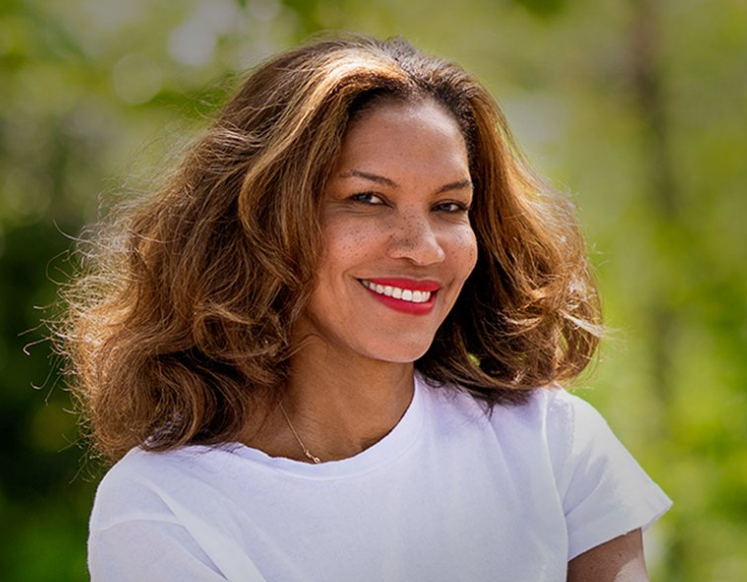
    Guest Blogger Tamara Belinfanti writes about a new beginning.

    A few years ago, I found myself called to write exuberant, colorful stories with riotous characters that defied rational thinking and did not fit the mold of legal academia, which was my background. At first, like so many, I ignored the inner whisper to explore new territory. But the thing about callings is that they get louder when you get really still or something shakes your world. For me, the latter forced the former: my closest mentor in the law field passed suddenly, and alongside intense grief, a new beginning emerged.

    In academia, I had a built-in community of mentors and colleagues, plus the academic publishing path was fairly straightforward. My tenure process was not a walk in the park, but overall it was relatively hitch-free and went according to plan.

    Creative writing was a whole new terrain. I had to learn its contours, how its paths meandered and connected, and how to navigate its deep woods. I had to become familiar with the inhabitants of a rich, complex, and interconnected ecosystem of coaches, agents, editors, sensitivity readers and publishers; and, above all else, how to look for the sun when there are times that you cannot see beyond the impenetrable thicket. For tenure, the guiding principle was publish or perish. For creative writing, it can feel as though we are perishing on our way to being published.

    My writing coach tells me I am in what they call the murky middle. Too far from the shore I’ve left to swim back; yet the other shore still feels well beyond the horizon. I’m not quite sure I am equipped for this, or if I can call myself a writer without having a publisher. Over these past four years on this journey, I have come to learn that these external resources and the usual recommendations of craft books, workshops, seminars, writing community, etc. are important, especially to get started, but they will only get you so far. To truly stay the course with composure, one must cultivate one’s own internal compass—an inner wisdom that can cut through the noise of the landscape and guide you to the place where only you know, where you are called.

    Since venturing off the strictly academic path, a shift has emerged. Before, my days were primarily driven by external demands and conventions. Now I try to attend to, and orient towards, my internal north star. Thankfully, some of my shorter pieces and personal essays have found the right publishing homes, and it’s always a surprise (mostly pleasant) to see how my writing lands with others. I am also lucky to have a wise writing coach and an astute agent.

    I am far from having this figured out, but five things help me stay oriented:

    Actually writing, which sounds so terribly trite and tautological, but it’s true. I try to write at least five days a week, early in the morning, before the sun is awake and when my household is still quiet. I always begin with an acknowledgement of the space and grace to write, and then I start whatever is on tap for that day’s writing session.

    How we live around our writing. What I eat affects not only my mood but also my creativity. Whole foods, minimal to no dairy, omega-rich foods like flax or chia seeds, and bitter greens seem to be a winning formula for me in providing sustenance and clarity. That foggy head feeling is a doozy when you’re trying to find the right words or your through-line. In the legal field, I was better able to muscle through the fog, but creative writing is less forgiving. I need to clearly see, hear, and feel the world of my characters, with minimal static. I do, however, tend to daydream and spend a lot of time with my head in the clouds, and I need to counterbalance my skyward-looking tendency with things that help me feel grounded—like running, yoga, contemplative practice, or sitting with my back against a tree. I am not sure how the latter works, but somehow it does.

    Preparing for creativity. I have always used to-do lists, but these can feel too utilitarian for wooing creativity. Now, I sketch out at night my writing beats for the next day. This allows me to tune in to where I am in my writing, how I’m feeling about it, and ask myself what needs to be done tomorrow? In the morning, I have a road map for how to proceed.

    Detach. At the end of each day, no matter how productive or not I have been, I try to detach from what the day has brought and gently let it be. What’s done is done, and there will be more paths to traverse tomorrow.

    I have come to believe that writing is a microcosmic reflection of the greater life journey. As we travel, may we heed the call, step lightly, pay attention to our inner wisdom, and cultivate the rich interior landscape from whence the urge to write originates.

    Tamara Belinfanti is an emerging Caribbean writer whose work explores themes of identity, belonging, and transition. Her writing has appeared in Vogue, The New York Times, and PREE, a magazine of contemporary Caribbean writing. A graduate of Harvard Law School, she is a professor of law at New York Law School.

    Originally posted as “On Guides and Journeys” October 3, 2023 on the Brevity Blog.