Author: mcullen

  • Hippocampus Magazine wants your story about All Kinds of Weather

    Hippocampus Magazine enthusiastically accepts unsolicited submissions in the following categories:

    • memoir excerpt – a self-contained portion (chapter or selection) of a larger, book-length work
    • personal essay – a short narrative reflecting on a particular life experience or observation
    • flash creative nonfiction or a work of creative nonfiction in an experimental format

    Here is an article that discusses the difference between memoir and essay. And here is another.

    2014 Theme: Weather & Acts of Nature

    From storms and sprinkles to earthquakes and extreme heat, Mother Nature can pack a punch or paint a pretty picture. Weather can be wacky and wild. And weather can be calm.

    Weather often plays a character in our everyday—and not so everyday—lives. We’re seeking tales in which the weather or even a natural disaster played a significant or supporting role.

    To be clear, we’re not specifically looking for stories just about bad weather or destruction; instead, we seek any personal essay or memoir excerpt related to the weather in some way. Maybe you dated a meteorologist? Perhaps you were stuck at an airport for a day and made an unlikely friend… Maybe the sun came out at JUST the right time… Perhaps there’s a story behind your umbrella…

    Also of note: we’re not looking for essays/articles/opinion pieces solely about why climate change does or does not exist—Hippo is not the venue for that.

    We’re open to submissions for this issue now through April 30; submissions should adhere to our usual guidelines.

    We like quirky, we like edgy, we like witty, we like smart, we like to be moved, we like pieces that stick with us.

    Have fun! We look forward to your weather stories.

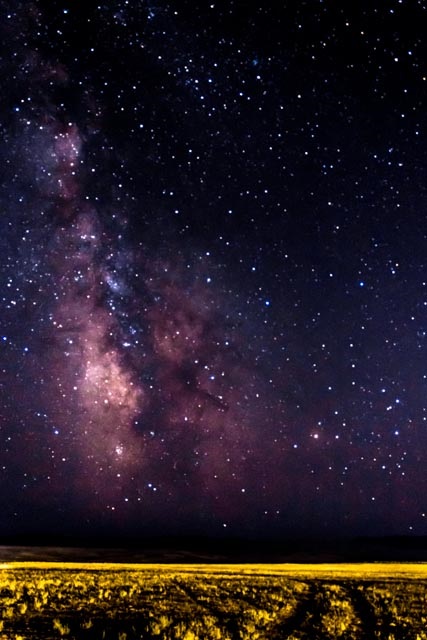
    Colby.Evening Sky

    Photo by Colby Drake. Colby Drake Design.  Check out Colby’s Facebook Page.

  • Guest Blogger Meredith Bond – create historical fantasy

    Guest Blogger Meredith Bond writes about creating beautiful history.

    I love history and reading about how people lived. And I love writing historical romance. But one doesn’t have anything to do with the other and rarely do I use very much of what I read in my novels. Historical novels—all, although romance is certainly the most guilty—takes history and makes it beautiful. That’s wonderful, except for one minor fact. History is not beautiful. Life before electricity and toilets was really not pretty or comfortable. And yet when was the last time you read a historical novel which actually made you aware of that?  Or mentioned it at all?

    There are, from time to time, mentions of some villains awful breath. But the scent of a hero or heroine is always something wonderful—flowers or leather. But is that accurate? Did people in the 18th century really smell that way. Highly unlikely. If they bathed, it wasn’t often.  In medieval England the monks of Westminster were required to bath four times a year. That’s it. And we’re not even certain they bathed that often. So, now how are people supposed to smell so nice? If they did so, it was due to the liberal use of perfume.  The next time you read that a hero smelled like “musk”, it was probably his own personal musk that the heroine is smelling because the guy hasn’t bathed for a while.

    Of course we all know that people in novels rarely use the toilet. Why? Because it was a disgusting experience. The wealthy might have a pot which would be cleaned out by some poor servant (sometimes by simply throwing the contents out the window – be careful how closely you walk next to a house). If there was an outhouse—well, you can imagine how lovely that smelled.

    And then there were the animals. Yes, horses which leave what wherever they’ve gone? And no, there was no one picking it up. There were also pigs, rats, goats and all manner of other animals living in cities, eating whatever waste lay about on the streets—and there was definitely enough of it to feed them well.

    So where is all of this lovely detail in historical novels? Nowhere. Are you surprised? No, I didn’t think so.

    And what of women? People who read romance novels love a feisty heroine. A woman who will stand up for herself. Who rides as well as the men. Or thinks nothing of engaging in some witty, sarcastic repartee with our hero. But did girls, especially unmarried young women, really behave so boldly? I don’t think so. Not if they wanted to get married. And if they didn’t get married they became nothing but a burden on their family. They had no other option.  Women were quiet. Submissive. Treated like children—who only spoke when spoken to. The brave young souls of the modern romance novel bears no resemblance to the actual women of time. It is a sad story, but true nonetheless.

    So enjoy your romance and other historical novels, but especially enjoy the fantasy that they create—that’s why it’s called “world building.”

    Meredith Bond is an award-winning author of a series of traditionally published Regency romances and indie-published paranormal romances. Known for her characters “who slip readily into one’s heart,” Meredith’s paranormal romances include Magic In The Storm, Storm on the Horizon, and the short story “In A Beginning.” Her traditional Regencies include The Merry Men Quartet of which An Exotic Heir and A Dandy In Disguise have recently been republished. Her new series of New Adult Medieval Fantasy Romances, will be coming out beginning March 18th, 2014 with Air: Merlin’s Chalice, followed by Water: Excalibur’s Return in April and Fire: Nimue’s Destiny in May. Meredith also teaches writing at her local community college. If you want a taste of her class in book form, Chapter One is available at your favorite e-retailer.

    Want to know more? Visit Meredith at her website, or chat with her on Facebook  or Twitter (@merrybond). If you’d like to be one of the first to know of Meredith’s new releases, join her no-spamming email list by clicking here.  

    Thanks so much!  Meredith.

    Meredith Bond book

  • Run your own race.

    In an interview in the February 2014 issue of The Writer magazine, interviewer Alicia Anstead asked Monica Wood, “One of the nuns who taught you as a child said explorers should have courage, goals, imagination and, finally, humility. Which of these is most important for a writer, and why?”

    Monica answered: “I have a sign in my studio:  Run your own race. Some other writer will always write lovelier books, reach more readers, make more money, win more awards. the writing trade – which is full, full, full of rejections and failure – is a lifelong lesson in humility, and we are wise to take that lesson into the other arenas of our life. Writing is engaging, gratifying and often profoundly discouraging and difficult. But not as discouraging and difficult as coal mining or warfare.”

    Monica Wood is the author of When We Were the Kennedys: A Memoir from Mexico, Maine, her story about growing up in the 1960s in a Catholic family in a mill town in northern New England.

    Wood_correctSmall

  • Watershed moment . . . Prompt #57

    This prompt is inspired by Ianthe Brautigan from her Writers Forum workshop.

    Draw a circle with radiating arms, ending in circles (see below).

    In the center circle, write a note about a watershed moment where nothing was the same after that: A pivotal moment.

    Write details on the radiating circles. Include as many circles as you want for details.

    Write into the questions  . . . how did this moment shape me? How did this affect the rest of my life?

    Use this prompt to spark a freewrite.

    When you are finished with freewriting on this prompt, if you keep a journal, use that for details to flesh out the story.

    water circles new

  • See your story and tell it.

    Tips to writing deeply and comfortably.

    Stretch – either standing or sitting in a chair. Do whatever whatever stretching feels good to you.

    Sit easily in a comfortable chair.

    Take a deep breath in through your nose, exhale out through your mouth, like you are blowing out a candle.

    Take several deep breaths and whoosh out on the exhalations.

    Relax into your chair.  Smile.  Escort your inner critic out the door.

    Shed your ideas about what perfect writing means.

    Give yourself permission to write the worst stuff possible.

    Writing isn’t about talent, it’s about practice and going into another dimension.

    Creative writing is an act of discovery.

    Take another deep breath. Relax into your breathing. Exhale with a satisfying sigh.

    Rather than write for an audience, write from an instinctual level.

    Immerse yourself in writing. Let go of your worries and write. Just write to a satisfying inner desire to go to a meaningful place.

    Go deeper into the recesses of your mind and really write.

    Write from the well that stores the fears. Let the tears come. Let the stomach tie up in knots.

    It’s okay to write the story that is difficult to tell.

    Get through the barriers to go to a deeper level.

    See your story and tell it.

    When you are writing, if you run out of things to say, write “I remember. . .” and see where that takes you.

    Or write, “What I really want to say . . .”

    You can use the prompts on this blog to jumpstart your writing.

    beach filled heart

    Photo by Jeff Cullen. Click here to see Jeff’s portfolio on fotolia.

  • In a perfect world . . . Prompt #56

    Prompt:  In a perfect world . . .

    Set timer for 12 minutes. Write.

    Post your writing here. Come on . . . share your writing with us.

    In a perfect world . . .

    IMG_1607


  • SmokeLong publishes flash fiction up to 1000 words

    SmokeLong Quarterly publishes flash fiction up to 1000 words.

    The SLQ aesthetic remains an ever-changing, ever-elusive set of principles, but it most likely has to do with these kinds of things:

    •  language that surprises
    • narratives that strive toward something other than a final punch line or twist
    • pieces that add up to something, oftentimes (but not necessarily always) meaning or emotional resonance
    • honest work that feels as if it has far more purpose than a writer wanting to write a story

    We have a special place in our hearts, more often than not, for narratives we haven’t seen before. For the more familiar stories—such as relationship break-ups, bar scenarios, terminal illnesses—we tend to need something original and urgent in the writer’s presentation.

    Click here for submission guidelines.

    Sonoma County author and writing teacher Stephanie Freele has been published in SLQ:   Breathing Oysters

    Have you, or someone you know, been published in Smokelong?  Let me know, and I’ll post on my Facebook Writing Page.

    Submit, so we can add your name to the list!

    Freele Stephanie Freele

  • Guest Blogger Nina Amir and writing goals

    The following is from Nina Amir’s Blog, Write Nonfiction Now. Nina posts writing prompts on Fridays.  I really enjoyed Prompt #10 and thought you might like it, too.

    Create Book Ideas to Support Your Goals: Nonfiction Writing Prompt #10 by Nina Amir.

    If you want to write and publish books, the first step involves developing ideas. You may be a nonfiction writer with just one book idea or with many. However, if you have nonfiction writing goals, your book ideas should support your goals.

    I have many book ideas. Despite the fact that some of them really excite me, I have put quite a few on hold. I have them queued up in a logical order, one following the other so they help move me toward my goals.

    Sometimes those goals could be simple, such as get a traditional publishing deal. That may not sound “simple,” but, for example, I put aside some projects of mine that were outside my area of expertise to pursue that goal. I used my expertise to accomplish it. With traditionally published books under my belt that have performed well—a track record—I can move into other categories more easily, should I want to pursue traditional publishing for my other ideas. I can also pursue self-publishing now more successfully.

    Your goals could be to:

    • Attract more clients
    • Make more money
    • Develop authority
    • Tell your story
    • Serve others
    • Teach
    • Build a business around a book
    • Get more freelance assignments
    • Become a professional speaker

    Whatever your goals, it’s time to develop book ideas that support them.

    Write down your top two or three nonfiction writing goals. For each goal, also write down one or two reasons why you want to achieve that goal.

    Next, brainstorm tentative titles or subjects for books that would support those goals. Come up with at least one, preferably two for each goal. Prioritize them based on which will help you achieve your goal fastest.

    If you come up with other nonfiction book ideas you’d like to write during this process, write them down as well, but put them away for later.

    How many ideas did you come up with? Tell Nina in a comment by clicking here.  Scroll down to the bottom for the comments section. 

    Note:  Nina’s original post includes a chart and examples. . . to view the complete post, click here.

    Nina’s newest book, The Author Training Manual is now available.  Be one of the first to own a copy of The Author Training Manual : Develop Marketable Ideas, Craft Books That Sell, Become the Author Publishers Want, and Self-Publish Effectively.

    Nina Amir, author of How to Blog a Book and The Author Training Manual, transforms writers into inspired, successful authors, authorpreneurs and blogpreneurs. Known as the Inspiration to Creation Coach, she moves her clients from ideas to finished books as well as to careers as authors by helping them combine their passion and purpose so they create products that positively and meaningfully impact the world. A sought-after author, book, blog-to-book, and results coach, some of Nina’s clients have sold 300,000+ copies of their books, landed deals with major publishing houses and created thriving businesses around their books. She writes four blogs, self-published 12 books and founded National Nonfiction Writing Month, aka the Write Nonfiction in November Challenge.  Nina will be the November 20, 2014 Writers Forum Presenter.

    Nina Amir

  • Find the truth of the scene — Actor Will Forte

    In an interview with The Costco Connection, Will Forte – an eight-year vet of Saturday Night Live – talks about his experience working with Bruce Dern in the movie “Nebraska.”  When asked what he learned from Bruce Dern, Will answered, “Bruce would always give me this advice: ‘Be in the moment. Just find the truth of the scene.’ I’m not a trained actor, so that just seemed like drama school hogwash, but the further we got into the  movie, it really made a lot of sense to me, and then I started thinking, maybe that’s what I’m supposed to do in comedy too. The truths might be very different, the levels of reality might be different, but you have to commit 100 percent either way.”

    Note from Marlene: I think this is true with writing also.  When “the truth of the scene” is conveyed, writing is strong and readers feel a visceral reaction.

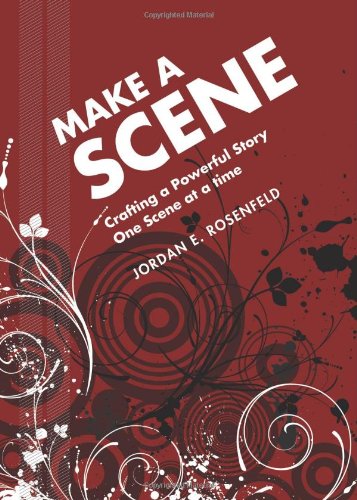
    Excellent resource book for writing good scenes:  Make A Scene by Jordan Rosenfeld.

    Make A Scene.Rosenfeld


  • In this photo . . . Prompt #55

    This is a two-part prompt.

    Part 1:  Get a photo of yourself.  We’ll wait.

    Toe tapping . . . humming.  Photo in hand?  If not . . . close your eyes for a moment and picture a photo of yourself.

    Write,  starting with:  “In this photo . . . ”

    Go! Now! Write before reading Part II.

    Wait. . . did you write on the prompt?

    If yes . . . proceed to the next part.  If not, take 10 or 15 minutes to write, “In this photo . . . ”

    We’ll wait for you to catch up.  Maybe we’ll hum a little tune. . . la. . . de. . . dum. . .

    Ready?

    Part II:

    Add three sentences after every sentence you have just written.  Start first additional sentence with “I felt” and then add two sentences after that.

    Example of adding three sentences to what you have already written.

    Original Sentences:  In this photo, I’m opening a present. I’m four years old. It’s Christmas.

    Original sentence #1 plus three sentences:  In this photo, I’m opening a present. I felt happy. I loved being surrounded by my parents, grandparents, aunts and uncles. I’m excited to open this present.

    Original sentence #2 plus three sentences:  I’m four years old. I felt happy.  I am older than my sister. I liked playing with her.

    Original sentence #3 plus three sentences:  It’s Christmas. I felt content. I liked being in Nana’s living room. She made the nightgown and robe that I’m wearing in the photo.

    This is one way to go deeper in your writing.

    I first experienced this writing prompt with Adair Lara, at a writing class in her home, Summer 2009.  She teaches classes in her home. If you live in the San Francisco Bay Area and are interested, contact her. Click here for information about Adair Lara.

    scan0001