“A two-week intensive writing push with an accountability partner.”
“Craft Talk” by Jami Attenberg is the home of the #1000wordsofsummer project, a community of writers of all levels who are all supporting each other to write 1,000 words a day for two weeks.
This project has been in existence since 2018.
The next round starts June 17, 2023 and ends June 30, 2023.
When you sign up, during the project, you will receive an email from Jami Attenberg encouraging you to write.
Sometimes another published author will contribute their thoughts on creativity, productivity, and inspiration.
Your mission, should you decide to accept: Write 1000 words a day for two weeks.
“Craft Talk” is a community of writers who are accountability partners: that is the magic of this project.
At the end of this challenge, you will have a big pile of words and a sense of accomplishment and hopefully the inspiration to keep going.
At the end of it all, you will have a big pile of words and a sense of accomplishment and hopefully the inspiration to keep going.
A writer and writing teacher I admire, Rebecca Evans, talked about an Entry Point as an opener when writing.
Rebecca asked us to think of comfortable things.
Things you’re wearing and you don’t even know you’re wearing, like eyeglasses.
I thought that was interesting because I don’t like wearing my glasses. I usually take them off as soon as I get home from going out.
About a week after Rebecca’s workshop, as I drove to my first errand, things looked blurry. I couldn’t read signs clearly.
I thought, “I need to get my eyes checked.”
I accomplished my errands. Got home. And did my usual, took my glasses off first thing.
That’s when I noticed . . . I was not wearing my distance glasses. I was wearing my computer glasses.
I guess the moral is things can be comfortable without our even noticing it.
Or, maybe the moral is . . . pay attention.
Either way, let’s find an entry point for writing.
Find something comfortable on your body. It could be a tattoo, a scar, something you are wearing. Just notice an item of comfort.
Now look around, find something to look at that brings comfort, or a sense of peace, a sense of all is right with the world.
If none of that works, think of a phrase, a word or a sound, that brings comfort to you.
If you can’t find anything right now, don’t worry. Something will come to you.
If you did find a comfort point, use that as your focal point. If the writing gets difficult, look at that comfort item or think of your comfort word . . . use that as a reminder to breathe. As a reminder that you are okay. In the here and now, you are okay.
If the writing gets difficult, you can tap on your chest, just above the breast bone, with the tips of your fingers. This is a calming and centering activity.
While you are writing, if you run out of ideas of what to write about, and there is more time to write . . .
Rewrite the prompt.
Literally, rewrite the prompt.
Or:
What I really want to say.
I have been doing meditations online with Alister Gray.
Here are some thoughts from his meditation.
These are ideas we can use as an entry point into our writing.
~ Let go of resistance
~ Drop into a level of awareness
~ The power of acceptance
~ Experience inner freedom
Acceptance is accepting all there is in the present moment. Allow it to be.
Clarity and wisdom guide us into the next moment.
Let acceptance in. Let acceptance be your super power.
Acceptance is a gateway to a peaceful place, a grounding place.
Acceptance of yourself, including your flaws, past experiences, what you think is unlovable.
Realize your true nature. Your wholeness of who you are.
Drop in to the super space of awareness which is unconditional love for yourself, including what you have labeled as bad.
Writing can help us to heal . . . so we can navigate life consciously.
Take a moment to take this in.
Feel it. Let it settle.
While you write:
Notice what emotions come up. Let the tears come.
Accept whatever comes up.
Accept whatever path you are on.
Before starting to write:
Stretch.
Take a few deep breaths.
There are two writing prompts.
Prompt #1: Acceptance.
Write for 15-20 minutes. Longer, if you have time. Save time for an exit point.
Rebecca talked about an exit point, closure, after writing.
Don’t carry your hard writing to the next thing you are doing. Writing is your sacred place.
Think of your item of comfort . . . either a real thing, or a word, a mantra.
What brings me comfort are the moments I sit outside, in my private little apartment garden, reading a book whose words intrigue and delight me.
The big black shiny honey bees are flitting about my blooming flowers, sipping their nectar and laughing with joy.
Yes, I can hear them. Maybe you can’t, but I have cultivated a special and long lasting relationship with them.
They are my neighbors, and my friends. They fly to see me everyday. They are loyal and perpetually consistent with their love.
I rise with anticipatory excitement as I hustle outside! Which one will I see today as I gleefully read to them aloud?
Does it bring us comfort? Are we the same, even though we appear so different?
We are living things. We matter! We grow intrinsically, day by day, as we flourish among the colorful and newly sprouting Spring flowers.
I celebrate our mutual understanding. We are God’s special and intimate compatriots. We can sort out our differences at a later time!
Don’t you think?
Caryl Sherman is a woman of a certain age, who aspires to write, and bridge a mutual understanding between herself and her readers. This is an art form that continually grows and matures within her heart. And, when it works, she can’t think of anything better!
Excerpted from the May 2023 issue of the Sonoma County Gazette:
Research over the past 20 years shows the same result time and time again: when we’re stressed, we want what researchers call high energy and nutrient-dense foods—those snacks, treats and meals that are high in fat and sugar.
Comfort foods improve mood, reduce loneliness and connect us to cherished memories, often linked to childhood. A craving for comfort food typically stems from an extreme emotion, including happiness, meaning we reach for comfort foods even to celebrate.
Comfort foods often trigger our reward system by releasing dopamine, a hormone and neurotransmitter. When we take a bite of that comfort food, whether it’s a hot fudge sundae, peanut butter and apples, tikka masala or a double bacon cheeseburger, dopamine floods the brain and gives us a huge boost of pleasure feelings. Any negative feelings we may have been experiencing before—stress, anger, sadness or anything in between—is diminished thanks to that hit of dopamine.
Fractured Lit publishes flash fiction with emotional resonance, with characters who come to life through their actions and responses to the world around them.
“We’re searching for flash that investigates the mysteries of being human; the sorrow and the joy of connecting to the diverse population.”
Fractured Lit is open year-round and is available to all writers.
We currently publish microfiction (up to 400 words) and flash fiction (401-1,000 words), with new writing featured on Mondays and Thursdays. We also offer contests throughout the year.
We’re excited to launch a new contest for our flash writers. From May 15 to July 16, 2023, we welcome writers to submit to the Fractured Lit Flash Fiction OPEN.
Fractured Lit publishes flash fiction with emotional resonance, with characters who come to life through their actions and responses to the world around them. We’re searching for flash that investigates the mysteries of being human, the sorrow and the joy of connecting to a diverse population.
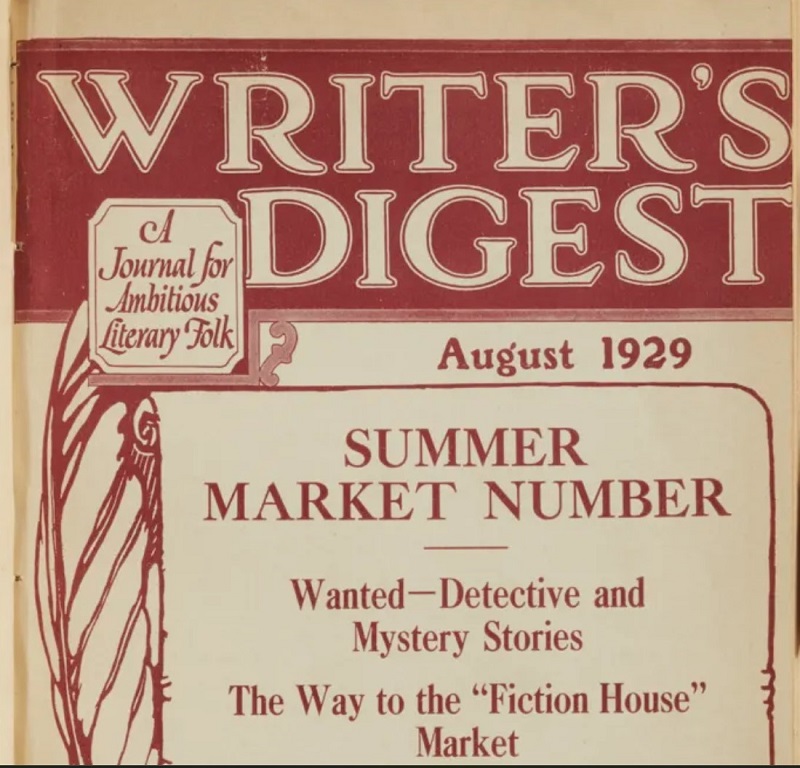
Made from the cheapest paper available, pulp magazines were among the bestselling fiction publications of their day, with the most popular titles selling hundreds of thousands of copies per month at their height. The pulps paid just a penny or so a word, so writers quickly learned that making a living required a nimble imagination and remarkable speed, with some working on several stories simultaneously.
Contemporary fiction writers can learn from pulp magazines the importance of a tight, character-driven narrative; the necessity of imaginative descriptions and how to immediately grab the reader with an action-filled lead.
Jack Byrne, managing editor of the pulp magazine publisher fiction House, wrote in an August 1929 Writer’s Digest article detailing the manuscript needs of Fiction House’s 11 magazines:
“We must have a good, fast opening. Smack us within the first paragraph. Get our interest aroused. Don’t tell us about the general geographic situation or the atmospheric conditions.
Don’t describe the hero’s physique or the kind of pants he wears. Start something!”
Readers can find pulps aplenty on eBay, as well as in anthologies such as The Pulps, edited by Tony Goodstone, and The Black Lizard Big Book of Pulps, edited by Otto Penzler.
Excerpted from the May/June 2019 issue of Writer’s Digest magazine, “Back in the Day,” by Don Vaughan.
“Remember that when you’re writing that first thing, you’re in an incredibly precious time. When you’re writing that book or that early story, write for yourself first and foremost. There’s going to come a time when that won’t be the case anymore, when there are going to be all these people who are involved. So, don’t be in any great hurry to publish or to get it out there into the world. Take your time to hone and draft that first book. Appreciate those early years where you’re writing for yourself because it never is quite the same once you start publishing.”
The bestselling (and Booker Prize-shortlisted) author discusses the interconnectedness of his work, the importance of short stories, and his latest release, The Late Americans. Interviewed Michael Woodson
The May/June 2023 issue of Writer’s Digest is all about “Keeping It Short” —short forms of writing, that is. This issue includes advice for writing flash fiction, personal essays, and some of the shortest—but most important—bits of writing you’ll do: loglines, elevator pitches, query pitches, synopses, and marketing copy. Plus, we feature the perennial favorite 25th Annual 101 Best Websites for Writers.
When Cheryl Moore came to California in the early 1960’s, she realized she’d found her home. Then moving to Petaluma in the 70’s, she was as close to paradise as she’d ever be.
Travel has taken her to Europe and the Middle East. She has written on these memories as well as on the flora and fauna of the local river and her own garden.
I don’t think I would really want to have known what my life would bring. Of course, I wish I’d done some things differently, made more time for the family I loved. I wish I hadn’t abandoned writing for so many years, over and over again.
I certainly wish I’d known when I heard the grim news “malignant,” when it applied to lungs that it did not mean horrendous surgery with scant hope of recovery.
And I wish that, before I knew all would be well, that I had actually written all those letters of accumulated love and wisdom that I planned to leave for my family—maybe even a page or two for assorted nieces and nephews and their offspring. Well, I didn’t. And, yes, I know it’s not too late, but that’s another story.
Life is full of “what ifs?”
It’s a delightful waste of time to ponder. Never mind the personal—the turmoil of the past few months reminds me of the heady days when my daughter’s generation took to the streets with protest marches They brought change just as the freedom Riders changed the face of the South.
What if they’d all stayed home muttering their discontent?
It’s turmoil time again. I stayed placidly on the sidelines in the sixties and seventies for the sake of peace in my own house. I sympathized, but . . .
Not this time.
A wheelchair handed down to me when my sister-in-law died served as a walker and a much needed place to sit through a lot of singing and speeches when I joined that merry creative crowd in small town Ukiah to protest on a Saturday in January, 2018.
I just know that I needed for once in my life to be a part of something I believed in.
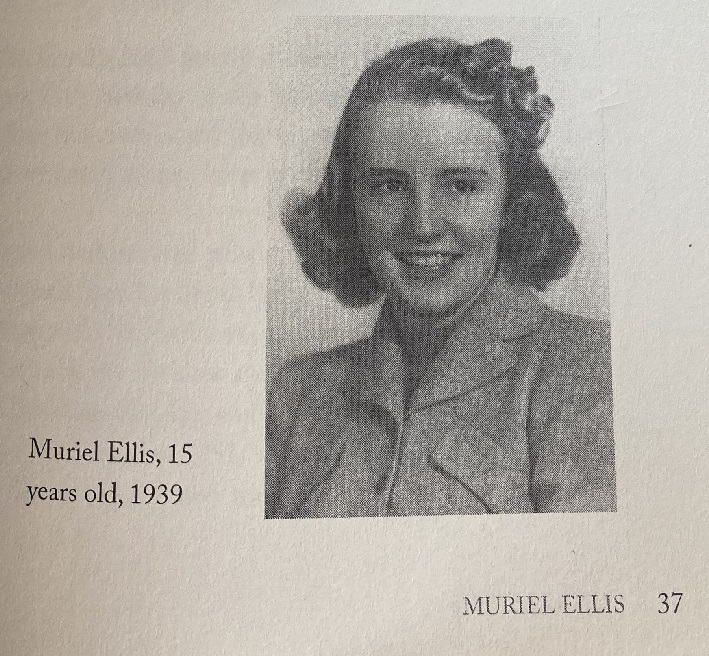
“What I wish I had known” by Muriel Ellis in “The Write Spot to Jumpstart Your Writing: Connections.”