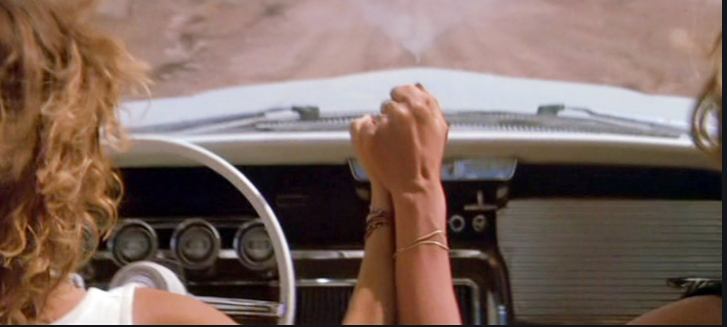
Write about a turning point.
Or, a point of no return.
#justwrite #iamawriter #iamwriting
Write about a turning point.
Or, a point of no return.
#justwrite #iamawriter #iamwriting
The idea of using prompts is to inspire writing in a freeform style.
There are no rules, except to write without too much thinking.
Let your thoughts flow and capture them in writing.
Give your inner critic time off during this writing.
The challenge of freewriting is getting Self out of the way.
With freewrites, you are writing for yourself, not for an audience.
Give yourself permission to be open to whatever comes up while you are writing.
Writing Prompt: How do you handle adversity?
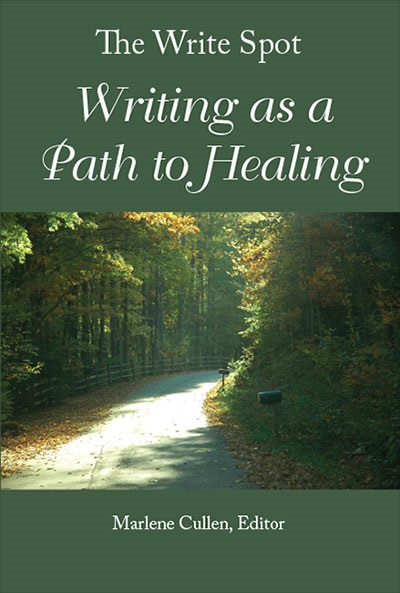
There are several prompts, ideas about freewrites, and resources about how to write without adding trauma in “The Write Spot: Writing as a Path to Healing,” available from your local bookseller and as both print books and ebooks on Amazon.

“Cleaver” publishes craft essays on writerly topics. If you are a poet, fiction writer, essayist, or graphic narrative artist and would like to propose a craft essay, contact the editors with a query before submitting.
Guidelines: offer a reaction to or exploration of one’s personal experience as a prose writer/artist/creative; pieces that delve into something you’ve either found compelling, learned along the way, figured out, gotten obsessed with, found surprising, and want to share with other writers.
Quirky is okay.
Nothing too scholarly/academic/ teacher-y.
Aim for between 800 and 2000 words.
“Riding West Towards The Woods” by Deb Fenwick is a sample of the type of writing “Cleaver” is looking for.
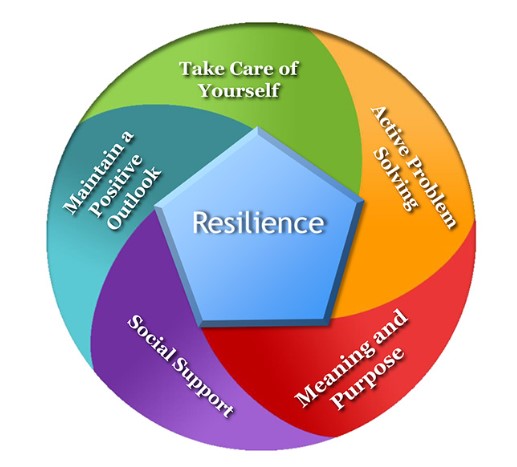
“Resilience is the ability to scrape yourself off the floor relatively quickly after a giant trauma, medium-size setback or everyday disappointment.
Resilience is a set of coping mechanisms we develop over time. This quality is determined by how we take care of ourselves, the people we surround ourselves with and what we do to find meaning and purpose in our lives.”
— “How to Bounce Back From Anything,” by Elaine Chin, M.D. and William Howatt, PH.D, Good Housekeeping magazine, July 2018
How do you define resiliency?
What are your coping mechanisms?
What do you do to take care of yourself?
Is there someone in your life who hinders your ability to be resilient?
Write about the times you have been resilient.
#justwrite #iamwriting #iamawriter
Memorable writing that sparks imagination. Lean in. Hear the writer’s voice on the page.
You Think You Know Me
By Karen Handyside Ely
You think you know me, but you don’t know…
that I am struggling with a powerful bout of depression. I’ve battled it before. I’ve been in deeper, darker, more dangerous pits. This current episode has rolled over me slowly. Not a storm, but more a dense, thick, cloud cover, wrapping me in the heavy humidity of numbness and ennui, pinning me to the ground with a listless, languid, low-grade despair that makes me want to sleep all day.
I’m suffocating one breath at a time… in slow motion. This time around, my depression isn’t a raging sea, which has been my usual experience, but an ebbing tide that creeps back over the sand as the fog rolls in to smother the beach.
I could cry, just writing this, but I don’t. I continue to function, smile, interact. And I try to fight back. I fight with prescribed medication. I fight by restricting alcohol and chocolate – alcohol because it provides temporary, false relief that will ultimately kill me, and chocolate because of my natural proclivity to drown myself in calories, which will also kill me.
I work with a counselor. It doesn’t feel like it helps, but I know it will. I know I WILL get better. I always have before. My hope has not completely flickered out. I think this is partially a delayed reaction to the covid years, a sort of PTSD, now that the crisis is over (as “over” as it can ever be.) I lived in fight mode for 2 ½ years and managed to keep my head above water, legs propelling me forward. Now my strength and discipline are gone. I’m left with a sorrowful emptiness that I cannot shake.
For now, I am trying to be gentle with myself. I’m clearing away the unrequired obligations in my life that do not bring me joy. I am de-cluttering the way I live, ala Marie Kondo. I am reintroducing the activities that used to motivate me. I am withholding self-judgement, the hardest exercise of all, and learning to love who I am, not what I do or how I look.
I don’t think that I am alone. Yes, I have a medical diagnosis of depression, but I can sense the sad fatigue that clings to people around me wherever I go… in grocery lines, or shopping at TJMaxx, in airports and zoom meetings. I think so many are coping, on some level, with this feeling. It hides behind frantic busyness and red-hot anger. It lurks beneath everyday smiles and societal pleasantries. Most of us aren’t incapacitated by it, but the weight of what we carry has become a constant. You think you know me, but you don’t. Right now, I grapple with knowing myself.
Karen Handyside Ely was born and raised in Petaluma, California. She delights in difficult crossword puzzles, the Santa Rosa Symphony, and traveling with her husband, James.
Karen has been published in several Write Spot Books: The Write Spot to Jumpstart Your Writing: Discoveries, The Write Spot: Reflections, The Write Spot: Possibilities, The Write Spot: Writing as a Path to Healing, and The Write Spot: Musings and Ravings From a Pandemic Year. All available at Amazon and your local bookseller.
Writing prompts inspired by the June 5, 2022 interview with Kevin Powell and Dr. Adrian Arancibia.
Prompt #1: You think you know me, but you don’t know . . .
Prompt #2: Same as first prompt, but this time write in your parent’s voice, or from your parent’s perspective,
Or: Write from the point of view of Someone Important in your life.
Write as if your mother or father or Important Person were writing, “You think you know me, but what you don’t know . . .
#justwrite #iamwriting #iamawriter
#justwrite #amwriting #iamawriter
Guest Blogger Arletta Dawdy’s reflections on Susan Bono’s talk, “Illuminating The Essay.”
Remember the bogs of Ireland or those on the moors of England in old romance novels? The one where the heroine comes to the lonesome manor to be a governess, nurse, or maid only to fall for the moody master, his neighbor or maybe the groundsman. She’s lost in the mire of boggish emotions until HE comes to her rescue.
Well, I don’t see HIM rescuing this writer from her blogger’s mind-bog. If you noticed, I’ve been absent for, low, these many months and then I thought there might be hope showing on my horizon.
Marlene Cullen, producer of Writers Forum, invited local heroine/publisher//teacher Susan Bono to inspire an October gathering by “Illuminating The Essay.”
Susan has published personal narratives in her famed journal, Tiny Lights, for nearly twenty years. She is an expert in the form and offers references, stimulation and inspiration freely.
Susan Bono sees five keys to writing the personal essay:
Character: the self
Problem: give yourself a problem
Struggle: Problem creates conflict
Epiphany: after struggle, a flood of new understanding
Resolution: what you do differently as a result.
Susan calls on the work of many experts including: Phillip Lopate’s The Art of the Personal Essay; Adair Lara’s Naked, Drunk and Writing; and Louise Desalvo’s Writing as a Way of Healing.
Many of her references specialize in memoir which Susan finds to be good resources.
As so many good instructors do, Susan had exercises for us to try out. I found them to be great fun and marveled at the variety when students chose to share what they wrote. These are starter ideas which serve to establish the intent or direction of the essay/narrative.
Here they are with a couple of my answers shared:
My answer: John Steinbeck, and he did it twice: inspiring me to go into social work to change the world and to write.
Paraphrasing Susan Bono’s rules:
Reader should know within three paragraphs what the essay is about.
Check proportion of scene with real action against summary which moves reader thru time rapidly.
Check the frame: sense of being triggered by past event and ends by bringing back to current event.
Use of dialogue brings others into the event.
Use restraint when writing difficult themes as with violence, abuse . . . need not be gory to make point.
End or resolve with action or gesture as opposed to flowery words.
Your Turn
Challenge yourself: Try answering Susan’s six openers.
Posted on Arletta Dawdy’s Blog, October 27. 3013.
July 7, 2022: Susan Bono will talk about Ready, Set, Pivot!
Personal narratives are documents of change. They always contain a “before” and “after.” This is really useful to remember when building our stories. In our time together, we’ll explore this concept and experiment with some structures that create natural pivots or shift points.
Writers Forum sponsors this free event on Zoom. You need to register to attend.
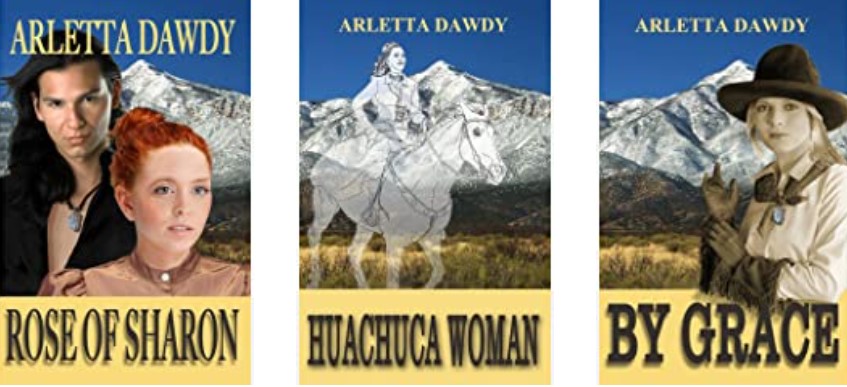
Note From Marlene: Arletta Dawdy has written a wonderful series of historical fiction: entertaining, engaging, and “escapism” reading.

Write about what fascinates you, or what you are obsessed with.
#justwrite #amwriting #iamawriter #freewrites
“Whether you have a fractured relationship with your dad or family, or you have untold stories of your own, now is the time to bring them out of the darkness and let them shine and be a beacon to inspire and move others.
You never know who you can possibly help until you share pieces of your own heart through writing or by showing up, fully present, with a heart full of love.” — Shawn Langwell
“Father’s Day has ALWAYS been hard for me BUT I decided to write a short poem forgiving my father, finally, fully. Thank you to The Good Men Project for publishing the poem. It is called, simply, MY FATHER.” — Kevin Powell
Note from Marlene: Thank you, Shawn and Kevin, for giving me the courage to post My Father story.
“Meeting My Father,” by Marlene Cullen.
When I was seven years old, I was embarrassed that I knew the meaning of the word sober.
I heard “Is Bill sober?” more times than I care to count. That’s all my mother, grandparents, aunts, and uncles asked about my father.
The only holiday I remember celebrating with him was a rainy Christmas Eve. My mother couldn’t talk him out of driving to her mother’s house for our annual party. I was petrified in the back seat as he wove in and out of traffic.
The only time I missed having a father was an occasional Father’s Day, and that was more of an awkward feeling rather than a sense of missing out on something.
I never called him “Dad.”
My father was a merchant seaman and would be gone months at a time. He brought home exotic toys from far away countries, intricately carved hope chests from Japan, clothes for me and my sisters, always too small.
When he was home, it meant he wasn’t working. When he wasn’t working, he was at a neighborhood bar. My mother would drive from bar to bar looking for him. My younger sisters and I waited in the backseat of our 1950 Chevy while Mom coaxed him to come home. I tried to find ways to entertain my sisters while we baked in the stifling heat.
We moved in with my father’s parents when I was nine. My father lived with us off and on, mostly off. He drifted away as alcoholism took over his life.
My parents divorced when I was twelve. And so, we began the torturous Sunday afternoon visitations. My mother would conveniently be gone when he arrived at our flat. He would be conveniently drunk. We took a taxi to a restaurant on Market St. My father slurred his words when he ordered. I cringed in embarrassment.
When I was sixteen, I rode the bus down Mission Street to my new job. I looked out the window and saw my father slumped in a store entryway. That’s when I began to think of him as a Third Street Bum and good for nothing. As the bus lurched forward, I felt shame. My stomach tightened. My throat constricted. Tears blurred my vision. I stared straight ahead. There was nothing else for me to do.
One year later, I was getting ready for school when the phone rang at 7 am. I answered quickly, not wanting the ringing to wake up my grandmother, who had returned late the night before from visiting my father in the hospital. I was angry at whoever was calling so early. The voice on the other end of the line identified himself as “Bill’s doctor,” and then, “Bill died this morning.” Just like that. I was shocked that he gave no consideration who he was giving this news to. I must have gone into my grandmother’s bedroom and told her there was a phone call for her. I don’t remember what I said to my mother. I finished getting ready for school, like it was any other day.
My father died on March 22, 1966, at the age of thirty-seven, emaciated from cirrhosis of the liver.
As a young mother, watching my husband with our daughter, I realized I was bitter and angry with being deprived of a father. I began to think of him as just the sperm donor.
[Then, a miracle happened. I met a woman who knew my father as a teen-ager.]
Georgia and I talked for two hours. She told me about their escapades, the pranks they played, and the normal teenage stuff they did. Georgia said my father would take the bus to meet her after work and escort her home, to keep her company and make sure she made it home safely. She said he was a gentle and quiet kid.
After our conversation, I realized my father was once a happy-go-lucky kid. He went to dinner dances at the Claremont Hotel in Berkeley in the 1940s and he had many friends. He was more than a slumped figure in a doorway.
Seeing my father through the lens of his teenage friend is one of the best gifts I have received. I felt I met my father as a real person the day I talked with Georgia.
I will be forever thankful to Georgia for introducing my father to me as a caring young man and a valued friend.
My father wasn’t just a Third Street bum and he was more than merely a sperm donor. William (Bill) Scott was a loving son, a loyal friend, and a Marine Corps veteran. He was a husband and a father, struggling to navigate the challenges of life.
He is a part of me, imperfections as well as the good parts. He is a part of my granddaughter who shares his hazel-colored eyes.
Bill Scott was Somebody. He was my father. And if he had the chance, he might have been a wonderful grandfather. I like to think so.
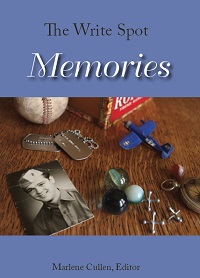
Excerpt from “Meeting My Father,” in the anthology “The Write Spot: Memories,” available from your local bookseller and as both a print and ebook through Amazon.
Note: That’s my father, William (Bill) Scott, on the cover of “The Write Spot: Memories.”