Category: Guest Bloggers

  • Brad Yates Inspires Action

    Note from Marlene: I have been helped and inspired by Brad Yates and his Tapping Videos. I hope you enjoy reading about his New Year’s Eve experience in Paris.

    Guest Blogger Brad Yates: Walking with a blind man

    From time to time we hear stories – or see videos – of differently-abled people doing remarkable things.  We may find these stories to be inspiring… and sometimes we might even find them challenging, as we confront how we may have allowed lesser hurdles than theirs to limit our lives.  We can allow ourselves to be shamed by these, or let them serve as wake-up calls to stop making excuses.  Naturally, I’d guide folks towards the second option.

    Most of the time, these stories come into our awareness in a fleeting way, and not a personal one.  More often, it’s someone we don’t know and will likely never meet, making it less likely to stick.

    Our 2017 ended with an up-close-and-personal encounter. 🙂

    My family and I spent the holidays in Europe, where I did workshops in London, Dublin, Prague and Paris.  It was a fantastic trip, filled with wonderful experiences, many of which involved meeting fantastic people.  This is one of them…

    We had chosen to be in Paris on New Year’s Eve, and decided to check out the Main Attraction – the celebration on the Champs-Élysées. We had taken a boat tour along the Seine, and returned to the Eiffel Tower just after sunset, arriving just in time for the spectacular hourly light show.  From there we walked up to the Arc de Triomphe.  It was still early, and people were just starting to gather. The roads were starting to close, and there were heavily armed and armored police – which was both intimidating and reassuring. The Arc was lit up with test patterns for the light show that would take place just before midnight.

    It looked like it was going to be quite an event … but it also looked like it would be very crowded … and it was raining … and we all agreed that we’d rather head home and watch it on TV while sipping champagne, which we wouldn’t be able to do there.

    So we headed down into the nearest metro station, which was packed. We noticed a woman holding the arm of a blind gentleman in his late-twenties, who made his way past us up to the glass doors at the edge of the platform as his guide disappeared, apparently having only been there to help him get to this point.

    My French isn’t great, but I could tell he was asking for some assistance. I don’t recall which of us explained that we didn’t understand, but he quickly responded in English. (We would later discover that he spoke five or six languages fluently!).  He explained that the glass doors in this station made him nervous, and was hoping for some assistance when the train arrived and they opened. The crowd in the station would make lots of folks nervous, even if they could see everything going on.

    It wasn’t long before a train came … and passed us by. Then another… and another. Then there was an announcement on the loudspeaker, and people started leaving the platform. Our new friend explained that this line was being closed at this station. He asked where we were going, and when we told him, he suggested a different line that also stopped at this station, and where to take that to get to another line to get to our desired destination. Even though he had never seen a metro map, he knew the different lines, where they stopped and where they connected. The alternate line he suggested would also take him in the right direction, so he latched onto Christy’s arm and suggested we head to that platform.

    Not long after we got there, there was another announcement, and people again started leaving. The whole station was being shut down. Our new friend said there was another station further down the road – at the Place de la Concorde, where we could find a train we needed. Although he was on my wife’s arm, he was the guide to the clueless tourists. A very different take on “the blind leading the blind.”

    As we walked along the Champs-Élysées, we learned that our new friend was named Hossein, and was from Iran. He was very friendly and charming and asked a little about each of us. When we said we were from California, he mentioned he hoped to go there someday and we’d find him swimming in the rivers. He said he loved to swim – “faster than a fish” – and had competed in tournaments.

    I was impressed. Far from feeling limited by his lack of sight, here was a young man who had studied engineering, was traveling the world, learning languages, getting to know people, doing things that could intimidate lots of sighted people (like going into crowded metro stations), figuring out complicated metro map… and apparently really living a full life.

    He also wasn’t afraid to ask for help – something so many of us struggle with. Obviously, it was something of a necessity, which may be why he had learned to do it so matter-of-factly and pleasantly.

    Eventually we arrived at the next station, and he insisted we leave him at a certain spot, as we would be going on different trains. He warmly shook hands with my son and me, and kissed my wife and daughter’s hands. Then began gently saying, “Excusez-moi…,” looking for the next person who could help navigate the way to the platform. We felt comfortable leaving when a Metro staff member came to assist him.

    It was a really lovely way to put 2017 to bed, and we were all touched by the experience.  It is my intention that his example of not making excuses will continue to inspire me in this New Year.  I hope it might do the same for you as well. You deserve a great life.

    Note from Marlene: Are you waiting to write? What’s holding you back? If you can envision it, you can do it, especially with inspiration from Tapping with Brad Yates.

    Brad Yates is known internationally for his creative and often humorous use of Emotional Freedom Techniques (EFT). Brad is the author of the best-selling children’s book “The Wizard’s Wish,” the co-author of the best-seller “Freedom at Your Fingertips,” and a featured expert in the film “The Tapping Solution,” He has also been a presenter at a number of events, including Jack Canfield’s Breakthrough to Success, has done teleseminars with “The Secret” stars Bob Doyle and Dr. Joe Vitale, and has been heard internationally on a number of internet radio talk shows.  Brad also has well over 700 videos on YouTube that have been viewed over 19 million times, and is a contributing expert on the Huffington Post.

     

  • Alison Luterman and Patience


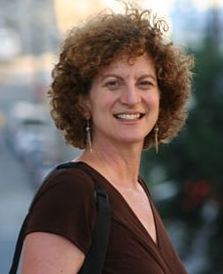
    Guest Blogger Alison Luterman writes:

    January 2018

    Happy New Year! A few weeks ago I read something on-line about the concept of a “word for the year” and being a sucker for all things woo, decided to try it. Someone had used the word “Delight” and her career exploded into a lovely confetti burst of rainbows and candy canes.

    Sounds good, I thought. I’ll take “Delight” too. But wait! It turns out that you can’t just choose a word willy-nilly. It’s more like the word chooses you. The next day as I sat scribbling morning pages it came to me in a sickening flash of insight: my word is Patience; unsexy, old-fashioned Patience. Not the ever-popular Abundance or Adventure or Sex Goddess, (even those are all very good words and you’re welcome to them). But as soon as I saw my pen writing “Patience,” I knew: It’s what I need most.

    Like most writers I tend to live in my head where conception occurs simultaneously with the fantasy of fulfillment. Meaning, I can get a Big Idea for a new play or musical or book of poems and at the same time imagine the finished product, and the opening night party. Even knowing that somewhere between the germ of an idea and whenever a production actually sees the light of day lies an ocean of work, much dumb luck, and the budgeting of time and work and money to live on while doing the work—and I know all this—still, each time I get swept off my feet by the next entrancing vision.

    So the only way to move forward is step by step. Much as I would have liked to instantaneously undo the last election, and much as I’d like to wave a magic wand and have all my creative babies realized and successful, the reality remains a lot of work, some of it tedious, much of it invisible. Hence, Patience.

    And then there’s teaching, which is my spiritual path, but like all spiritual paths, in addition to being rewarding and fulfilling, also lights up my growing edges, as we charitably call them in California, with painful clarity.

    Here’s what I learned in teaching and coaching this past year: I’m great at seeing what’s missing, which is sometimes a useful superpower. With one client, I read her wonderful memoir-in-progress and said, “I love all these vivid tales from your youth, but I’m not getting the turning-point. When and how did you turn your life around?”


    “Oh, I wasn’t sure if I should include that,” she said, before telling me the story of an important relationship whose demise signaled her awakening. We both saw immediately that this was where the plot pivoted and she went away inspired, knowing what to write next. This client and I work well together; she’s a lot like me, driven and fierce in her process.

    But there are other students whose growth depends on gentle spacious encouragement. What would it be like to practice radical patience, not only in politics and writing, but also with beginning students, and in my personal life, with my husband and friends and family, and most of all with myself?

    I think it’s an Indonesian proverb that says, “Go slowly, we’re in a hurry.” Patience doesn’t always come easily to me. But seeing as how the world is at stake I’m willing to take it on.

    Alison Luterman is a poet, essayist and playwright. Her books include the poetry collections Desire Zoo (Tia Chucha Press), The Largest Possible Life (Cleveland State University Press) and See How We Almost Fly (Pearl Editions) and a collection of essays, Feral City (SheBooks). Luterman’s plays include Saying Kaddish With My Sister, Hot Water, Glitter and Spew, Oasis, and The Recruiter and the musical, The Chain.

    Her writings have been published in The Sun, The New York Times, The Boston Phoenix, Rattle, The Brooklyn Review, Oberon, Tattoo Highway, Ping Pong, Kalliope, Poetry East, Poet Lore, Poetry 180, Slipstream, and other journals and anthologies.

    Alison has taught at The Writing Salon in Berkeley, the Esalen Institute, and the Omega Institute, as well as at high schools, juvenile halls, and poetry festivals.

  • Corral your best time of day for maximum creativity

    Rebecca Lawton posted “Ring-fence” on her blog in August 2013.  If you are struggling with your writing, or finding a routine that works for you, this might help.

    Ring-fence

    What is this malaise? This lack of focus and ennui combined with a skimming restlessness? My mind won’t settle on anything for more than an instant. The piles of paper around me are growing, escaping my recycle bin. I can’t seem to force myself to get to work on them or anything else. Those short stories I was revising religiously every morning? Not today.

    Today my mind is a cloud pushed by the wind.

    It could have been a regular workday with a schedule I knew from experience to be effective. Usually I rise between 5:30 and 6:30 AM, head for the meditation chair, sit for 20 minutes, then concoct morning chai for the household. Next I’m off to my writing desk. I work for two hours on my latest manuscript (these days, it’s that collection of short stories), after which I stop for breakfast. Later I’m on to returning phone calls, making progress on consulting work, emailing friends and clients, or blogging. Somewhere in the day will be a swim, walk, or bike ride. Then I’ll go back to writing, especially if I’m on deadline.

    Today I broke that pattern. I thought taking a shortcut past the meditation and morning writing and getting directly to business and accounts meant I was being responsible. I could return to the short stories in the evening, I told myself. I’d be efficient and effective, putting important, earning work first.

    How wrong I was. Without that morning ritual, as well as the critical, concentrated creative time, I was like a ship with no compass. The usual landmarks I look to for guidance weren’t there. Not only did I not accomplish my non-writing tasks more efficiently or quickly, I found them curiously evading my prized problem-solving ability.  In short I didn’t get anything done before breakfast and very little after.

    I had missed my most creative time, when my circadian rhythms allow me to sink most deeply into the world of make-believe. By not stopping in at the usual checkpoints, I scuttled the well-honed craft of my general working life.

    Mark McGinnis, poet and business coach, puts it this way: “Ring-fence your most creative time.” He advises that we pick our rich, creative time of day and separate it from the rest for our lives.

    Apart from the lack of external interruptions, I write first thing in the morning because (once I’m up) that’s the time of day when I’m most focused and alert. I experience a greater mental clarity in the first couple of hours of the working day than any other time. As a writer, that quality of attention is my most valuable asset, so I’ve learned to guard it carefully. If I start plowing into emails, reading blog feeds, or doing mundane tasks such as accounts, then I’m squandering my most precious resource.

    Mark admits that, for him, finding extra hours in the morning means rising earlier than he would if writing weren’t his heart’s desire. It’s the same for me. Without those morning hours I carve out (which might be afternoon hours for you, or after dinner, whatever you can “ring-fence”) I wouldn’t have a writing practice, which is the core of my work. I wouldn’t feel authentic passing myself off as a writing instructor or as speaker at a community writer’s night. I wouldn’t rest easy selling copies of my novel or proposing a new book to my agent or filling in a grant application to support a new project. The creative practice makes up the core of my writing identity. From that ring-fenced time also comes, apparently, my ability to do other work.

    It’s true there are other aspects to my life and me, but for that part wearing the author hat, the ring-fence is as mighty as the pen. Mightier.

    Rebecca Lawton’s books and articles are available through her website, www.beccalawton.com

    Note from Marlene: Reading Water is one of my all-time favorite books for writing prompts. I highly recommend it.

  • Revision: When the really big ideas show up.

    Today’s Guest Blogger Rachael Herron has this to say about revision.

    I’m back in the middle of revision of a book, and I’m finally swimming in the water I love.

    What I adore about revision is this: I know the world. I invented it, after all! When I open the document, I’m right in the middle of something I understand. It’s much easier, for me, to drop in for hours and rest on the page. It’s also easier to come out of, to shake off.

    First drafts remain torture for me. So many of you love the first drafts, and I can admit that sometimes, the writing of new words is glorious. You surprise yourself with a turn of phrase that you’re pretty sure is genius and has probably never been said before. The plot bends and a tree you wrote about comes to life and points a branched finger in a direction you never saw coming. Inspiration flows, hot and heavy.

    But maybe I’m just more of a down-to-earth gal. I love falling in love, but I love remaining in love more. Give me a passionate kiss before you take the trash out—that’s happiness to me. I like the comfort of What I Know. I like to tuck my feet under the thighs of my manuscript as we cuddle on the couch. I love knowing my manuscript likes the lights on till sleep-time, even though I prefer to read in the dark.

    Revision is both comfortable and exciting, like a sturdy marriage. Oh, I love the word sturdy. It’s prosaic, but it’s so me. My legs are sturdy. My emotions are, too. I love my books to be sturdy enough to lean on.

    And lean on them, I do. I fall into them, really. Revisions are getting in the bed you made of out words and pulling up the covers. Then you roll around, making those words better, cleaner, more focused.

    Revision is when the REALLY big ideas show up. Then you have to move parts around, like those flat puzzle toys you slid pieces around on to make a picture, to make those new ideas fit. You might have to pry out some pieces and manufacture new ones. But then you click one piece left, and another one right, and suddenly, you’re looking at it. The whole picture. Your book.

    Ahhh. I’m reveling.

    Note from Marlene:  Yes! I also love revising. Moving parts around, like a puzzle = Exactly! And the euphoria when the pieces fit = Joy!

    Rachael Herron is the bestselling author of the novels The Ones Who Matter Most (named a 2016 Editor’s Pick by Library Journal), Splinters of Light and Pack Up the Moon (all from Penguin), the Darling Bay and the Cypress Hollow series, and the memoir, A Life in Stitches (Chronicle). She received her MFA in writing from Mills College, Oakland and she teaches writing in the extension programs at both UC Berkeley and Stanford. She’s proud to be a New Zealander as well as a US citizen, though her Kiwi accent only comes out when she’s very tired. She’s honored to be a member of the NaNoWriMo Writers Board. She is currently a Writer in Residence at Mills College.

  • Does your book concept have legs?

    Today’s guest blogger, Jerry Jenkins, has written a thorough article, “How to Write a Book: Everything You Need to Know in 20 Steps.”

    I love lists, so of course I was intrigued to find out more. And I love it when writers talk about passion.

    Listed below are a few of Jerry’s steps about writing a book, excerpted or paraphrased from his comprehensive list (link at the bottom of this post).

    • Where to start…
    • What each step entails…
    • How to overcome fear, procrastination, and writer’s block…
    • And how to keep from feeling overwhelmed.

    Establish your writing space.

    If you dedicate a room solely to your writing, you can write off a portion of your home mortgage, taxes, and insurance proportionate to that space. You can also write in restaurants and coffee shops.

     Assemble your writing tools.

    Try to imagine everything you’re going to need in addition to your desk or table, so you can equip yourself in advance and don’t have to keep interrupting your work to find things like:

    Stapler

    Paper clips

    Rulers

    Pencil holders

    Pencil sharpeners

    Note pads

    Printing paper

    Please click on the link below to see the rest of the list.

    Break the project into small pieces.

    Writing a book feels like a colossal project, because it is! But your manuscript will be made up of many small parts.

    An old adage says that the way to eat an elephant is one bite at a time.

    Try to get your mind off your book as a 400-or-so-page monstrosity.

    See your book for what it is: a manuscript made up of sentences, paragraphs, pages. Those pages will begin to add up, and though after a week you may have barely accumulated double digits, a few months down the road you’ll be into your second hundred pages.

    So keep it simple.

    Start by distilling your big book idea from a page or so to a single sentence—your premise. The more specific that one-sentence premise, the more it will keep you focused while you’re writing.

    Settle on your BIG idea.

    To be book-worthy, your idea has to be killer.

    You need to write something about which you’re passionate, something that gets you up in the morning, draws you to the keyboard, and keeps you there. It should excite not only you, but also anyone you tell about it.

    If you’ve tried and failed to finish your book before—maybe more than once—it could be that the basic premise was flawed. Maybe it was worth a blog post or an article but couldn’t carry an entire book.

    Think The Hunger GamesHarry Potter, or How to Win Friends and Influence People. The market is crowded, the competition fierce. There’s no more room for run-of-the-mill ideas. Your premise alone should make readers salivate.

    Go for the big concept book.

    How do you know you’ve got a winner? Does it have legs? In other words, does it stay in your mind, growing and developing every time you think of it?

    Run it past loved ones and others you trust.

    Does it raise eyebrows? Elicit Wows? Or does it result in awkward silences?

    The right concept simply works, and you’ll know it when you land on it. Most importantly, your idea must capture you in such a way that you’re compelled to write it. Otherwise you’ll lose interest halfway through and never finish.

    From Marlene:  Are you getting the idea that Jerry Jenkin’s article is a complete guide to writing a book?

    It’s worth a click: How to Write a Book: Everything You Need to Know in 20 Steps.


  • How to catch the ideas that flit by.

    Today’s Guest Blogger post is from one of my favorite authors, Rachael Herron.

    Rachael writes:

    A comment by David Sedaris on a podcast gave me an a-ha moment recently, and I wanted to share it with you.

    I’d always wondered how he got his essays so brilliantly specific—filled with the kind of particulars that put you right into the spot where he stands.

    From Me Talk Pretty One Day, “For the first twenty years of my life, I rocked myself to sleep. It was a harmless enough hobby, but eventually, I had to give it up. Throughout the next twenty-two years I lay still and discovered that after a few minutes I could drop off with no problem. Follow seven beers with a couple of scotches and a thimble of good marijuana, and it’s funny how sleep just sort of comes on its own. Often I never even made it to the bed. I’d squat down to pet the cat and wake up on the floor eight hours later, having lost a perfectly good excuse to change my clothes. I’m now told that this is not called “going to sleep” but rather “passing out,” a phrase that carries a distinct hint of judgment.”

    His humor comes from the details.

    But how did he remember those details? When you’re reading his work, you’re right there, exactly with him.

    I have a legendarily bad memory. This is why I blog and journal.

    But I’ve been stumped in the past as to how to catch the things that flit by, the words I want to remember, the colors of the sunset I’m in front of, the smell from the Korean barbecue on the corner.

    I’m not willing to drag out my big ole journal and plop down on the sidewalk to catch my ideas and put them into beautiful sentences. Therefore, I lose a lot of them. I want to live in the moment, not next to it.

    The tip David Sedaris gave me? He jots down snippets, and then later transcribes and expands them in his diary.

    I’ve often jotted snippets into a tiny Moleskine (because those can seriously go through the washer and come out with your words intact — ask me how I know). And I journal.

    But combining the two — grabbing the few words and expanding them later — this is a really powerful combination that’s netted me some great stuff recently.

    So I’ve taken to carrying a purse, even though I hate to do so. I find that tapping ideas into my phone doesn’t have the same feel as grabbing a notebook and pen and scribbling the words that lead to other ideas.

    Of course, I don’t stop the party. I don’t announce that I need quiet for my creative inspiration. My goal is that no one notices what I’m doing. It’s the bank robbery of journaling — get in and get out before anyone sees your face.

  • Trust your intuition for creative writing.

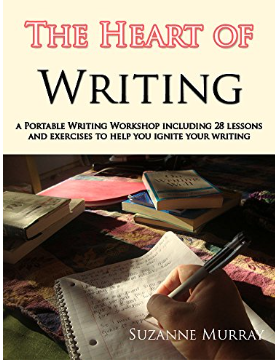
    Guest Blogger Suzanne Murray inspires our writing to flow from a dream-like state of consciousness and to trust our intuition.

    Suzanne writes:  How Do We Allow Creativity to Flow?

    When we get lost in a good book it’s because the writer got lost in letting the story come through as they wrote.

    I remember the first time when I got on a roll with my writing, where I knew I was writing something good. I stopped and looked around the room to see where it was coming from because I knew it wasn’t coming from my everyday self.

    Since then I have come to understand writing comes from a dream-like state of consciousness of allowing what wants to be written to unfold. It doesn’t involve thinking or trying to figure it out but rather feeling and sensing what wants to be born and following that golden thread.

    All creativity comes from this place of allowing something beyond our understanding to lead us. We can even create our lives from this place of expanded awareness. The trick is to let go of our need figure things out with our mind and our need try to control things to make things happen the way we think we want. Rather we let ourselves be surprised by what wants to unfold. We let go of the resistance we feel to letting go and letting our creativity and life flow.

    We focus more on our heart and intuitive knowing. We pay attention to the inspiration that comes from that place and take action from there. We relax into being and let go of the need to push to complete our to do list.

    We are more present in the moment, paying attention to the world around us.
    From this place we can pick up on the clues the universe or our creative self is giving us. Life becomes
    an adventure in allowing, an exploration of infinite possibilities. What if we think of our creativity and lives as a good book that we get lost in, where we can’t want to see happens next.

    About Suzanne Murray:

    EFT (Emotional Freedom Techniques)
    I’ve been working with EFT in new ways that allow us to laser in on the issue and shift it at the core. We often make significant shifts in a single session.

    CREATIVE LIFE COACHING

    Would you like to live from an expanded place of grace, ease and flow? Would you like to tap the wisdom and power of your heart and soul? We work with soul based ways to let go of limitation and gaining clarity of the next steps to living a more joyful, authentic life.

    CREATIVITY COACHING

    Do you want to experience the pleasure and joy that comes from adding satisfaction and meaning and a sense of well being to your life through creative expression. I will offer practical, emotional and soulful strategies to help you fully uncover your creative gifts and support yourself in expressing them. I will provide encouragement and support in understanding of the creative process and its stages and exercises for accessing the wisdom of your imagination. I’ll help you set realistic goals and support you in achieving them. We will work with tools for coaching yourself through the issues that get in the way of your creativity including career concerns, blocks, limiting beliefs, relationship issues and the existential and spiritual questions that can arise from wanting and needing to create.

    The Heart of Writing eBook
    Jumpstart the Process, Find Your Voice, Calm the Inner Critic and Tap the Creative Flow

    I have been working an exercise a day through your The Heart of Writing eBook. I love it! It’s like being in class again. – Tonya Osinkosky

    Now available on Amazon Kindle!

    and available is a pdf download from my website (includes a one hour mp3 interview about writing process)


  • So, what is a story?

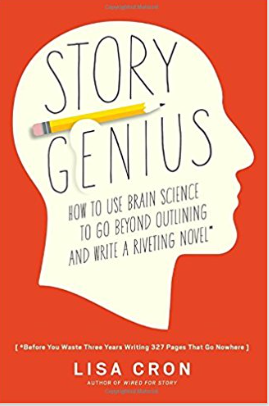
    Today’s post is by Lisa Cron, author of Story Genius and Wired for Story.

    We think in story. It’s hardwired in our brain. It’s how we make strategic sense of the otherwise overwhelming world around us. Simply put, the brain constantly seeks meaning from all the input thrown at it, yanks out what’s important for our survival on a need-to-know basis, and tells us a story about it, based on what it knows of our past experience with it, how we feel about it, and how it might affect us. Rather than recording everything on a first-come, first-served basis, our brain casts us as “the protagonist” and then edits our experience with cinema-like precision, creating logical interrelations, mapping connections between memories, ideas, and events for future reference.

    Story is the language of experience, whether it’s ours, someone else’s, or that of fictional characters. Other people’s stories are as important as the stories we tell ourselves. Because if all we ever had to go on was our own experience, we wouldn’t make it out of onesies.

    So, What Is a Story?

    Contrary to what many people think, a story is not just something that happens. If that were true, we could all cancel the cable, lug our Barcaloungers onto the front lawn, and be utterly entertained, 24/7, just watching the world go by. It would be idyllic for about ten minutes. Then we’d be climbing the walls, if only there were walls on the front lawn.

    A story isn’t simply something that happens to someone, either. If it were, we’d be utterly enthralled reading a stranger’s earnestly rendered, heartfelt journal chronicling every trip she took to the grocery store, ever—and we’re not.

    A story isn’t even something dramatic that happens to someone. Would you stay up all night reading about how bloodthirsty Gladiator A chased cutthroat Gladiator B around a dusty old arena for two hundred pages? I’m thinking no

    A story is . . .

    A story is how what happens affects someone who is trying to achieve what turns out to be a difficult goal, and how he or she changes as a result. Breaking it down in the soothingly familiar parlance of the writing world, this translates to

    “What happens” is the plot.

    “Someone” is the protagonist.

    The “goal” is what’s known as the story question.

    And “how he or she changes” is what the story itself is actually about.

    As counterintuitive as it may sound, a story is not about the plot or even what happens in it. Stories are about how we, rather than the world around us, change. They grab us only when they allow us to experience how it would feel to navigate the plot. Thus story. . .  is an internal journey, not an external one.

    Articles by Lisa Cron:

    “Ten writing insights from brain science guru, Lisa Cron.”

    2 Ways Your Brain is Wired to Undermine Your Story – And What To Do About It


  • Go With The Flow

    What do you call it when your creativity just seems to flow?

    Alison Luterman had an epiphany:

    I was singing in a little pop-up chorus this past month. It was a tricky classical piece, and the other women were all looking intently at their sheet music. I don’t really read music, so I ignored the paper and gazed at our teacher, trying to meld my brain with hers. Okay, I know this is going to sound woo-woo, but that night in chorus, watching the teacher’s hands on the keyboard, hearing her sing the parts, my body understood the music on a level my mind couldn’t.

    In Interplay we call this “ecstatic following” and we often do it as a group in dance. I remember being introduced to the concept and having an immediate suspicious reaction to it: “Ecstatic following– you mean you surrender your critical thinking? That’s how we end up becoming good Germans and supporting Fascism!” I’m very attached to my critical brain that helps me do crossword puzzles, solve murder mysteries, and participate in spirited debates.

    But when I go to sing or to dance or play theater improv games, if I worry too much about what I’m doing, or try to figure it out ahead of time with that same busy brain, I freeze up. I’ve seen some of my students try to scheme and strategize their writing and in the process block their own flow. The writing becomes stiff and wooden, and it feels like a burdensome task rather than an exploration.

    On the other hand, it’s good to know some technique. Thanks to an extremely patient musician husband, I can now find middle C on the keyboard and navigate around from there. I know what a scale is. I know the difference between a third and a fourth and a fifth, and on a very good day I can sing them. And all of that is helpful.

    So it’s not like Intuition Good, Technique Bad. It’s more like Left Foot and Right Foot, and then Left Foot and then Right Foot again. We need them both.

    In many ways I’m a left-brained nerd who loves crossword puzzles, dramatic structure and logical arguments. But that evening in chorus I remembered that my intuition is a resource that I can call on when I need it. I actually do this all the time with poetry, where the leaping and magic that the unconscious supplies are an essential part of the magic. I just didn’t realize that I could also do it with music which I think of as “hard” and something I’m not good at.

    We all have this ability to let the energy of doing the thing we love lead us, and that, combined with a deep abiding commitment to love and clarity and truth, can create great work. I just don’t know how to put Intuition on a syllabus or a lesson plan along with handling dialogue or story structure, or metaphors and similes and figurative language. But it is part of the package.


  • Writing Success Revealed by Thonie Hevron

     Image result for thonie hevron

    Guest Blogger Thonie Hevron’s interview reveals her writing successes.

    What is the most important thing that you have learned in your writing experience?

    Keep working.

    What would you say is your most interesting writing quirk? I used to have to light a specific scented candle but I’ve outgrown that. I had to write to classical music, but I find it distracting now. I won’t drink wine while I am working or anything but water or coffee. Pretty boring, I’d say. Sometimes, those quirks become excuses for not putting my butt in the chair. No quirks, no excuses.

    Tell us your insights on self-publish or use a publisher?

    I’ve done both and each has plusses and minuses. Self-publishing has more author control. I recall after my first book, By Force or Fear, came out, a reader said he found very few editorial mistakes. That was one of my goals. Editing is one of the most exacting, tedious jobs in authorship. Then, I got a small press publisher (who eventually published my first book) for my second thriller, Intent to Hold. After Intent was published, a friend called me to tell me he wanted to give the book five stars on Amazon reviews but couldn’t because there were so many editorial mistakes. There was a whole printing of books that had most of the Mexican words underlined (the correct formatting to indicate italics). Yikes! I’d been given the galleys to check but that slipped by both me and the publisher. I had to destroy a whole $hipment.

    Any insights eBooks vs. print books and alternative vs. conventional publishing?

    For alternative versus conventional publishing: it depends on your genre, your book, your audience, and many other things. I write traditional police procedurals/crime thrillers so an alternative publisher probably wouldn’t suit me. But other authors are well served by this medium. Bottom line is, you, as an author, have to educate yourself on the business.

    Do you have any secret tips for writers on getting a book published?

    First, there is no secret. Just write and produce a marketable product. Second, get the word out: enter contests, query literary agents and publishers until you find what you need. Thirdly, but not least, market yourself and your work. Public relations is one of the most daunting aspects of today’s publishing world. But if an agent or publisher looks at your work compared to another author and you have a solid, thriving platform, chances are good they’ll look harder at you. After all, they only make money if your books sell. If you’re engaged in selling them, too, and the other author isn’t, you are the better bet.

    How would you suggest acquiring an agent?

    1. Query, query, query.
    2. Go to writers conferences (volunteering is a great way to get in cheap sometimes); join a writers club (I belong to the Redwood Branch of the California Writers’ Club, an incredibly active club that has helped me learn to set goals, organize, write better, market and so much more).
    3. Go to club workshops, pitch sessions, and volunteer to help at events or the leadership level.
    4. I belong to Public Safety Writers Club, Sisters in Crime and International Thriller Writers. All offer scoops on agents currently looking for new projects.
    5. Sometimes the agents attend the club conferences looking for new clients.
    6. Subscribe to blog newsletters like Funds for Writers: mystery writer C. Hope Clark offers a free version with agent info. I check that every week.
    7. Find a book in your genre that you like, find the author’s agent, research and pitch/query him or her.
    8. Subscribe to QueryTracker or one of the many online (free!) programs to put you in touch with agents and/or publishers.
    9. Check out this excellent post to Nancy Cohen’s site for further resources: Getting an Agent 

    Do you have any suggestions for new writers?

    Write: put your butt in the chair and write, even if you toss it tomorrow, there may be something that leads to something else. Write: if it takes a schedule carved in stone, getting up at 5 A.M., or finding a place outside the home. Write!

    Develop a thick skin: know that when you ask your mother about your newest work, she is going to tell you it’s a masterpiece. Not so with the rest of the world. I joined my current critique group ten years ago and have learned so much; become a better writer because of their criticisms. I wouldn’t trade any of them.

    Speaking of critique groups: Join one! Find a group of people with similar goals (not necessarily similar genres) to cheer you on, to point out better ways to say it, to give you ideas when you’re stuck, challenge you to dig deeper, but one of the most cogent arguments for a critique group: to produce ten pages of work every meeting.

    Join a writer’s club: even if you have to do it from a distance (online). Nothing beats glad-handing with other reclusive writers (you want me to meet other people???). These days authors are so much more than writers. They’re speakers, experts, bloggers, marketers, and so on. Like it or not, the Hemingwayian prototype of the writer as a hard-drinking ascetic is history. Today, writers network.

    What was the most surprising thing you learned with your creative process with your books?

    That I could do it. I never doubted that I had the skill to write, oddly enough. My uncertainties lay in setting and achieving a goal. Typing “The End” on the manuscript. When I finally did, I had to polish it heavily.

    I had to learn new skills such as social media, blogging and public speaking (what??? Not me, the girl who couldn’t get up in front of a crowd to be her best friend’s bridesmaid!). Not to mention formatting, even if I’m traditionally published, the editor requires the text to be just so.

    How many books have you written?

    Four: By Force or Fear, Intent to Hold both on Amazon. With Malice Aforethought to be published sometime later in 2017 and a fourth book, working title: Walls of Jericho. That one is in edit.

    Do you have any tips to help others become a better writer?

    Stay current with what my genre is producing; they evolve daily. See what is being published and what is selling. I look at the monthly reports from International Thriller Writers and Sisters in Crime. They give comprehensive info on what’s out there.

    I keep a stock of writing craft books on hand so when I get stuck at a denouement (for instance), I can research Stephen King, David Corbett, Nancy Kress, Jordan Rosenfeld and more.

    My quick go-to is my critique group. They challenge me.

     What makes your book stand out from the crowd?

    Because my topics are so real, they tend to be dark. But I have the cop-survival mechanism of humor to defuse the tension. I think the blend is unique.

    I also love to make the setting a character. Whether it is Sonoma County or Puerto Vallarta, I like to take readers there: how does it feel (humid or damp)? Smell (jungles are full of growing things that give off scents)?

    How do you promote your work?

    I use social media to get to audiences. I market heavily to cops so I belong to Facebook groups and post my blog links. Readings are huge. Our local bookstore, Copperfield’s and my writers club, Redwood Writers, host many literary events at which I have appeared as an emcee and featured author. I meet customers at local fairs and festivals. I give out freebies like bookmarks with my book info on them.

    What is the one thing you would do differently now?

    I’d have started sooner. I wrote as a kid but never had any direction. In my fifties that I decided I’d better get to it if I wanted to write a book. Marketing wasn’t on the radar then or I probably would have been scared off! Basically, I would have believed in myself sooner.

    What saying or mantra do you live by?

    Put your butt in the chair and write. Quitting is the sure road to failure.

    About Thonie Hevron:

    After accepting a dare, I was hired by San Rafael Police in 1973 as a Parking Enforcement Officer. Now, 35 years later, I look back on a long and varied years in law enforcement. It was a career that fuels BY FORCE OR FEAR and many more. I spent nearly seven years on the street as a Community Service Officer but the bulk of my tenure has been as a dispatcher. During that time I have written several technical manuals. Because of my interest in writing, I have authored law enforcement related newspaper columns for the Inyo Register, Tri-City Times and the North Valley Times. I write like I think: like a cop. After spending so much time in the field, I’ve  learned many things. My most useful lesson is that I’ll never know it all. There’s always research to be done, people to talk to, stories to write.