Category: Guest Bloggers

  • Relax To Enhance Your Creativity

    The Write Spot Blog is all about writing: Writing Prompts to inspire you; Just Write tidbits to motivate you; Quotes to let you know others are in the same boat as you; Places to Submit to get your work out there; Book Reviews to share authors’ work; Guest Posts for all kinds of writing-related things.

    Today’s Guest Blog Post by Suzanne Murray talks about increasing your creativity by relaxing. Sounds easy, doesn’t it? But what about cortisol, adrenaline, and epigenetics? Factor those in, and it becomes apparent that relaxation isn’t as easy as drifting in a hammock.

    Fortunately, Suzanne Murray offers strategies to help us learn to relax. 

    HOW CREATIVITY CAN HELP US RELAX

    We all know that relaxation makes us and our bodies feel good whereas stress causes us to tense up and feel less that optimum. New scientific research shows just how important relaxing our bodies and minds is.

    The emerging science of epigenetics shows that our genetic expression is not permanently fixed at birth, but actually evolves as we grow and learn. Environmental factors including nutrition, stress and our emotional responses can affect how our genes express themselves without changing the basic blueprint of our DNA, the genetic material in our cells.

    When we are stressed our genes produce hormones associated with fight or flight like adrenalin and cortisol that are associated with aging and making us more susceptible to disease. When we are relaxed and feeling good our genes produce chemistry that boosts our immune system and helps with cellular repair and growth. 

    A study looking at mindfulness practices like meditation, yoga, breath work, and other relaxation techniques, showed that we can actually “turn on” disease-preventing genes and “turn-off” disease-causing genes through relaxing. Research on the energy psychology modality EFT (Emotional Freedom Techniques), an easy to use self-help strategy that combines western psychology with Chinese acupressure, found that an hour session of EFT lowered cortisol levels by 24 percent.

    I’d like to add creativity to ways we can relax as well as develop more of our potential.

    Creativity is really a form of mindfulness since it puts us in the flow of the moment and feels good. Adult coloring books have been shown to reduce stress. I like doodling or free writing where you just let the words flow out of the pen with no thought to what you are writing.

    Bringing play to whatever process you are working with and letting go of attachment to outcome is important.

    Stress so often stems from the fact that our mind has leapt ahead with worry about the future or is chewing over something that happened in the past. When we do things that bring us into the moment we naturally relax.

    Find what works for you. Play with it and see if you feel better.

    Suzanne Murray is a gifted creativity and writing coach, soul-based life coach, writer, poet, EFT practitioner and intuitive healer committed to empowering others to find the freedom to ignite their creative fire, unleash their imagination and engage their creative expression in every area of their lives. She works with simple, powerful techniques to help clear whatever gets in the way and creates a safe and sacred space for your creative and soulful life to blossom. She provides an experience of the joy and beauty that comes from embracing your gifts and expressing them in the world. With a lifelong connection to the natural world, she enjoys sharing the grace and wonder that Nature can bring to your life and creativity

     Writing and Creativity in Nature
    One Day Workshop Point Reyes CA
    April 22, 2017, 10 am to 4 pm

    Spending time in nature is good for our health, enhances our creative capacities and increases our general sense of wellbeing. It can help us enter the flow. Join me for this one day workshop where we will work with our creativity in the beauty of nature.

    EFT (Emotional Freedom Techniques)

    I’ve been working with EFT in new ways that allow us to laser in on the issue and shift it at the core. We often make significant shifts in a single session. Sessions are available by phone and Skype


    Original posted on Suzanne’s April 2, 2017 Blog


  • Too stressed to write?

    Are you too stressed to write? You want to, but you just can’t clear your mind. Maybe you’re drifting in The Fog of Overwhelm.

    The following is paraphrased from Ted A. Moreno’s Blog Post, Avoiding the Fog of Overwhelm Part I and Part II, where Ted discusses “the state of overwhelm, what it is, how it happens and how it affects us.”

    State of Overwhelm  

    Overwhelm happens when there is too much information coming into our conscious awareness. Our minds only have a certain capacity, like a cup that can hold a limited amount of liquid. When our minds are filled to capacity, and stuff keeps pouring in, we lose the ability to cope.

    At this point, our ancient survival mechanism, that good old fight or flight, gets triggered. When that happens we become what is known as “hypersuggestible” which means that we are susceptible to whatever is coming into our minds. We are actually in a state of hypnosis, but the suggestions we are giving ourselves are not positive, unlike the positive suggestions you get in a hypnotherapy session.

    Unintentional programming

    Often, when we are overwhelmed, there is an accompanying state of stress; the conversations we are having in our heads are usually negative monologues. When we are overwhelmed, we sometimes program ourselves for negativity and fear. We end up (unintentionally) with a reinforcing cycle of overwhelm.

    The Fog of Overwhelm

    Responses to the state of overwhelm vary from a complete shutdown, to irritability or anxiety, or to a feeling of being disoriented or “spaced out,” which Ted calls “The Fog of Overwhelm.”

    The end result is the same: We become ineffective in dealing with the challenges of life. We may lose the ability to focus and stay on task. We may turn to avoidance or procrastination. We will probably feel anxious or depressed.

    How to manage The Fog of Overwhelm

    Get adequate sleep and take naps when needed. Remember how your mind is like a cup? Every day it gets filled with tension, pressure and the stress of living. Sleep is the time for your mind to empty the cup.

    Don’t skip meals. Some people are prone to anxiety and overwhelm due to low blood sugar. Blood sugar, or blood glucose, is the main fuel for your body. Your brain uses more glucose than any other organ in your body. Do you ever get that feeling of lethargy or lack of focus in the late afternoon? Take a break and eat something with protein.

    Take breaks. Taking regular breaks throughout the day allows your mind to process incoming information more effectively. Breaks are scientifically proven to boost productivity and focus. Consider working in one-hour or 90 minute spurts, then take a five or ten minute break. Be sure to take regular vacations and days off.

    Exercise allows our bodies and minds to release tension and stress. At a minimum, get up and walk around.

    Meditation, yoga, and other mindful practices are powerful tools to achieve a state of calm and the ability to focus.

    Focus on one thing at a time. Multitasking can create overwhelm. Focus is sharpest when it’s narrow and concentrated.

    Please click on The Fog of Overwhelm to read Ted’s blog posts on how to have a calm and productive writing life.

    Ted A. Moreno is a hypnotherapist, who helps clients become free from fear and anxiety, procrastination and bad habits. He is excellent with phone consultations and phone hypnotherapy sessions.

  • Let Go And Create

    Guest Blogger Suzanne Murray writes about how surrender can help creativity:

    We can’t force creativity. We know this intuitively. If we told a painter that we wanted a masterpiece by five o’clock tomorrow, he or she would look at us like we were crazy, that we clearly didn’t understand what being creative was all about.

     An important part of being creative is learning to surrender to the flow of the universe, allowing something greater than our everyday self to move through us. It’s not something we can figure out with our linear mind.

    Of course, if we want to paint we need to learn how to work with our chosen medium and studying the work of the masters can help. If we want to write it’s really valuable to read widely and deeply, to show up daily to put pen to paper and perhaps take a workshop on form we want to work with.

    Yet at the heart of being creative is letting go and allowing the ideas, the inspiration to move through us. This is where practice comes in. As Flannery O’Connor said of her writing experience, “I show up at my office everyday between 8 am and noon. I’m not sure that anything is going to happen but I want to be there if it does.” 

    I recently sat next to a young man in Starbucks who had a set of watercolors laid out and quickly produced a couple of small paintings that were quite lovely. We spoke of creativity and how so many people think you either have it or you don’t. “Yeah,” he said, “really it’s a muscle, you’ve got to use.” He went on to say “No matter how lousy I feel, if I do even a couple of little paintings I instantly feel better 

    I feel the same way about writing, even if it’s just a page of free writing where I just let the words flow out of the pen. Being creative feels good and lightens our mood because we become more present to the moment, quiet our chattering minds, and allow for the awareness of our heart and knowing to do the work. In the surrender we find ourselves in an expanded state of consciousness were we can do things we didn’t think we could.

    Originally posted on Suzanne Murray’s Blog,  March 2017

    Suzanne Murray is a gifted creativity and writing coach, soul-based life coach, writer, poet, EFT practitioner and intuitive healer committed to empowering others to find the freedom to ignite their creative fire, unleash their imagination and engage their creative expression in every area of their lives. She works with simple, powerful techniques to help clear whatever gets in the way and creates a safe and sacred space for your creative and soulful life to blossom. She provides an experience of the joy and beauty that comes from embracing your gifts and expressing them in the world. With a lifelong connection to the natural world, she enjoys sharing the grace and wonder that Nature can bring to your life and creativity.

  • Begin with the low hanging fruit.

    Guest Blogger Jan Ellison talks about truth in short stories and novels.

    Years ago, when the first short story I published was included in the 2007 O. Henry Prize anthology, I was standing out front of my kids’ school when a woman I hardly knew poked her head out of her car to say that she’d only read the first paragraph, but would I be willing to tell her how much of my short story was true? It was the first time the question had been posed to me, and I had no idea how to answer it. Did she only want to read the story if it was “true,” or if it was not?

    Sometimes the question comes in other forms. What gave rise to the novel? What was the inspiration for your story? Is it autobiographical?

    I am as guilty of wanting answers to those questions as any reader. After reading Adam Haslett’s heartbreakingly beautiful novel, Imagine Me Gone, I couldn’t help wondering whether the novel’s brilliance is in part born out of personal experience with crippling depression.

    I read Imagine Me Gone at our place in the mountains. I sat beside a lake, oblivious to the sun burning my back and the odd little black beetles stinging my calves. It was a novel that sucked me into its psychology, drowned me in one family’s despair and unfailing love, and felled me with its humor, its intelligence, and its vision. It released me two days later furious, devastated, moved, and envious. As only the finest literature can do, it had altered me. Does it matter how much of it is “true?” It matters only in that whatever tragedies in the author’s life gave rise to it, we can be grateful as readers that he had the courage and tenacity to turn those experiences into art.

    As Stephanie Harrison writes in BookPage: “Imagine Me Gone is immensely personal and private, yet feels universal and ultimately essential in its scope. The end result is a book you do not read so much as feel, deeply and intensely, in the very marrow of your bones.”

    When literary realism succeeds, it feels like life. When it doesn’t, it feels contrived. In my experience, this is the case whether the events that inspired the fiction happened or not. I have often become burdened by small details from my own experience that I try to manhandle into an evolving fiction. My own nostalgia insists this gem of an anecdote or detail belongs. But often, it’s not the right thing; it belonged in my life, but not in the fabrication it inspired. The opposite is of course also true: sometimes life delivers up a line of dialog, or a situation or detail that cannot be matched by invention. When there is a risk of offense, though, sometime we writers have to suck it up and settle for an inferior construction of our imaginations.

    In an interview for American Short Fiction, the lovely Rachel Howell asked me how much of my own life, and past, informed my work, and how I managed to keep narrative distance while very much writing what I know.

    I responded that I often begin with the low-hanging fruit: places I’ve lived, my own experiences, emotions, memories, observations, friends, family. Stories people tell me or that I read in the newspaper. Conversations I overhear in restaurants. That’s the raw material. And often, the initial attempt to get this material onto the page is done in a voice close to my own.

    But once I begin to shape the material into something resembling a story, once characters emerge, the voice, or voices, if there is more than one narrator, will necessarily be transformed. Even though some of what happened to the narrator happened to me, the voice is no longer mine—it’s one that has emerged in the service of the story over years of revision. The story is not my life but a collection of sentences deliberately, fictionally shaped to deliver an emotional truth that becomes clear only as the story unfolds.

    In the last year and a half since the book came out, I’ve spoken and written at length in essays and interviews about the features of my own life that gave rise to the novel. All that I’ve said and written on the topic is true. Is it the whole truth? No story ever is.

    Excerpted from Jan Ellison’s 10/7/2-16 Blog Post: How Much of This is True? And other questions authors dread.

    Jan Ellison is the USA TODAY bestselling author of the debut novel, A Small Indiscretion, which was a San Francisco Chronicle Best Book of the Year. A graduate of Stanford, Jan left college for a year at nineteen to study French in Paris, work in an office in London, and try her hand at writing. Twenty years later, her notebooks from that year became the germ of A Small Indiscretion

    Jan holds an MFA from San Francisco State University. Her essays about parenting, travel and writing have appeared in The New York Times, The Wall Street Journal, Writer’s Digest and elsewhere. Her short fiction has received numerous awards, including the O. Henry Prize for her first published story.

  • Cultivate Creativity

    Cultivate creativity: Grow awareness and eliminate distractions.

    Like gardening: Pull what you don’t want (those darn weeds) and nourish what you want to grow.

    The following Guest Blog Post is an excerpt from Suzanne Murray’s 1/14/17 blog post.
    I started writing before the development of the personal computer, when cut and paste meant I was down on the floor with a pair of scissors and a jar of that thick white glue that smelled vaguely of peppermint. It was in many ways a simpler time with far less pulling on my attention.Every morning upon rising I would make my single cup of French roast coffee, dripped through a Melitta, and then sit down to write. There weren’t thoughts like I’ve got to check my email or Twitter feed to interfere with putting words on the page. If I needed to do research, I went to the library, the sacred hall of actual books. I would flip through the cards in the small wooden drawers of the card catalog to find the book I needed, check it out and carry it home. Now I love my laptop. It makes revision, including cut and paste, so much easier. It connects me to a larger world. I can Skype my friend in Australia and feel like I’m sitting in her living room talking. I can connect to the web to find a wealth of information I need for my work.Yet lately I’ve been thinking about the issue of distractions. The fast pace of our times pulls us in so many different directions at the same time. We can lose ourselves in the swarm of emails, the compulsion to engage social media, surfing the web or checking the notifications coming in on our phones.I’m not suggesting that we give those things up. Rather, what if we brought more awareness to what we really want to be doing with our time in each moment?What if we asked ourselves the question, “What would bring me the most happiness and joy right now?”

    If the answer is to post something on Facebook, great.

    Bringing consciousness to our lives on a regular basis helps us chose the activity that feeds us and helps us create more of what we really want in our lives.

    Asking “What would bring me the most happiness at this time?” can help overcome procrastination and the distraction that can get in the way of our creating.

    When I asked myself that question this morning I got that I wanted to write a blog about distractions. Writing is one of the things that always brings me a satisfaction as I tend to be more present and lose myself in flow.

    What does this for you? Start being more mindful of what really brings you happiness. Maybe set an alarm on your phone to go off every hour to remind yourself to stop and ask the question and be more conscious of your choices. Play with it. See what shifts for you.

    About Suzanne Murray:

    Join Suzanne on a Journey to the West of Ireland:  Experience the Enchantment of the Ancient and Emerging Celtic World

    EFT (Emotional Freedom Techniques):  Learn new ways to laser in on issues and shift them at the core.

    CREATIVITY COACHING
    Experience  joy  through creative expression. I offer practical, emotional and soulful strategies to help you fully uncover your creative gifts. I provide encouragement and support in understanding of the creative process and its stages and exercises for accessing the wisdom of your imagination. I’ll help you set realistic goals and support you in achieving them. We will work through the issues that get in the way of your creativity, including career concerns, blocks, limiting beliefs, relationship issues and the existential and spiritual questions that can arise from wanting and needing to create.

    Follow Suzanne on Twitter at @wildcreativity where she tweets inspirational quotes for creativity and life.

  • Short essays can be a goldmine.

    Today’s guest blog post is excerpted from Anne R. Allen’s Blog… with Ruth Harris. Writing about writing. Mostly. 

    Book length memoir is a hard sell, but short essays can be a goldmine.

    Memoir is the most popular genre at any writers’ conference.

    Unfortunately, it’s the hardest to write well—and the least likely to be successful if you’re an unknown newbie writer.

    That’s because book-length memoir isn’t likely to become a bestseller unless people already know who you are.

    So how do you get people to know you? You could become a reality TV star, run for political office, or be related to somebody who marries into the British royal family of course, but not everybody has that option.

    You can also work to get yourself known through social media, which I recommend for all memoirists.

    Start a blog, podcast, or vlog on the subject or setting of your memoir and put some serious effort into promoting it through social media (also known as “building platform”).

    It also helps to publish short memoir pieces and personal essays in traditional venues. If you’ve been working on that memoir a while, you probably have the material mostly written in the form of a book length memoir.

    With a few tweaks, your excerpts can become publishable personal essays.

    And the good news is, those short pieces can pay very well. Look at the fantastic success of anthologies like the Chicken Soup series. And if you get into an anthology along with some well-known authors, you’ll establish a fanbase that would take years to garner with a solo book release.

    To read Anne’s entire blog post, including “Tips on Getting An Audience for Your Blog” and an essay by award-winning author and editor Paul Alan Fahey on how to expand a scene from your memoir (or directly from your life) into a flash memoir piece or personal essay, click on: Writing Memoir that Sells: Think Outside the Book!

  • A Memoir is Not a Voodoo Doll

    helen-sedwickGuest Blogger, attorney Helen Sedwick, writes:

    Memoirists are the bravest of writers.

    In exploring the journeys of their lives, they delve into the private (and imperfect) lives of others. Can a memoirist write about surviving abuse without getting sued by her abuser? Can a soldier write about war crimes without risking a court-martial?

    Yes, but a cool head is key.

    Considering the thousands of memoirs published each year, there are relatively few lawsuits. Claims are difficult and expensive to prove. Most targets don’t want to call attention to a matter best forgotten.

    However, it’s important for memoir writers to be aware of the legal risks. You can’t avoid risk 100% of the time, but you can learn to take the ones that are important to your narrative arc and minimize those that are not.

    What is Safe Territory?

    You may write about a person in a positive or neutral light. For instance, you don’t need permission to thank someone by name in your acknowledgments or to mention non-controversial information, such as the name of your fifth-grade teacher.

    You may use historical names to establish context. If you are writing a memoir about the summer of 1969, you may mention Neil Armstrong and the moon landing and talk about your crush on Cat Stevens or Grace Slick.

    You may speak ill of the dead. Claims of defamation and privacy die with a person.

    When to Start Worrying?

    When you are publishing information about identifiable, living people and that information could be seriously embarrassing, damaging to their reputation, or subject them to public hatred and score, then you need to consider the risks of defamation and invasion of privacy. I am not talking about portraying your mother-in-law as bossy; I am talking about portraying your mother-in-law as a drug dealer.

    Here’s a quick summary of United States law. (The laws of other countries are more favorable to the targets.)

    Defamation

    To prove defamation, whether libel for written statements or slander for spoken ones, a plaintiff (target) must prove all of the following:

    False Statement of Fact:

    If a statement is true, then it is not defamatory no matter how offensive or embarrassing (although privacy issues must be considered, as I discuss below). Opinions are protected because they are not “facts.” If you post a restaurant review stating a meal was so bad you gagged, that is an opinion. But one restaurant critic was sued for saying a stringy steak tasted like horsemeat. The plaintiff claimed the reference to horsemeat was a statement of fact and not a colorfully stated opinion. Satire is not defamatory if the absurdity is so clear that a reasonable person would not think the statement is true.

    Of an Identifiable, Living Person, Group, or Company:

    A defamatory statement must contain sufficient information to lead a reasonable person (other than the target) to identify the target. Typically, the target must be a living person, but organizations have sued for defamation. Oprah Winfrey was sued by a group of Texas ranchers after saying she had sworn off hamburgers because of mad cow disease. (Oprah won the case.)

    That is Published:

    One person (other than the target) must read or hear the statement.

    Causes reputational harm:

    The statement must be more than offensive, insulting, or inflammatory. It must “tend to bring the subject into public hatred, ridicule, contempt, or negatively affect its business or occupation.” Statements involving crimes, loathsome diseases, professional incompetence, corruption, impotence, or promiscuity are automatically considered harmful.

    Made With Actual Malice or Negligence:

    If the target is a public figure, then the target must prove the statement was made with actual knowledge that it was false or with a reckless disregard for the truth. If the target is against a private individual, courts generally require some carelessness or fault by the writer.

    Invasion of Privacy Claims

    Even if you publish the truth, you may still be sued for unauthorized disclosure of private facts if you disclose private information that is embarrassing or unpleasant about an identifiable, living person and is offensive to ordinary sensibilities and not of overriding public interest.

    Private Information:

    The target must have a reasonable expectation of privacy. Any conduct in public is not protected, particularly today when everyone carries cameras in their pockets. Conversely, there may be issues your family doesn’t talk about, such as your uncle’s drinking problem, that are not private if your uncle has been convicted in public court of DUIs.

    That is Offensive:

    The disclosure must be more than embarrassing; it must be so offensive that it harms a person’s personal and professional reputation. Typically, these cases involve incest, rape, abuse, or a serious disease or impairment. Sex videos have triggered a number of suits.

    And Not of Public Interest:

    Even if the information is highly offensive, courts often decide there is no legal liability if the information is of public interest. Public interest does not mean high-brow or intellectual. Gossip, smut, and just about anything about celebrities is of public interest. Frequently, courts find stories of abuse and incest to be of public interest if they are disclosed by the victims. Judges and juries are not sympathetic when the perpetrator makes a privacy claim.

    And Unauthorized.

    You can avoid these issues by getting permission from people appearing in your memoir. An email will do. But avoid giving someone the right to approve your manuscript. It’s your story. If your sister remembers the past differently, she should write her own memoir.

    Other Privacy Limitations

    Ask yourself whether you are subject to other limitations.

    • Does your profession impose a duty of privacy? As an attorney, I cannot use confidential information about a client even if I mask the identity. Same for therapists, doctors, medical care givers, accountants, and other professionals.
    • Are you are a trustee/guardian for a third party or a minor? Then you have a duty not to cause harm to that person by disclosing private information.
    • Would your memoir disclose trade secrets or classified information?
    • Have you signed a confidentiality agreement? If you were a party to a dispute settled out of court (including a divorce settlement), your settlement agreement probably contains nondisclosure and non-disparagement clauses.

    If any of these apply to you, consult with an attorney about your options.

    How to Reduce Your Risks

    • Memories are subjective and evolve over time. Verify your memory with research and interviews. Retain records to support your statements.
    • Don’t say someone is criminal, sexually deviant, diseased, or professionally incompetent or use labels such as crook, pervert, or corrupt. Instead, stick to verifiable facts and your personal, emotional responses. Show, don’t tell. Let your readers come to their own conclusions.
    • Ask yourself how important the information is to your narrative arc. Judges and juries can be moralistic and will punish someone who discloses private information gratuitously or maliciously.
    • Rely on publicly-disclosed information, such as court documents and news reports wherever possible.
    • Consider changing names, physical characteristics, and settings so targets are not identifiable to the average reader. Using a pen name will also help.
    • Wait until your targets have passed away. (Okay, most of us don’t want to wait.)
    • Add disclaimers. I give some samples in Book Disclaimers Don’t Have to be Boring.
    • Get written consents and releases.
    • If accused of a defamatory statement, consider publishing a retraction.
    • Engage an attorney to review your manuscript.
    • Always reach for the truth when writing—it’s the best defense.

    And most importantly, keep a check on your motives. Publishing a memoir is not a chance to get even with somebody by skewering them like a voodoo doll. A memoir is about you, the writer. It’s an opportunity to explore your heart, your character, and your truth.

    To learn more about minimizing the legal risks of memoir writing, download my presentation at Fall 2016 Telesummit: The Heart and Soul of Memoir Audio Downloads.

    Helen Sedwick is an author and California attorney with thirty years of experience representing businesses and entrepreneurs. Publisher’s Weekly lists her Self-Publisher’s Legal Handbook as one of the top five resource books for independent authors.

    Helen’s blog coaches writers on everything from saving on taxes to avoiding scams.

    Disclaimer: Helen Sedwick is an attorney licensed to practice in California only. This information is general in nature and should not be used as a substitute for the advice of an attorney authorized to practice in your jurisdiction.
  • Envision your best year ever

    Suzanne MurrayGuest Blogger Suzanne Murray writes:

    Amid what seems like a world gone mad, can you relax, take a deep breath and consider the possibility that all that is happening around us, that seems so disturbing, is really an opportunity for so many to awaken to the divine spark within each of us? The place that holds the light and the creative solutions our world so very much needs.

    This, I suspect, is what Albert Einstein meant when he said that the problems we face won’t be solved by the same level of thinking that created them. We need instead to approach the monumental challenges we face in our lives and the world from the level of our heart, soul and spirit. We need to work with our creative imagination which is really our hotline to the divine. From here we can respond to situations from a place of love that we are rather than the grip of fear that events can trigger.

    The start of a new year fully invites us to consider new possibilities. Like the blank slate, the blank page, the blank canvas of our lives we can ask what do we want to create for ourselves and the world. We have the opportunity to let go of the idea that what has happened yesterday determines our today. We can break out of our habit patterns that feel safe, if not satisfying, and open to a sense of wonder at what we could choose to create. One way to get started is to practice being more present in each moment. Release regrets that keep us stuck in the past and let go of our worries that launch us into a future that doesn’t exist. The Now moment is really the place of creation where miracles can occur. It is also a place of real peace. To spend time in the present we have to let go of relying on our minds and the urge to try and figure everything out.

    When we focus on the moment we more readily find ourselves in the flow of the universe. As we relax and allow the answers and solutions will come in wondrous ways. A flash of inspiration, an unexpected gift or a chance meeting with someone who can help us. We learn to tap the deep intelligence of our heart that speaks to us in the form of intuition, that felt sense of what to do now, now and now. We follow it like a breadcrumb trail home to our true selves and the inspired life that helps heal our world.

    We may need to heal the repressed feelings and emotions that we hold in our bodies and energy fields that can cloud our clarity and keep us from easily accessing these deeper ways of knowing. Yet the development over the past twenty years of many different energy psychologies like EFT (Emotional Freedom Techniques), that I have had such wonderful success with, make this emotional housecleaning so much easier and graceful, allowing us to open to more of who we really are and step out of our comfort zone to create the new.

    Everywhere I go I meet people tapping into their creative impulses and their spiritual spark, in small and large ways, to help build a new world from this inspired place. This is the great possibility of 2017. What if as you live more from your heart and knowing and use your creative imagination this new year can be your best year ever?  What new life and world are you ready to create?

    Suzanne Murray is a gifted creativity and writing coach, soul-based life coach, writer, poet, EFT practitioner and intuitive healer committed to empowering others to find the freedom to ignite their creative fire, unleash their imagination and engage their creative expression in every area of their lives.

    As a Creativity Coach she helps others explore and support their creative self in whatever form it takes and to discover ways to live a more creative life. Offering The Heart of Writing Coaching and Classes since 1991, she brings to her work with writers a passion for words and an ability to inspire others to write and experience the writing process.. As an EFT Practitioner she enjoys working with these simple, powerful technique to help others shift out of limiting patterns and embrace a life they love.

    Committed to the power of Sacred Travel she leads small groups to Ireland, a place that offer a strong sense of the magnificent and mystical.

  • When Tough Love becomes True Love

    stop-treat-to-do-list-as

    This past year has been difficult for me (Marlene), not just during the long month of November.

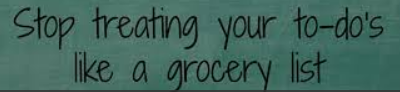
    I have been playing catch up all year, trying to whittle down my never-ending to-do list. Susan Bono’s guest blog post reminds me to stop, notice, and savor the moment.

    Susan writes:

    Even those of us who start the day with a list know what it’s like when unplanned-for events start coming our way. In spite of our intentions, we start tackling the unscheduled instead of working on what we had planned. Emergencies come up, of course; we can’t control everything. No one can plan for bad news or times we are suddenly needed. But the list of unanticipated tasks is endless, and after a while, we just start doing what comes to us, instead of what we had intended.

    You should have days when you follow your bliss. In fact, have them as often as you like, but the trick is in telling yourself right from the start, “Today I’m going to do whatever I feel like.” But a plan that’s been ignored is a sign of defeat, and most of us have long range goals—I  mean, who doesn’t? So whenever you miss an opportunity to complete an intended task, you are altering the look of your Big Picture.

    Whether you regularly schedule too much for yourself or sell yourself short, you’ll benefit from the TL list. TL stands for “Tough Luck,” because that’s what you say to anything that’s not on it. If you can complete your assigned tasks, then let the spirit of que sera, sera take over.

    So tomorrow, do whatever is in your power to follow your list. The more in control you become in this area of your life, the fewer details your list will need to contain, but for tomorrow, make a schedule of what you think will cover every hour of your day. Include meals, personal care, regular errands, like carpooling, time sinks like phone calls, TV, or email. Now fit your to-do list into that existing framework. How much time do you really have?

    Once you’ve made your list, do your best to stick to it. Each time you say, “Tough luck” to extraneous chores, you are giving yourself a big helping of Tough Love. You are proving to yourself and the world that the work you set out to do is important, and so are you.

    See if you can love yourself enough to use the TL list until you discover what your true desires and capabilities are. As you plan your list for each tomorrow, note any substitutions you made earlier that day. Did you trade a trip to the grocery store for a surprise phone call from an old friend? Did you not get the ironing done because you couldn’t  put down that exciting book you were reading at lunchtime? Were your “failures” or trade-offs satisfying, or did they leave you wishing you could have a do-over?

    It’s important not to beat yourself up, because maybe what you really need is to make room for more fun. You can start scheduling that in, too, as you transfer whatever’s undone from the day’s list onto tomorrow’s. And if you’ve really missed the boat on some assignment you’ve given yourself, give it a decent burial. If what you failed to accomplish alters the Big Picture, accept this change with grace and trust that you were meant to change course anyway. As you learn to work with the TL list, you will internalize its rhythms and you won’t need to write everything down. But when you feel yourself getting out of control, you can always use this method to get yourself on track again.

    We can’t control what life does to mess up our plans. But we can eliminate our own tendencies to sabotage  ourselves. You’ll know when the TL list is working when you stop being so mad at yourself and start building a list of your accomplishments. That’s when Tough Luck goes beyond Tough Love and becomes True Love.

    susan-bonoSusan Bono, author of What Have We Here: Essays about Keeping House and Finding Home, was once a high school English teacher, is now a freelance editor, and has been facilitating workshops, critique groups and free-writing classes for more than 25 years. She was the editor and publisher of Tiny Lights: A Journal of Personal Narrative from 1995—2014.


  • From Chaos To Creativity

    Guest  Blogger Suzanne Murray writes:

    What if the chaos we experience in the world today and in our lives is actually an invitation to let go of the old ways and create something new. What if in letting go in the face of fear of the unknown we actually make room for the new to enter. Often when we give up trying we find a sort of magic that can bring unexpected opportunities beyond what we thought possible.

    We tend to resist chaos. We associate it with war or natural disasters or with the unraveling of the structures that we have always thought of as solid. We cling to what feels comfortable. Chaos can rattle our bodies and emotions leaving us feeling overwhelmed. It can trigger a reaction of fight or flight which puts us in our reptilian brain which is incapable of creative problem solving.

    What we call chaos can actually be part of the process of creativity and renewal. Look at nature. Fire recycles nutrients and restores certain species of trees like the Lodgepole Pine that require heat to release seeds from their cones. Immediately after a fire, nature gets to work restoring a new kind of order.

    In her book Biomimicry: Innovation Inspired by Nature, Janine Benyus explains, “The new sciences of chaos and complexity tell us that a system that is far from stable is a system ripe for change. Evolution itself is believed to have occurred in fits and starts, plateauing for millions of years and then leaping to a whole new level of creativity after crisis.”

    Then there is the chaos in our individual lives. We lose our job, a relationship ends, we are diagnosed with an illness or a loved one dies. Such changes can leave us feeling disappointed or sometimes even devastated. Yet often out of such chaos it’s possible that we get a better job, we met the love of our life, we develop increased kindness and compassion or we deepen our spiritual life.

    Allowing for chaos can open up new doors. I know a woman whose house burned down. At the time she didn’t see it as a gift. Yet a year later she is living in the house of her dreams paid for by her insurance. She is laughing as she tells me it’s the best thing that ever happened to her. In my own life it was the disturbing loss of job that prompted me to become self employed combining my love of teaching, writing, creativity and nature.

    Chaos is at the heart of being creative. Creativity begins from a place of swirling possibilities. It can be messy. On the creative journey we often feel like we don’t know what we’re doing or where exactly it’s going. Yet as we take it step by step following the threads of intuition and inspiration, and showing up for the work we are guided to do, we discover the process itself to be deeply rewarding and satisfying.

    We find that we are okay when something doesn’t work out the way we want. We let go of wanting to control everything and learn to let ourselves be surprised by what unfolds. We let ourselves be like a child with finger paints, who isn’t the least bit concerned about the mess. We learn to trust something greater than ourselves is working on our behalf.

    By bringing creativity into every area of our lives it can help us transcend the chaos by reordering the world and our lives in new and inspired ways. Take a minute consider a place in your life that feel chaotic and ask “what newness wants to be born in my life?” Don’t think about it, just allow an idea to pop in, follow your heart. Then see what one small act that you can take to start creating from this inspiration. What if we could help change and evolve the world that way?

    Suzanne Murray

    Join Suzanne Murray for a one day workshop in Point Reyes, CA. October 15, 10 am to 4 pm.