Category: Guest Bloggers

  • Organizing a Writing Project

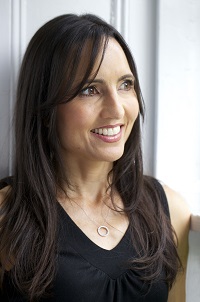
    Organizing a Writing Project by Guest Blogger Nona Smith, author of Stuffed, Emptying the Hoarder’s Nest,  A True Tale.

    Nona tells the story of writing Stuffed:

    I didn’t start out with the idea of writing a book, but from the get-go, I was aware we were onto a unique experience. In late November of 2010, my husband, Art, became the executor of his friend Linda’s estate. Linda was a hoarder. Not your run-of-the-mill hoarder, but a collector of unique stuff as well as plain ol’ junk.

    We felt it prudent to document what we found because in addition to being the executor, Art was the only on-site heir. So I took photographs of the plethora of original artwork by a famous botanical printmaker, the rare mechanical music machines and closets of musical scrolls, tools and computers and even of the life-size teddy bear reclining in the bathtub. I also photographed the stuff that had no value: old piles of crafting supplies, a jarful of unmarked keys, moldy, outdated textbooks. I saved emails from our friend Dan who helped us clean things out, and I took notes on research we conducted while trying to ascertain the value of one collection or another.

    There was so much of everything I was afraid we might lose track of the details, so I bought an accordion folder and divided it into loosely organized categories. I was in Organization Mode. Writing about this hadn’t yet occurred to me.

    Each time we entered Linda’s apartment and surveyed the chaos, my stomach clenched. Every horizontal surface was littered with things, every room was jam-packed. Stuffed animals were her particular passion and they were everywhere; literally hundreds of teddy bears, rabbits, monkeys, turtles and an occasional pig filled the place to overflowing. Three other apartments in this building plus a computer repair shop, a warehouse and two houses in southern California were similarly stuffed to the rafters.

    The disorder was unsettling, disturbing, and invaded my dreams. I would have liked to simply walk away from the mess. But we needed to deal with it in a methodical manner until it was all disposed of and converted into cash. In the end, it was this disorder–––and the teddy bears–––that drove me to writing. Writing became my therapy and helped me process the experience.

    In order not to get crushed by the telling of the story, I decided three things. First, I wanted to introduce my readers to Linda and her husband Al, also a hoarder, who had died years earlier. I wanted them to be known as people, not simply hoarders. In addition, I wanted my audience to understand the malady called hoarding as I myself learned about it. Second, I didn’t want this tale to be depressing, so I made it a point to look for humor where I could find it. The third decision was strictly an organizational one. I chose to isolate each collection or problem and write about it as we encountered it. That accordion folder helped me follow a single story line and not drift anywhere else.

    The stuffed animals, with their sad, accusatory eyes, had the first story to tell. I stuck with them until they all happily found new homes. Then I introduced our friend Dan who played a major role in assisting us with our responsibilities to this estate. Dependable, loquacious Dan weaves in and out of the tale. Whenever he turns up, there’s food involved, and I was able to make that a kind of repetitive, happy theme. He also writes funny emails, so I saved those in the appropriate accordion file sections.

    If Dan is our “hero,” Mike Em is his evil counterpart. Mike Em’s story-thread involves the mechanical musical instrument collection. He comes into the story early on and he was such an abrasive person from our first encounters with him that I knew intuitively I should keep his email correspondence. It served me well when writing about him later.

    And finally, I never began writing about a problem or a collection until that issue had been settled. As each thing resolved itself, I contained it in a chapter. Sometimes, one chapter spilled into two, such as finding the hidden safe, which turned out to be safes. However, knowing the story line from start to finish was a strategy I believe helped me find the humor I hoped to maintain. Occasionally that humor came from a single adjective, such as Mike Em’s “turd-colored suspenders.” Sometimes I had to search further and exaggerate a bit. But not having to worry about the story’s conclusion freed me to look for the lightness.

    Stuffed. Nona SmithIn the beginning, the teddy bears’ happy endings encouraged me to write on. Toward the end of our adventure, I felt compelled to tell the tale to its finish in order to honor the time we’d spent and the people who’d helped us along the way.

    Note from Marlene:  I read Stuffed and enjoyed every bit of it. What could be a sad story is told in an upbeat, positive way, with a satisfying ending. Well-written and entertaining.

    Nona Smith writes memoir and short stories with a humorous bent that show how life’s foibles connect us to each other. She lives on the Mendocino Coast with her husband Art and two spoiled cats, Missy and Buster.
    Photo by Rosalie Winesuff
     

  • Guest blogger Arlene Miller asks, “Should we dumb down the language?”

    Guest Blogger Arlene Miller writes:

    I am a member of some grammar groups on LinkedIn, where there are fascinating — and long – discussions of what some people would call grammatical minutiae. However, this week, I saw a discussion that I found a little surprising. The question posed was “Should we continue to teach who and whom to our students?” the real question is: Should we continue to teach the difference between them and when to use each?

    On my blog, bigwords 101, I talked about the difference between linguistic and grammatical prescriptivism and descriptivism:

    ▪    Prescriptivists (the camp that I lean toward) think that the rules are there and they should be followed.

    ▪    Descriptivists believe that language evolves as new usages come into play.

    Well, if we followed a purely prescriptivist viewpoint, we would still be using the language of centuries ago – thank you, Chaucer.

    But what would happen if we followed a purely descriptivist viewpoint? How does language change, anyway?

    Let’s look at an example: I have always used the idiomatic prepositional phrase by accident. The younger generation seems to be using on accident instead. Is it wrong? Which is right? Should we adopt what the younger generation is now using? Is there a reason that by should be used rather than on? Why did anyone start saying it that way in the first place? Is it because we say its opposite as on purpose?

    People use who and whom incorrectly because they don’t know or understand the rule. Should we say, “Oh, let’s just forget trying. It’s just too difficult to teach or understand”? Should we dumb down the language? Or, should we avoid using whom?

    Taking who and whom specifically,  there is a reason that who is correct sometimes and whom is correct other times. And most people studying a foreign language will run across the same thing in that language.

    The distinction between who and whom is the same as the distinction between I and me. Are we now going to say “Me and him went to the movies” is okay? If many people say it that way, will that become the standard?

    Then, there is the issue of conversation versus formal writing. Let’s say you are writing a cover letter. Are you going to distinguish between who and whom? All the grammar books I know of make that distinction, at least as of now. I would recommend that anyone writing anything formal use the rules until they are “formally” changed.

    The evolution of language is nothing new. And I won’t pretend to know much about it. I am not a linguist, although I wish I were, and I find the subject fascinating.  I do know that there needs to be a mix of descriptivism and prescriptivism, as there always has been; otherwise, the language would never have changed throughout the centuries. But where do we draw the line?

    But who and whom? That’s where I draw the line!

    Here is the difference between who and whom:

    There are three cases for pronouns in the English language: Nominative, Objective, and Possessive.

    ▪    The nominative case is used for subjects of sentences (and predicate nominatives, but we won’t go there today).

    ▪    The objective case is used for direct objects, indirect objects, and objects of prepositions, the three types of objects.

    ▪    The possessive case is used for ownership.

    Let’s take the pronoun I: nominative is I; objective is me; possessive is my or mine.

    ▪    I am going to the movies.

    ▪    He took me to the movies.

    ▪    He is mine.

    Now let’s take the pronoun who: nominative is who; objective is whom; possessive is whose.

    ▪    Who is going to the movies? (Who is the subject of the verb is going.)

    ▪    Whom did you invite to the movies? (Whom is the direct object of the verb invite.)

    ▪    To whom did you give the movie tickets? (Whom is the object of the preposition to.)

    ▪    Whose tickets are they, anyway?

    One thing is for sure. I will be teaching my students the difference between who and whom!

    Click here to read the original blog post “‘Whom’ Cares?” by Arlene Miller.

     Arlene MillerArlene Miller, also known as The Grammar Diva, is the author of four grammar books and a novel. Her first grammar book, The Best Little Grammar Book Ever, is being used by many schools and colleges. Arlene’s grammar books clear up common grammar issues. In addition to writing books, Arlene writes a weekly blog post about grammar, punctuation, and anything else to do with words. She is also a copyeditor for both fiction and nonfiction books, teaches 7th grade English in Petaluma, teaches The Best Little Grammar Class Ever at College of Marin, and teaches corporate grammar and business writing workshops.

    Arlene has been a presenter at the Sonoma County Book Festival, Bay Area Independent Publishing Association (BAIPA), Petaluma and Guerneville branches of the Sonoma County Library, Romance Writers of America, Society of Technical Communications, and Redwood Writers Academy. She is a member of Redwood Writers and BAIPA. She holds degrees in Print Media, English, Humanities, and California teaching and school administration credentials.

  • I wanted to connect with others.

    Guest Blogger Lois Lavrisa writes about the lack of self-confidence and doubt amongst writers.

    My husband and I attended an event featuring the bestselling financial guru, Suze Orman. We chatted with friends as my husband’s coworker approached us. Beth, a perky lady with a huge smile, approached us.

    Beth shook my hand. “I’m a huge fan.”

    I nodded enthusiastically. “Me too. I love Suze. I can’t wait to see her.”

    Beth’s face froze for a moment, as if registering what I said. Then she gently squeezed my hand. “I’m a fan of yours.”

    For a few moments, I didn’t know what to say. I finally said a quick thank you to Beth. She was sweet and I was completely flattered. It’s just that I was just taken off guard because I don’t have great author confidence. Instead I have loads of self doubt, maybe it could be called author angst, which makes me work triple time to make sure what I write is as good as it can be. However, self-doubt doesn’t lend itself to being prepared for a compliment — ever.

    Perhaps my doubt began many years ago. The first time my name was in print (eighth grade in a four page mimeographed newsletter) I felt both thrilled and vulnerable. The public (okay maybe thirty of my peers and their families) read what I wrote. That was somewhat cool. Yet I also felt vulnerable.

    If I stayed hidden in the shadows with my stories still tucked away in my imagination, I wouldn’t be susceptible to ridicule. Yet I had this desire and overwhelming need to tell my stories. I wanted to connect to people outside of my head. I received lukewarm reception to my first byline. Since no one out right ridiculed my story, and some even liked it, I was encouraged.  Coming from a home where no praise was given (recently my mother admitted she did this on purpose so that my four siblings and I wouldn’t get big egos) the lukewarm reaction from my peers was better than nothing. I soaked it up like a sponge. I felt pulled. I didn’t know how to accept praise but at the same time when it happened it felt so good.

    And I needed to write.

    I wanted to connect with others. This meant my words needed to be out there for all to see. This also meant that my stories could be rejected, accepted or ignored.

    In a very tough Southside of Chicago suburban public high school, I was tormented and bullied unmercifully. Being a shy, passive, nerdy honor student in a sea of black rock concert t-shirts and pot smoking— I stuck out as an easy target.

    When the high school newspaper announced a poetry contest, I decided to enter. However, for fear of further tormenting, I signed my poem as Heather. My first (and so far only) pseudonym. My poem appeared in the school newspaper.  Overhearing some students talking about Heather’s poem made me (secretly of course) jump for happiness.  Yet I couldn’t tell anyone that was my poem for fear that if I did, my name would leak to the bullies and could possibly multiply the attacks on me. So, I stayed silent. Yet, I knew I had something to say that connected with people. I wanted to do more of it.

    Following graduation, I attended a college a few hours away from my hometown. I loved the anonymity. No bullies. No history of who I was. Freedom to reinvent myself.

    During the first semester I realized that I was not cut out for pre dentistry (I do brush and floss twice a day, I haven’t given up on teeth entirely.) I signed up for journalism classes and began to write for the school newspaper. This time I used my own name. And guess what? I didn’t get ridiculed nor beat up. Instead, friends came up to me and commented on my front page story, or on one of my featured articles.

    Flash ahead to the Suze Orman event I mentioned at the beginning of this blog, when Beth said she was a fan of mine. My lack of confidence left me flabbergasted when she complimented me. Yes, I work tirelessly on my craft, trying my best to make sure it is as perfect as it could be. So why do I still have those nagging doubts about my writing? When I see a new review posted I hold my breath.  Will they say terrible or terrific? Here’s the truth, I believe the terrible reviews more than the terrific ones (thankfully there are way more good reviews than negative, but still those nasty comments -ugh!)  I’m hopeless right?

    I’m thrilled and honored that readers post great reviews and seem to connect with my stories. Yet, part of me feels unworthy of the accolades. I have such angst you’d think I was a teen, not someone in midlife.

    If there were a special workshop to boost author confidence, I’d sign up today. Have any of you experienced author doubt? If you have, how do you handle it? And if anyone wants to share some ideas for boosting author confidence- please do!

    Lois LavrisaLois Lavrisa writes Mystery with a Twist. Her first mystery, Amazon Top 100 Bestselling and Amazon Hot New Release, LIQUID LIES, is set in an affluent lake town in Wisconsin, and asks the question “Would you tell the truth, even if it meant losing everything?”

    Originally posted May 22, 2013, The Writer’s Guide to E-Publishing Update. This post is slightly edited and paraphrased from the original post. Re-posted with permission.


  • An Argument for Daily Writing by Ellen Sussman

    Guest Blogger Ellen Sussman writes about “An Argument for Daily Writing.”

    You want to be a writer. But…

    You’ve got a demanding job. A demanding spouse. Demanding kids.

    You wrote a novel that didn’t sell. You wrote two novels that didn’t sell. Three? Four?

    You don’t have a snazzy office. You don’t have the latest computer. You write at a café and the moms bring all their screaming babies to that café.

    You don’t think you’re good enough. Your high school English teacher told you you’re a lousy writer. Your mother told you that your brother was smarter than you are.

    You have a hangover. You have carpal tunnel. You’re hungry and there’s no food in the house.

    Excuses are easy. Writing is hard. I’ve got one way of silencing all those voices. I go to work every day. Writing is my job. So I show up. Screw the hangover. Screw the high school English teacher. Screw the screaming babies.

    If I had to make a decision whether or not to write each day, I’d be a basket case. There are too many good reasons not to write. But my decision has already been made. I’m a writer and so I write. Daily. Regardless of whatever crazy thing is trying to distract me.

    I think it’s better to write for a half-hour every day than it is to find a time, when the muse strikes, to sit your butt in that chair at your desk. Because daily writing teaches you the practice of writing. And the more you practice the better you get.

    Ellen SussmanEllen Sussman is the New York Times bestselling author of four novels, A Wedding in Provence, The Paradise Guest House, French Lessons, and On a Night Like This. She is the editor of two critically acclaimed anthologies, Bad Girls: 26 Writers Misbehave and Dirty Words: A Literary Encyclopedia of Sex. She teaches through Stanford Continuing Studies and in private classes.Sussman.A Wedding in Provence

  • Guest Blogger Jennifer Lynn Alvarez talks about the importance of daily writing

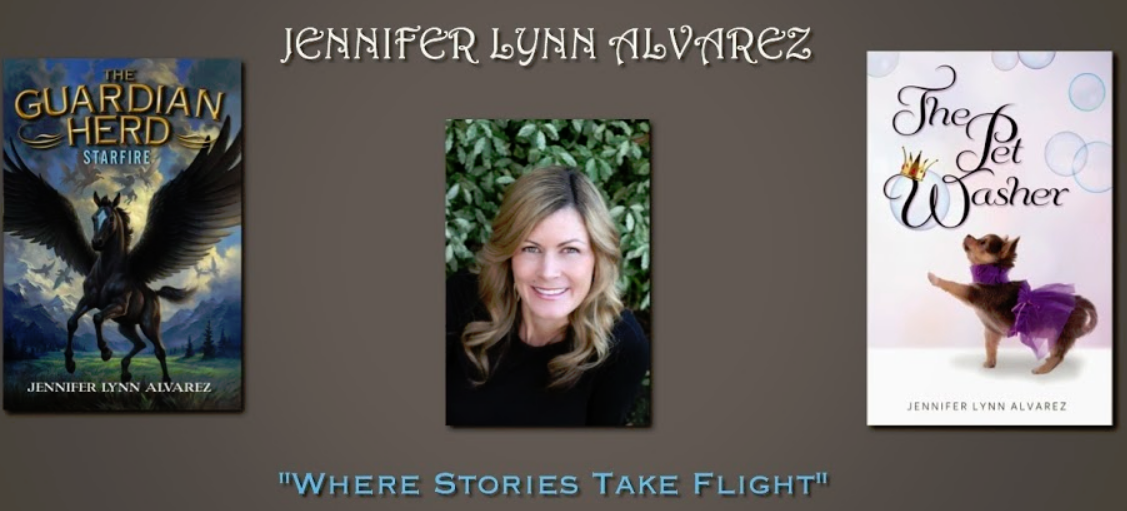
    The Importance of Daily Writing, by Guest Blogger Jennifer Lynn Alvarez

    Writing is an exercise that requires practice and training to build the muscle required to become a “finisher.” When I set out to write a novel after a fifteen-year break, I struggled to trap my imagination on paper. I wrote a few days a week, and it was mentally agonizing, similar to how I feel when I begin a new exercise routine for my body. However, I was happy to be writing again, and so I kept at it, but my writing routine was sporadic. I finished a middle-grade book, THE PET WASHER, in about a year, and it’s only 33,000 words.

    In January of 2012, I made a decision to write something—anything—every day. I announced this on my blog, and like any new routine, it was difficult to keep up at first. I didn’t have a book contract at the time, and not all of my friends and family initially accepted that I now had “work” hours. But I stuck to it and carved out several hours a day, often awaking at 5 or 6am, to write blog posts, articles, and journal entries.

    After a few months, I noticed how much easier it was to write. I became adept at quickly organizing my thoughts. Soon I was averaging 2000 words a day in three-hour time periods. I also noticed that the more I wrote, the more ideas I had for new material. And eventually, everyone in my life accepted that they saw a little bit less of me.

    So later—when the big idea came—I was ready! It happened while I was driving home from Petaluma on highway 101. I visualized a herd of winged horses flying above my car. They were migrating and a heavily pregnant mare was struggling to keep up. I knew immediately that her foal was special and that I had to write about him. When I arrived home, I began the first draft of STARFIRE.

    Because I had been writing daily, I had the brain muscle to fuel a quick first draft. I wrote 53,000 words in just 20 days. I finished, revised the book, and sent it to an agent who had previously, but kindly, rejected me. She loved STARFIRE and signed me on as a client. Soon after that, we accepted a four-book contract from Rosemary Brosnan and Karen Chaplin at HarperCollins Children’s Books.

    I attribute my success to the fact that I showed up each day and wrote. It created the endurance I needed to quickly act on my idea, it carved out the time required to write the next three books in the series, and it enabled me to meet my tight publishing deadlines.

    It can be difficult at first to carve out this time, and not everyone in a writer’s life will always understand it, but I encourage all writers who aren’t doing it to try. Don’t judge your progress. Just write!

    I showed up every day at my computer without the foreknowledge that it would ever lead to anything. I treated my hobby as a job even though I had no reason to believe I’d ever be paid for it. I wrote without judgment because my goal was to practice, not to publish. But when the big idea came, I was strong enough to execute it. I went from aspiring author, to debut author with a big five publisher in exactly one year.

    The first book in my new series will be released in hardback around the world on September 23, 2014. Of course, results will vary with every writer, but the point is that daily training will prepare you, whether your published or not, for the next big idea.

    Jennifer Lynn Alvarez is a fantasy fiction author and speaker who writes middle-grade fiction. She graduated from U.C. Berkeley with a B.A. degree in English Literature. Jennifer’s upcoming books include The Guardian Herd middle-grade series. Book one, Starfire, releases on 09/23/14 through HarperCollins Children’s Books. Jennifer’s self-published books include The Pet Washer. This series is for ages 7 and up. Jennifer lives on a small ranch in Northern California with her husband and three children.

    Jennifer.2books

  • Guest Blogger Karin Gillespie: 5 Pieces of Advice That Changed the Way I Write

    Guest Blogger Karin Gillespie writes:

    “When the student is ready, the teacher will appear.”

    Long ago, when I first read the statement above, I imagined an encounter with a big-bellied, toga-wearing monk who would whisper the secrets of the universe into my ear.

    Over the years I’ve learned you don’t necessarily need a monk to show you the way. If you’re open to it, wisdom comes in many guises, such as advice from a friend, a passage in a book, an overheard conversation or even a sudden insight.

    What follows are the valuable writing gifts I have received over the years. Depending on where you are in this journey, they may or may not resonate with you, but each one was precious to me and changed my way of thinking about my craft.

    Morning Pages        

    Since I was a little girl I always dreamed of being a writer but it wasn’t until I started doing daily morning pages that I gained the courage to face the blank page.  And what are morning pages?

    Simply, first thing when you wake up in the morning, you write longhand in a notebook for twenty minutes without stopping. It’s best if you practice morning pages for two or three months and you shouldn’t read what you’ve written until much later.  The Artist’s Way by Julia Cameron popularized morning pages but they’ve been around for decades.

    Morning pages train your subconscious to write. It coaxes out the muse, and, trust me, the practice is utterly magical. Morning pages work best with new writers or writers who have abandoned the craft for a while.

    Save the Cat!

    Storytelling is a skill separate from writing beautiful sentences and Blake Snyder, author of “Save the Cat Strikes Back!” explains plotting in the most eloquent and accessible way possible.

    After reading his book, I knew I would never again plot myself into a corner or abandon a project because of structural problems.  Although his work is written in a breezy style, there’s something very elemental and old-world about Snyder’s approach.

    He died a few years ago, and even though he was a successful screenwriter, I think his insightful how-to books were his true legacy. I recommend all of his books but if you were only to buy one, I’d get “Save the Cat Strikes Back.” In addition to giving structural advice, he shares the very personal story of how he changed his writing life around. An inspiring man who will be missed.

    Pomodoro Technique

    The Pomodoro Techinque is simple: Basically you write for twenty-five minutes, no interruptions, and then take a five minute break.

    Repeat as many times as necessary. This method has increased my focus ten-fold. I no longer worry about being distracted by the Internet or e-mail, because during each twenty-five minute period, you trick the brain to attend only to the writing.

    Rachel Aaron’s Amazing Productivity Method

    Recently I decided I wanted to write first drafts faster, and I ran across Rachel Aaron’s advice on that very topic. Using her method, I easily upped my daily word count from 2,000 words a day to 3,000. (Accomplished in a four-hour time period with brief breaks) The secret?

    Aaron suggests writing a brief summary of what you’re going to write each day before plunging in.  Her advice should be worth a $1,000 it helped me so much. But I only spent $.99 on her book .

    Trusting Your Subconscious Mind

    Once during one of the best performances of his life, Laurence Olivier came off the stage and was approached by a reporter who was bowled over by his mastery. Olivier acknowledged he’d done well, but he also said, “I don’t know if I can ever repeat it, because it did not come from me.”

    The more I write, the more I understand that the best writing is achieved when I leave my ego outside the writing room, and surrender to my subconscious mind.

    Karen GillespieIf I show up every day, the muse will arrive, and if I’m humble and understand that I’m only a conduit or co-creator at best, then good writing will almost always result. When I’m co-creating, the supply of ideas are endless, and I never get stale. Maybe this gift was the most important one of all.

    Karin Gillespie is the author of five novels; her nonfiction work has appeared in the NY Times, Washington Post and The Writer magazine. Click here to visit Karen’s blog about writing and creativity insights.

  • Guest Blogger Maria Murnane reveals her secret to getting past the sticky parts.

    I recently read a blog post by Maria Murnane at She Writes and asked Maria if I could share it with you. She graciously said yes.

    Maria writes:

    I’m currently working on my seventh novel, and one of the most valuable lessons I’ve learned about the writing process is when to hit pause on a particular scene/sentence/description and move on. If you’re a perfectionist or Type-A personality, that can be hard to do, but it’s extremely important. Trust me.

    I use all caps to keep me focused on progressing the story.

    When I was writing my first novel, if I wasn’t sure where to take the story next, I would spend countless hours tweaking, editing, refining, and tinkering the words I already had written. Where did that get me? Nowhere! The problem with spending too much time on a particular area of the book is that you aren’t moving the story forward, and if you don’t move the story forward, you will never finish the book. I’m convinced this is why it takes some people 10 years to complete the first draft of a novel. They work so hard making every sentence perfect that it takes forever to get to the finish line.

    A good trick I’ve learned is to use the ALL CAPS function. My current manuscript is filled with notes in ALL CAPS such as:

    • WRITE SOMETHING FUNNY HERE
    • FLESH OUT THE DESCRIPTION OF THIS RESTAURANT
    • ADD IN SOMETHING HERE ABOUT WHY THEY GOT DIVORCED
    • FIX THIS- SOUNDS WEIRD
    • MAKE THIS DESCRIPTION BETTER
    • DOES THIS MAKE SENSE?

    It would be easy to spend days, if not weeks working on the above issues, but at the end of the day, they are details that aren’t critical to the story. If I want to finish the novel, my focus has to be on progressing the story. 

    Once you finish the first draft, then it’s time to go back and fix all the problem areas you’ve put in ALL CAPS along the way. That’s where the fun begins, because you know you’re in the home stretch!

    Maria Murnane six book coversBooks by Maria Murnane

     Note from Marlene: I was so inspired by Maria’s wisdom and fun attitude that I signed up to receive her blog posts in my email inbox. Click here to read some of Maria’s inspiring posts. You can also sign up to receive The Write Spot Blog posts in your email inbox (scroll down, look on the right side for the sign-up box).

    Maria Murnane.2Maria Murnane is the best-selling author of the romantic comedies Perfect on Paper, It’s a Waverly Life, Honey on Your Mind, Chocolate for Two, and Cassidy Lane. She also provides consulting services on book publishing and marketing. Click here to learn more about Maria and her consulting services. 

    Katwalk, Maria’s latest book, will be released August 12th.

    To order a copy of any of Maria’s books, please click here.

    This blog post originally appeared on CreateSpace.com. Reprinted with permission. © 2014 CreateSpace, a DBA of On-Demand Publishing, LLC. All rights reserved.

  • Your name could be here. . .

    Fridays are Guest Blogger Days on The Write Spot Blog. Contact Marlene if you want to be a guest blogger on The Write Spot Blog, ~600 words,  inspiring and encouraging for writers.

    Lola.200You can read what other Guest Bloggers have written by clicking here.


  • Guest Blogger Ted A. Moreno’s Top Ten Tips for Super Productivity

    Ted A. Moreno, Certified Hypnotherapist and Success Coach, shares his top ten tips for super productivity.

    1. Start the day centered and grounded. Jim Rohn said “Either you run the day, or the day runs you.” How you start the day will affect how your day goes. If you wake up and you are already rushing around and running late, the day is running you. Give yourself some space to be prepared mentally and feel super in the morning, even if it means getting up earlier to exercise, read or meditate.

    2. Write down your goals the night before. Make your to do list the night before. Plan to start the next day with the most important things that will make the biggest difference, or start with the hardest. This way, you move into the day with momentum and the feeling of productivity and being super!

    3. Keep yourself fed and watered. I have an avocado tree and a tangerine tree in my back yard. If I don’t water them and feed them, they don’t produce. Same with you.

    4. Have a routine or a system. Develop a habit of productivity by using a system that works for you. It might include a Franklin Covey type planner, Outlook tasks, or one of the many online tools available. I use the Pomodoro Technique and a daily calendar sheet with my list that I carry around in my shirt pocket. Not very high tech but it super works.

    5. Prioritize tasks. Some days you are not going to be able to do it all. Prioritization maximizes your productivity and focus so that you get the most super important stuff done. Roll the non-essential stuff over to another day.

    6. Pay someone to do those things that are not worth your time. What can you take off of your plate by paying someone else to do that gets paid less per hour than you do? For 10 bucks a week, my super gardener does in 45 minutes what it used to take me 3 hours to do.

    7. Work simultaneously instead of sequentially. Instead of working on something  for four hours, work on it for an hour and half, then another project for an hour,  then another for an hour or so.  You will be moving a number of projects forward at the same time. Waiting to start the next one until the current one is done is a super productivity killer.

    8. Get rid of distractions. Turn off email, Facebook and silence your phone while you are working on a task. These are the biggest time vampires that will suck the productivity out of you. Work for an hour, then take 15 minutes to return calls or email. One guy I know has a phone message: “I return calls between 4 and 6 pm,” thus setting the expectations for his callers as to when their call will be returned. Guard your time like the super precious asset it is.

    9. Be ok with failure. Dan Kennedy says “Success is cooked up in a messy kitchen.” Don’t wait for conditions to be super, or perfect, or for your desk to be organized or the moon to be full. Just start and keep moving forward. Things might get screwed up, you may need to scramble, improvise, or start over. Sometimes that’s what it looks like.

    10. Take a break. Being super productive doesn’t mean killing yourself or not spending time with loved ones. Productivity doesn’t necessarily mean struggle either. Play some music, take a walk, call a friend, eat some ice cream, then get back to your project refreshed, renewed and feeling super good!

    Need help with productivity or procrastination? I’d love to help you. Click here to contact Ted.

    Your companion on the path to possibility, Ted A. Moreno

    Ted A. MorenoTed A. Moreno is a hypnotherapist, success performance coach, published author, educator and sought-after speaker who helps his clients become free from fear and anxiety, procrastination and bad habits such as smoking. Ted works with  business professionals, performers, athletes, students and anyone seeking excellence in all areas of life. Ted’s book, “The Ultimate Guide to Letting Go of Negativity and Fear and Loving Life” is available on Amazon.com.

    Note from Marlene: I have worked with Ted. Hypnotherapy via phone lines works! Ted was very helpful in assisting me with getting past some roadblocks. I highly recommend him.

  • The Miracle of Language: Reminders from 50,000 Feet by Daniel Ari

    Guest Blogger Daniel Ari talks about The Miracle of Language: Reminders from 50,000 Feet

    Chin.

    An alien from another galaxy encountering those four written characters or the sound we as English speakers make reading them would have no idea what we were writing or talking about. The markings or sounds alone would give the alien no inkling that they even possess a corresponding meaning in the physical world.

    We write using a complex system of symbols that are almost entirely abstracted from the physical phenomena they indicate. The alien might stand a chance at understanding spoken onomatopoeias, perhaps fetching a connection between the shouted words bang, boom or screech with the aural phenomena they represent. And perhaps the written article a might indicate to the alien the spirit of its meaning as something singular. Yet wouldn’t you be impressed with an alien that could intuit even those connections from our abstract language? I would.

    The miracle is that we learn to associate a huge range of phenomena with a huge range of symbols. For example, you can read the word candy as it appears here on screen and know it’s the same word as the one built out of plastic, foot-tall, block letters above the entryway of a candy store. The two symbol sets are vastly different in appearance, yet we decode and access related bodies of meaning from both.

    At the same time, the range of meanings we associate with the symbols is enormous. Where does your mind go when you read candy? Cellophane-wrapped hard candies? A bag of Halloween spoils? Or a sudden, unspecific craving? Or that song “I Want Candy” by Bow Wow Wow?

    It awes me that I can write chin—never mind the font—and you can visualize the chin that makes the most sense for you. If I want to guide your mind, then I can add prominent, clean-shaven, Caucasian, famous. Or I can write about meeting Jay Leno backstage before a live concert a few months before he took over The Tonight Show from Johnny Carson.

    My brother Phil was one of three comedians opening for Jay that night. I went backstage to meet Leno, and he joked amiably with my brother and I and about five others from the campus comedy club, including our friend Mike Chin. I could see Mike was thinking about cracking his joke about also being a “chin” comedian, but before he could, Leno handed me a Coke from the table of refreshments—cubes of cheese, cut vegetables, a bowl of M&Ms candy, green ones included—and Mike’s moment was lost. I recall feeling jealous of my brother and the other two comics who had opening slots that night. I also had mixed feelings about Leno beneath my celebrity-awe. In the comedy club at that time, we regarded David Letterman as the better comic, the one who should have taken Carson’s throne.

    I think it’s a miracle that you can make sense of what I’ve written. And to honor the miracle, I’ve done my best to aid your understanding by choosing my words consciously, with the intention of making my meanings clear—even the unspoken ones.

    I like to assume an atmospheric view of language sometimes because it reminds me of the magnitude of the project and helps me accept the processes of writing as gradual and incredibly grand. It helps me remember that it’s taken me 47 years—and counting—to learn the abstract symbolic system of contemporary North American English.

    When you interpret the rows of abstracted symbols I have chosen, you get an indication of my experience. That’s why I revisit and rework my strings of symbols so meticulously—adding, subtracting and swapping; changing handwritten to digital to printed; translating writing into voice.

    We attempt to share experience. Remembering that writing means communicating through a complex system of abstraction reminds me that results are guaranteed to be inexact. But if perfection is impossible, connection isn’t. That’s what we as writers strive toward, and when we experience that others are moved by what we’ve strung together, that is the greatest satisfaction a writer can feel. Do you know what I mean?

    DANIEL ARI writes, teaches and publishes poetry. He lives in Richmond, California, where he leads a monthly writing jam, thriving since 2011; and he has taught and led writing sessions and workshops since the 1980s. Daniel has recently placed creative work in Poet’s Market (2014 and 2015 editions), Writer’s Digest, carte blanche, Cardinal Sins, Flapperhouse, Gold Dust Magazine and McSweeney’s. Daniel also works as a professional copywriter and performs improvisation with the troupe Wing It in Oakland, CA. His blogs are Fights with poems and IMUNRI = I am you and you are I.

    Daniel AriRead Daniel’s tongue-in-cheek, “Reject A Hit” about e.e. cummings in the July/August 2014 issue of Writer’s Digest magazine.

    Daniel will be the July 17, 2014 Writers Forum Presenter in Petaluma, California