Category: Just Write

  • World Building With Words

    “Readers seek the experience of the world through character emotion and consciousness. What we remember about books and movies is the way they made us feel/experience, which is why we crave another story-hit, more, more, more.” — Juneta Key, “A Look at World Building and the Reader Experience”

    Juneta elaborates:

    Use your character’s emotional attachment to places, things, and feeling of home–longing, or contentment, or discontentment. World building is an external and internal journey with the character.

    World building includes using all the senses, to create atmosphere, texture, and attachment:  Sight, Smell, Touch, Hearing, Taste, and 6th sense. 

    STORY EXAMPLE:

    Anne of Green Gables L. M. Montgomery uses the senses and emotions in such a way that her world is a character in itself.  Read the free Project Gutenberg ebook.

    Chapter 1: First paragraph:

    “MRS. Rachel Lynde lived just where the Avonlea main road dipped down into a little hollow, fringed with alders and ladies’ eardrops and traversed by a brook that had its source away back in the woods of the old Cuthbert place; it was reputed to be an intricate, headlong brook in its earlier course through those woods, with dark secrets of pool and cascade; but by the time it reached Lynde’s Hollow it was a quiet, well-conducted little stream, for not even a brook could run past Mrs. Rachel Lynde’s door without due regard for decency and decorum; it probably was conscious that Mrs. Rachel was sitting at her window, keeping a sharp eye on everything that passed, from brooks and children up, and that if she noticed anything odd or out of place she would never rest until she had ferreted out the whys and wherefores thereof.”

    You will notice MRS is all capitalized. 

    Immediately we know she is important to the story.

    She relates the character to us via the world building (setting).  

    Simile and metaphor are the vehicle of setting that create visually and emotionally strong images in our minds. She uses the setting to tell the reader  about the character’s attitude, disposition and temperament. The further you read the more she builds on this and strengthens the scene paragraph after paragraph. 

    Montgomery particularly uses the river to describe and create a parallel impression of the road, specifically the people passing by MRS. Rachel Lynde’s home. 

     MRS. is a busy body cataloging details while sitting at her window. Through the use of a ferret, as a comparison tool, she demonstrates the trait of persistence for MRS. following every crumb in pursuit of other people’s business.    

    If you think about it, the senses are triggered in that paragraph even though sound is not mentioned exactly. The sound of flowing water—a river, the sound of people passing by on the road, the sound of children—it’s implied, I don’t know about you but I heard it.

    Originally posted 8/15/2022 in Insecure Writer’s Support Group, as mentioned in Anne R. Allen’s Blog… with Ruth Harris (8/7/2022).

  • Don’t Rush It

    Morgan Baker

    “Don’t Rush It” by Morgan Baker

    I don’t like being late – to classes I teach or the airport to catch a plane. My anxiety meter goes haywire if I haven’t given myself the time to organize before school or when I’m packing to go away. Will I need my swimsuit? What about those shoes? I allow extra time wherever I go, which means I’m usually early.

    My stepfather once told my daughter as he drove her to a summer job, “You’re on time if you’re ten minutes early.”

    I’ve taken that to heart.

    When my daughter and I went to a wedding in Montana a few years ago, we were excited about the event, and to see the big sky landscape we had heard so much about. I didn’t want to feel rushed or anxious, so I allowed for plenty of extra time to get through security and find our gate.

    We watched planes taxiing to other gates from the rocking chairs we sat in. For three hours.

    But when it comes to my writing, I don’t follow my own advice. I often rush it. I think I’m done way before I really am. My husband, a former journalist and editor, reminds me frequently to slow down, think the piece through, whether it’s an essay or a profile I’m working on. Wait, he says, before sending it out. There are always opportunities to expand or transform my writing.

    I don’t always listen. Often, I already have a good sense of what’s working and where I need more, but instead of figuring out the fixes, I get jittery and eager and I send off the piece to trusted readers and editors, hoping they won’t notice the holes.

    Not only do they notice, they fall in them.

    I encourage the writers in my workshops to take their time. Sit on your work for a day or two, or more, I tell them. If it’s a timely essay, sit on it for a few hours. Wait and see how the work matures over time. Then revisit and revise. Don’t rush. Wait before taking a bite of the cookie that’s just come out of the oven. Don’t burn your mouth.

    I spoke with a writer recently who has a book of essays out, and she told me some of the essays took her years to write. Years.

    I don’t have years. I want to get my book of essays out now!

    I’m a problem solver. I like immediate results. I can usually fix someone else’s challenge, edit their work, or find their lost car key. Helping myself is more perplexing and time consuming.

    But when I linger on my pieces, like waiting to bite that hot cookie, it’s always worth it. I might remember another aspect of the topic I want to add in, or recognize a theme I didn’t see before.

    I’ve been working on a collection of essays for, yes, years, and I thought I knew their purpose. but recently, I realized I was going in the wrong direction. There was a theme in my work I hadn’t seen earlier, a theme that tied my shorter pieces together from two separate projects. I am now going to select, toss, and revise. Because I’d taken my time with the essays, the theme had time to marinate before it jumped out at me.

    Now I’m eager to get going. But I need to heed the yellow light ahead and slow down, take my time, let the pieces simmer, blow on them a little so they’re not so hot and I can hold them.

    If I rush to pack, I might forget the shoes I need, or my bathing suit in case there’s a pool. Sometimes I have to unpack and repack to make sure I have everything I need—editing my suitcase like I edit a book. I repack, rolling my clothes instead of folding them. They take up less room that way, and there is more room to add and substitute items. Just as I can revise once more, allowing for expansion and transformation.

    “Don’t Rush It” first appeared on Brevity’s Nonfiction blog on June 6, 2022.

    Morgan Baker has written for The Boston Globe Magazine, The New York Times Magazine, The Bark, The Bucket, Talking Writing, Cognoscenti, Motherwell, and several times for the Brevity Blog.

    Morgan’s debut memoir will be out in Spring 2023 (Ten16 Press).

    She lives in Cambridge, MA with her husband and two dogs where she teaches at Emerson College and facilitates writing workshops.

  • Push Past The Fluff

    When you are freewriting and there is more time to write, but you feel ready to stop . . . try to keep going. Push the limits. Push past the urge to go no farther.

    After the fluff is written, deeper writing can happen. Perhaps a doorway to intuitive writing will open.

    One of the benefits of writing fine details when freewriting, besides exploration and discovering forgotten items, is that details are what make stories interesting and make them come alive.

    I Feel Statements
    The reason for “I feel” statements in freewrites is that this is a way to learn and access your emotions about what happened. This is what personal essay or  memoir writing is all about. The facts are interesting, but what the reader wants to know is:

    ~ What the narrator gained

    ~ The narrator’s emotions

    ~ What lesson was learned

    ~ The epiphany or the “aha” moment

    Freewrites

    The Freedom of Freewrites

    Freewrites: Opening Doors to Discoveries

    Just Write!

    #amwriting #justwrite #iamawriter

  • Write About Your Loss

    Write About Your Loss

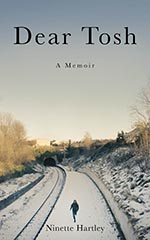
    By Ninette Hartley

    “Well, he has a broken leg but that’s the least of his problems. He has suffered some trauma to his head. In this country we . . . how can I put it? . . . we would say he is brain dead.”  

    On the 13th of January 2011 my twenty-seven-year-old son Thomas was rushed to intensive care in Porto, having fallen through a skylight whilst searching for somewhere to paint graffiti. I received a phone call from a doctor in the hospital, and when I asked her how bad it was she explained his injuries to me. Her English was good, but I couldn’t quite take it in.

    His step-father and I had to get from Italy (where we lived at the time) to Portugal as quickly as we could. The hospital was waiting impatiently for me, his next of kin, to arrive so that I could give permission for his organs to be donated. His partner and my other four children came to Portugal, travelling from Australia, Singapore and England. Together we moved through the days after the accident supporting each other. 

    When I look back now, I remember those first few days as a sort of numbness. I floated around in a mist of confusion and disbelief, with grief knocking me sideways when it arrived without warning in erratic bursts. The paperwork and tasks that have to be attended to after a death do, to a certain extent, distract the newly bereaved for some of the time. Funeral arrangements, cremation, bringing the ashes home; there was a great deal to organise. Then when all that was over, my children returned to their own lives, my husband and I to Italy, it was then I realised I needed some other kind of support. 

    I found it in writing creative non-fiction. 

    I began to write a letter to Tosh (his nickname) just to tell him what was going on. I wrote eight thousand words that were meant to be just between us. I never intended to share those words but as the years went by my writing became more important to me. I enrolled for online courses, began creating poetry, wrote short stories and flash fiction. A play and even a novel. But I kept coming back to Dear Tosh.  In September 2019, I was accepted onto the MA in Creative Writing Course at Exeter University and I completed that in 2020. For one module I pulled out my letter to Tosh and began to re-structure it into something that I felt I could share with others; at that time, it was just 5000 words.

    For the tenth anniversary of his death, I completed Dear Tosh, my first memoir, which was published in May 2021. It’s made up of twenty-seven letters, one for each year that he lived. It felt as though I spent time with him as I wrote, telling him all the events that had happened in the family and the world since he left us. I found it therapeutic to write, and even though it opened up the wounds of loss, it also helped me come to terms with so much that surrounds the loss of a child. One of those things for me, was the organ donation. I had no counselling for this, and the whole idea of it haunted me like a recurring dream for months and years after his death. Writing about it, sharing my feelings with Tosh, actually exorcised my fears and I was able, at last, to accept it. 

    Writing the book wasn’t all doom and gloom. Much of it made me smile and even laugh out loud — and readers often have the same reaction — so many memories brought back, of fun times with the family when the children were little. I have a strong sense of humour and realise that I have passed this on to my children and that it comes through in my writing.

    Writing saved my mental health, I’m sure of it. I would urge anyone to write about their loss in any way they can. It doesn’t matter if it’s never shown to anyone. The act of writing your innermost feelings can act as therapy. Grief may be difficult to share verbally but writing it down is a release and you never know, it might turn into a beautiful work of creative non-fiction. 

    “Write About Your Loss” first appeared on Brevity’s Nonfiction blog on July 2, 2022.

    Ninette Hartley is a writer, mother, grandmother, wife and teacher. She has followed many paths – from acting and dancing to magazine publishing, and even driving a pony and trap – but she has always come back to storytelling.

    Ninette has an MA in creative writing and has been published in three short story collections. Her first memoir Dear Tosh, published in May 2021 has been shortlisted in the Selfies Book Awards and long-listed in the Dorchester Literary Festival Writing Prize 2022 (shortlist and winner announced in August 2022). In 2015 she was shortlisted for the Fish Publishing Short Memoir Prize, and was longlisted for the Poetry Prize in 2020. She has won or been placed in several flash fiction competitions.

    After eight years living in rural Italy she moved to the Dorset countryside with her husband, Geoff, and beloved rescue dog, Jpeg. 

    Find more from Ninette on her website www.ninettehartley.com 

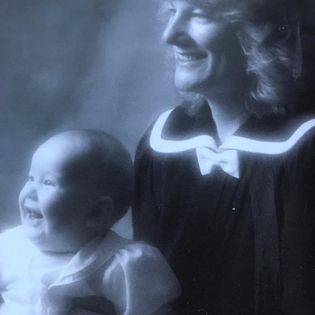
    Ninette and Baby Tosh
  • Layering

    Layering: The goal of layering in writing is to take unrelated elements and bring them together in a single piece of writing.

    “Layering means that we’re weaving in different elements of our story, characters, writing craft, etc. Some writers even start with just one element—such as writing their whole story just as dialogue—and then layer in everything else once they have the shape of the story.” — Jami Gold

    Ideas to add layering in your writing.

    Start with lists:

    List #1: Some facts about yourself or your fictional character

    List#2: Favorite food or music

    List #3: Favorite movies or TV shows

    List #4: Philosophical sayings

    List #5: A type of clothing or furniture

    Freewrite: #1: Using a word or phrase from each of the lists, spend a few minutes creating a piece of writing.

    Freewrite #2, Layering: Add an outside event as a metaphor to echo the theme of your freewrite.

    If you are writing about love, compare two people in love with two doves sitting on a wire.

    Use the movie, “Love Story,” or the TV show, “Love Boat,” or a book one of the character picks up from the coffee table while waiting for the other person.

    One of the characters could pick up something from a loveseat.

    A pin in the shape of a heart could snag on a sweater.

    If your theme is death, use an analogy from the game of chess.

    Quotes

    You can use quotes to mirror the theme of your writing:

    “Love means never having to say you’re sorry.” — “Love Story”

    “Love is heavy and light, bright and dark, hot and cold, sick and healthy, asleep and awakeit’s everything except what it is!” — “Romeo and Juliet.”

    Ideas to layer your writing:

    Use something from nature: Land formations, flora, vistas, terrain, etc.

    Something human-made: Buildings, dams, highways, art, transportation.

    Use your imagination and create a memorable piece of writing by layering.

    Examples of layering in writing:

    Delicate as a Hummingbird’s Heart

    Reverberations

    Memory of a ‘giorno dei morti’ in Italy

    Thanks to Becca Lawton for inspiring this prompt at Writers Sampler in 2009.

  • Star 82 Review

    Star 82 Review is an independent art and literature, online and print magazine that highlights words and images in gemlike forms. Each issue includes a combination of flash fiction, creative nonfiction, erasure texts, narrative art, word+image, collage poems, and poetic storytelling featuring subtle humor, humility and humanity, the strange and the familiar, and hope.

    Star 82 is the code needed to unblock one’s phone number. Tell us who you are. Someone will answer.

    Submission Guidelines

    Star 82 Review was founded in 2012 by Alisa Golden, then a senior adjunct professor in the Printmaking Program at California College of the Arts, later, teaching letterpress in the MFA Writing Program, now a freelance writer, editor, and artist. She has been making books since 1983 under the imprint never mind the press. She holds an MFA in Creative Writing from San Francisco State University, a BFA from CCA(c) in Printmaking. You can find her book art, art quilts, and links to her writing, blog, and YouTube channel, never mind.

  • Pitch Your Story to The Bucket

    From “The Bucket” Editor, Morgan Baker:

    We’re thrilled that you are interested in writing for The Bucket. We have a simple question to ask: How does what you want to write help people lead a more fulfilling life by acknowledging – even embracing – their own mortality? This is our mission. And our filter for the kind of article we accept.

    We are looking for articles that fall under three main categories:

    • Living Fully
    • Dying Well
    • Money & Law

    While these seem mutually exclusive, we have found them to be quite the opposite.

    But rather than get hung up on what goes where, just use our mission as your guide…we’ll figure out the details later.

    Our Brand

    The Bucket’s brand is bold, curious and unapologetic. We are not afraid of mortality and we want our writers to feel the same. We encourage humor, honesty and the ability to talk about the elephant in the room.

    Before you submit a pitch, ask yourself if the topic could easily run in another magazine. If the answer is ‘yes,’ that doesn’t make it a bad idea, but it probably means we’ll consider other ideas before giving yours the go-ahead.

    Length

    There’s a witticism attributed to Abraham Lincoln which claims that when he was asked how long a man’s legs should be, he said, “Long enough to reach the ground.” So take as many words as you need to tell your story. But know that any article that creeps past 1,200 words better be pretty riveting.

    Story length is also driven by whether you are doing an essay (750-ish), feature (1,200-ish) or investigative piece (1,500-ish).

    Exclusivity

    The Bucket creates original content. We do not allow any article that appears on The Bucket website to be published anywhere else without permission/attribution. And, with few exceptions, we do not publish articles that have already appeared in other publications.

    Submit a Pitch

    Have an idea for an article? Please submit a pitch which should consist of the topic, a summary of the idea and what makes it relevant to The Bucket’s mission.

    Include the methodology you will use such as interviews and research.

    Estimate the word count and your cost-per-word. Please note, we do not accept unsolicited articles and have no obligation to publish or pay for them.

    We also seek short fiction, poetry, art and comics. As with article submissions, please contact us in advance of a submission so that we can let you know if it is what we are looking for and to make sure we are not already publishing a similar subject.

  • Off Assignment

    Off Assignment is a literary magazine with a penchant for journeys and a fascination with strangers, looking for writers who travel, poets who wander, essayists with a sense of place, reporters with swollen notebooks, and gourmands with street cart taste.

    “We’re not here to guide vacations. We don’t cover spas or centennials. We have a taste for offbeat places. We care about voice and story. We want the writer on the page—sweating, tripping, and telling a tale.”

    Off Assignment Submission Guidelines

  • Cleaver Magazine

    “Cleaver” publishes craft essays on writerly topics. If you are a poet, fiction writer, essayist, or graphic narrative artist and would like to propose a craft essay, contact the editors with a query before submitting.

    Guidelines: offer a reaction to or exploration of one’s personal experience as a prose writer/artist/creative; pieces that delve into something you’ve either found compelling, learned along the way, figured out, gotten obsessed with, found surprising, and want to share with other writers.

    Quirky is okay.

    Nothing too scholarly/academic/ teacher-y.

    Aim for between 800 and 2000 words.

    “Riding West Towards The Woods” by Deb Fenwick is a sample of the type of writing “Cleaver” is looking for.

  • Waterwheel Review

    Waterwheel Review  publishes three pieces of writing each month, September through May, with accompanying companion pieces selected or solicited by the editors.

    “We hope authors will take advantage of our refusal to define what we publish, and send us un-name-able bits and pieces. A fiction that has no shape but feels complete and leaves a hole in your stomach; a nonfiction layered in obvious lies; a recipe that works like a poem.

    If you’re looking for a home for a sonnet or a realist short story, or any piece that happens to wear a traditional outfit, we want to see it.

    If the writing is fresh, artful, and engaging, if we’re moved (to cry, to clench a fist, to laugh), we want it.”

    Guidelines