Category: Prompts

  • Never The Same . . . Prompt #533

    Today’s prompt is inspired by a poem I wrote in response to the fires that ravaged Northern California, October 2017 and to the devastation throughout the world.

    The sentiments seem true today, especially “adjusting to a new normal” and the feelings of frustration, anger, and hope.

    October 10, 2017

    by Marlene Cullen

    Sonoma, Napa, Solano, Santa Rosa will never be the same.
    Las Vegas concert goers will never be the same.
    Hurricane victims will never be the same.
    This City, That City . . . the list too long.

    new perspectives
    new fears
    new ways of thinking

    frustrated with nature
    angry with wrong-doers
    angry with bureaucracy
    angry in general

    now we know what we don’t want to know
    the unimaginable can happen
    there are no guarantees

    what will we take away
    what have we learned
    what do we need

    we need time to process
    we know the five-year drought
    and the heavy rains
    made tinder that caught sparks
    fueled by heavy winds
    creating flying embers

    but the why lingers—why this devastation
    our beautiful Northern California landscape
    disfigured by ash and rubble
    looks like war was fought
    in its yards and parks and on its hillsides

    this scarring of the earth
    the inconceivable, unthinkable
    happened

    how can so many people lose everything
    I am affected emotionally and spiritually
    I have my house, my belongings
    but do I have my right mind

    tears spill down weary cheeks

    we carry on, adjusting to a new normal
    trying to make sense of that
    which cannot be understood

    there is the before
    and now—the after
    the camaraderie and sense of community
    the amazing goodness of people

    my writing partner asks if I’m okay
    I answer, no, but I will be

    Writing Prompt: Write about the mood or theme of the poem, a stanza, a line, a word. Just start writing and follow whatever comes up for you.

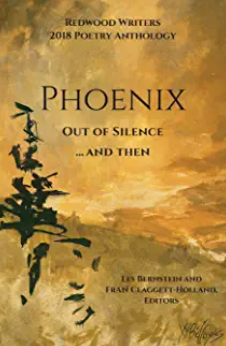
    October 10, 2017was published in Phoenix Out of Silence . . . And Then. Redwood Writers 2018 Poetry Anthology, edited by Les Bernstein and Fran Claggett-Holland. Available through Amazon.


  • Boost Dialogue with Beats . . . Prompt #532

    Too much dialogue can be boring to read. Interspersing action with dialogue makes a story interesting.

    In real life, we don’t talk without movement, neither should characters on a page. Plus, action gives clues to the character’s personality, habits, status and more.

    For example:

    “I dunno,” Remy said.

    Well, kind of boring. But what if detail were added:

    “I dunno,” Remy said, polishing the top of his boot along the back of his jeans.

    Readers can “see” this action and learn more about Remy’s character.

    Beats

    “Dialogue benefits from variety. A good way to maintain reader’s interest is to insert a variety of beats into dialogue. Beats are descriptions of physical action that fall between lines of speech.” —“Amp Up Dialogue With Emotional Beats,” by Todd A. Stone, Nov/Dec 2010 Writers Digest

    Facial Expressions

    Facial expressions signal emotions.

    “When a character raises an eyebrow or furrows his brow, this action, or beat, interrupts the dialogue and telegraphs a change in the character’s emotional state. As an exchange progresses and the emotional intensity rises—as the character’s dissatisfaction grows into anger, for instance—a character might set his jaw, bite his lip or narrow his gaze. His eyes may darken, his face may redden, his nostrils may flare and so on.

    Watch a TV show with the sound off. See how actors use facial expressions to signal emotions.”

    Physicality

    Of course, facial expressions aren’t the only way to physically show emotions. Body language can indicate a range of emotions.

    “Characters can point, steeple their fingers, clench hands into fists, pound tables, hold their hands up to surrender, cross their arms in front of their chests, throw up hands in resignation or despair.”

    Movement

    “Characters can cross the room, push back from a desk or table to get physical and emotional distance from a heated conversation, an intimate moment or another character. They can move in closer to become more threatening or more intimate, or to drive a point home. Use movement to support and enhance your dialogue.”

    Bigger Moves

    “If it fits your character, use big actions: Throw a fit, throw a plate or throw a punch. If your character has a hair-trigger temper, bypass eyebrow raisings and go straight to breaking furniture.

    Make sure the actions are consistent with the character’s traits. Every action should be a reflection of the character’s objectives and emotions, and of the scene. If the character seldom shows emotion, focus on small details that show true feelings, a tightening around the eyes, a deliberate forcefulness in each step as he walks across the room, a tense grip on a pen.”

    If you have a work in process see where you can add beats to dialogue.

    Prompt: Recall a recent conversation. Write it out, including physical gestures, facial expressions, and movement. Write as if you are writing a scene for a character to act out.

  • What energizes you? Prompt #531

    What motivates you to get out of bed in the morning?
    What do you look forward to?

    What energizes you?

  • A Blues Poem . . . Prompt #530

    A blues poem takes on themes of struggle, despair, bad weather, any suffering.  

    It can also be funny: Fruit Flies Everywhere.

    Three-line Blues Poetry

    A statement in the first line,

    A variation in the second line,

    an ironic alternative in the third line.

    My baby walked out that door.

    My baby walked out

    and now my broken door won’t open up no more.

    And

    I had to walk back to Texas.

    I had to get on my feet

     cuz my baby she took my Lexus.

    Four-line:

    When a woman gets the blues

    She hangs her head and cries

    But when a man gets the blues

    He hops on a freight train and rides

    With both types, you can continue the pattern. You can also repeat lines.

    You can write something in narration, then pull out lines to condense for a poem.

    You can start with these lines:

    When I woke up this morning . . .

    I heard on the news . . .

    Excerpted from Writer’s Digest magazine, “Writing Your Woes” by Miriam Sagan, August 2004

  • Collage in Poetry . . . Prompt #529

    I would like to share collage in writing with you, some things I learned from the poet Dave Seter.

    His poem, “Fargo Airport, Waiting in a Bar” in The Write Spot: Writing as a Path to Healing is an example of using collage in poetry. The lines in italics in his poem are from signs on the wall and on the label on a bottle. He seamlessly incorporates “lines from others” into his poetry.

    Look around you . . . what writing do you see that you can use in your writing?

    Perhaps: A book title, a greeting card, writing on décor, writing on a tissue box, or a piece of mail.

    Or: A note you have written, writing on a coffee mug, a sign on a wall.

    A label on a jar, a can, or a bottle.

    You can also use song lyrics as a jumping off point for your writing.

    Writing Prompt: Today . . . or . . . Yesterday

    Incorporate written words that you see into your writing.

    A stanza from “Fargo Airport, Waiting in a Bar” by Dave Seter:

    Waiting for a funeral, it seems the years collapse

    into one moment. I want to find

    the right thing to say to firemen and farmers,

    who are kind, as they offer from

    A Bucket of Beer Nine Dollars.

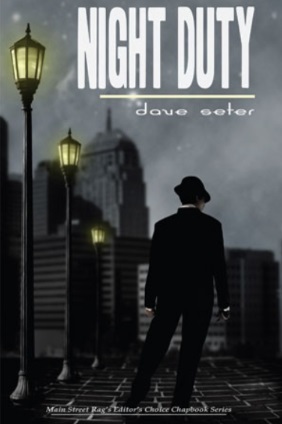
    Dave Seter is the author of  Night Duty,  and Don’t Sing to Me of Electric Fences, a poetry collection due out from Cherry Grove Collections in 2021. A civil engineer and poet, he writes about social and environmental issues, including the intersection of the built world and the natural world.

    Born in Chicago, he now lives in Sonoma County, California. He earned his undergraduate degree in civil engineering from Princeton University and his graduate degree in humanities from Dominican University of California, where he studied ecopoetics.

    Dave wrote his master’s thesis, “Introducing Godzilla to Marianne Moore’s Octopus of Ice at the Intersection of Global Warming, Environmental Philosophy, and Poetry,” based on Marianne Moore’s collage poem, “An Octopus (of ice).”

     “This paper explores the question: How can a poet write an ecologically aware poem about global warming?”

  • When I was in 7th grade . . . Prompt #528

    When I was in the seventh grade . . .

    Fill in the rest . . . what happened when you were in seventh grade?

  • When I was six years old . . . Prompt #527

    When I was six years old . . .

    Finish the sentence: When I was six years old . . .

  • What have you been thinking about? Prompt #526

    What have you been thinking about lately?

    I’ve been thinking about hair.

    The following is an excerpt from My Generation magazine, Sept-Oct 2001.

    “You can’t say hair without muttering a bitter, Ha!

    Hair is the Achilles’ heel atop our skulls: the curse of baldness, the pathos of the comb-over, the futility of the hairpiece.

    The double cross of auburn, chestnut, raven locks—your crowning glory—suddenly blanching the color of steel wool.

    Curly hair that won’t straighten, straight hair that won’t curl.

    The heartbreak of the impermanent wave, the bungled dye jobs, split ends, dandruff.

    Every head of hair in the civilized world is shackled to a monthly treadmill of maintenance, overhaul and gardening, hostage to the grooming industry and its literal clip joints.

    You could buy a new Ferrari with the money you shell out over a lifetime for the upkeep of that mat of third-rate fur.”

    Prompt: Hair

    Or: What have you been thinking about?

  • I liked to . . . Prompt #525

    Be the kid you once were. What did you like to do when you were 4 or 5 years old?

    Or 12 years old?

    Remember that time of joy or angst.

    Scroll back in your memory bank . . . . write about a memorable time from your childhood.

    Or write about something you liked to do over and over again.

    Prompt: I liked to . . .

    Or: I remember . . .

  • Mapping The Journey . . . Prompt #524

    Stories are about characters desiring something and the things that prevent them from getting what they want. 

    This is true for both fiction and memoir.

    Another word for desire is yearning, suggesting the deepest level of desire.

    Characters have problems and yearnings.

    Do they overcome them?

    What obstacles get in the way?

    Answering these questions results in story-telling.

    Writing Prompts as a guide, or a map, leading the way to telling the narrator’s story:

    Interview yourself or your fictional character, by answering these questions:

    How did you get started in your line of work?

    How did you become interested in your hobby?

    What did you desire at age 18?

    What did you desire at age 25?

    What do you desire now?