Category: Quotes

  • What makes a happy reader?

    What makes a happy reader?

    Robert Keiner answers, “It’s all about being invited in by the writer. If a writer begins showing off with obscure or precious writing, that gets in the readers’ way. . . The job of the writer is to ignite a fictional daydream in the brain of the reader and then step away and become invisible so the story becomes the readers’ own.” — WritersDigest, February 2017

  • Forgiveness liberates the soul . . . — Nelson Mandela

    Forgiveness liberates the soul,” Mandela explained to a crowd. “That’s why it’s such a powerful weapon.”

    The movie “Invictus,” featuring Matt Damon, Clint Eastwood and Morgan Freeman is about Nelson Mandela, who spent 27 years in prison. After he was released and elected as South Africa’s first black president, he preached reconciliation.

    When he decided to support the country’s rugby team — long a symbol of white oppression — his countrymen were stunned.

    Forgiveness liberates the soul,” Mandela explained to a crowd. “That’s why it’s such a powerful weapon.”

    When writing, especially freewrites, you may experience epiphanies that will enlighten and inform you.   Best wishes to you as you write. Just write.

  • Memoirists are the bravest writers.

    Helen Sedwick, author of Coyote Winds, believes “Memoirists are the bravest of writers.”

    “In exploring the journeys of their lives, they [memoirists] delve into the private (and imperfect) lives of others. Can a memoirist write about surviving abuse without getting sued by her abuser? Can a soldier write about war crimes without risking a court-martial?

    Helen answers these questions in her guest blog post “A Memoir is not a Voodoo Doll.”

    We lead rich lives, most of us. Rich in experiences, in friendships, in family, and in our work. I think you can find riches to write about.  So, whatchya waitin’ for? Start writing. And don’t worry about a thing. Just write.

  • “I was very careful never to take an interesting job.” —Mary Oliver

    mary-oliverPoet Mary Oliver was born in 1935 in Maple Heights, Ohio. She had an unhappy childhood and spent most of her time outside, wandering around the woods, reading and writing poems.

    From the time she was young, she knew that writers didn’t make very much money, so she sat down and made a list of all the things in life she would never be able to have — a nice car, fancy clothes, and eating out at expensive restaurants. But Mary decided she wanted to be a poet anyway.

    Mary tried college, but dropped out. She made a pilgrimage to visit Edna St. Vincent Millay’s 800-acre estate in Austerlitz, New York. The poet had been dead for several years, but Millay’s sister Norma lived there. Mary and Norma hit it off, and Mary lived there for years, helping out on the estate, keeping Norma company, and working on her own writing.

    Mary said: “I was very careful never to take an interesting job. I took lots of jobs. But if you have an interesting job you get interested in it. I also began in those years to keep early hours. … If anybody has a job and starts at 9, there’s no reason why they can’t get up at 4:30 or 5 and write for a couple of hours, and give their employers their second-best effort of the day — which is what I did.”

    She published five books of poetry, and still almost no one had heard of her. She doesn’t remember ever having given a reading before 1984, which is the year that she was doing dishes one evening when the phone rang and it was someone calling to tell her that her most recent book, American Primitive (1983), had won the Pulitzer Prize. Suddenly, she was famous. She didn’t really like the fame — she didn’t give many interviews, didn’t want to be in the news.


  • “Life will go on . . . ” Oren Lyons

    oren-lyons

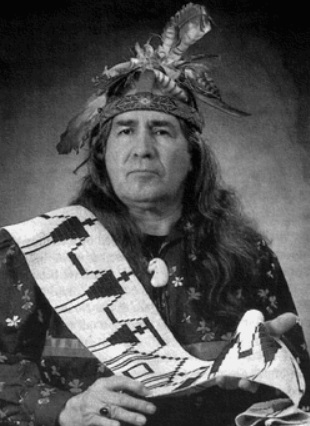
    “Life will go on as long as there is someone to sing, to dance, to tell stories and to listen.”  —Oren Lyons

    Share your story at: StoryShelter,  “a free service that lets you write down the personal stories of your life, save them and selectively share them. StoryShelter was founded in 2012 by Melisa Singh.”

  • “Move to a position of wisdom and power . . . ” DeSalvo

    ledger.ink well


    “If we write about our pain, we heal gradually, instead of feeling powerless and confused, and we move to a position of wisdom and power.” — Writing As A Way of Healing by Louise DeSalvo

  • Twenty-six letters.

    Neil Gaiman, excerpt from Brain Pickings,  “Why We Read and What Books Do for the Human Experience

    When you watch TV or see a film, you are looking at things happening to other people. Prose fiction is something you build up from twenty-six letters and a handful of punctuation marks, and you, and you alone, using your imagination, create a world, and people it and look out through other eyes. You get to feel things, visit places and worlds you would never otherwise know. You learn that everyone else out there is a me, as well. You’re being someone else, and when you return to your own world, you’re going to be slightly changed.  — Neil Gaiman


    https://www.brainpickings.org/2016/08/03/neil-gaiman-view-from-the-cheap-seats-reading/

  • I’m sorry you are experiencing this.

    Flashlight beam blueThis Write Spot Blog Post is inspired by The Writings of Tim Lawrence, The Adversity Within, Shining Light on Dark Places.

    Tim offers ideas in his blog post about helping someone who is grieving:

    “I acknowledge your pain. I am here with you.”

    “Grief is brutally painful. Grief does not only occur when someone dies. When relationships fall apart, you grieve. When opportunities are shattered, you grieve. When dreams die, you grieve. When illnesses wreck you, you grieve.

    So I’m going to repeat a few words I’ve uttered countless times:

    Some things in life cannot be fixed. They can only be carried. 

    These words come from my dear friend Megan Devine, one of the only writers in the field of loss and trauma I endorse. These words are so poignant because they aim right at the pathetic platitudes our culture has come to embody on an increasingly hopeless level. Losing a child cannot be fixed. Being diagnosed with a debilitating illness cannot be fixed. Facing the betrayal of your closest confidante cannot be fixed.

    They can only be carried.”

    —Excerpt from Tim Lawrence, 10/19/15 blog post, “Everything Doesn’t Happen For A Reason.”

    Note from Marlene: Some people think everything happens for a reason and this is a comforting thought for them. Others do not think everything happens for a reason. Grief can be difficult no matter what your beliefs are about why it happens.

    Suggestion from Marlene:  When someone is having a difficult time, instead of saying “Everything will be okay,” or “This, too, shall pass,” how about:

    “I’m sorry you are experiencing this.

    If you are experiencing grief that you can’t shake, please seek professional help.

    It might help to write about your situation. Please be careful not to re-traumatize while writing. For ideas on The Write Spot Blog about healing through writing, click on How to write without adding trauma  and Pema Chodron’s Things falling apart is a kind of testing.

  • Force yourself . . . and don’t stop . . .

    Storm clouds“Force yourself to begin putting words on the page immediately, and don’t stop until the timer goes off, even if you have to write about the weather.” — Jan Ellison, inspired by Ellen Sussman

    I read this quote in the 12/4/15 Writer’s Digest guest blog post, “9 Practical Tricks for Writing Your First Novel,”  written by Jan Ellison.

    Since Ellen Sussman was scheduled to be a Writers Forum presenter and since I also believe this philosophy . . . my ears perked up. . . .  Daydreaming about how “ears perked up” would look and could it really happen? I think so, in a Fred Flintstone kind of way, when he’s . . .

    Oops, I’m taking the writing advice to put words on the page too literally. And the timer is ticking.

    Brian Klems, host of The Writer’s Dig Blog where this post appears, gives this introduction to the article:  “Whether you’re writing your first novel or are struggling with completing a second one (or more), sometimes you need some help focusing and figuring out how to reach your goal. Use these 9 tricks to help you go from first sentence all the way to completed novel.”

    I found “9 Practical Tricks for Writing Your First Novel” to be helpful. You might also find inspiration and  helpful ideas in this blog post by Jan Ellison.

    Jan Ellison is the bestselling author of the debut novel, A Small Indiscretion (Random House 2015) which was both an Oprah Editor’s Pick and a San Francisco Chronicle Book Club Pick. Jan’s essays and stories have appeared in The New York Times, The Wall Street Journal, Narrative Magazine and elsewhere, and she received an O. Henry Prize for her first short story to appear in print.

    Ellen Sussman is the New York Times bestselling author of four novels, A Wedding in Provence, The Paradise Guest House, French Lessons, and On a Night Like This. She is the editor of two critically acclaimed anthologies, Bad Girls: 26 Writers Misbehave and Dirty Words: A Literary Encyclopedia of Sex. She teaches through Stanford Continuing Studies and in private classes.

    Ellen Sussman will be the presenter at Writers Forum of Petaluma on Thursday, June 16, 2016 where she will talk about will talk about A Writer’s Life: Process and Craft.
  • When we accumulated silent things within us . . .

    Bachelard“What is the source of our first suffering? It lies in the fact that we hesitated to speak….it was born in the moments when we accumulated silent things within us.” ― Gaston Bachelard

    I first learned of Gaston Bachelard from my writing teacher, Terry Ehret, with her response to my poem, “What I Learned.”

    Terry wrote on my paper, “Here’s a quote from Gaston Bachelard (French philosopher) that your poem makes me think of.”

    I’m no poet, but it’s been fun to dabble.  Click on Prompt #221, to read “What I Learned.”  (scroll down)