Blog

  • Begin with the low hanging fruit.

    Guest Blogger Jan Ellison talks about truth in short stories and novels.

    Years ago, when the first short story I published was included in the 2007 O. Henry Prize anthology, I was standing out front of my kids’ school when a woman I hardly knew poked her head out of her car to say that she’d only read the first paragraph, but would I be willing to tell her how much of my short story was true? It was the first time the question had been posed to me, and I had no idea how to answer it. Did she only want to read the story if it was “true,” or if it was not?

    Sometimes the question comes in other forms. What gave rise to the novel? What was the inspiration for your story? Is it autobiographical?

    I am as guilty of wanting answers to those questions as any reader. After reading Adam Haslett’s heartbreakingly beautiful novel, Imagine Me Gone, I couldn’t help wondering whether the novel’s brilliance is in part born out of personal experience with crippling depression.

    I read Imagine Me Gone at our place in the mountains. I sat beside a lake, oblivious to the sun burning my back and the odd little black beetles stinging my calves. It was a novel that sucked me into its psychology, drowned me in one family’s despair and unfailing love, and felled me with its humor, its intelligence, and its vision. It released me two days later furious, devastated, moved, and envious. As only the finest literature can do, it had altered me. Does it matter how much of it is “true?” It matters only in that whatever tragedies in the author’s life gave rise to it, we can be grateful as readers that he had the courage and tenacity to turn those experiences into art.

    As Stephanie Harrison writes in BookPage: “Imagine Me Gone is immensely personal and private, yet feels universal and ultimately essential in its scope. The end result is a book you do not read so much as feel, deeply and intensely, in the very marrow of your bones.”

    When literary realism succeeds, it feels like life. When it doesn’t, it feels contrived. In my experience, this is the case whether the events that inspired the fiction happened or not. I have often become burdened by small details from my own experience that I try to manhandle into an evolving fiction. My own nostalgia insists this gem of an anecdote or detail belongs. But often, it’s not the right thing; it belonged in my life, but not in the fabrication it inspired. The opposite is of course also true: sometimes life delivers up a line of dialog, or a situation or detail that cannot be matched by invention. When there is a risk of offense, though, sometime we writers have to suck it up and settle for an inferior construction of our imaginations.

    In an interview for American Short Fiction, the lovely Rachel Howell asked me how much of my own life, and past, informed my work, and how I managed to keep narrative distance while very much writing what I know.

    I responded that I often begin with the low-hanging fruit: places I’ve lived, my own experiences, emotions, memories, observations, friends, family. Stories people tell me or that I read in the newspaper. Conversations I overhear in restaurants. That’s the raw material. And often, the initial attempt to get this material onto the page is done in a voice close to my own.

    But once I begin to shape the material into something resembling a story, once characters emerge, the voice, or voices, if there is more than one narrator, will necessarily be transformed. Even though some of what happened to the narrator happened to me, the voice is no longer mine—it’s one that has emerged in the service of the story over years of revision. The story is not my life but a collection of sentences deliberately, fictionally shaped to deliver an emotional truth that becomes clear only as the story unfolds.

    In the last year and a half since the book came out, I’ve spoken and written at length in essays and interviews about the features of my own life that gave rise to the novel. All that I’ve said and written on the topic is true. Is it the whole truth? No story ever is.

    Excerpted from Jan Ellison’s 10/7/2-16 Blog Post: How Much of This is True? And other questions authors dread.

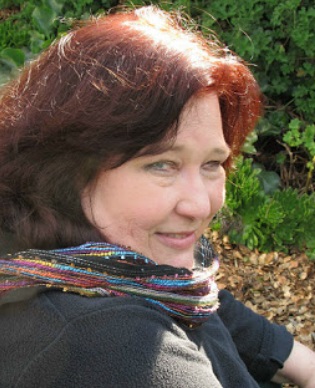
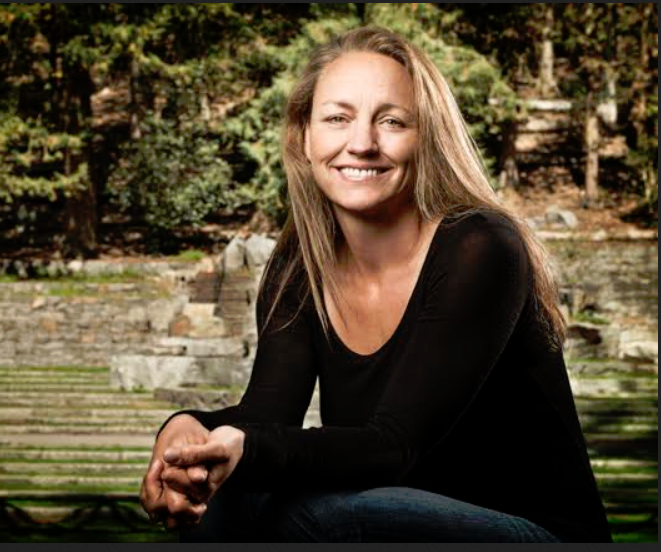
    Jan Ellison is the USA TODAY bestselling author of the debut novel, A Small Indiscretion, which was a San Francisco Chronicle Best Book of the Year. A graduate of Stanford, Jan left college for a year at nineteen to study French in Paris, work in an office in London, and try her hand at writing. Twenty years later, her notebooks from that year became the germ of A Small Indiscretion

    Jan holds an MFA from San Francisco State University. Her essays about parenting, travel and writing have appeared in The New York Times, The Wall Street Journal, Writer’s Digest and elsewhere. Her short fiction has received numerous awards, including the O. Henry Prize for her first published story.

  • Best or favorite gift, or . . . ??? Prompt #310

    There are tacky gifts, insulting gifts, selfish gifts the giver secretly wants, cheap gifts and re-gifted gifts.

    But some gifts are transcendent. Have you ever received such a perfect gift? One that amazed you with its imagination? Perhaps it was a gift that completely touched your heart, changed your life, or opened a new world. Maybe it was a gift so dear you held on to it for a lifetime.  What was it and why was it so special to you?

    Prompt: Your best gift or your all-time favorite gift.

  • Forgiveness liberates the soul . . . — Nelson Mandela

    Forgiveness liberates the soul,” Mandela explained to a crowd. “That’s why it’s such a powerful weapon.”

    The movie “Invictus,” featuring Matt Damon, Clint Eastwood and Morgan Freeman is about Nelson Mandela, who spent 27 years in prison. After he was released and elected as South Africa’s first black president, he preached reconciliation.

    When he decided to support the country’s rugby team — long a symbol of white oppression — his countrymen were stunned.

    Forgiveness liberates the soul,” Mandela explained to a crowd. “That’s why it’s such a powerful weapon.”

    When writing, especially freewrites, you may experience epiphanies that will enlighten and inform you.   Best wishes to you as you write. Just write.

  • Cultivate Creativity

    Cultivate creativity: Grow awareness and eliminate distractions.

    Like gardening: Pull what you don’t want (those darn weeds) and nourish what you want to grow.

    The following Guest Blog Post is an excerpt from Suzanne Murray’s 1/14/17 blog post.
    I started writing before the development of the personal computer, when cut and paste meant I was down on the floor with a pair of scissors and a jar of that thick white glue that smelled vaguely of peppermint. It was in many ways a simpler time with far less pulling on my attention.Every morning upon rising I would make my single cup of French roast coffee, dripped through a Melitta, and then sit down to write. There weren’t thoughts like I’ve got to check my email or Twitter feed to interfere with putting words on the page. If I needed to do research, I went to the library, the sacred hall of actual books. I would flip through the cards in the small wooden drawers of the card catalog to find the book I needed, check it out and carry it home. Now I love my laptop. It makes revision, including cut and paste, so much easier. It connects me to a larger world. I can Skype my friend in Australia and feel like I’m sitting in her living room talking. I can connect to the web to find a wealth of information I need for my work.Yet lately I’ve been thinking about the issue of distractions. The fast pace of our times pulls us in so many different directions at the same time. We can lose ourselves in the swarm of emails, the compulsion to engage social media, surfing the web or checking the notifications coming in on our phones.I’m not suggesting that we give those things up. Rather, what if we brought more awareness to what we really want to be doing with our time in each moment?What if we asked ourselves the question, “What would bring me the most happiness and joy right now?”

    If the answer is to post something on Facebook, great.

    Bringing consciousness to our lives on a regular basis helps us chose the activity that feeds us and helps us create more of what we really want in our lives.

    Asking “What would bring me the most happiness at this time?” can help overcome procrastination and the distraction that can get in the way of our creating.

    When I asked myself that question this morning I got that I wanted to write a blog about distractions. Writing is one of the things that always brings me a satisfaction as I tend to be more present and lose myself in flow.

    What does this for you? Start being more mindful of what really brings you happiness. Maybe set an alarm on your phone to go off every hour to remind yourself to stop and ask the question and be more conscious of your choices. Play with it. See what shifts for you.

    About Suzanne Murray:

    Join Suzanne on a Journey to the West of Ireland:  Experience the Enchantment of the Ancient and Emerging Celtic World

    EFT (Emotional Freedom Techniques):  Learn new ways to laser in on issues and shift them at the core.

    CREATIVITY COACHING
    Experience  joy  through creative expression. I offer practical, emotional and soulful strategies to help you fully uncover your creative gifts. I provide encouragement and support in understanding of the creative process and its stages and exercises for accessing the wisdom of your imagination. I’ll help you set realistic goals and support you in achieving them. We will work through the issues that get in the way of your creativity, including career concerns, blocks, limiting beliefs, relationship issues and the existential and spiritual questions that can arise from wanting and needing to create.

    Follow Suzanne on Twitter at @wildcreativity where she tweets inspirational quotes for creativity and life.

  • Why I Write. Prompt #309

    There’s a lot going on in the world. Upheaval, turmoil, chaos, unity, freedom, marches, democracy.

    Those are some of the words/concepts I’m thinking as I write this blog post.

    Today’s prompt is similar to my August 12, 2014 blog post, quoting screenwriter and author, Antwone Fisher, about why he writes.

    I write for a variety of reasons: For clarification, to share thoughts, for enlightenment, plus all the things I mentioned in the 8/12/14 post.

    Now, it’s your turn. Why do you write?

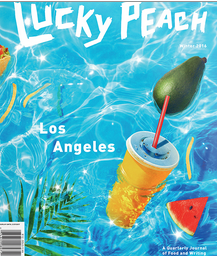
  • Lucky Peach might be your lucky magazine

    Do you like to create recipes? Do you have favorite recipes from way back? Do your stories involve food?

    “Lucky Peach uses food as a filter to tell stories about people, places, traditions, flavors, shared experiences and cultural identities.”

    Lucky Peach might be a good place for you to submit your story/vignette/art/photos and the occasional recpe.

    “For freelancers, the opportunity to break in doesn’t stop at each issue: Lucky Peach expanded its mission with an award-winning website, cookbooks and live events.”

    Their submissions page is very friendly and inviting: “If you’re interested in submitting your writing to Lucky Peach, we’re interested in reading it.”

    COMPLETE ARTICLES ONLY: Lucky Peach does not want pitches nor vague ideas.

    LENGTH is up to you.

    SIMULTANEOUS SUBMISSIONS are okay. Just let them know if your work is accepted elsewhere.

    COVER LETTER is not necessary.

    Art Photos:    “Art is important to us. Send us your best stuff.

  • Short essays can be a goldmine.

    Today’s guest blog post is excerpted from Anne R. Allen’s Blog… with Ruth Harris. Writing about writing. Mostly. 

    Book length memoir is a hard sell, but short essays can be a goldmine.

    Memoir is the most popular genre at any writers’ conference.

    Unfortunately, it’s the hardest to write well—and the least likely to be successful if you’re an unknown newbie writer.

    That’s because book-length memoir isn’t likely to become a bestseller unless people already know who you are.

    So how do you get people to know you? You could become a reality TV star, run for political office, or be related to somebody who marries into the British royal family of course, but not everybody has that option.

    You can also work to get yourself known through social media, which I recommend for all memoirists.

    Start a blog, podcast, or vlog on the subject or setting of your memoir and put some serious effort into promoting it through social media (also known as “building platform”).

    It also helps to publish short memoir pieces and personal essays in traditional venues. If you’ve been working on that memoir a while, you probably have the material mostly written in the form of a book length memoir.

    With a few tweaks, your excerpts can become publishable personal essays.

    And the good news is, those short pieces can pay very well. Look at the fantastic success of anthologies like the Chicken Soup series. And if you get into an anthology along with some well-known authors, you’ll establish a fanbase that would take years to garner with a solo book release.

    To read Anne’s entire blog post, including “Tips on Getting An Audience for Your Blog” and an essay by award-winning author and editor Paul Alan Fahey on how to expand a scene from your memoir (or directly from your life) into a flash memoir piece or personal essay, click on: Writing Memoir that Sells: Think Outside the Book!

  • Create a vignette. Prompt #308

    Many of us have vignettes, little stories of things that happened, that we could write about: Events or situations that enlightened, inspired, or changed us.  All are memorable and could be written. But why? Why should you write these stories?

    “All humans understand and use story on an intuitive level. It’s our most effective teaching tool. It’s how we understand our world, ourselves and each other. It’s how we make and deepen our connections. It’s how we draw meaning from experience.”  — Deb Norton, “Story Structure, Simplified,” WritersDigest, February 2017

    What if there was a recipe for this type of writing like there is for voodoo doughnuts?

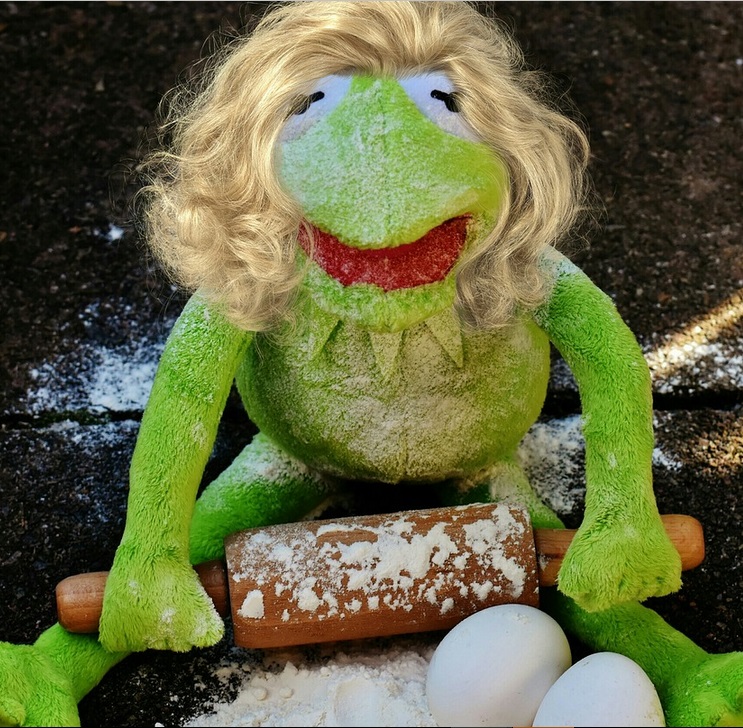
    “Learning when to throw the flour, proper handling of a rolling pin, the intricacies of an old fashion, the ‘flip,’ and countless other tricks of the trade were now in the hands, minds, and notebooks of  Cat Daddy and Tres.”  Voodoo Doughnut

    Recipe for Writing Vignettes

    Learning when to throw in anecdotes, proper handling of strong verbs, the intricacies of memory, the fear of exposure, and countless other tricks of the trade are in your hands and your creative mind. There are many resources to help shape your creation.

    Click Memoir for recipes . . .  how-to ideas . . . for writing anecdotes. Now, get to creating!

  • Memoirists are the bravest writers.

    Helen Sedwick, author of Coyote Winds, believes “Memoirists are the bravest of writers.”

    “In exploring the journeys of their lives, they [memoirists] delve into the private (and imperfect) lives of others. Can a memoirist write about surviving abuse without getting sued by her abuser? Can a soldier write about war crimes without risking a court-martial?

    Helen answers these questions in her guest blog post “A Memoir is not a Voodoo Doll.”

    We lead rich lives, most of us. Rich in experiences, in friendships, in family, and in our work. I think you can find riches to write about.  So, whatchya waitin’ for? Start writing. And don’t worry about a thing. Just write.

  • Figuring out the important thing

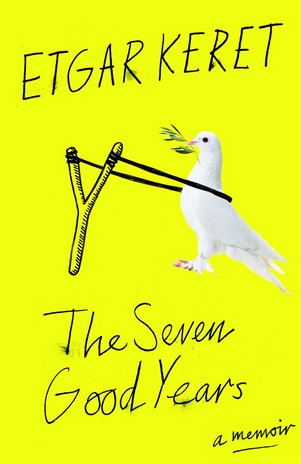
    “Writing essays is like therapy because you’re figuring out: What was the important thing in that incident? ”   —   Etgar Keret

    Keret, an “acclaimed Israeli writer . . . known for his unique and distinctive writing style” began writing essays after the birth of his son.

    “. . . because I’m sensitive about family issues. . . It never stops me from writing it, but it might stop me from publishing it.”  He wrote personal essays to “have a literary tombstone” for his father.  He is able to create work that is “moving and deeply affecting in only a few pages.”

    Excerpted from the February 2017 issue of The Writer magazine.

    Your turn: No pressure to write the next great American novel, just write what you know, what you experience. Write about your trip to the grocery store where you observed an act of kindness or had a weird encounter. Write about your ordinary-to-you holiday event . . . something you will find later and be glad you captured those exquisite moments that you had forgotten:  The funny story your grandfather told, your sweet aunt and her infectious laugh, the annoying presents you received from your equally annoying cousin/uncle/sister/friend. Write the good stuff, the bad stuff and the in-between stuff. Just write.