Blog

  • The California Sunday Magazine

    California Sunday MagazineThe California Sunday Magazine is looking for freelance writers, photographers and illustrators.

    From their website:

    The California Sunday Magazine roams across California, the West, Asia, and Latin America, telling stories for a national audience. We also produce a live event series, Pop-Up Magazine. We explore science, business, entertainment, politics, technology, art, social issues, sports, food, and more. We’re curious about everything. We publish stories regularly on the web and in print — delivered monthly with select Sunday copies of the Los Angeles Times and the San Francisco Chronicle.

    Interested in working with us? Check out our job openings.

    Writers

    We’d love to hear your story ideas. We’re not hiring staff writers or contributing writers yet. But we look forward to working with a wide network of independent, freelance writers. Our rates for reported features will be competitive with national print magazines. And you’ll work with exceptional editors. Send a note to writers@californiasunday.com to receive our Contributor Guide.

    Photographers and Illustrators

    Photographers and illustrators are welcome to share their work for consideration. We are open to seeing a variety of work as we assemble a roster of talented contributors and hope to be a meaningful outlet for artists for a long time. Send a note to artguidelines@californiasunday.com to receive our Contributor Guide for photographers and illustrators, as well as very occasional emails that will let you know if we’re developing a special issue or looking for work on a particular theme.

  • Note to your younger self . . . Prompt #265

    Before you start writing on this prompt, how about a little relaxation?

    Sit back. Relax into your chair. Both feet flat on the floor. Hands resting lightly.  Take a deep breath in. Relax it out. Roll your shoulders in a circle.  Other direction.  Drop your chin to your chest and roll your head in a circle. Other direction.

    Take a deep breath in. Ease it on out.

    Now, We’re going to time travel back in years.

    Time Machine

    Think back to the person you were ten years ago. See yourself as in a snapshot.

    Now go back to when you were 25. Remember what you looked like. What were you doing? Just take a moment to remember yourself at 25.

    Hand writing in journalNow go back to when you were twenty.

    Take a look at yourself when you were 15.  What were you like at 15? What influenced you?

    When you’re ready, write a note to your younger self.

  • Call the Authorities!

    Guest Blogger Elaine Silver: How to show your expertise in your writing.

    Think about any book that you have read that really grabbed you. Take some time to read parts of that book again with the idea in mind of writerly authority.  Once you start looking for it, you will be dazzled at the facility with which the author commands the story.

    You can write like that too.

    Let’s examine the word authority. What feeling do you get reading the word “authority?” Do you feel rebellious, like you don’t want to listen to someone else? Do you feel like you want to immediately say “no” to a request? If you answered yes to these questions, then you think of authority as something that subjugates you.

    Or conversely, when you think of authority, do you feel secure knowing that someone else knows more than you do about something? Do you envision someone who can give you guidance and advice? Does having someone around in authority make you feel like all is handled?

    Or do you have both reactions to the word—positive and negative?

    It is my experience that many people are ambivalent about authority—both as it is exercised by others and by themselves. We seem, as a culture, to be confused about it. To whom do we give authority and why? When do we claim it ourselves? This ambivalence is understandable since we live in a heterogeneous culture with many value systems and many people claiming power over us who may not have our best interests at heart.

    What does this have to do with writing, you may ask? Well, actually, everything.

    The word authority comes from the word  “author.” From the Latin:  auctoritatem (nominative auctoritas) “invention, advice, opinion, influence, command,” from auctor “master, leader, author.”

    In my work as an editor, one issue that I deal with frequently is a writer who is reluctant to become an author, a leader—someone who is actually claiming authority over what the reader is reading and understanding.

    I can tell you that the writer/author/leader who does not claim authority might as well hang up her keyboard and call it a day.

    Here are two examples:

    I recently helped a vocal coach with a book about the technique she has developed to teach her singing students. She is without question an absolute authority on teaching singing and her students have had remarkable results using her methods. However, the initial version of the book did not reflect these facts. She backpedaled on many of her explanations of her methods. She wrote in passive sentence structures

    I asked her to describe to me how she acts in her studio sessions with her students. She painted a picture of herself as a confident leader who creatively deals with every issue that comes up and inspires her singers to move past their perceived limitations to achieve vocal prowess that they did not think possible. Armed with that knowledge, we changed her book and her writing to reflect this powerhouse of a teacher. Now her message comes through beautifully and forcefully, as it should.

    Another client of mine who is writing a memoir found herself awash in a powerful story but she was writing it as if she had no idea what was going on. This made me, as surrogate for the reader, uneasy and insecure. How am I supposed to trust this author if she doesn’t trust herself?

    This writer made the mistake many writers make. She did not take charge of the story and instead let her main character (her younger self) run the show. And the show she ran was a meandering and bumbling mess, much like her life. The author was confusing the actions of her main character with her own role as author. Once she began to differentiate between herself and her protagonist, the book gained cohesion and clarity while story remained an account of chaos and confusion. What a lovely achievement!

    No matter what the story is or who the main character is, the author must act as captain and keep steering the ship with a steady hand even in unruly seas.

    We read because we want to see the world through the eyes of the author. We want to know what he knows. We ask and expect her to be our leader and show us some new terrain. We expect our author authority to navigate us safely into and through an uncharted, exciting land that we have not experienced before.

    Know your story. Know the journey you want to take your reader on. Lead with confidence. Write with Authority.

    Elaine Silver.200Elaine Silver helps writers realize the greatest potential of their writing by discovering their true intent and translating it to the pages of their books. She has written on topics as varied as choosing the right college to the innovations in green building techniques. Elaine’s specialty is seeing how your message will be perceived by others and guiding you to create your best work.

    Elaine will be one of the editors on the Editors Panel at Writers Forum on July 21, 2016, 6:30 pm to 8:30 pm at Petaluma Community Center.

  • Here and There. Prompt #264

    Today’s writing prompt comes in two parts.

    Before writing on this prompt, I have a suggestion.  Do a little relaxation first. Just for a few minutes. Use your own method or follow this method:

    Relax into your chair. Feet flat on the floor. Hands loose, resting on your thighs.

    Take a big, deep breath in, feel your chest expand.  Let it out like a deflated balloon.

    Another deep breath in. And release.
    This time, when you take a deep breath in, bring your shoulders up to your ears. Shrug them down hard with the out breath. Another one.

    Let your head drop forward on your chest. Rest there for a moment. Rotate your head in a circle. Opposite direction.

    As you read about the next prompt, please place the palm of your writing hand on any place in your body that calls for attention. If you can’t put your hand there, bring your breath there. Take deep breaths as you need to.

    When you read the next prompt, notice what part of your body has a reaction.

    Prompt, Part 1: Write about a place that is uncomfortable for you.

    As you think about this, take your hand and rest it on the part of your body that is having a reaction.   Or put your breath there.

    The place that causes discomfort could be a small place like a corner, a closet, a chair, a nook. It could be a larger place, a building. It could be a barn or a city.  This could be a place that makes you feel very uncomfortable . . . it could have you itching and twitching with discomfort.

    When you are ready, Write about that uncomfortable place.

    Don’t leave yourself feeling uncomfortable . . . go to Part 2. If you don’t have time to write, at least daydream about . . .

    Prompt, Part 2:  Write about a place that you are comfortable in.

    First, make a short list of places you could write about. Just a list. Don’t start writing about the place just yet.

    With your comfortable place in mind, start writing with this opening:

    bookshawl“How do I love thee? Let me count the ways . . . ,” based on the poem How do I love Thee?  by Elizabeth Barrett Browning

    Be sure to end on a positive note:  A place you are very comfortable in.

    Thank you, Claudia, for the idea of palm of hand or breath for body-mind connection.  Thank you, Marjorie, for teaching me how to breathe and shrug.

  • While you were out. Prompt # 263

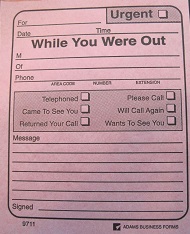
    While you were outIf you are of a certain age, you might remember those little pink telephone message notepads, “While you were out.”  Back in the days when executives had secretaries, and before answering machines, we would fill out these forms with information:  Who the message was for. The date. Who called and why. There were little boxes to check:  Telephoned. Came to See You. Returned your call. Please call. Will call again. Wants to see you.

    And my favorite, “Urgent.” I don’t know why it’s my favorite, perhaps it appeals to the dramatic aspect. And there is a larger space to write a message.

    Today’s Prompt:  While you were out.

    A variation of this prompt: The red light is blinking on the telephone answering machine. Or “you have one new message” on your cell phone.

    You hit “play” or “voice mail” and listen. You are shocked to hear. . .

    I can imagine all kinds of things you might write about, especially with the idea of “While you were out . . .  ”  I’m seeing pets go wild, plants taking over, bathtub overflowing, kids making a mess, stuffed animals/toys come to life.

    I look forward to reading your writing here, on The Write Spot Blog.

  • Worst and Best . . . Prompt #262

    Think about this past weekend . .  . this past week . . . this past month.  Take a few minutes to reflect how things have gone, are going.

    ledger.ink wellWhen you are ready, write about the worst thing that happened to you this past weekend, or week, or month.

    When you are done with that, write about the best thing that happened to you this past weekend, or week, or month.

    Worst and Best. Just write.

  • Force yourself . . . and don’t stop . . .

    Storm clouds“Force yourself to begin putting words on the page immediately, and don’t stop until the timer goes off, even if you have to write about the weather.” — Jan Ellison, inspired by Ellen Sussman

    I read this quote in the 12/4/15 Writer’s Digest guest blog post, “9 Practical Tricks for Writing Your First Novel,”  written by Jan Ellison.

    Since Ellen Sussman was scheduled to be a Writers Forum presenter and since I also believe this philosophy . . . my ears perked up. . . .  Daydreaming about how “ears perked up” would look and could it really happen? I think so, in a Fred Flintstone kind of way, when he’s . . .

    Oops, I’m taking the writing advice to put words on the page too literally. And the timer is ticking.

    Brian Klems, host of The Writer’s Dig Blog where this post appears, gives this introduction to the article:  “Whether you’re writing your first novel or are struggling with completing a second one (or more), sometimes you need some help focusing and figuring out how to reach your goal. Use these 9 tricks to help you go from first sentence all the way to completed novel.”

    I found “9 Practical Tricks for Writing Your First Novel” to be helpful. You might also find inspiration and  helpful ideas in this blog post by Jan Ellison.

    Jan Ellison is the bestselling author of the debut novel, A Small Indiscretion (Random House 2015) which was both an Oprah Editor’s Pick and a San Francisco Chronicle Book Club Pick. Jan’s essays and stories have appeared in The New York Times, The Wall Street Journal, Narrative Magazine and elsewhere, and she received an O. Henry Prize for her first short story to appear in print.

    Ellen Sussman is the New York Times bestselling author of four novels, A Wedding in Provence, The Paradise Guest House, French Lessons, and On a Night Like This. She is the editor of two critically acclaimed anthologies, Bad Girls: 26 Writers Misbehave and Dirty Words: A Literary Encyclopedia of Sex. She teaches through Stanford Continuing Studies and in private classes.

    Ellen Sussman will be the presenter at Writers Forum of Petaluma on Thursday, June 16, 2016 where she will talk about will talk about A Writer’s Life: Process and Craft.

  • Real Simple Life Lesson Essay Contest

    What was the most dramatic change you have ever had to make?

    “Maybe you had to move cross-country after being relocated for a job, opening up new possibilities along with fears. Or maybe you needed to sell your house or leave an apartment before you expected to. How did that situation influence the rest of your life? If one unavoidable shift changed your world—for good and bad—in enduring ways, write it down and share it with Real Simple.”

    Send your typed, double-spaced submission to lifelessons@realsimple.com.

    1,500 words maximum.

    Deadline: 11:50 pm, September 19, 2016.

    Read the 2016 Winning Essay How I Made My Best Friend During the Worst Tragedy of My Life, by Diane Penney.

    Real Simple

  • Found . . . Prompt #261

    Found.

      What do you think of when you hear the word “Found?”

    Some Thing you found somewhere?

    Something you discovered about yourself?

    You found you had . . .  fill in the missing piece.

    Something you lost and then found?

    Today’s writing prompt:  Found.

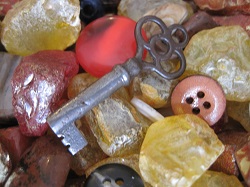
    Key.buttons

  • Ellen Sussman likes her world shaken.

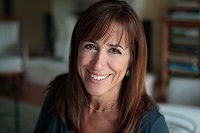
    Ellen SussmanGuest Blogger Ellen Sussman writes about the novelty of new places and how this opens interesting problems and possibilities for fictional characters.

    When I travel abroad I expect to be surprised. Life shouldn’t be the same in a foreign country. I want to shake up my world, to expose myself to new tastes and sounds and smells and voices. I want to see things that are so novel, so startling, that my eyes open wider. That experience – of expanding my horizons while traipsing across a new horizon – should not only transform me while I’m gone, but it should deliver me home again in some new, improved way.

    High demands for a little vacation.

    My sister travels to the same resort in Florida every year. She doesn’t want what I’m looking for. She wants food she’s familiar with, experiences that don’t challenge her, sheets with the same thread count as the sheets in her own house. I don’t think she’s alone. There are so many resorts around the world that look the same as each other – one could forget that one is in Mexico or Thailand or Italy. It will be easy to get a hamburger at that hotel and everyone will speak English and the gates are locked at night.

    But for those of us who want a foreign world that is, well, foreign, we head off in different directions.

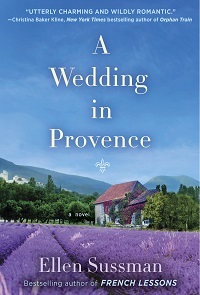
    Three of my own novels, French Lessons, The Paradise Guest House and A Wedding in Provence, are set abroad — in Paris, Bali and Cassis. My American heroes discover that once they’ve traveled to a foreign country their world tilts on its access, that nothing is as they thought it was. It’s great material for fiction because a new world presents conflict as it rubs up against the status quo. And I have a grand time making my Americans fumble their way through unfamiliar places and cultures.

    A year ago I moved from Palo Alto to Sebastopol. I have never lived in the country before. Like a traveler in a foreign land, my eyes are wide open. I love this new landscape, the slower pace of life, these gentler neighbors. And I’ve found that my creative juices are flowing. My senses are sharper, my imagination is fired up. Now I understand that changing the landscape can happen right here at home. And it’s a wonderful thing for a writer to experience.

    Sussman.A Wedding in Provence

    Ellen Sussman is the New York Times bestselling author of four novels, A Wedding in Provence, The Paradise Guest House, French Lessons, and On a Night Like This. She is the editor of two critically acclaimed anthologies, Bad Girls: 26 Writers Misbehave and Dirty Words: A Literary Encyclopedia of Sex. She teaches through Stanford Continuing

    Studies and in private classes.

    Ellen Sussman will be the presenter at Writers Forum of Petaluma on Thursday, June 16, where her books will be available for purchase.