Blog

  • Take note.

    It’s early Monday morning. The day is just getting started and it’s very quiet. The softly falling rain has hushed all ambient noises. No cars drive up our country lane. People are still sleeping on this soft-feeling day, not quite ready to begin the busyness of our lives. Even the birds are quiet this morning.

    And I’m wondering, do you want to write? Do you contemplate ideas to write about as you stay in bed just a little longer in the morning? Do you have brilliant, awesome thoughts for writing while you are driving? As you wait for sleep to settle in, do these brilliant ideas swirl in your head? And they are brilliant, I am sure.

    You tell yourself you will remember everything until you have time to write. Finally, you sit down to write and those creative ideas seem to have vanished. You stretch to grasp your dazzling insights, but now they are elusive.

    If only you had made a note to jog your memory.

    What to do?

    Lightbulb.Great Idea Keep a notebook and pen handy.

    Jordan Rosenfeld suggests keeping a notebook and pen in every room. Rayne Wolfe suggests keeping a notebook in your back pocket. Why not? Oh, you don’t wear jeans with back pockets? How about a shirt pocket? Or a pocketbook (isn’t that a funny word for purse?). Keep a notebook or recording device your car. Use only when it’s safe, of course.

    You can also use technology to track of your ideas: Tablets, a Notebook (the computer kind), recording devices, Evernote, your smartphone, digital slates. Probably before I can tap the “publish” button for this post, there will be more gadgets available.

    So next time, you sit down to write, dig out your note-leaving device and pick up where you left off. That is, if you can read your writing. Sorry, I can’t help you with that. I can barely decipher my scribblings.  Just write!

  • Main Street Rag Publications

    Main Street Rag PublicationsLiterary Magazines, Anthologies, Book Publishing, Contests.

    Main Street Rag Literary Magazine

    Fiction/Creative non-fiction:    Please EMAIL THE IDEA FIRST. Main Street Rag will tell you whether the subject appeals to them and if there is space for it. Prefer social or political themes over How to, process pieces or literary pieces about the life of a literarian.

    Images: Need high resolution to print, but require low resolution to submit.” If you don’t know the difference, you’re not ready to have your work published.” We like it all—no subject taboo—but if you are targeting cover art, we like people doing what they do, street scenes, a world in motion. Send us a picture we can hear and smell.

    Interviews: Prefer interviews with those in the arts—mostly literary—but visual and performing arts will also be considered.

    Poetry: Up to 6 pages of poetry. That can mean one long poem or as many as 6 one-page (or shorter) poems. No more than one poem per page. Any style, any subject, emphasis on edgier material, but we’re not interested in the graphic details of your love life and we do enjoy a good laugh now and then–so just send your best material and let the rest sort itself out. We prefer work that is alive with the poet’s own experiences.

    While we do not publish much in the way of formal poetry in our magazine, we will consider it. In that regard, we like to see formal poems that maintain the integrity of the form without becoming stiff, uninteresting or losing their vitality.

    Click on the subject to find out about: Anthologies, Book Publishing, Contests

    Main Street Rag

  • Suicide Doors . . . Prompt #200

    Today’s writing prompt is a poem by Ron Salisbury. You can write on the theme of the poem or the mood. You can use a line or a word for the writing prompt. Ready? Read and write. Just write, without  worrying how your writing will sound.

    Suicide Doors

    Don’t put that in a poem, she said.

    What? Don’t put what I said in a poem.

    We talk and a week later I find what I said

    in one of your poems. What’s the matter

    with that? He’ll find out. He doesn’t read

    poems. His friends will tell him. His friends

    don’t read poems. Just don’t put me in your poems.

    How about I make it in the 1960’s

    and it happens in my 1951 Merc with suicide

    doors, I got a D.A. haircut, smell of Bay Rum

    and your angora sweater comes off on my sport coat.

    Then what happens. Well, we could be in love.

    We already are. I mean the crazy 60’s love

    before birth control pills and we both smoke

    and sneak bourbon from your father’s liquor cabinet

    and try to figure out how to get some Trojans

    because they’re not in every grocery store

    and you have to ask the druggist for them

    because they’re kept behind the counter

    like cigarettes are now and because

    he knows everyone in town, it’ll get around

    so we drive all the way to Dexter on Saturday

    night and I’ll try to be cool and see if

    I can buy some and if I can’t we’ll take

    our chances anyways. Do we do it in the

    back seat? Yeah, the Merc had a giant

    back seat. And you won’t use any thing

    I said in the poem. Sure. Ok, but

    bring a blanket and you have to go slow

    and give me time to hang my sweater

    over the seat so it won’t get ruined.

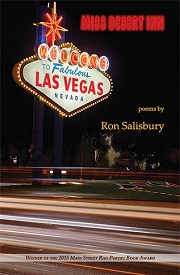
    Ron SalisburyRon Salisbury, author of Miss Desert Inn, (Main Street Rag Publications) lives in San Diego, CA, where he continues to publish, write and study in San Diego State University’s Master of Fine Arts program, Creative writing. Publications and awards include: Eclipse, The Cape Reader, Serving House Journal, Alaska Quarterly Review, Spitball, Soundings East, The Briar Cliff Review, Hiram Poetry Review, A Year in Ink, etc; Semi Finalist for the Anthony Hecht Poetry Prize – 2012, Finalist for the ABZ First Book Contest – 2014, First Runner-up for the Brittingham and Pollak Prize in Poetry – 2014, Winner of Main Street Rag’s 2015 Poetry Prize.

  • So you’ve earned that MFA, now what?

    Guest Blogger Ron Salisbury talks about MFA – Master of Fine Arts writing programs.

    Everywhere I go, I’m asked if I think the universities stifle writers. My opinion is that they don’t stifle enough of them. There’s many a best seller that could have been prevented by a good teacher.”–Flannery O’Connor

    Flannery may be a little tough but not far wrong. What will you do with your MFA in poetry or fiction or non-fiction or children’s literature? Is it different from what you thought you would do before you started that MFA program?

    The proliferation of Master of Fine Arts Writing Programs in the United States (some 200 as of this writing) requires new crops of students every year; cannon fodder, inductees to charge over the lip of the trench into the guns of Admission Departments and Student Loans without much chance of becoming that famous author, a goal which is implied but never stated by these programs. (Is that what you thought you’d learn at that program?)

    When I started my MFA – Poetry program in 2013, I had few of those allusions given my age (70) and narrative style of poetry. I was not going to be offered that tenure track teaching position in some MFA program. At best, I would get some adjunct position. (the typical pay for a semester class as an adjunct is $2000 to $3000 with no guarantee of any future work) And would hope to worm my way into the hearts and pockets of the program directors and students. Last year the United States graduated approximately 2,000 poetry MFAs, 2,000 fiction and between 500 to 1,000 non-fiction and other. And there were less than forty tenure tract creative writing positions available in those universities and colleges. But, I did naively expect that in my program I would be among poets striving to become better poets. What I have mostly found is a cadre of wonderful people learning “how” to write poetry. My observations have been generally supported by other writers in other programs throughout the United States.

    To  satisfy the body count necessary for these 200+ programs, the threshold has been considerably lowered. If your goal is to teach in an MFA program, anecdotally, minimal requirements today are the MFA degree and two published books at least. If one or both books were contest winners, so much the better. Given the proliferation of book publishing options today such as high quality appearing print-on-demand and self-published, the vetting process for MFA instructors—ones skilled and with enough notoriety to attract students—has become more difficult for universities. It used to be just a book from a good publisher and you could be considered, then it became the book and the MFA. Now the field is murky. Which has led to an entirely new phenomenon, the PhD in Creative Writing which has begun to propagate much as the MFA programs did fifteen-twenty years ago (today, about 32 programs). It would not be a surprise to discover in less than ten years that the minimum requirement to be considered as an instructor in an MFA program is the book or two and the Creative Writing PhD. So, if you have a goal to obtain an MFA in Creative Writing and do more with it than hang it on your wall, continue to work at Starbucks or teach two classes of freshman composition at some Junior College, hurry.

    Your Turn: Should you or shouldn’t you join an MFA program? Have you done it? What do you think? Weigh in. Post your writing on The Write Spot Blog.

    Miss Desert Inn. Salisbury.180Ron Salisbury lives in  San Diego, CA where he continues to publish, write and study in San Diego State University’s Master of Fine Arts program, Creative Writing. Publications and awards include: Eclipse, The Cape Reader, Serving House Journal, Alaska Quarterly Review, Spitball, Soundings East, The Briar Cliff Review, Hiram Poetry Review, A Year in Ink, etc; Semi Finalist for the Anthony Hecht Poetry Prize – 2012, Finalist for the ABZ First Book Contest – 2014, First Runner-up for the Brittingham and Pollak Prize in Poetry – 2014, Winner of Main Street Rag’s 2015 Poetry Prize

    Miss Desert Inn published November 2015.


  • What is a good life? . . . Prompt #199

    What makes up a good life?

    What are the ingredients for a good life? If you could combine essential ingredients to produce a good life, what would those ingredients be? Is there a secret ingredient?

    If there was a recipe for a good life, would people embrace it? Would they conform or rebel or ???

    If you were going to stitch qualities for a good life into a quilt, what bits and pieces would you need? What would the final piece look like?

    Is this even a fair or answerable question? Are there too many variables to consider?

    Charlie BrownIf you could create, cajole, conjure, form, shape a good life, would you? What would it look like. . . that good life many people strive for.

    Today’s writing prompt: What do you think a good life is all about?


  • Let’s discuss and write!

    Hello and welcome. Do you have a writing question or a topic you would like to see discussed on The Write Spot Blog? Perhaps I can research and discover answers. Also, you are welcome to contribute as a guest blogger. ~600 words something inspirational or informational for writers. Have you read a book that you love and want to tell others about? Send an email to me. Let’s talk.   ~Marlene

  • Analog: Science Fiction and Fact

    “When the weather outside is frightful, the perfect thing to do is curl up inside with some science fiction and let it transport you to warm alien lands.” — Analog: Science Fiction and Fact

    Analog: Science Fiction and Fact (ASF) is “considered the magazine where science fiction grew up.” When editor John W. Campbell took over in 1938, he brought to Astounding [original name] an unprecedented insistence on placing equal emphasis on both words of ‘science fiction.’ No longer satisfied with gadgetry and action per se, Campbell demanded that his writers try to think out how science and technology might really develop in the future, and, most importantly, how those changes would affect the lives of human beings.”

    Campbell chose the name “Analog” in part because he thought of each story as an “analog simulation” of a possible future, and in part because of the close analogy he saw between the imagined science in the stories he was publishing and the real science being done in laboratories around the world.”

    Submit: “Analog will consider material submitted by any writer, and consider it solely on the basis of merit. We are definitely eager to find and develop new, capable writers.

    We have no hard-and-fast editorial guidelines, because science fiction is such a broad field that I don’t want to inhibit a new writer’s thinking by imposing Thou Shalt Nots. Besides, a really good story can make an editor swallow his preconceived taboos.

    Basically, we publish science fiction stories. That is, stories in which some aspect of future science or technology is so integral to the plot that, if that aspect were removed, the story would collapse. Try to picture Mary Shelley’s Frankenstein without the science and you’ll see what I mean. No story!

    The science can be physical, sociological, psychological. The technology can be anything from electronic engineering to biogenetic engineering. But the stories must be strong and realistic, with believable people (who needn’t be human) doing believable things–no matter how fantastic the background might be.”

    Fact articles: Should be about 4,000 words and deal with subjects of not only current but future interest, i.e., with topics at the present frontiers of research whose likely future developments have implications of wide interest. Illustrations should be provided by the author in camera-ready form.

      e^(pi i) = -1    *

    *This equation was used in an episode of The Simpsons, when Homer gets sucked into the third dimension.

  • Spooktacular or . . . ??? Prompt #199

    Halloween blog hop

    Smallest ghostJoin the festivities. Click on Halloween Blog Hop. Scroll down, click on a blogger’s name and you will be transported into a new dimension.

    WRITING PROMPT:

    Spooktacular or Spectacular or Meh . . . What was Halloween like for you as a child? Did you go trick-or-treating? Costumes: Homemade or store bought? Bag to hold goodies: Pillowcase, plastic bag, plastic pumpkin, or ???

    Halloween GhostYou can also write from your fictional character’s point of view.

    Writing Prompt: Describe your childhood Halloween.

    OR: Describe a perfect All Hallow’s Eve.


  • The perfect evil character by Francis H. Powell

    In this guest blog post, Powell discusses the perfect evil character.

    Readers love an evil character, literature is strewn with them. I would say an interesting evil character is often multi-faceted, never straight forward, they themselves are often in a way, victims.

    Who can forget the Stephen King character Jack Torrance, who has slipped into insanity, a danger to his wife and child as well as other people who cross his path. He is interesting in that he himself has been victim, having watched his father, who he adored, abuse his mother. There is this baggage, along with the fact that the hotel where he and his family reside over a bleak winter is slowly taking control of him.

    Evil characters are full of character flaws, Jack Torrance, for example, has a major problem with alcohol. There are a whole range of character flaws a writer can imagine.

    Many evil characters are cruel and carry out unspeakable acts, which leave readers disbelieving they can be so gruesome. The manner in which an evil character enacts their murders, also leaves a strong impression on the reader.

    Some evil characters are deranged. Take the character Patrick Batemen. This man, on the one hand, a clean living yuppie, but on the other hand, a murderer, or contrary to this, perhaps the murders are just an insane delusion. This schizophrenic character is used as a ploy to make the reader question what is reality and what is going on in the darkness of Batemen’s mind. Batemen has no strong personality to speak of, it is his imagination that has a richness, be it one of toxic evil.

    Evil characters often have strong fixations and are on their own bizarre missions. Grenouille from the book Perfume: The Story of a Murderer, has an incredible gift of smell. This gift leads him to do unspeakable crimes, in the pursuit of a creation of a master angelic perfume. He sets about robbing beautiful virgins of their smell. Grenouille also could be described as hedonistic.

    Similarly, Hannibal Lecter from Red Dragon, by Thomas Harris tests the limits of how far a man can go with no moral compass. He is a sophisticated character, not only in his tastes, (he loves opera) but also with sophisticated culinary skills (he sautés human brains). Hannibal is a highly intelligent man, who can outsmart those in pursuit of him. He is precise with how he goes about his killings. He is certainly audacious, as are many evil characters.

    Not all evil characters are performing evil physical acts to their victims, there are also those who are more psychological. The evil nurse in One Flew Over The Cuckoo’s Nest works in Oregon State Hospital, a mental institution, where she exerts total power over the patients, limiting their freedom and taking away their freedom and privileges at will. Played brilliantly by Louise Fletcher, in the film version, at times you would like to throttle her, which is what the main character, Randle McMurphy, tries to do. One of the main victims of her evil regime is the character of stuttering suicidal Billy Bibbit, who is so terrified by her, that any hope he might get outside the institution is quashed.

    Writers have to immerse all these cocktails of character flaws into their characters, to come up with interesting and memorable deviants. A mindless slasher killing for no obvious reason is not going to engage readers, whereas a murderer with a lot of previous baggage and an air of sophistication will. Writers need to delve deep to create deviants.

    Francis H. PowellBorn in 1961, in Reading, England, Francis H. Powell attended Art Schools. In 1995, Powell moved to Austria, teaching English while pursuing his varied artistic interests of music and writing. He currently lives in Paris, writing both prose and poetry. He is the author of Flight of Destiny.


  • Scary movie . . . Prompt #198

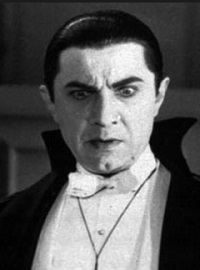
    Count DraculaToday’s Write Spot Blog prompt:  Write about a movie that scared the bejeebers out of you. If you are writing fiction, what movie frightened your fictional character?

    There are lots of writing prompts on The Write Spot Blog, 198 to be exact.  Choose one and  just write!