Blog

  • Joyland – Regional Literary Magazine

    Joyland is a literary magazine that selects stories by region. Each regional editor works with authors with some connection to their area. Living in the respective city or region for any amount of time is qualification enough for submission. If you’re unsure, send to the region nearest you.

    Joyland publishes short fiction, novel excerpts, and literary non-fiction between 1200 and 10,000 words ( slightly under or over is fine).

    Joyland Submission Guidelines

    Rejection Guidelines

    Published work by RegionsJoyland

  • First car . . . Prompt #190

    Write about your first car, someone else’s first car, or your fictional character’s first car.

    You can use this as a way to get to know your fictional character better. You probably won’t use this information in your fiction, but you might!

    Pedal carWrite about a first car. See where it takes you.

  • Is pre-writing for you?

    Guest Blogger Becca Lawton writes about pre-writing.

    Excerpt from Becca Lawton’s 8/31/15 blog post, about her time in Canada on a Fullbright Scholarship to research her book:

    Writing a novel is such a huge undertaking that I’m amazed anyone writes more than one . . . I’m completing a submittable draft of my second novel . . . Now that I’m dragging my sorry carcass to the finish line, it’s fun to look back at this post written September 29, 2014, soon after the start of the project, when I was just starting to pour all my hope and energy and learning into it:

    I just completed sixty pages of prewriting for a second novel . . . They’re filled with answers to questions like, “Who are the main characters in your book?” and “What are their wants in every scene?” and “Is the setting recognizable yet unique?” I’ve modified the questions from a checklist developed by Janet Neipris, from her book To Be a Playwright, a resource I find essential. Typing up to ten pages each morning before breakfast, I completed the questionnaire in a week. At home it would have taken me a month. Although the impatient part of me wanted to zip through all the questions with an “I don’t know” or “Who cares?” I focused on each one with as much focus as I could muster. Grudgingly I’ve come to admit that if I pour myself into a pre-write of this kind, the book’s first draft flows much easier. Prewriting saves time, guesswork, and rewriting sweat. A week saves months or years of labor later. I know. I’ve written books both ways.

    Becca Lawton. . . buoyed by the knowledge that I can start the first draft of my second novel tomorrow morning. That knowledge feels like a precious gift after more than a year of dreaming, applying, and then preparing to come to Canada on a Fullbright Scholarship to research a book. Every day I’m grateful for the support.

    Photo by Melinda Kelley
     
  • What are you angry about? Prompt #189

    Prompt #1: What are you angry about? Mad about? Annoyed about?

    ArgueComplain! Go ahead and vent. Spit it out.

    You can answer from your experience, or from your fictional character’s point of view.


    Prompt #2: Regarding Prompt #1, is there anything you can do about it?

    Hope & MiraclesIf yes, write possible solutions, compromises, ideas, brainstorm.

    If not, let it go. Write about how you can release it, breathe it away, banish it, whisk it away.

    How can you let go of your fears, worries, annoyances? How can you just let go?

  • Cast off the fear

    “I was terrified about writing stories about where I came from because I was embarrassed. Truly great writers are not afraid to bare their souls. Sometimes you may feel like: ‘I shouldn’t have put that in there, I don’t want people to think it’s about me or look at me differently.’ Toss those thoughts aside. That’s a mental block. Don’t think about it. Just do it. As long as you write from a place of purity, and it comes from your heart, you can’t go wrong.”—K’wan Foye, interview with Alicia Anstead, October 215 issue of The Writer.

    Kwan Foye

  • Sensory Detail – Taste

    When writing simmers with sensory detail, readers digest the story and perhaps, are satiated with emotionally charged memories.

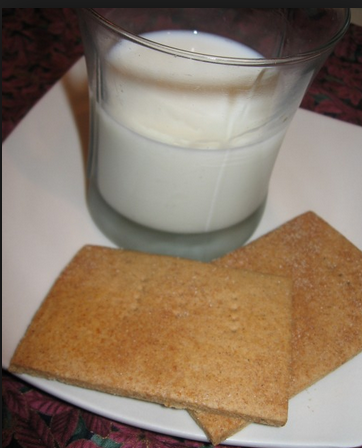
    Do you remember dipping graham crackers in milk and eating it quickly before it broke off and became a soggy mess? You might use something like this in a scene where the hero/heroine has just been dumped by a boyfriend/girlfriend.

    Perhaps your character can’t make decisions. Employ a scene where he taste tests while walking a buffet line; a bite here, a nibble there, unable to settle on a nourishing decision.

    Employ sensory detail to involve readers in the story’s emotional ingredients.

    Match emotions with taste receptors:

    Bitter: She recoiled and didn’t know whether it was from her bitter coffee or his abrupt, “We’re done.”

    Salty: “The oysters were so fresh they tasted like my tears. I closed my eyes to feel the sensation of the sea.” — Laura Fraser, “Food for the Heart,” Eating Well Magazine   Jan/Feb 2007

    Sweet: She lifted the chocolate to her mouth, gazing at the young man across the room. She held him captive and slowly savored the chocolate.

    Sour: “Lemon with your squid?” She pinched her nose, “No, thank you.”

    Umami: Their classroom integrated a variety of cultures, much as umami unites disparate flavors.

    Match emotions with taste:

    Ebullient, getting away with murder:

    ” . . . the fat Georgia man told Big George that it was the best barbecue he had ever eaten, and asked him what his secret was.

    Big George smiled and said, ‘Thank you, suh, I’d hafto say the secret’s in the sauce.’” —Fried Green Tomatoes at the Whistle Stop Cafe, Fannie Flagg

    Emotionally charged:

    “She reached for a cherry tomato and popped it into her mouth. The juices exploded on her tongue. Carly wanted her attention? I’d give her anything she wants.” — A Wedding in Provence, Ellen Sussman

    Hopeful, positive, upbeat:

    “Taste this . . . I swallowed. She had fed me a fluffy cloud, no more than pure texture, but as it evaporated it left a trail of flavor in its wake . . . That’s an amazing combination. The saffron’s brilliant—it gives it such a sunny flavor.” —Delicious! Ruth Reichl

    Comparing food with nature:

    “Moving constantly, she caressed the chocolate like a lover, folding it over and over on a slab of white marble, working it to get the texture right. She stopped to feed me a chocolate sprinkled with salt, which had the fierce flavor of the ocean . . . One chocolate tasted like rain, another of the desert.”—Delicious! Ruth Reichl

    “That’s the spring cheese. . . When I put the cheese in my mouth it was richer, and if I let it linger on my tongue I could taste the lush fields of late summer, just as the light begins to die.” —Delicious! Ruth Reichl

    Taste and texture detail:

    “It was accompanied by lamb cutlets, which Cuneo had passed three times over the open flame, and a snow-white, melt-in-the-mouth garlic flan.” —The Little Paris Bookshop by Nina George

    In previous posts we talked about sensory detail using sight, sound, smell and kinesthetic.

    Taste and memory: Proust’s Remembrance of Things Past:

    “I raised to my lips a spoonful of the tea in which I had soaked a morsel of the cake. No sooner had the warm liquid mixed with the crumbs touched my palate than a shudder ran through me and I stopped, intent upon the extraordinary thing that was happening to me. An exquisite pleasure had invaded my senses, something isolated, detached, with no suggestion of its origin. And at once the vicissitudes of life had become indifferent to me, its disasters innocuous, its brevity illusory – this new sensation having had on me the effect which love has of filling me with a precious essence; or rather this essence was not in me it was me. I had ceased now to feel mediocre, contingent, mortal. Whence could it have come to me, this all-powerful joy? I sensed that it was connected with the taste of the tea and the cake, but that it infinitely transcended those savours, could, no, indeed, be of the same nature. Whence did it come? What did it mean? How could I seize and apprehend it?

    I drink a second mouthful, in which I find nothing more than in the first, then a third, which gives me rather less than the second. It is time to stop; the potion is losing it magic. It is plain that the truth I am seeking lies not in the cup but in myself.” Remembrance of Things Past, Proust
    Graham crackers and milkClick on Prompts, try a freewrite, using sensory detail.  Just Write!



  • Ruminate is ready for your submission

    ru’mi-nate: to chew the cud; to muse; to meditate; to think again; to ponder

    Ruminate is an award-winning quarterly literary arts print magazine engaging the Christian faith.

    Ruminate publishes poetry, short stories, photography, visual art reproductions, short fiction, memoir, creative nonfiction, essays, reviews, and interviews.

    Ruminate sponsors four contests each year—poetry, short story, nonfiction and visual arts.

    Ruminate suggests slowing down and paying attention. “We love laughter. And we delight in telling the truth, asking questions, and doing small things with great love,’ as Mother Theresa said.”

    You are invited to submit your work.

    Note from Marlene: Writers Forum of Petaluma presenter Rayne Wolfe, October 15, 2015:
    Newspaper reporter and columnist, Rayne Wolfe will share her methods for identifying sources, mining for quotable gold and turning interviews into stories.

    Whether you are focusing on non-fiction, fiction, historical fiction or memoir, Rayne will share her tools for enriching all writing by becoming an ace interviewer. Attend this forum, learn the art of interviewing, then submit to Ruminate.

    Ruminate

  • Growing up . . . Prompt #188

    Start writing with this phrase:  “Growing up” . . .  and then, just start writing!

    Today’s writing prompt:  Growing up . . .

          Baby feet.small                   Baby feet.medium                        Baby feet.big

  • Things I’ve Learned. . . Prompt #187

    Notepaper.make a listMake a list. Write about things you have learned.

    Today’s Prompt:  Things I’ve learned. . .

  • Writing as an organic process. . .

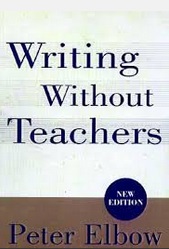
    “Think of writing as an organic, developmental process in which you start writing at the very beginning – before you know your meaning at all – and encourage your words gradually to change and evolve. Only at the end will you know what you want to say or the words you want to say it with.” –Peter Elbow

    Peter Elbow