Blog

  • Food! Spices! Prompt #179

    Picture the house you grew up in. Or, any house where you have lived.

    Walk into the kitchen. See the table and chairs, the counter, the cupboards.

    Open a cupboard door. . . or walk into a pantry.

    Take a deep breath. Notice the smells.

    Open the spice cabinet. Inhale and . . . what are those many and mysterious smells?

    SpicesPrompts, multiple choice:

    What food reminds you of the kitchen in the house where you grew up? Memories surrounding that food?

    OR: What nourishes you?

    Or: I grew up with . . .

  • Silverstein wrote for the ear

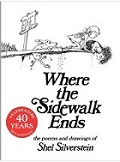
    Where the sidewalk endsShel Silverstein’s Where the Sidewalk Ends “resonates because Silverstein wrote for the ear. Purposeful rhythm. Calculated pace. Challenging riffs. Delightful melodies. Words selected as much for their sound as their meaning.” —Jack Hamann, “For the ear — Writing with rhythm,” The Writer, July 2015


    Tips to make writing stronger, inspired by Jack Hamann, “For the ear.”

    • Vary pace – “bookend longer sentences with short, rhythmic declarations.”
    • Use a thesaurus.
    • Use alliteration (see below).
    • Give weak verbs the boot.
    • Omit unnecessary words, especially “the.”
    • Read aloud. You’ll notice places that need tweaking.

    Alliteration is a stylistic device in which a number of words, having the same first consonant sound, occur close together in a series: But a better butter makes a batter better.

    Marlene’s Musings: Have fun with this. Choose a prompt and write. Then, revise, using the tips above.

  • Sensory Detail – Smell

    How do you put the sensory detail of smell in writing? Let’s sniff out ideas.

    Take a deep breath and imagine the smell of:

    fresh lemons

    watermelon

    chocolate

    coffee

    fish – cooked, or freshly caught

    roast turkey right out of the oven

    popcorn – movie popcorn with melted butter

    How would you describe these smells to someone who cannot smell or who never smelled these particular scents?

    What does a crunchy red apple smell like? Does a red apple smell the same as a green apple? Does an apple smell different if it’s crunchy or mushy? If it’s cold, it might have that earthy smell of a river. Or an apple might smell like a hot summer afternoon in an orchard. Can you put apple smell into words?

    If you can, walk through an orchard or a field where the earth has recently been plowed. Inhale. Describe that earthy smell.

    What does a river smell like?

    Describe fresh cut lawn.

    What about describing smells for other things? What does” old,” ancient” and “calm” smell like?

    Here are some ideas:

    old . . . smells like parchment paper

    ancient . . . smells like musty book

    calm . . . smells like summer rain candle

    But what does parchment paper, musty book and rain candle smell like? Can you describe these smells?

    How about adding sounds:

    “old” sounds like coughing and wheezing

    “ancient” sounds like rattling breath

    “calm” sounds like church . . . sitting in church

    The following is from The Martian Chronicles by Ray Bradbury:

    There was a smell of Time in the air tonight. . . What did Time smell like? Like dust and clocks and people. And if you wondered what Time sounded like, it sounded like water running in a dark cave and voices crying and dirt dropping down upon hollow box lids, and rain. Time looked like snow dropping silently into a black room or it looked like a silent film in an ancient theatre one hundred billion faces falling like those New Year balloons down and down into nothing. That was how Time smelled and looked and sounded.

    A glorious line about smell:  “The air took on its mossy evening smell.” — Elizabeth Sims, September 215 Writer’s Digest.

    Your turn: How do you infuse smell in your writing? Tell us. We want to know.

    Lemons                        River                 red apple

  • Talking Writing: Why writing matters in the digital age.

    Talking Writing features stories, poetry and first-person journalism.

    Talking Writing is a nonprofit literary site that features essays, first-person journalism, and poetry. New material is published weekly, focusing on provocative themes.

    ” Great writing makes us want to sing or shout or argue, and TW’s innovative format opens virtual doors to readers and writers everywhere. As the publishing industry continues to transform itself online, Talking Writing exemplifies why luminous stories and well-executed journalism matter more than ever.”

    Talking Writing magazine publishes four issues a year—Fall, Holiday, Winter, and Spring.

    Submission deadlines for upcoming themes can be found in TW’s Editorial Calendar.

    Holiday 2015 – Writing and Faith     Submission Deadline: September 14, 2015

    How do you tackle life’s Big Questions? During the holiday season, our annual faith issue will examine why writing is such a powerful tool for soul searching, creating meaning, and defining one’s spiritual beliefs.

    Talking Writing.1

  • What if? Prompt #178

    What if you start from reality and then use “worst case scenario” to do some writing?

    Here’s how it could work: Recall a time when you desperately wanted something. Could be a good grade on a test, or a good health check-up, or the biopsy comes back negative, or a divorce, or the cute guy/girl to notice you, or a good job, or any job.

    Just choose a moment when you really wanted something. Now, shift . . . as you write about this desire, this longing. . . the narrator becomes a character in a story. We’re no longer talking about “you.” We’re focusing on A Character Who Wants Something.

    Down the rabbit holeNext, as you write, throw in some curve balls, some roadblocks. Give that character an obstacle to overcome. . . the worst case scenario. What is the worst thing that could happen?

    For example, the character fails an important test, doesn’t get into college, can’t get a job, becomes homeless. . . keep going. . . what is the worst thing that happens?

    Or, the biopsy comes back negative. It’s cancer. Lots of doctor appointments. Sleepless nights. The character feels betrayed by his/her body. Lots of decisions. Surgery? Chemotherapy? Radiation? Keep going. What happens?

    What if He wants a divorce, but She doesn’t. There are children involved. The divorce happens. He happily dances off into the sunset. What if She falls apart? She can’t function. Can’t get up in the morning. Gives her children cereal for dinner with orange juice because there is no milk. What if she sinks lower and lower and then . . . what happens?

    Prompt: Start with something real, creating a character who has a problem, a need, a desire. Then. . . what if?

    Inspired from July/August 2015 issue of Poets & Writers magazine, “Preparing for the Worst,” by Benjamin Percy.

  • Guest Blogger Daniel Ari: Sense And Specificity . . .

    Daniel AriGuest Blogger Daniel Ari writes about Sense And Specificity: The Soul of Great Writing

    Great art is about balance. Okay, great art is about a heck of a lot of things. But one thing that makes great writing stand out from the superfluity of all writing is that it strikes a balance between emotional abstraction and concrete specificity.

    We want to read about things like devotion, honor and transformation. But the actual words devotion, honor and transformation aren’t concrete enough to sweep a reader away. As I discussed in “How to Make Your Poems Stand Out: Advice From a Reader” for Writer’s Digest online,  abstract nouns can’t be grabbed, and they don’t grab readers. And what’s worse, they tend to come in flocks. Once a writer writes honor, then love and respect want to come in. Then deep, forever, and mutual are at the door, having chased away all the beautiful specifics like moonstone, cardamom, and foxtrot.

    But luckily, concrete nouns also come in flocks. That’s because when you tell a story or describe a moment, either remembered or imagined, the telling includes all the specific things that make the moment unique and moving. If you want to test whether your writing is too abstract, imagine illustrating it. Could you? If there aren’t enough nouns and verbs to make into a drawing or painting, then your writing may be too abstract to interest most readers.

    Allen Ginsberg put it well: “You can’t write about ‘The Stars.’ You can go out one night and see a glitter in Orion’s belt, or see a constellation hanging over Nebraska, and that’s universal. But it’s got to be over Nebraska—particular—otherwise it isn’t universal. If it’s just the stars in the abstract you don’t even see them, so it’s not a living experience. It’s not an instant in time actually observed, and only instants in time are universal.

    What’s universal is the sense of being human that we translate into language as writers and that readers translate back into thought. That’s why concrete sense imagery is so crucial. That’s how the abstract system of language is able to relate living humans to one another—though memory and imagination of sensed experience.

    Here are two poems that I think do a good job of being relatable by being specific. The first is one of my own, a draft in a series about a legendary backwoods character named Starlight. The second is by Rebecca Auerbach, and I think it’s wonderful how her imagery isn’t just visual, but also auditory, and even more interesting how the sensation she describes is often the absence of sensation and hunger for it.

    “To build a supper”

    by Daniel Ari

    Without matches, I’m sure I could build a fire.
    I may be city, but I’m not dumb. I would
    just use a lighter. No lighter either? Hm.
    Then I’d use friction between two bits of wood
    to weave threads of smoke into a baby spark
     
    then huff and puff the infant in a hoodie
    of soft, dry bark or needles. I’d be famished
    by the time the contained blaze could be called good.
    Then I’d have to start the hunting or fishing
    or just eat miner’s lettuce and blackberries.
     
    I wonder how much hungry equals finished.
    Lost in the woods, I’d be grateful for Starlight.
    She knows a thousand growing things that furnish
    sustenance and comfort. She could catch a trout
    with a thorn hook—or we could stalk the shoulder
     
    of Tyler-Foote Road for fresh (truck-)grilled meat,
    a bumper crop of headlight venison.
    

    **********************************************

     untitled

    by Rebecca Auerbach

    We used to start with eyes meeting,

    exchanging a smile,

    then voices,

    speaking, sharing names.

    Now we start with a photograph & a profile.

    If you like the way a man smiles

    when he isn’t smiling at you,

    the way he introduces himself

    when he isn’t meeting you,

    you might exchange words without voices,

    & if you like what he says when you can’t hear him,

    you might consent to speak aloud by phone,

    & if you like how he speaks to you

    when he has never seen you,

    you might

    maybe

    consent to look into his eyes.

     Daniel Ari began dancing to Freeze Frame” by The J. Geils Band at an 8th grade dance in 1981. He hasn’t stopped. About five years later, he began courting poetry as a practice, and that, too has stuck. As a poet and professional writer these days, movement remains key to his creativity.  Daniel recently won Grand Prize in the Dancing Poetry Festival, and his poem about swing will be set to choreography and performed at the Legion of Honor in September. His forthcoming book One Way To Ask from Zoetic Press, pairs poems in an original form called queron, with artwork by 67 artists including Roz Chast, Tony Millionaire, Bill Griffith and R. Crumb.

    Daniel Ari will be the August 20, 2015 Writers Forum Presenter in Petaluma, CA

  • Write a note . . . Prompt #177

    Hand & PenToday’s writing prompt: Write a note to someone alive or not, to someone currently in your life or from your past. Start with one of these lines:

    I forgive you . . .

    I love you . . .

    I will always remember . . .

    This is a note you may or may never send.

    You can write about something that happened to you, something that happened to someone else or write from your fictional character’s point of view.

    You can also write to a “thing” . . . to a body part, to something mechanical, to any Thing that was meaningful.

    Just write.

  • Start at the height of desire — David Lavender

    Many of us have heard “start your story in the middle of the action, or the height of the conflict.”

    David Lavender suggests “start at the height of desire.”

    “You need not worry about being dull if you can present within the first few hundred words a definite character in the grip of a definite emotion.”

    “But introducing a character and his motives to an audience must be done deftly and without explanation. For example, if setting up a boy-loves-girl story, Lavender says, ‘I must show the boy immediately engaged in wanting the girl. I must do it with unobtrusive little touches. I must bring it out through the way he acts and what he says, being at all times careful not to let the reader guess that he is having something explained to him.’”  — Nicki Porter, August 2015 The Writer magazine

  • Sensory Detail – Sound

    GramophoneI cranked up the music to prepare this post and was reminded of the sixties and seventies when I worked downtown San Francisco Monday through Friday. Saturdays were house cleaning days. I centered my Swan Lake record on the turntable and turned up the volume. By the time I was dusting and cleaning downstairs, I was rocking to West Side Story. To finish, I blasted Hair. Odd combinations, I know. But they worked for me . . . a satisfying way to completely clean the house and do laundry.

    Sound. . . how do we incorporate sound in our writing?

    But first, why do we want to use sensory detail in our writing? Sound can evoke strong memories: screeching tires, whining four-year-old, grinding gears when learning to drive a stick shift, songs from our teenage years, wedding songs, hymns, sing-song rhymes. When we employ sound in our writing, we transform language into sensory stimulation that the reader hears in his/her mind and transports the reader to the world we have created in our writing.

    Poet Major Jackson says it this way, in the September 2015 issue of The Writer magazine:

    I aim to write poems in which language changes into feeling. With hip-hop and rap music, the expressive medium of my generation, I learned to stylize language and to make language an experience for the reader — whether through an idiosyncratic simile or through an insistent use of repetition or some heretofore encountered combination of rhymes.

    Right on . . . and sensory stimulation in writing offers readers a way to vicariously experience other worlds viscerally.  It’s that visceral reaction writers seek . . . the strong emotional reaction when reading.

    Notice all the sensory detail in the following excerpt from In the Time of the Butterflies by Julia Alvarez:

    Usually, at night, I hear them just as I’m falling asleep.

    Sometimes, I lie at the very brink of forgetfulness, waiting, as if their arrival is my signal that I can fall asleep.

    The settling of the wood floors, the wind astir in the jasmine, the deep released fragrance of the earth, the crow of an insomniac rooster.Their soft spirit footsteps, so vague I could mistake them for my own breathing.

    Their different treads, as if even as spirits they retained their personalities. Patria’s sure and measured step. Minerva’s quicksilver impatience. Mate’s playful little skip. They linger and loiter over things. Tonight, no doubt, Minerva will sit a long while by her Minou and absorb the music of her breathing.

    Some nights I’ll be worrying about something, and I’ll stay up past their approaching, and I’ll hear something else. An eerie, hair-raising creaking of riding boots, a crop striking leather, a peremptory footstep that makes me shake myself awake and turn on lights all over the house. The only sure way to send the evil thing packing.

    But tonight, it is quieter than I can remember.

    Notice:  Specific words that evoke sound: hear, crow of a rooster, soft footsteps, breathing, creaking

    Phrases that evoke sensory detail: the settling of the wood floor, the wind astir, a crop striking leather,

    And of course, the sense of smell: wood floor, jasmine, fragrance of the earth.

    Your turn: What sounds evoke powerful memories for you? House cleaning sounds (vacuum cleaner)? How about: nursery rhymes, rock ‘n roll, thunder, gum snapping, crunchy foods, sirens, bells, whistling, animal noises, engine revving.

    What about water: Running water, gurgling stream water, waves as they lap to shore and recede to the ocean. Or maybe it’s more of a stormy day and the water rushes toward the sand dunes, crashes into rocks and hurries back to the sea.

    How about: Squawking sea gulls, the calliope of a merry-go-round, music boxes?

    Remember songs from movies, television theme songs, commercial jingles?

    What sounds bring up strong memories?

    Choose a prompt and write for 12-15 minutes. Put sound sensory detail in your writing. Just Write!
  • Foliate Oak Literary Magazine wants quirky writing . . .

    Foliate Oak Literary Magazine wants quirky writing . . .

    We love previously unpublished quirky writing that makes sense, preferably flash fiction (less than 1000 words). We are eager to read short creative nonfiction also. We rarely accept submissions that have over 2700 words. We enjoy poems that we understand, preferably not rhyming poems, unless you make the rhyme so fascinating we’ll wonder why we ever said anything about avoiding rhymes. Give us something fresh, unexpected, and will make us say, “Wow!”

    We are always interested in publishing intriguing photography, artwork, and graphic (you know, comics) literature.   Send all artwork as jpg or gif.

    Always include a short (less than 50 words) third person bio.

    Submission Period: August 1 – April 24

    We are unable to pay for work. If the work we have posted is later used in another magazine, we ask that you credit Foliate Oak for first publishing it. Authors retain their own rights and copyright to their works. Foliate Oak only requests one-time, nonexclusive rights. Work will remain archived indefinitely, unless author/artist ask that it be removed from our website.

    Complete submission guidelines on Foliate Oak’s website.

    Foliate Oak Literary Magazine