 Guest Blogger Jordan Rosenfeld: 5 Habits of Persistent Writers (That you can adopt, too).
Show me two equally capable writers and I’ll show one who succeeds at her publishing dreams and one who struggles. What’s the difference between them? And no, the answer isn’t luck, or “being born with it.” The writer who succeeds persists. What does this mean, precisely? We hear a lot about persistence–is it just a numbers game, where if you keep submitting the same story or novel eventually it will just magically land? No, that’s blind hope. Persistence is passion + commitment + practice. Below I’ll walk you through seven strategies for becoming a persistent writer, and I promise you the answer will not include self-immolation or losing sleep.
Find a Passion Root: One of the most amazing things about rose bushes is that they are notoriously difficult to kill by chopping or cutting. You can prune it down to a tiny little nubbin, and next season you’ll simply have a fuller, more glorious rose bush. You have to cut out its root, its heart, to kill such a persistent, gorgeous flower. We writers can take a lesson from the rose, even if it’s not your flower—if you can identify those qualities and reasons that make you passionate about your writing—whether you do it for work or pleasure—you will forge a root that is incredibly difficult to kill inside you despite the many vagaries of the field, from rejection to comments from trolls. You do this by identifying why you write, what it means to you, and how you can use it to serve yourself and others.
Set Boundaries: It took me nearly a decade to stop allowing interruptions to my writing time—answering the phone to friends in need, getting up to answer my husband’s shouted-across-the-house questions, or making overlapping commitments that would cut into my writing time. I don’t cancel on my clients, I don’t show up late to appointments, so why would I not treat my own writing time with the same respect? The more you build strong boundaries around your writing time, the more you train yourself and others to treat it with respect (and you’re more likely to get it done). But in order to do this you first have to do the next step:
Treat Creative Time as Work Time: When you sit down to write, especially when it’s NOT for work (but even if it is), you have the right to let your friends, family and pets know that you are no longer interruptible. Shut doors, put up “writer at work” signs, do whatever you can to approach your own writing with serious intent and others will follow suit. Not to mention, the only way to find inspiration is to show up and make time for it. Inspiration rarely comes in lightning bolts, but often comes when you prime the pump and let a little imperfect writing flow first.
Don’t be an Island: The mistake many of us make in this already isolated craft, is to do everything in isolation, perhaps to even take pride in this state of being. But you need the support of other writers who get what you go through, and their eyes on your work to see past your blind spots. I firmly believe in trusted allies you can kvetch to, seek cheerleading from, and rely upon for helpful but critical feedback.
Revise: Many of us writers are addicted to the fresh outpouring of a new draft—that’s the stage at which it feels like release, flowing out of us at last onto the page. And as much as we’d all like to produce finished work on the first try, there’s beauty in the revision process, which David Michael Kaplan calls “re-seeing.” Though you may feel a stab of fear at the idea of having to cut and pare, snip and trim, take comfort in the knowledge that even the NYT bestsellers have editors, and rarely is a piece of writing ever published that hasn’t been revised.
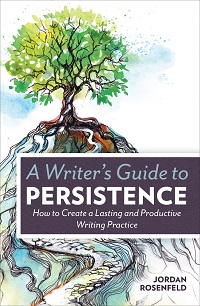 Jordan Rosenfeld is the author of A Writer’s Guide to Persistence, Make a Scene, Write Free (with Rebecca Lawton), the novels Forged in Grace and Night Oracle and the forthcoming novel Women in Red, and Writing Deep Scenes (with Martha Alderson). Her work has appeared in: AlterNet, Brain Child, Bustle, DAME, GOOD, Mental Floss, Modern Loss, New York Times, The Nervous Breakdown, Ozy, Role/Reboot, Rewire Me, Salon, the San Francisco Chronicle, STIR Journal, Sweatpants & Coffee, Washington Post, and The Weeklings.
 Ready? Set? Let’s go.