Blog

  • How does someone become frightening to one’s self?

    Guest Blogger Ted A. Moreno: How You Became What You’ve Become

    I’m learning a new song on my guitar: “Africa” by the band Toto.

    One line of the lyrics intrigued me:  “I seek to cure what’s deep inside, frightened of this thing that I’ve become.”

    It’s never really explained in the song what that means. How does someone become something that is frightening to one’s self?

    Seems to me that it doesn’t happen all at once, of course.

    It’s more like the frog peacefully floating in increasingly hotter water until he is boiled, never aware of what’s happening so he never jumps out. Kind of like death by a thousand cuts.

    Perhaps a good word would be entropy: the gradual decline into disorder.

    How does someone become someone that they are not happy with?

    • It happens one extra cookie, or additional scoop of ice cream or portion of food at a time.
    • It happens one extra drink or cigarette at time.
    • It happens the day you decide you are not going to take that walk or go to the gym and then one day leads to two days, then three…
    • It happens when you don’t make that extra phone call, or send that card or that letter, or drop by to say hello and then that becomes the norm.
    • It happens when one day you don’t get up on time, arrive on time or leave on time, one day at a time.
    • It happens that one time when you don’t say I love you, or smile, or go out of your way to be generous. It’s easy not to do, so it can happen again and again.

    I heard a saying once “If you stand in sewage long enough, you can become comfortable with it.”

    We can become very comfortable with the gradual lowering of our standards for ourselves, the gradual lowering of our expectations, the lowering of our energy, stamina and strength.

    Then one day we step on the scale, or look at our bank account, or realize that our marriage or business is failing. Maybe the doctor tells us something we didn’t expect.  Or we end up in the hospital, or divorce court, or getting our kid out of jail. And we ask ourselves: How did I get here?

    Answer: One neglect, one bad choice, one wrong word, one bad habit, one “it doesn’t matter” or “didn’t get around to it” at a time.

    No one sets out to become unhappy, unhealthy, unmotivated, unproductive and unsuccessful. The problem all too often is, we neglect to keep our goals in front of us so that we choose each day to do what it takes to be happy, motivated, productive and successful. Sometimes we think that it will happen by itself.

    The good news is that the same principle that tears us down is the same one that can build us up: what we choose to do every single day.

    If you have accomplished anything, triumphed over anything, or become someone you are proud of, it happened every single day.

    Can you walk for 5 minutes a day?
    Can you hold out for one less cigarette a day?
    Can you make one phone call a week? Send a letter a month?
    Save a small amount of money each week?
    Can  up get up 5 minutes earlier each day? Go to bed 5 minutes earlier?
    Can you smile at one person a day?

    If you are able to do any of these, than you have power to become what you love, what you respect, what you admire. Success by the inch is a cinch, by the yard it’s very hard.

    Take steps to cure what is deep inside, whether it’s apathy, resignation, cynicism, or fear. Becoming who you want to be might only take a small action every day.

    Like the song says: “Hurry, it’s waiting there for you.”

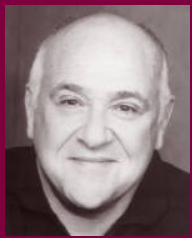
    Ted A. MorenoOriginally published by Ted Moreno, April 9, 2015 Ted A. Moreno is a hypnotherapist, success performance coach, published author, educator and sought-after speaker who helps his clients become free from fear and anxiety, procrastination and bad habits such as smoking.
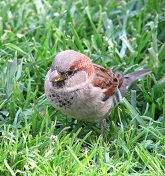
     

  • If pets could talk . . . Prompt #158

    Today’s prompt is inspired by Voices of Lincoln Poetry Contest. Deadline: July 25, 2015

    Bird by Breana Prompt:  If pets could talk . . .


    Photo by Breana Marie

  • Trust Your Instincts

    Gabriel Packard asked Bo Kaprall: What is the most important thing you’ve learned about writing? — The Writer magazine, June 2015

    Kaprall answered, “Probably the most important single thing I’ve learned about writing is to trust your instincts, because, especially with comedy, it’s so subjective. One person will love it; another person will hate it. Everyone seeks comments and reinforcement or criticism, but really you need to trust your instincts, and that’s harder for someone who’s new at it than someone who’s a little more seasoned.”

    Marlene’s Musings: I agree. When in doubt, listen to your “gut feeling.” Your instincts are right on . . . you just have to trust yourself. With that in mind, when working with an editor . . . listen to what the editor has to say . . . you don’t always have to agree, nor make the suggested changes. Just listen carefully, then go with what your instincts say.

    Bo KaprallBo Kaprall writes, directs and produces Saturday Night Live’s Weekend Update. He has written for The Carol Burnett Show, The Cher Show, The Partridge Family, Welcome Back Kotter, Laverne & Shirley and the Bob Hope Christmas Special, among other accomplishments.


  • Le rire mécanique

    If you want to write comedies, or include humor in your writing, you might want to know about “Le rire mécanique.” The phrase translates as “mechanical laughter.”

    I first came across this phrase in the June 2015 issue of The Writer magazine, in an article by Alicia Anistead.

    Anistead wrote about the French philosopher Henri Bergson and his theory that “whenever real life is suddenly interrupted by a mechanistic imposition, like the banana peel, it is disruptive and triggers laughter.” Bergson called this “le rire mécanique.”

    Bergson developed a theory of how laughter is provoked and described the process of laughter (in particular portrayals by comics and clowns) as “the caricature of the mechanism nature of humans (habits, automatic acts, etc.).” Wikipedia

    Anistead ends her article with a quote by Harvard professor Bob Scanlan, “It [le rire mécanique] pounces on you and catches you unexpectedly. That’s why the pratfall is so perfect. Why that makes us laugh? Nobody knows. But Bergson thinks it’s the interruption of things, a subversion of life as it’s proceeding on its own.”

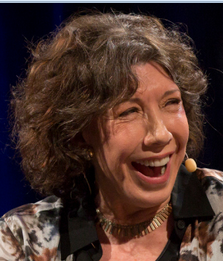
    Lily TomlinMarlene’s musings: I just finished watching Episode 11, Season 1 of Grace and Frankie on Netlix. Now you know my secret vice . . . (not a secret anymore!). The dialogue in the final scene between Jane Fonda’s character (Grace) and Lily Tomlin’s character (Frankie) was hilarious, brilliant and as in le rire mécanique . . . completely unexpected. As my belly laughing turned to snorting, I thought about what made this comedic scene so successful. It was the unexpected.  If you have seen it. . . let me know. Did you like it? I don’t want to go into detail because I don’t want to spoil the surprise for people who haven’t seen it. I’ll just say Frankie’s revelation still has me in stitches.

    Your turn. . . think about Abbott and Costello, the Three Stooges, I Love Lucy, Carol Burnett, Rowan and Martin’s Laugh-In, Lily Tomlin . . . the pratfalls, the unexpected vignettes. . . le rire mécanique. Write a scene that includes a comedic aspect. Just write!

  • Keep Calm, Carry On And Let the Magic Begin

    Guest Blogger Karen Hart reveals secrets about how to Keep Calm, Carry On and Let the Magic Begin:  How To Breathe Life Into Your Work Through Revisions.

    During my thirties, I wrote my first novel, Butterflies in May. It tells the story of a 17-year-old high school senior, Ali Parker, who discovers she’s pregnant. I gave her characteristics, created a family, a best friend and boyfriend, and described where she lived. I effectively created a situation and characters, and the mechanics were in place. After nine months of work, I had a novel, but the story was flat. It was discouraging after all that effort, but in the words of Hemingway: “The first draft of anything is shit.”

    The goal in writing a novel (or any body of work) is to capture the magic, give it a heartbeat and touch your readers in a relevant way. Revising and editing are essential to breathing life into your words.

    So how to capture the magic?

    There’s no clear formula other than to learn how the magic manifests for you. For me, it begins with the mechanics, then somewhere along the way, an idea takes hold and takes over. That “idea” could be a word, a phrase, a scene, a scent or snatch of dialogue. While revising Butterflies in May, a scene between Ali and her newborn baby woke me up at 5 in the morning. I got up, went to my computer and started writing. Today, teen girls often tell me that passage makes them cry. The passage still brings tears to me, because I cried as I wrote it. Here are a few ideas to get your writer mojo on and capture the magic.

    • Set your first draft aside. Save your original, then save it again under a different file name so you can be freely ruthless with changes later. Refrain from showing it to your friends who will most likely find a polite way to tell you it’s awful. (Remember what Hemingway said? It’s not ready.) Return to it one day at the time you work best.
    • Take a look at your book chapter-by-chapter. Print it out and pull it apart. Eliminate slow starts, and tighten descriptions. Check for the following: Does the story move forward at a good pace? Do the characters engage you? Do they have flaws your readers can relate to? Can you clearly see who they are? Next, fill in sensorial details to breathe life into your work. Can you smell the coffee brewing? Feel the sweat along your character’s hairline? Hear the door creak open?
    • Make sure your dialogue flows. Eliminate unnecessary dialogue. Make sure your characters sound natural, not stiff. Be sure your characters don’t all sound the same. Let their use of language, word choice, slang or cursing set them apart.
    • Follow your instincts. Trust what comes to you. In my first novel, I gave Ali’s newborn son a name, Jonah. I’d heard it one day, liked the sound of it, not giving it any more thought than that. Later, Ali has a dream in the hospital about him. In the dream, Jonah is a young boy and says, “It’s okay, Mommy. I’ll always love you.” Then I wrote that he turned into a bird and flew away. Months later, I learned that “Jonah” means dove and made changes so Ali would discover this, too. (This is the stuff of magic, and a story writing itself.)
    • Allow your characters to take over. In my second novel, I’d written about a character named Beau, whom I originally planned to be an all-around nice man. Later, as I worked on revisions, Beau came more fully to life and I didn’t like his behavior. I stopped writing; the novel came to an abrupt halt. When I allowed Beau to take over, the writing flowed, I followed Beau’s lead and the story changed for the better.

    Karen will be on a panel of editors at Writers Forum in Petaluma on May 21, 2015.

    Join us and learn how to keep calm, carry on and catch the magic.

    Karen Hart.180Award-winning writer, editor and novelist, Karen Hart, has served as the editor for two corporate magazines and a newsletter and continues to be slightly obsessive-compulsive about all writing endeavors.


  • An editor can offer a valuable worthwhile assessment . . .

    An editor can offer a valuable worthwhile assessment of writing that can help move the manuscript closer towards publication. — Brian A. Klems, Writers Digest Magazine, October 2012

    Note from Marlene: Editors are totally valuable and necessary to fact-check, spot-check, double-check and make you, the writer, look good.

    What does an editor do? Click here to check out the series of April 2015 blog posts by editors on The Write Spot Blog.

    So . . .  Just Write!   Give those editors something to think about!  Then work with an editor to whip your manuscript into shape.

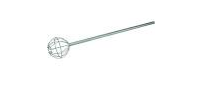
    whipDoesn’t this kitchen whip look like a magic wand?  With the help of an editor to shape your writing. . . it just might feel like a magic wand was waved!


  • Redwood Writers, a branch of oldest writers’ organization . . .

    Redwood Writers, a branch of the California Writers Club (CWC), has ongoing writing contests. Click Redwood Writers Contests to read about the current contest.

    “Whether you’re a traditionally published author or ‘just always wanted to write,’ there’s a place for you at CWC Redwood Branch.”

    CWC is one of the oldest writers’ organizations in the nation. Members are poets, journalists, essayists, technical writers, and creators of genre and literary fiction, as well as editors, booksellers, and others involved in related fields.

    There are branches throughout California. Click California Writers Club to find a branch near you.

    To enter a Redwood Writers branch contest, you must be a member. California residence is not required to be a member. Click Redwood Writers Membership for member information.

    Submit! You never know. . . the next contest winner could be you!

    Redwood Writers

  • What really happened? Prompt #157

    What really happened?

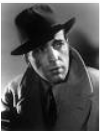
    Humphrey BogartYour story could start out like this:  [Read in a Humphrey Bogart nasally voice]:

    “This is what really happened. . . See. . . .”

    Got it?  Now write it!

    Prompt: What really happened?

    Humphrey Bogart [actor]:  Maltese Falcon, CasaBlanca, The Treasure of Sierra Madre, High Sierra and many more unforgettable movies.

  • Just What Does an Editor Do for Me, Anyway?

    Guest Blogger Mark Burstein elucidates about the different types of editors.

    “Editor” is a catchall term for a host of different functions in the publishing business; here we will look at six different kinds. It’s an amorphous field, one in which our roles and definitions are moving targets. Sometimes we are hired by the author, sometimes by the publisher. Often the same person can take on diverse roles for different clients, or even the same client. So, in more or less chronological order:

    The first, at the top of the food chain if you will, is known simply as the “editor,” but is also called the “book,” “project,” “literary,” “substantive,” or “developmental” editor. S/he is the person who is in charge overall, helping with organization, the story arc, consistency, features, structure, transitions, “assets” (images), permissions, and possibly even advising on design and layout. S/he is also your friend, ideal reader, collaborator, spouse, sparring partner, babysitter, psychologist, cheerleader, hand-holder, slave driver, and/or therapist … doing whatever is necessary to pull those lovely words out of your head and onto pages.

    When the editor and the author are satisfied, the manuscript (ms.) then goes to a copyeditor, whose functions were well described by Linda Jay in an earlier post on the Write Spot Blog. In brief—copyedits range from “light” to “heavy”—s/he checks grammar, spelling, punctuation, consistency, usage, continuity, facts, voice, phrasing, tone, and the like. On the “heavy” end of the scale, s/he might suggest rewording, moving sentences and paragraphs around, or adding to or eliminating text.

    The third kind of editor is your publishing and proposal consultant. S/he will help you craft a proposal and get it looked at by appropriate publishers or literary agents. (Many small-to-medium houses will look at unsolicited mss., but the larger houses need to go through known literary agents.) Both of these kinds of submissions require a polished proposal.

    Number four is the acquisitions editor who works for a publisher. S/he will be the one who decides if the proposal warrants further attention, and ultimately decides if it is right for the house. S/he may also say that it would be perfect for them, if only it had a bit more of (a) and (b) and a little less of (c), in which case it goes back to step one (the “editor”) to work with you for resubmitting.

    Once a book has been accepted for publication, it goes to a designer. The designer will put the text and assets into layout (aka galleys) and will send it back to you for approval or tweaking. Having secured that, it will go to a proofreader who will again read the ms., but also specifically look at things that may have gone awry in layout: headings, page numbers (folios), missing lines, bad line breaks, “widows and orphans,” spacing, figures, captions, etc.

    Category six is the production editor. In a major house, s/he is responsible for reviewing all aspects of the editorial and production process, including hiring editors, copyeditors, proofreaders, and designers; plus scheduling, shipping, warehousing, and distribution. For an “independent” (formerly known as “self-”) publishing title, this can also be one of the editor’s responsibilities, that is, finding a designer and printer/binder—or formatting your ms. so that it can be accepted by a POD (print on demand) house like CreateSpace, Lightning Source, Blurb and so on, and leading you through that process.

    Sometimes these functions can be the province of just one person. Or up to six or more individuals. But each stage of the editorial process is necessary—to greater or lesser degree, depending—and will do wonders for your book.

    Mark Burstein.200Mark Burstein is a freelance editor of both nonfiction and fiction. His clients include Chronicle Books, Insight Editions, Harry N. Abrams, and Welcome Books, as well as many authors.

    Mark will be on a panel of editors at Writers Forum in Petaluma on May 21, 2015.

  • Broken . . . Prompt #156

    Broken . . .

    Broken bowl 180

    Today’s Writing Prompt:  Broken