 The funny thing about rock bottom is . . .
Set your timer and write on this prompt.
Photo by Breana Marie
The funny thing about rock bottom is . . .Photo by Breana Marie
Full Grown People publishes personal essays that explore what it means to be an adult . . . essays that explore those moments in life when you wonder, what’s next?
“Essays should be between 800 and 4,000 words and have a literary quality: engaging and smart without being academic or schmaltzy. Work hard on your endings—if you’ve built up some good momentum, ending it on the right note is sometimes the difference between a contender and an acceptance.”
Click here for submission guidelines.

Guest Blogger Arlene Miller writes:
I am a member of some grammar groups on LinkedIn, where there are fascinating — and long – discussions of what some people would call grammatical minutiae. However, this week, I saw a discussion that I found a little surprising. The question posed was “Should we continue to teach who and whom to our students?” the real question is: Should we continue to teach the difference between them and when to use each?
On my blog, bigwords 101, I talked about the difference between linguistic and grammatical prescriptivism and descriptivism:
▪ Prescriptivists (the camp that I lean toward) think that the rules are there and they should be followed.
▪ Descriptivists believe that language evolves as new usages come into play.
Well, if we followed a purely prescriptivist viewpoint, we would still be using the language of centuries ago – thank you, Chaucer.
But what would happen if we followed a purely descriptivist viewpoint? How does language change, anyway?
Let’s look at an example: I have always used the idiomatic prepositional phrase by accident. The younger generation seems to be using on accident instead. Is it wrong? Which is right? Should we adopt what the younger generation is now using? Is there a reason that by should be used rather than on? Why did anyone start saying it that way in the first place? Is it because we say its opposite as on purpose?
People use who and whom incorrectly because they don’t know or understand the rule. Should we say, “Oh, let’s just forget trying. It’s just too difficult to teach or understand”? Should we dumb down the language? Or, should we avoid using whom?
Taking who and whom specifically, there is a reason that who is correct sometimes and whom is correct other times. And most people studying a foreign language will run across the same thing in that language.
The distinction between who and whom is the same as the distinction between I and me. Are we now going to say “Me and him went to the movies” is okay? If many people say it that way, will that become the standard?
Then, there is the issue of conversation versus formal writing. Let’s say you are writing a cover letter. Are you going to distinguish between who and whom? All the grammar books I know of make that distinction, at least as of now. I would recommend that anyone writing anything formal use the rules until they are “formally” changed.
The evolution of language is nothing new. And I won’t pretend to know much about it. I am not a linguist, although I wish I were, and I find the subject fascinating. I do know that there needs to be a mix of descriptivism and prescriptivism, as there always has been; otherwise, the language would never have changed throughout the centuries. But where do we draw the line?
But who and whom? That’s where I draw the line!
Here is the difference between who and whom:
There are three cases for pronouns in the English language: Nominative, Objective, and Possessive.
▪ The nominative case is used for subjects of sentences (and predicate nominatives, but we won’t go there today).
▪ The objective case is used for direct objects, indirect objects, and objects of prepositions, the three types of objects.
▪ The possessive case is used for ownership.
Let’s take the pronoun I: nominative is I; objective is me; possessive is my or mine.
▪ I am going to the movies.
▪ He took me to the movies.
▪ He is mine.
Now let’s take the pronoun who: nominative is who; objective is whom; possessive is whose.
▪ Who is going to the movies? (Who is the subject of the verb is going.)
▪ Whom did you invite to the movies? (Whom is the direct object of the verb invite.)
▪ To whom did you give the movie tickets? (Whom is the object of the preposition to.)
▪ Whose tickets are they, anyway?
One thing is for sure. I will be teaching my students the difference between who and whom!
Click here to read the original blog post “‘Whom’ Cares?” by Arlene Miller.
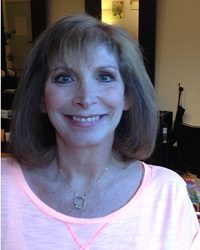 Arlene Miller, also known as The Grammar Diva, is the author of four grammar books and a novel. Her first grammar book, The Best Little Grammar Book Ever, is being used by many schools and colleges. Arlene’s grammar books clear up common grammar issues. In addition to writing books, Arlene writes a weekly blog post about grammar, punctuation, and anything else to do with words. She is also a copyeditor for both fiction and nonfiction books, teaches 7th grade English in Petaluma, teaches The Best Little Grammar Class Ever at College of Marin, and teaches corporate grammar and business writing workshops.
Arlene has been a presenter at the Sonoma County Book Festival, Bay Area Independent Publishing Association (BAIPA), Petaluma and Guerneville branches of the Sonoma County Library, Romance Writers of America, Society of Technical Communications, and Redwood Writers Academy. She is a member of Redwood Writers and BAIPA. She holds degrees in Print Media, English, Humanities, and California teaching and school administration credentials.
I read this quote in the September 2014 issue of The Writer Magazine. It aligns perfectly with my passion for genuine and authentic writing.
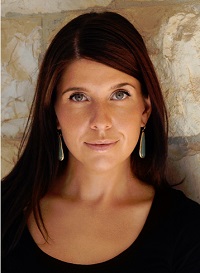 “Years ago I read an interview with Paula Fox in which she said that in writing, truth is just as important as story. Reading that interview was the first time I really understood that there’s no point in trying to impress people with my cleverness when I can just try to write honestly about what matters most to me.” — Molly Antopol, The UnAmericans, Stanford University
Write a thank you note . . . either for a tangible, or intangible gift, either for a gift you truly liked, or something you saw as annoying or difficult at first. . . but later saw the value or the good of the gift.

The subject of death may be uncomfortable or difficult for some. And yet, we are all going to die . . . some time. . . somehow. Here’s a quote from Steve Jobs.
“Remembering that I’ll be dead soon is the most important tool I’ve ever encountered to help me make the big choices in life. Because almost everything — all external expectations, all pride, all fear of embarrassment or failure — these things just fall away in the face of death, leaving only what is truly important. Remembering that you are going to die is the best way I know to avoid the trap of thinking you have something to lose. You are already naked. There is no reason not to follow your heart.” — Steve Jobs
 Note from Marlene: Writing. . . letting others read your writing . . . can make you feel vulnerable, afraid and weak in the knees. And yet, when we pay attention to our desire to write and when we write. . . it’s such a satisfying feeling. So, I say, let go of your fears. . . be brave. . . write and share your writing. Go for it and Just Write.

 Wineglass, dustpan, wooden spoon, smartphone case, belt, soda-can tab, balance/fitness ball, melon baller, coffee cup sleeve, DVD case, cutting board, rolling pin, magnets, shoelaces, garment bag, shot glass, coffee K-Cup, contact-lens case.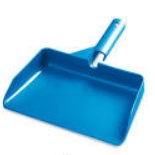
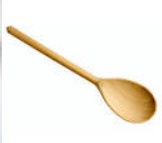 Winners will be published in a future issue and receive a $100 gift card.
Email your ideas for “New Uses For Old Things” to: newusescontest@realsimple.com
Include the name of the item and how you repurposed it. Photos welcome.

Guest Blogger Lois Lavrisa writes about the lack of self-confidence and doubt amongst writers.
My husband and I attended an event featuring the bestselling financial guru, Suze Orman. We chatted with friends as my husband’s coworker approached us. Beth, a perky lady with a huge smile, approached us.
Beth shook my hand. “I’m a huge fan.”
I nodded enthusiastically. “Me too. I love Suze. I can’t wait to see her.”
Beth’s face froze for a moment, as if registering what I said. Then she gently squeezed my hand. “I’m a fan of yours.”
For a few moments, I didn’t know what to say. I finally said a quick thank you to Beth. She was sweet and I was completely flattered. It’s just that I was just taken off guard because I don’t have great author confidence. Instead I have loads of self doubt, maybe it could be called author angst, which makes me work triple time to make sure what I write is as good as it can be. However, self-doubt doesn’t lend itself to being prepared for a compliment — ever.
Perhaps my doubt began many years ago. The first time my name was in print (eighth grade in a four page mimeographed newsletter) I felt both thrilled and vulnerable. The public (okay maybe thirty of my peers and their families) read what I wrote. That was somewhat cool. Yet I also felt vulnerable.
If I stayed hidden in the shadows with my stories still tucked away in my imagination, I wouldn’t be susceptible to ridicule. Yet I had this desire and overwhelming need to tell my stories. I wanted to connect to people outside of my head. I received lukewarm reception to my first byline. Since no one out right ridiculed my story, and some even liked it, I was encouraged. Coming from a home where no praise was given (recently my mother admitted she did this on purpose so that my four siblings and I wouldn’t get big egos) the lukewarm reaction from my peers was better than nothing. I soaked it up like a sponge. I felt pulled. I didn’t know how to accept praise but at the same time when it happened it felt so good.
And I needed to write.
I wanted to connect with others. This meant my words needed to be out there for all to see. This also meant that my stories could be rejected, accepted or ignored.
In a very tough Southside of Chicago suburban public high school, I was tormented and bullied unmercifully. Being a shy, passive, nerdy honor student in a sea of black rock concert t-shirts and pot smoking— I stuck out as an easy target.
When the high school newspaper announced a poetry contest, I decided to enter. However, for fear of further tormenting, I signed my poem as Heather. My first (and so far only) pseudonym. My poem appeared in the school newspaper. Overhearing some students talking about Heather’s poem made me (secretly of course) jump for happiness. Yet I couldn’t tell anyone that was my poem for fear that if I did, my name would leak to the bullies and could possibly multiply the attacks on me. So, I stayed silent. Yet, I knew I had something to say that connected with people. I wanted to do more of it.
Following graduation, I attended a college a few hours away from my hometown. I loved the anonymity. No bullies. No history of who I was. Freedom to reinvent myself.
During the first semester I realized that I was not cut out for pre dentistry (I do brush and floss twice a day, I haven’t given up on teeth entirely.) I signed up for journalism classes and began to write for the school newspaper. This time I used my own name. And guess what? I didn’t get ridiculed nor beat up. Instead, friends came up to me and commented on my front page story, or on one of my featured articles.
Flash ahead to the Suze Orman event I mentioned at the beginning of this blog, when Beth said she was a fan of mine. My lack of confidence left me flabbergasted when she complimented me. Yes, I work tirelessly on my craft, trying my best to make sure it is as perfect as it could be. So why do I still have those nagging doubts about my writing? When I see a new review posted I hold my breath. Will they say terrible or terrific? Here’s the truth, I believe the terrible reviews more than the terrific ones (thankfully there are way more good reviews than negative, but still those nasty comments -ugh!) I’m hopeless right?
I’m thrilled and honored that readers post great reviews and seem to connect with my stories. Yet, part of me feels unworthy of the accolades. I have such angst you’d think I was a teen, not someone in midlife.
If there were a special workshop to boost author confidence, I’d sign up today. Have any of you experienced author doubt? If you have, how do you handle it? And if anyone wants to share some ideas for boosting author confidence- please do!
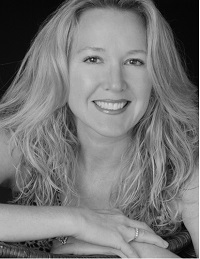 Lois Lavrisa writes Mystery with a Twist. Her first mystery, Amazon Top 100 Bestselling and Amazon Hot New Release, LIQUID LIES, is set in an affluent lake town in Wisconsin, and asks the question “Would you tell the truth, even if it meant losing everything?”
Originally posted May 22, 2013, The Writer’s Guide to E-Publishing Update. This post is slightly edited and paraphrased from the original post. Re-posted with permission.
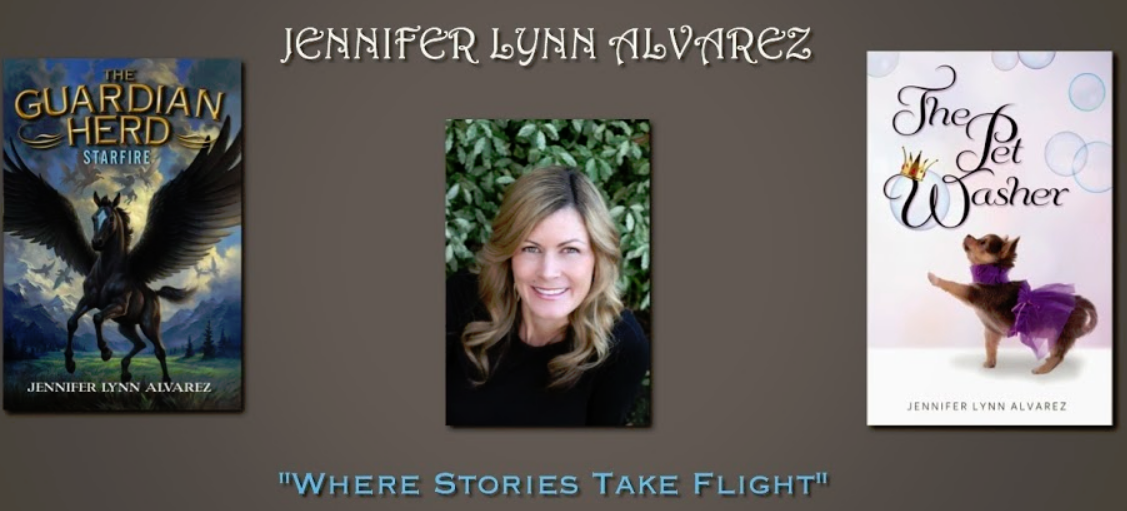
Publishing is a journey, not a destination. — Jennifer Lynn Alvarez, author of The Pet Washer and Guardian Herd – Starfire.
Jennifer was an amazing presenter at Writers Forum in Petaluma, summer of 2014. If you have an opportunity to hear her speak, or attend her author’s event . . . go for it! She’s warm, friendly and has a herd of information about publishing . . .both traditional publishing and self-publishing. She has done both and has stories to tell! She is welcome back at Writers Forum anytime! She’s a good writer, too!