Blog

  • . . . . so we can have an ordinary life.

    In honor of Memorial Day, Sharon Hamilton sent the following to be included in our tribute to military personnel.

    Sharon shares these photos and thoughts:  We owe a lot to the men and women who have fought on our behalf, so we can have an ordinary life. Memorial is just one day we remember and vow to always remember all of our military personnel.

    General Daniel CameronPhoto of Sharon Hamilton’s Great-Great-Grandfather’s brother, who served in the Civil War, like her Great-Great-Grandfather. General Daniel Cameron gained his citizenship by fighting for the North.

                                                     Navy Seal Uniform

    SEAL Uniform.185

    Cover of Sharon Hamilton’s latest book, SEAL My Destiny.

    Seal My DestinySharon Hamilton writes Navy SEAL romance, about military heroes who thrill strong women, who are lucky to love them back.


    Sharon began her serious writing with freewriting exercises, using prompts to inspire her writing. You, too, can jumpstart your writing. Choose prompts from The Write Spot Blog  or from The Write Spot Writing Prompts and just write.

  • Write about someone in the military. Prompt #74

    Write about someone you know who is currently serving in the military or who has served. What branch of the military? What country? What would you like us to know about this person?

    Is there an author who writes about the armed services or books you like with a military theme? Tell us, we want to know.

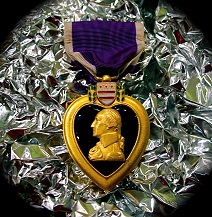
    MedalJane

    Photo of Purple Heart Medal taken by Jane Person. Her father, First Lt. John Person, was posthumously awarded the Purple Heart following his combat in World War II, April 1943.
    The Purple Heart is one of the most recognized and respected medals awarded to members of the U.S. Military armed forces. Introduced as the “Badge of Military Merit” by General George Washing in 1782, the Purple Heart is also the nation’s oldest military award.

    Prompt: Write about someone in the military.

  • Threepenny Review reading period January 1- June 30

    “The Threepenny Review is a quarterly literary and arts magazine that publishes criticism, memoir, fiction and poetry as well as review of the performing and visual arts.” —May/June 2014 Writes Digest magazine

    Reading period is January 1 — June 30.

    Three PenniesClick here for submission guidelines.

    From Marlene, here’s an idea: Always have writing ready, so when you hear about submissions that match your writing. . . you’re ready to submit!

  • Guest Blogger Arlene Mandell: Write Quirky, Break Free

    Guest Blogger Arlene Mandell writes:

    “Found tiny brown frog in bathroom sink.” Both the frog and the notation in my journal made me smile. This reminded me that not all entries must be “worthwhile” in the service of self-analysis or material for lofty literary purposes.

    I’m seventy-three, have been writing for most of my life, and have cabinets, folders and computer files filled with work. Quite a bit has been published. And there’s plenty that hasn’t been. Recently I’ve been giving myself permission to snip, toss and DELETE anything that hasn’t worked thus far and may not be worth expending any more energy on.

    For example, there was the stack of dusty manuscript copies of Slow Kissing, my first novel which I shipped from Closter, New Jersey, to Santa Rosa, California, fourteen years ago. No matter how many times I revised it, it just wasn’t very good. One rainy morning I hauled the copies to my recycling bin. Then I took the ultimate action and deleted Slow Kissing from my computer’s memory with only a twinge of nostalgia for Claudia, my protagonist.

    This brave action inspires me to urge other writers to at least contemplate the unthinkable. Have you been slogging through a multi-year project that has squeezed the happiness from your writing self? But you don’t yet have the courage to toss it out? Do consider putting it aside and writing something funny, silly, and/or inappropriate.

    Or borrow a tactic from Lynda Davis, a Man-Booker-prize-winning writer who sometimes pens a one-sentence story. For example, Tropical Storm: “Like a tropical storm, I, too, may one day become better organized.” After writing a sentence like that, you should reward yourself with a cappuccino or a walk in the woods.

    Another way to brighten your writing life is to take a piece of work that has been rejected many times and ruthlessly edit it, keeping only the liveliest bits. Then send out the shortened version. My “Kaleidoscope” poem, written in 1989, was just published in the April 2014 issue of Waterways: Poetry in the Mainstream. (The poem had been reduced from 67 to 23 words.)

    Perhaps you write about serious ecology-related subjects, like global warming or endangered species. Consider detouring to another nature-related topic, such as those tiny odoriferous black ants that swarmed over your kitchen counter after you set down a single piece of unwrapped fudge. According to the extermination company that charges $160 a visit, these ants are invading the nation. Once you admit to hosting this horde, others will want to share their own ant horror stories. You might even end up with an ant anthology.

    Another tactic is to pick a subject that no one, to your knowledge, has ever written about before, such as an ailing hot water heater with an ominous Tick Tick Tick that reverberates through the pipes, as though counting down the seconds of your life. Then describe its replacement, a shiny new hot water heater with a little white light that goes blink, blink, blink.

    The lyrics to a song from the 40s just popped into my head:

    “Enjoy yourself, it’s later than you think. Enjoy yourself, while you’re still in the pink. The years go by as quickly as a wink. . . .”

    Obviously if your main focus is on the Holocaust or memory loss, it can be difficult to switch to fluffy stuff for an hour or two, but good for your mental health.

    Should you share any of these suggestions with your writing group? Only with extreme tact. For months I’ve held my tongue as a fellow writer reworks a piece that just isn’t very interesting. I’ve wanted to offer my Thai mantra, mai pen lai (which means let it go) but wouldn’t want to hurt her feelings.

    One of the poets writes verses that make no sense at all. I tried, “Um, those blueberries rolling through the courthouse?” But she feels no need to explain. This may be her unique quirkiness or a profound symbolism I’m too dense to comprehend.

    Might you consider deep-sixing an ending? Some of us (probably not you) have a tendency to add a summary paragraph or a cute little coda to every piece of writing, just in case the reader may not get the point. A cigar-puffing city editor once gave me a gruff piece of advice as he slashed my copy: “When you’re finished, STOP!”

    Arlene Mandell Arlene Mandell, a retired English professor who lives in Santa Rosa, CA, was formerly on the staff of Good Housekeeping magazine. She has published more than 600 poems, essays and short stories in newspapers and literary journals. Her work has also appeared in 24 anthologies.


  • Being optimistic is like a muscle . . .

    “Being optimistic is like a muscle that gets stronger with use. Makes it easier when the tough times arrive. You have to change the way you think in order to change the way you feel.” — Robin Roberts, Everybody’s Got Something, her memoir.

    Note from Marlene:  Sometimes the sweetness of serendipity brings tears to my eyes. I have a list of quotes to post on Thursday Quote Day on The Write Spot Blog.  This one, by Robin Roberts, was next in line when I looked in my quotes file. I booted up to post the quote and surprise!  There was a post waiting for approval by marcyt, writing about cancer and doctors and well, you should read this one.

    robin robertsMarcyt’s post is in sync with Robin’s quote.  Thank you, marcyt, for your lovely, poignant, gorgeous writing.

    Everyone:  Please . . . do make comments on any of the posts on The Write Spot Blog. I welcome your participation.

  • How has writing changed your life? Prompt #73

    Today’s prompt: Write about how writing has changed your life, or an aspect of your life.

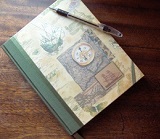
    My Journal.1

    Submit your 600-word essay reflection on the writing life by emailing to Writer’s Digest magazine at:   wdsubmissions@fwmedia.com with “5-Minute Memoir” in the subject line.


  • Start with something that really happened . . .

    In Escaping into the Open, The Art of Writing True, Elizabeth Berg (one of my favorite authors) writes:

    Whenever people ask me where I get my material, I am genuinely befuddled. “Well . . . from life!” is what I usually say. . . . each of us, no matter who we are or what we do, is offered potential story ideas daily. The people we know, the things that happen to them and us, the random scenes we witness and the conversations we overhear — all of these things are rich with raw material; all of them are capable of serving as a vehicle or springboard for a good story, in one way or another. We need only be aware. We need only be awake, and curious, and willing to share.

    Berg.Escaping

    Note from Marlene: Last night in the Jumpstart writing workshop that I facilitate, this very thing happened. I took a real life experience, wrote it in the third person, changed a few facts and ta-da . . . a freewrite based on a true experience.

    Your turn: Start with something that really happened and write about it. Just write.

  • It happened because . . . Prompt #72

    Set your timer for 12 minutes. Start by writing “It happened because”  . . . then write for 12 minutes without stopping.

    No thinking. No crossing out words.  Just write.

    WatchIt happened because . . .

  • You’re doing what? Magazine submissions.

    Adair Lara talked about publishing in magazines during her Summer 2009 Writing Class, giving me the idea for this blog post.

    1. Research . . . really research. . . where you could send your writing. Make sure the publication you have in mind publishes the type of writing you want to submit. Read the magazine you hope to be published in cover-to-cover, including the ads. Notice the tone of the articles/essays. Research the demographics . . . make a list of who the ads are geared towards (age, gender, lifestyle, socioeconomic). Make sure your article/essay fits those demographics. You can research magazines at libraries and ask for magazines from: hairdressers, medical offices, etc. Of course, buying magazines is good. We want to support our local vendors, but sometimes we need to use free resources.

    2. Look at the magazine’s masthead. . . this is in the first few pages of the magazine where the names of editors and contributors are listed. Flip through the magazine, making a list of writers’ names. Compare that list to the names in the masthead. . . If the ratio is high, in favor of the editors, then the magazine uses their own writers, rather than freelancers.

    3. Article written? Check. Research done? Check. Now what? Go to the publication’s website to find the name and email of the appropriate editor for the column/feature/where you want to submit. You can type “Submissions + name of publication” into the search engine of your choice (Google, Firefox, Internet Explorer, etc) to research submissions information.

    You can also type “How to publish in magazines,” using the research tool of your choice, to read about publishing in magazines.

    Think about specialized, or “niche” markets: Your alumnae news, or a specialized newsletter in a field that would be interested in your article/essay. For example, an article about relaxation, stress reduction techniques might work in Autism Parenting Magazine.

    Check out writing magazines (Writer’s Digest, The Writer, Poets & Writers, etc.)  for places to submit articles.  Look into Writers Market for information on “where and how to sell what you write.”

    You can also write posts for blogs.

    Sweatpants & Coffee: “A bastion of comfort and sanity in an often uncomfortable world” is looking for writers.

    The Write Spot Blog is looking for guest bloggers and book reviewers.

    Essays. . . how to write them. . . take a class from Adair Lara.

    One of my all-time favorite essays by Adair Lara is “Reconciling Tastes.

    Adair.at adair's house book“You’re doing what?

    So you do a simple everyday thing like you and your husband moving in with your ex, and people raise their eyebrows.”

    Adair’s funny and poignant story about their domicile arrangements was published in California Magazine, 2011.

    “Literary magazines, even ones that do not offer payment, can bring great value to your writing career. Publication adds to your credibility when applying to MFA programs or querying agents and editors.” — June 2014 The Writer Magazine lists literary magazines accepting submissions.

    Do you have a recommendation of magazines to write for? Share your ideas in the comments section below. First, you need to register, then it’s a simple log-in to The Write Spot Blog.


  • Guest Blogger Adair Lara talks about her latest obsession.

    Guest Blogger Adair Lara writes:

    Voice in writing is my new obsession. I’ve been talking nonstop to my memoir students about it until they all look at me cross-eyed. “You must think of your experiences as material! And of yourself as a character!” Many of them have been taking the workshop with me for years, climbing the three flights of steps every Saturday to the redwood attic of the Victorian house I live in.

    I was all about identifying the emotional beats of the arc when some of them started. They must have been sick of hearing me say, “What’s the beat?” (The wine Lee Anna brings helps). And they must have been surprised –why had I not mentioned this new approach before, if it was so important?

    Well, I didn’t because even though voice is the most obvious thing in the world, we don’t see it.

    It’s also all agents and editors care about in the memoirs they are sent these days. They’re looking for a vivid, quirky narrator with an engaging voice. The subject? Comes in second. You think you’re the only one who fell out of a prop plane in the Andes and captured by a lost tribe, and go online and find it happened to six other people, all of whom have written memoirs and already have agents. With a great voice, though, you can write about that or any other damned thing you please and get into print. For example, the agent who received a manuscript of a memoir called Candy Girl by a former stripper-for-a-year named Diablo Cody said:

    “I wasn’t interested based on the subject matter alone. Stripping had been covered before (no pun intended), and I didn’t think the author was likely to add much to an already crowded market. But then there was the voice. After just one paragraph, I was a) completely convinced that stripping was the solution to all of her problems, b) laughing uncontrollably, and c) definitely interested in being along for the entire ride, or at least 250-plus pages.”

    “Personality” is another word for voice, really. If you don’t like a person’s personality, you don’t want to hang out with them. If you don’t like a book’s personality, you don’t want to hang out with it, either. I know that the number one reason I pick up a book or put one down is because I like the voice or I can’t stand the voice. There doesn’t seem to be much in between for me. The subject is not a factor. I can happily read Anne Lamott talking about Jesus—not an interest I share –because she is so funny and smart and self-deprecating.

    Adair.Bill

     Note from Marlene:  Adair Lara is also smart and funny . . . take a class with her to learn more about “voice in writing.” This post is an excerpt from Adair’s book in process. I’ll post a book review as soon as the book is published and I have read it.  If you would like to be a Guest Book Reviewer for The Write Spot Blog . . . Let’s talk! Send me an email.  mcullen@comcast.net

    Adair and Bill on San Francisco Bay, Alcatraz in the background.