I am full of gratitude for the restless sea, sky butter-milked with clouds, the gentle love of a girl named Shih Tzu. What can I do to reach out from this bliss to the needy world?
I have given you all you need.
What am I supposed to feel right now?
Feel what you will, it is all important or not.
What can I do to move over the hurdle of this chaos?
There is no chaos, only change. You may not be around for the end, only enjoy what is the now.
Sometimes I cannot reseed the patches of my life.
Do not carve your initials in the tree or scrape your name in the dust, your footsteps do not matter. No one will care. All will be taken away, but much will be given to you.
How can I light the way?
Light the wicks on the wax ravens and enjoy the flight.
Sometimes I cannot bring myself to take down the pictures of the dead I carry inside.
To remember is a part of me, but to not let go is a death of a different kind.
Why do the poisons of the air, the earth, the sea, the flames of the forest disturb who I am as a human? Why do guns, bombs, destruction jar my inner self – shaking me to a place I cannot reach?
Because you are my child, my miracle, my right hand, the one who cares for the earth, the sea and all who dwell within. Be still and listen to what you are to do.
Why does an image of an angel descending toward a miracle that never comes, haunt me?
Because you are waiting for a miracle which is already here.
What if I forgave those who destroy us and take over who I am and leave me a vanishing shadow in the dust?
That is right child, what if, what if?
Sometimes I want to gather up my shattered glass and stars with both hands and cradle them safely home.
I think you’ve got it, Child.
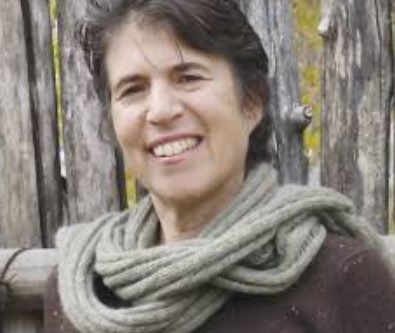
Elizabeth Kirkpatrick-Vrenios‘ award winning chapbook, Special Delivery, was published in 2016, and her second, Empty the Ocean with a Thimble by Word Tech Communications.
Twice nominated for a pushcart prize, she has poems published in various anthologies and journals including Stories of Music,The Poeming Pigeon, Love Notes from Humanity, Stories of Music, American Journal of Poetry, Cumberland River Review, The Feminine Collective, The Kentucky Review, Unsplendid, Edison Literary review, Passager, and NILVX.
She is a Professor Emerita from American University, artistic director of the Redwoods Opera in Mendocino, California, a member of international Who’s Who of Musicians, and has spent much of her life performing as a singing artist across Europe and the United States.
Excerpt from The Sun November 2003, “Keep The Hand Moving,” Natalie Goldberg interviewed by Genie Zeiger:
Zeiger asked Natalie, “What is the difference between speaking our stories and writing them down?”
Natalie: Writing it down is more intimate because, first of all, you are developing a relationship among your hand, your arm, your shoulder, your heart, and your mind. Then, because the story is recorded, you have a chance to read it later, so you can see who you are and come home to yourself.
I tell students to read deeply—which doesn’t mean reading all the great literature but just reading carefully, studying the mind of the author rather than whipping through the book. Reading is important because when you read, you enter the mind of the author, and so you get to study a practiced mind.
Notice: How do writers create structure in a book? How do they turn phrases and present facts?
Memorable writing that sparks imagination. Lean in. Hear the writer’s voice on the page.
Fortunes I Did Not Get In Cookies
By DSBriggs
A wise man marries a wiser woman.
You will get good news; and you will recognize it.
If you miss your bus, start walking.
A book returned is a friendship kept.
Get a dog, it will save you.
Blood is thicker than water but only Vampires should care.
Delight in today; for tomorrow is no guarantee.
Buy a car for its usefulness; not for its beauty.
The One that got away is not the One for You.
A blind man cannot see beyond his fingers.
Asking for help is a sign of strength but ignoring it can be a weakness.
A half full glass can be emptied and refilled.
A wise animal is better than a noisy friend.
Luck is knowing when to walk away.
Keep a pencil around for it never needs booting up.
And one I did get; if your table moves, move with it.
DSBriggs lives and writes in northern California. Her muse lately has been a roommate with soulful brown eyes, four long legs, and a very loud bark, Moose.
Donna has been fortunate to be published in Marlene Cullen’s The Write Spot Series including: Discoveries, Possibilities and Writing As A Path To Healing, available at your local bookseller. Also available in both print form and as ereaders at Amazon.
Writing with Marlene and the other Jumpstarters has been one of the most fortunate activities of my life.
Panoplyzine is a fresh new look at poetry and short prose.
“We seek to publish lively new insights in creativity, outlook, perspective, and analysis. Issue 1 debuted in August 2015. We’re edited by three friends located around Pensacola, FL who got together to offer a new look and a new option for readers and writers and lovers of good writing worldwide. In January 2022, we welcomed a new editor based in Romania to enhance our viewpoint and feel.
Our mission is to share the best in contemporary poetry and short prose, to enlighten and entertain, and to touch our readers’ hearts and minds.”
Guy’s piece “Send It!” encourages writers to submit their writing. “I record where, when, and what I send, and of course, the results. I record quality declines if I’m given feedback, especially from those who invite me to try them again. And when accepted, I write Yes! next to that entry in Zapfino font, just to party a little.”
May 5 and May 19, 2022: Guy will teach flash fiction writing. Free on Zoom through Recovery Writing of Idaho.
Guest blogger, dev-editor, and author Shirin Yim Leos, answers the question she’s most often asked: What is developmental editing, does it really make a difference, do I need it and how much—HOW MUCH?!?!—can I do for myself?
What is Developmental Editing?
It’s the big, high level, Is the book working? edit.
Does it make a difference?
Resoundingly yes. Ask any author with a career.
Do I need it?
No writer can accurately see their own work. It’s a fact, like refraction through water or distortion through atmosphere.
How much does developmental editing cost?
It varies, but here are some recently published rates in The Write Life.
How to be your own Developmental Editor
Can I do it for myself?
Try to duplicate a dev editor’s distance. They come to your pages cold and you can replicate that:
Put your writing away in a drawer for 3-6 months. I can hear you yelling, BUT I’M IN A RUSH TO GET PUBLISHED!!!! Anyone in a rush shouldn’t be attempting to get traditionally published. That’s just the truth. It is a loooong process even with the best of luck. If the clock is ticking that badly for you, consider self-publishing.
Find a rubric, a new lens that will let you evaluate the work with some objectivity. If you’re writing commercial or genre fiction, a beat sheet might be helpful. Save the Cat Writes a Novel is often recommended. The book is backed by an entire website of beat sheets, classes, and podcasts that you can download.
If you’re writing literary fiction, Donald Maass’s The Emotional Craft of Fiction focusses on creating and manipulating the reader’s emotional journey.
Freytag’s Pyramid in its modern rendition is useful as a draper’s dummy to lay your work against; to see if what you’ve made is in the actual shape of a book. (Don’t underestimate this. Remember when you can’t see, it’s very hard to discern shape. My own work invariably has a too-long sleeve and a missing collar when it’s submitted as “perfect” to an agent or editor. I am always amazed in retrospect by how I suspected X, Y, or Z on some subliminal level but could not see it.)
Learn as much about editing, as opposed to writing, as you can. I teach dev editing in my workshops.
Buy as much professional help as you can afford. I used to advise writers to go to writers’ conferences (here’s the AWP list) and sign up for consultations with editors. The Writing Day Workshops, especially, focus on getting writers in front of editors and agents, and vice versa. Of course, now there is also the online equivalent of a 24/365 writers conference dedicated to helping you get your manuscript and query in shape for pitching: Manuscript Academy, with its extensive faculty of editors and agents.
In whatever conference-like setting you find us, participating editors are taking huge cuts to our fees out of good will to the organizers. Take advantage of this!
Here’s a tip: the most useful thing to have a dev editor read for a short consultation is your synopsis, or your query and synopsis, if you can squeeze it in. Save first pages for when you’re sure your story is in great shape and you have focused on polishing that powerhouse first chapter.
Of course, you can also book editorial consultations through most editors’ websites. It will cost you more than at a conference, but it will also be to your own schedule and in a less hectic environment.
If you want feedback on your entire book but can’t afford a dev edit, many editors offer manuscript analyses that are not as detailed as dev edits. I don’t offer these (I’m so anal that if I read your book, I’ll have too much feedback to fit into a brief assessment), but my dev editor friends Susan Chang and Lisa Manterfield both do.
Make the most of free opinions. Join writers’ groups. If you don’t know where to find one, reach out to genre-specific or regional organizations like SCBWI or the California Writers Club, or organize one yourself.
The chats or cafeterias of writing conferences, classes, and events are a good place to introduce yourself and your idea of forming a group. Go to writing retreats where work will be reviewed or critiqued.
Develop a list of beta readers—people you trust whom you can swap whole-manuscript critiques with. Be generous with your own time and assistance, and it might be returned to you in spades.
Of course, the aim of all this is to get your manuscript ready for an agent.
Developmental editing sharpens your arrow for your one shot. Because, you probably will only get one shot with a particular agent.
When it comes to finding your many targets, here are a few possibilities:
1. If you know the books you’d love yours to appear next to, look at their acknowledgements. Nearly all authors thank their agents. (Sometimes, you have to plug a few names into Google to figure out who’s who.) Build a list this way. Everyone on this list will have liked a book like yours well enough to acquire it; and been competent enough to sell it. This is what I’d call a vetted and targeted list; an A list.
2. You can also build a list through good-old research. Websites such as ManuscriptWishList,querytracker, and publishersmarketplace make it easy to find agents, see what they’re wishing for, what they’re buying, what they’re selling, and for how much. So you just have to do the leg work of matching the agents who do X to the X you want doing. Then, PLEASE, visit their websites, browse through their client lists, and read their submission guidelines before querying. Be a professional! Do your homework!
3. If you can, compile a list through networking. They say the average first novel takes seven to nine years. In all that time, hopefully you’ll have become part of a writing community. Ask all the published authors you know whether they would recommend their agents. Always ask what they like best about them, and what is most challenging. Depending on your personality, some traits are deal breakers. If an agent sounds good for you and your book specifically, ask that author friend if they would mind giving you a recommendation. This is not something pushy, desperate, and despicable. This is how most agents prefer to acquire their new clients!
4. When you have your lists of agents, see if you can find them at conferences—the Writing Day Workshops are organized specifically for this purpose, and Manuscript Academy provides a very similar service. Attend classes and workshops these agents give. See if you admire them as professionals and like them as people. And see if they like you! Pay for a consultation. This may not be a pitch, depending on the conference, but it is exposure. At the very least they’ll have seen your work and given you real feedback on how to further sharpen that arrow for the next agent.
Until then, happy writing!
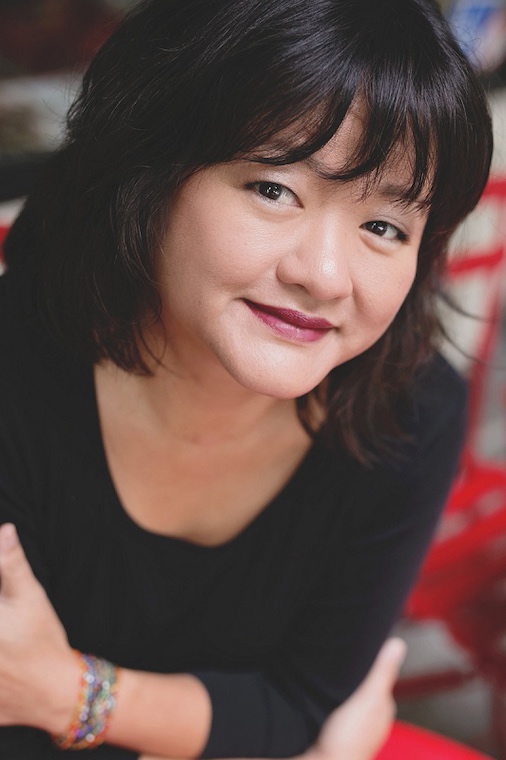
SHIRIN YIM LEOS is an Ezra Jack Keats Award-winning author and a developmental editor. She has coached writers who have secured multi-book deals from Big Four publishers, and was the founder and former Head Goose of Goosebottom Books.
Shirin also leads writing retreats and teaches writing and publishing for universities and conferences internationally. You can find out more about her services and her twenty published books at shirinyimleos.com.
MacQueen’s Quinterly : Knock-your-socks-off Art and Literature publishes writing of a thousand words or less.
“Short forms are deceptively difficult to write well, and although they take only a few minutes to read, the best resonate far longer than that. Perhaps for a lifetime. We’re dedicated to publishing such gems—please dive in to see the latest we’ve found for you.”