Blog

  • Journey

    Memorable writing that sparks imagination. Lean in. Hear the writer’s voice on the page.

    Journey

    By Pam Hiller

    The first leg of our trip to Nashville began with a Thursday afternoon flight. As Jon spent the three hours attending to job details on his laptop, I found myself increasingly staring at cloudscapes from my window seat. Snow covered mountaintops appeared to float on a sea of white clouds. Sunset over New Mexico’s red rock formations astounded with light, shadows, reflections, as earth and sky interacted. Dusk’s purple light soothed west Texas plains where vein-like rivers flowed. The night sky, increasing lightning flashes on the horizon, thrilled as our plane was diverted from Dallas to Wichita Falls.

    A question began emerging in my mind and heart. I felt myself a part of the grandeur, the immense mystery I was observing. On the other hand, it was apparent that an individual life is literally invisible in nature’s vast scale. Does a single human existence really matter?

    Saturday afternoon we attended a ceremony naming our former high school auditorium after a beloved drama teacher. City officials presented a declaration from the mayor declaring it Kent Cathcart Day in Nashville. Two former pupils gave speeches describing this man’s profound impact in teaching students to dare living authentically. Approximately half of the people in the audience were students from his first theater class in 1972 through his last class in 1999.

    Once the speeches ended Kent sat in a brown leather armchair on the stage, a fatherly figure sharing his thoughts and observations. Amid the laughter and memories, he expressed a few simple statements about his faith, in a way as a public school teacher he hadn’t before. He told us that every morning before teaching he would attend an early morning mass. He spoke of allowing one’s active life to lead to a place of silence where God could be heard. He emphasized that whatever spiritual path one followed making room for this silent space was an essential component. As in our youth, we listened spell-bound.

    Post celebration several former classmates met at a nearby home. We talked late into the night describing adventures (and misadventures) connected to time we spent in our home away from home, classroom S-01. As the evening progressed it became apparent that each of us had felt seen, attended to by Kent, in ways that deeply affected us both as teenagers and adults.

    So, to return to my question—does a single human life matter? What I experienced that weekend is that each life radiates outward in circles we can’t possibly imagine. While I still felt awed by the unknowable mystery of it all, I also felt more grounded in the feeling that the integrity of each person’s actions is important. We all contribute to the world in ways that are obvious, and in ways we may never know.

    Pam Hiller draws upon the storytelling traditions of her Tennessee childhood as inspiration for her writing. She has been blessed with a mother, relatives, and friends who know how to tell a good tale. Book-filled libraries have provided her with endless sources of wonder and interesting thoughts to ponder. It is Pam’s wish to write from the heart, from life experiences that influence her changing sense of being alive.

    Originally published in The Write Spot to Jumpstart Your Writing: Discoveries, on sale for $6.99 for a limited time at Amazon.

    You are invited to post comments on the Writers Forum Facebook page.

  • Just Do It

    Photo by Graham Lawler

    Do it! Do it in secret or in the open, do it with your heart.

    Share what you care to share and process the rest into more writing, or painting, or dancing, or living your everyday life.

    Don’t worry too much about a final product, there isn’t one, even when you call a piece done and, say, publish it. It could always be refined, rewritten.

    Get on to something and pursue it as many times, in as many ways as it takes it for you to feel done with it—for a while, at least—decide if and what you want to share, when and how, and start a new one.

    Christine Renaudin lives, writes, and paints in Petaluma, CA. She is also a dancer and performs occasionally in the Bay Area. She likes to mix art forms and makes a living teaching literature, creativity, and performance.

    Originally published in The Write Spot to Jumpstart Your Writing: Discoveries. To celebrate the fourth year anniversary of publication, Discoveries is on sale for $6.99 at Amazon for a limited time.

  • Water

    Memorable writing that sparks imagination. Lean in. Hear the writer’s voice on the page.

    Water

    By Susie Moses

    All summer long I yearn to be in water.

    First choice – A freshwater lake, cool and clear, minerally, soothing to the skin. Quiet, still. Maybe at times a whitecap or two, but no big waves, just gentle undulations, giving the swimmer a sense of massage. A tickle of weedy underwater growth against a foot, a small fish swishing by a shin. Avoiding the mucky bottom. 

    Second choice – An East Coast ocean, edged by wide white sandy beach stretching for miles along the shoreline. Sweet breezes, bright white pelicans in formation against the stunningly azure sky. Watching them drop like stones into the waves to spear a fish each had been keeping an eye out for.

    Venturing into the water as it laps onto the hard sand, toes tickled by the searching wavelets propelled by the incoming tide. The zing of the chill, a thought of recoiling immediately overcome by the desire for immersion, the feel of the briny liquid fully enveloping the cranium.

    Muffled underwater sounds create a sense of otherworldliness, a retreat from the cacophony of life above the surface—squealing toddlers, mothers’ warnings: “That’s far enough!” Squawking seagulls, shouting teens as they hurl frisbees at one another. Momentary peace—but only for as long as a breath can be held.

    Third choice – A small river, where I found myself last weekend, immersed in green water flowing between old beech trees, tulip poplars and sycamore arching above the waterway, gnarled ancient roots exposed along the eroding muddy bank.

    I lie prone in the water above the massive rocks that pave the river bottom, face skyward, reveling in the flight of the great blue heron soaring overhead as it traces the path of the flow. I hang on to a silty stone to keep from being swept downriver as I feel the steady pull of the moving stream. The shore is rocky where we emerge and retrieve our beach chairs, wedging them amongst stones, a bit of a wobble inevitable as we balance them on the uneven surface as best we can, and splay ourselves out to dry off in the sun’s strong rays.   

    Did I say this was number 3? At that point, lying in the bracing liquid caressing my body, hot sun warming my upturned face, my hair pulsating with the water’s movement, taking in the wonder of the great blue making its way upriver, I think it simply can’t get any better than this.

    Summer at its finest.

    Nestled in a body of water far from human development, noticing an iridescent blue dragonfly waft about. Noting a doe and her fawn far downstream crossing to the other side. No sign of another person for miles, save the one dear friend who floats nearby.

    This is nirvana. Cool water, clear light, brilliant sky.

    Nature. Respite. Peace. 

    Susie Moses is a generative writing junkie, enjoying the process and dreaming of actually doing something constructive one day with the piles of papers and notebooks she has accrued, that are spilling out of closets and off shelves and out of drawers. 

    But for now, just getting words down on the page is an accomplishment and a delight. She spent the year of Covid in Marin County to be near her daughters, but has returned to her beloved Blue Ridge Mountains in Virginia, at least for a while.

    You can read Susie’s dream of living in a cabin in a forest, by the edge of a lake here.

  • Beloit Fiction Journal

    Beloit Fiction Journal is open to literary fiction on any subject or theme from now to November 16, 2021.

    Stories up to 13,000 words.

    Flash Fiction is fine.

    Beloit showcases new writers as well as established writers.

    Guidelines & Submissions

    Due to the cost of maintaining the online submission platform, Beloit Fiction Journal charges a service fee of $3 per submission.

  • I could never . . . Prompt #599

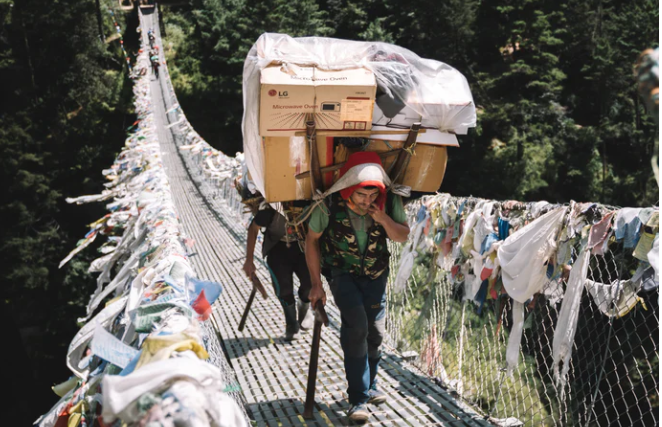
    Nepal suspension bridge. Photo by Mick Truyts, Unsplash

    Writing Prompt. Choose one and Just Write.

    I could never get rid of . . .

    I could never like . . .

    I could never go to . . .

    I could never eat . . .

    I could never get over feeling guilty about . . .

    I could never forget . . .

    Pick one or make up your own:
    I could never . . .

    This writing prompt is from “The Write Spot to Jumpstart Your Writing: Discoveries” along with 57 other writing prompts. Discoveries is on sale for $6.99 at Amazon for a limited time. ereader is $2.99 or free on Kindle Unlimited.

  • What energizes you?

    Memorable writing that sparks imagination. Lean in. Hear the writer’s voice on the page.

    What Energizes You?

    By Bonnie Koagedal

    Energy is everywhere. We are made of life energy. A person can influence their life, health and others by sending energy through thought. I call these thoughts: prayers without movement.

    Still mindfulness is a prayer. Thoughts are energy similar to words. They carry power and pain.

    These teachings came to me recently as the pandemic shutdown escorted me into quiet times in one place called home. These teachings were told to me years and years ago. I did not grasp the fullness or capacity of energy through thought until the shutdown. This time was my vision quest.

    When we can become no thing, no place, no thought as Joe Dispenza teaches we can affect our energy above and beyond our bodies. I was fascinated and obsessed for several months about these teachings.

    As a child and into young adulthood. I felt I had too much energy for my own good. I bounced off the walls of my life and experiences. I pushed myself to have adventure after adventure and not stop. Like many people who experience trauma or tragedy, a dramatic circumstance sends us to another side of our life energy.

    I learned to pray and turn my worry over to a universal God when I experienced the trauma of having a premature baby at age 38. She was born at 24 weeks gestation and was given a 5% chance of survival on the night she was born. She is now 28 and an amazing human.

    What this experience led me towards was an ability to stop and enjoy the universe rolling on in my favor, whatever my favor was. I learned to clear my worried mind and let the universe provide. Inner mindful energy is a space I enjoy immensely now as much as being out and about meeting people and doing energetic hobbies. What energizes me is drastically different from what energized me early in life.

    I gain great energy communing with my soul, my spirit animals and nature.

    I am over the moon grateful for the authentic me that was able to emerge in this marvelous life. The art of “Be Here Now” is my mantra and way of living my life to its fullest.

    Bonnie Koagedal moved to Sonoma County in 1986. She lives in Petaluma with her husband and fur friends. Bonnie enjoys soul seeking hobbies which include writing. Bonnie works in Senior Support Services part time. She tours families to board and care homes for a placement service. Favorites: Travel in her motor home and trips to her home in Arizona

  • Summer Smells . . . Prompt #598

    Write about smells of summer . . .

    Pink lemonade

    Cut watermelon

    Gazpacho

    Caprese salad

    Juicy plums

    Jam simmering on the stove

    Fruit tarts

    River water

    Sand

    Ocean

    Hot sun on asphalt, on a canvas chair, on your arm

    Sunscreen

    Write about summer smells.

  • Mycorrhiza

    Memorable writing that sparks imagination. Lean in. Hear the writer’s voice on the page.

    Mycorrhiza*

    by Patricia Morris

    I live under the canopy of a grandmother valley oak. It grows in what is now called “my neighbor’s yard,” due to the way we white settlers swept through this what-is-now-called a nation over the past 300 years and took over everything. Massacred people who were living here, infected them with deadly diseases, tried to re-make them in our image. Declared that we “owned” the land, bought and sold it; built structures to live in, structures that got bigger and more permanent as time passed; built fences to delineate MINE.

    But before all this, there was the valley oak. Like all oaks, it began as an acorn, scrunched into the dirt next to a small seasonal creek. Its roots sank deeper each year, reaching for the water. Its mycorrhizal fungi spread wide, linking fingers with the grandfather sycamore nearby, and the great buckeye at the deeper part of the creek. They grew up together sharing food; sharing information; sharing tenants such as woodpeckers, scrub jays, red-shouldered hawks, squirrels, and woodrats.

    The grandmother oak watched placidly as the Coast Miwok women gathered its acorns, ground them into mush, and fed them to their families; as the Spanish and then the white folks pushed in and planted crops and orchards, grazed cattle and sheep; as roads were laid down and houses sprang up, displacing meadows and pastures.

    Fifty-one years ago what I call “my house” was built beside the oak out of dead redwood trees. The oak, by this time the oldest living being in the area, grew protective of this redwood structure, and even of the humans within it, despite all the destruction they wrought. I’ve had no doubt, since first setting foot on what I now call “my lot,” that the tree is protecting me and sending me love. Its ever-expanding canopy of leaves covers over two-thirds of my house in the summer, keeping it cool on even the hottest days. In the autumn, as its acorns hit the roof, the deck, sometimes even my head, like small exploding artillery shells, I give thanks and gratitude for the way it shares its abundance.

    On a cold, dark winter night, silver stars glitter through the outline of the oak’s bare black branches, its ancient arms reaching to the cosmos. My tiny form sits in a tub of hot bubbling water. Boundaries between me, tree, and twinkling stars dissolve into emptiness.

    * fungus which grows in association with the roots of a plant in a symbiotic or mildly pathogenic relationship. Oxford English Dictionary

    Patricia Morris lives under the trees in Northern California and writes on Monday nights at Jumpstart Writing Workshops. She dates her love of stories to being read to while sitting on the lap of her Great-Aunt Ruth, a children’s librarian. Her writing has appeared in Rand McNally’s Vacation America, the Ultimate Road Atlas and The Write Spot anthologies Possibilities and Musings and Ravings From a Pandemic Year, edited by Marlene Cullen.

  • An Exercise in Barbecuing

    Memorable writing that sparks imagination. Lean in. Hear the writer’s voice on the page.

    This Sparks page on my website, The Write Spot, is, hopefully, a place for entertaining, fun, and enlightening reading.

    “An Exercise in Barbecuing” by DS Briggs is one of the funnier stories in Discoveries.

    The Write Spot to Jumpstart Your Writing Discoveries is for sale for a limited time for $6.99

    An Exercise in Barbecuing

    DS Briggs

    Very recently I leapt into the world of backyard barbecuing. For years I have secretly wanted to learn to barbecue. In my family it was always my Dad’s domain. However, I love grilled foods and got tired of waiting for Mr. WeberRight to BBQ for me. I proudly acquired a very big, shiny new Weber BBQ. It came with a grown-up sized grill width of twenty-two and a half inches. I dubbed my new friend “Big Boy.”

    Unfortunately, for me, Big Boy came in a big box with far too many pieces. It was with a definite leap of faith to undertake putting Big Boy together. He did not have written directions, nor a you-tube video and I have no degree in advanced “IKEA.”

    Instead, Big Boy came with an inscrutable line drawing and lots of lines leading to alphabet letters. Still, I have my own Phillips’s head screwdriver. I used to call it the star-thingie until an old boyfriend corrected me. But I digress. Suffice to say, after trials and even more errors, I constructed Big Boy.

    Okay, so it took me three hours instead of twenty minutes, but Big Boy was upright and proud. I just wanted to admire my handiwork by this time and Big Boy was clean, so very clean. In fact, he was too clean to use. I postponed the baptismal fire and nuked my dinner that night. In a couple of days, after repeated trips to the store for important and essential tools of the trade: A cover to keep Big Boy dry and clean, real mesquite wood to feed him, and long-handled tongs. For my own protection I bought massive mittens. I was almost ready to launch Big Boy. 

    A few forays into the garage for additional must haves—my landlord’s trusty but rusty charcoal chimney fire starter can with a grate on the bottom and handle on the side and a dusty, spidery partial bag of charcoal in case my mesquite wood failed to turn into coals. I was finally ready to light up the barbecue. I chose to inaugurate Big Boy on a humid, somewhat breezy day. No gale force winds were predicted. As a precaution, I hosed down the backyard weeds. I found matches from the previous century and a full Sunday paper for starter fuel. The directions to stuff the bottom of the charcoal chimney can with crumpled newspaper and then load up the top part with either charcoal or wood sounded easy enough.

    I chose to use the mesquite wood based on advice from Barbecue Bob, a friend of mine. I lit the chimney and soon had enough white smoke to elect the Pope. I waited the prerequisite twenty minutes for coals to appear. Nada. Nope. No coals in sight. The wood had not caught fire, although the paper left a nice white ash. Hungry, but not deterred, I re-stuffed the bottom of the charcoal chimney with more newspaper and set the whole chimney on top of a mini-Mount St. Helens pile of newspaper. I found smaller bits of wood since the lumber did not ignite. I lit the new batch of newspapers again. After a second dose of copious white smoke, miracle of miracles, the splinters of wood caught fire. Finally, it produced enough smoke for the oleanders to start talking.

    “You do know it is a red flag day.” I know bushes don’t really talk, so I assumed the warning came from the owner of the fish-belly-white legs and flip-flops standing behind the tall, overgrown oleanders.

    Having no clue what Flip-Flops meant, I explained that I was trying to learn how to BBQ. I asked what she meant by red flag day and she said that it was extreme fire danger in the hills. Aside from the fact that there was not a hill in sight, I told her that I had the hose at ready. I also asked Flip if BBQing was banned on red flag days. She didn’t know, however, I think I heard the word fire bug. Perhaps she just wanted to let me know that she knew who was playing with matches on a red flag day in case the fire department asked.

    Reassuring Neighbor Fire Watch, I carefully emptied the chimney’s coals onto Big Boy’s smaller, lower but still sparkling clean grill. Using my mitts, I gently crowned Big Boy with the very clean, shiny huge upper grill. The sacrificial chicken had, at last, a final resting place. Whoosh! The previously white Pope smoke was now black and voluminous. Turns out olive oil makes lots of good smoke and less-than-helpful flare ups of flame. With my hands still ensconced in bright red mittens and using a very long tong, I turned the chicken. Only slightly blackened. I kept turning the chicken every five or ten minutes. More black, but not at the briquet stage—yet. I figured I had better recheck my BBQ Bible, the thick one with pictures so you can compare your results with theirs. Their advice was to cook the chicken until it had an internal temperature of 189 degrees Fahrenheit. I hoped Fire Watch was not watching because I dangerously left my BBQ unattended to go rummage through my kitchen drawers in search of an instant read thermometer. I knew that I would need it someday when I bought it a decade earlier. I inserted it and watched it slowly rise to 145 degrees. Only 44 more degrees to go but I was starving and the coals were cooling! I knew this because according to said Bible you hold your hand above the coals and count three Mississippi’s for good heat.

    By the time I had counted “One Mississippi, two Mississippi, three Mississippi . . . fifteen Mississippi,” even I could tell the coals were dead. I pulled the chicken off the grill. The skin was definitely done. Delicious? No. Blackened? Yes. Delectable? No. Vaguely resemble the BBQ Bible’s picture? Not at all.

    So for the lesson summary: Two hours of perseverance resulting in one hardly edible, even when finished-in-the oven chicken. Adding insult to injury I had a very dirty, sticky, greasy, too-large-for-my-sink grill to scrub.

    Lesson learned: find a home for Big Boy and call take-out.

    DS Briggs resides in Northern California with Moose, her very large, loving, and loud hound/lab mix. She has been privileged to contribute to Marlene Cullen’s Write Spot books: Discoveries, Possibilities, and Writing as a Path to Healing.

    Share your barbecue story on my Writers Forum Facebook Page.

  • Crab Creek Review

    Crab Creek Review was founded by Linda Clifton in 1983. The publication is a perfect-bound print literary journal featuring poetry, fiction, and creative nonfiction.

    Reading period: September 15 through November 15.

    The editors seek original, unpublished poetry, fiction, and creative nonfiction. Only original, previously unpublished work will be considered.

    Submission Guidelines

    Poetry

    Send up to four poems, no more than eight pages total.

    Fiction
    Send one piece up to 5,000 words or up to three pieces of flash fiction/lyric prose fiction. We are interested in all types of stories, though sometimes suspicious of those in which genre conventions overshadow literary concerns. Still: please surprise us.

    Creative Nonfiction
    Send one piece up to 3,000 words or up to three micro-essays (750 words max) per submission period. We’re looking to publish fresh perspectives from diverse voices. We want to read exceptional narratives that illuminate the range of bitter and sweet that is human existence.

    Regardless of topic, Crab Creek Review is looking for well-crafted prose that exhibits depth and nuance, a clear voice, personal reflection, and vivid scenes. Experimental and non-traditional forms welcome.