Blog

  • Perseverance

     By M.A. Dooley

    “Dad, why do people think the moon is made of cheese?”

    “Because of the holes, it looks like swiss cheese.”

    “Dad, what are the holes made of?”

    “They’re craters made by asteroids crashing on the surface.”

    “Dad, can an asteroid crash here?”

    “It’s possible, but not probable.”  

    “Dad, is a shooting star a dying sun?”

    “No, they are meteorites burning up in earth’s atmosphere.”

    “But they’re good luck, right dad?”  

    The Mars landing reminded me of days of infinite possibilities. I was born to an aerospace engineer who flew to Cape Canaveral for satellite launches. The morning of the Apollo 12 lift-off, our family huddled around a black and white picture box. My little brother was just happy in mom’s soft lap. I, the older one and already like my dad, asked innumerable questions before count down. Mom shushed me so dad could narrate the details of the rocket parts and stages. As soon as an opening allowed, I proceeded with my inquiry.

    “Dad, is there such thing as aliens?”

    “It’s possible, but not probable.”

    “Why not, dad?”

    “Because of all the ingredients required for life, especially water, which we can’t find on other planets.”

    “But dad, have we looked everywhere?”

    “We are trying.”

    “Dad, what about Mars?”

    “Nope, there’s no life-sustaining elements there.”

    “But dad, is it possible that there once was?”

    “It’s possible, but not probable.”

    “But it is possible, right dad?” 

    M.A. Dooley is a fourth generation Californian who spent her childhood in the Santa Cruz Mountains. She is an architect in partnership with her husband. They have three sons. Among a multitude of athletic interests, she loves to ski and dance. Her work has been published in SunsetTrendsSan Francisco Magazine, the San Francisco ChronicleThe Press Democrat,and in Poems of a Modern Day Architect published by ARCHHIVE BOOKS, 2020. 

  • California Winter

    California Winter

    By Patricia Morris

    (with thanks to Ted Kooser)

    The wind turns the pages of rain

    As drops splatter on the skylights,

        beating a rhythm punctuated by

        the cracks of unmoored oak limbs

         hitting the roof.


     The rain chain dances,

        brass acorns jingling,

        water swooshing through its cups.


     The creek rushes over rocks,

          gushes into the culvert and out again,

          making its overground / underground way to the river.


    The thirsty earth soaks it in,

       filters it down into empty aquifers.

    One chapter ending, another beginning.


    Freewrite inspired by the poem, A Rainy Morning, by Ted Kooser


    Patricia Morris misses the summer thunderstorms of her rural Midwestern upbringing, but enjoys observing and writing about the California rains from her home in Petaluma.

    After careers as diverse as trial lawyer and organization and leadership development consultant and coach, she is exploring life beyond the workaday world.

    Every Monday night she writes with friends at Marlene Cullen’s and Susan Bono’s Jumpstart Writing Workshops. Her writing has appeared in Rand McNally’s Vacation America, the Ultimate Road Atlas and The Write Spot:  Possibilities edited by Marlene Cullen. Available on Amazon, print $15 and ereader $2.99.

  • The Trees on Her Block

    The Trees on Her Block

    By Camille Sherman

    Thick strands, split ends, hanging in zero gravity toward the sky

    A morning stretch, limbs painting fine details on the clouds

    Noble, astute, aged and ageless

    Naked and resolute, spindly in its brittle winter coat

    Immune from human error, impervious to neglect or over-watering

    Pledging a sacred vow of new life in the spring

    Thawing those that pass below

    Breathing new poems into poets,

    Fresh brush strokes into painters

    Holding our attention and springing our steps

    Until a season-long sunset

    When autumn leaves start to fall

    Camille Sherman is a professional opera singer from the Bay Area. She trained at The Boston Conservatory and the San Francisco Conservatory of music, and served as an Artist in Residence at Pensacola Opera and Portland Opera. She currently lives in Portland, where she continues to sing and develop artistic projects with local artists.

  • Perseverance . . . Prompt #562

    Today’s prompt is inspired from the Perseverance Rover landing on Mars.

    What do you think about the Mars landing?

    Is this as impactful as man’s first walk on the moon?

    OR:

    Where were you on July 20, 1969 when Neil Armstrong and Edwin “Buzz” Aldrin landed on the moon?

    OR: Write about perseverance.

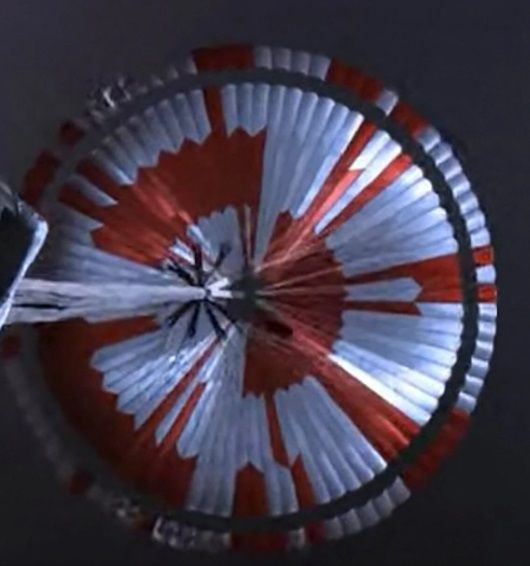
    About the parachute that helped land Perseverance:

    The parachute that helped NASA’s Perseverance rover land on Mars unfurled to reveal a seemingly random pattern of colors in video clips of the rover’s landing. NASA officials said it contained a hidden message written in binary computer code. The red and white pattern spelled out “Dare Mighty Things” in concentric rings. The saying is the Perseverance team’s motto, and it is also emblazoned on the walls of Mission Control at NASA’s Jet Propulsion. “The Verge”

  • This Side of a Freeze

    This Side of a Freeze

    By Deb Fenwick

    You have one last stop to make. The holidays are approaching, and you have one final card to mail. A quick stop at the post office, and you can tick the box and check that task right off the list just before dark hits at 4:30 on a December day.

    Parking strategies are key here, and when you find a second-tier one across the street, you grab it. You’ve got layers. Layers of fleece and GORE-TEX, even a new hat, to insulate you from temperatures that are just this side of a freeze. 

    You cross Lake Street when you first see him. He’s just a little older than your daughter. He’s standing outside the main entrance near the flagpole as you approach the mailbox box with your stamped envelope—with your contents safely sealed inside.

    You see him approaching. He’s tall, and he looks like he could be one of your daughter’s friends. But, no, on second thought, no. They’re all off at college in dorm rooms, counting down for winter break. He’s shifting his gaze back and forth but walking directly toward you on the snowy sidewalk. Although young, you note that he doesn’t have the same posture you recognize in your daughter’s friends. All the times she brought them home for parties and fire pits. Even in their teens, her friends stood tall.They made eye contact and small talk.They perfected handshakes and polite niceties as they moved through rooms with all the confidence that a promise of a bright future bestows. 

    The wind from the North makes the flag dance with a violent whip. When he’s close enough to speak, you notice that his hand shakes as he says, “Excuse me.” He says it twice. He asks if you have any food. Then he apologizes.

    Caught off-guard at his youth and the request for food—not money, food. You look down at your envelope holding a card that is wishing a friend who lives two cities away glad tidings. You feel utterly unprepared for this moment. Food? you rhetorically ask him. Like it’s the first time you’ve ever heard the word. Now it’s your turn to apologize. Your cashless approach to life means your debit card is woefully underwhelming in this situation. You can’t even buy your way out of the discomfort you feel by offering him money for food. 

    When you can’t look him in the eye any longer, you shift your attention back to his hands. No gloves of fleece or GORE-TEX. He has hands red from the cold with long fingers that shake. These hands were once as tiny as your child’s sweet baby hands. You imagine his childhood fingers learning to tie shoes, practicing the writing of letters and numbers. His hands must have been held by the hand of a parent, a grandparent, some adult that loved him.

    Love. It echoes in your head and sounds hollow in the frosty air. You remember the spare set of gloves that you have in the car. You ask him to wait there while you dash across the street and rummage through the vehicle for the gloves and granola bars or any spare food you carelessly tossed aside in favor of better options.

    When you return, you give him the gloves and a smashed Nutrigrain bar. You apologize again and forget to mail the card as the winter wind continues its assault on the flag overhead.

    Deb Fenwick is a Chicago-born writer who currently lives in Oak Park, Illinois. After spending nearly thirty years working as an arts educator, school program specialist, youth advocate, and public school administrator, she now finds herself with ample time to read books by her heroes and write every story that was patiently waiting to be told. When she’s not traveling with her heartthrob of a husband or dreaming up wildly impractical adventures with her intrepid, college-age daughter, you’ll find her out in the garden getting muddy with two little pups.

  • If you knew . . . Prompt #561

    If you knew then what you know now, what would you do differently?

  • Why not just get busy and write?

    I’ve been reading back issues of Tiny Lights and found this gem by Suzanne Byerley, published December 2000. Even though this was written twenty years ago, it’s a perfect piece to share with you in these days of restlessness, as we wade through difficult times to find inspiration and energy to write.—Marlene Cullen

    “Steps” by Suzanne Byerley.

    I find myself restless. I prowl about the house in my slippers making sure the cats are behaving themselves, sorely tempted to turn on CNN and see if Florida has picked the next president yet. Maybe I’ll lay out a game of solitaire or fumble through that little Bach prelude my daughter mastered when she was six. What is this wild drive to diversion? Why not just sit down and get at what makes me happy? Why not just get busy and write?

    Because the steps to the desk are like slogging bootless through the deepest muds of winter. It is only after the first sentence has made its way through the synapses, the words clicking into place like pictures in a one-armed bandit, that I can begin again.

    It’s always more daunting when life intervenes, as it has lately, when loss comes crashing in. I’m not sure how to climb up from long silence to sight and voice again. Was I ever a writer? I must once have known how to polish a paragraph. I have vague memories of once or twice finding just the right word. Maybe rereading the last poem or story somebody praised will bolster my confidence sufficiently, but today when I look, it seems obvious some alien being wrote those words, not me.

    Still, this is the day I’ve promised myself was mine, so I stumble to the bookshelf to search out some shred of insight. “The eye must be alert; must see the influence of one thing on another and bring all things into relation,” says Robert Henri in The Art Spirit. As if my eye could ever do that. “The background as put in in the beginning may have been excellent, but the work that has gone on I front of it may demand its total reconstruction.”

    That hits home, I feel like so much has gone on that I’m in need of total reconstruction. I think of the Henri paintings I saw last month at the tiny American Impressionist Museum in New Britain, Connecticut, when I sneaked a week away from teaching to visit my daughter, Tanya, and grandson, Andrew, and smell the leaves of a real autumn. I have always thought Henri’s book one of the best for artistic inspiration of any kind, and it was pure pleasure to look on his few paintings there in an old mansion with the October sun streaming through the window. How many times had he gone back to get a painting just right? Had he said to himself, “I like what’s in front but the background’s all wrong,” as I have often said of my own emerging story, “too much detail” or “not enough glue?”

    I slip Henri back into his place on the shelf and pick up the framed snapshot of my mother, my father, my brother, and me. I am three, smiling on the knee of my father, my legs crossed. I wear the wine-colored beret my grandmother has crocheted with a row of white angora around the edge. I remember the softness of the angora, the scratchiness of the wine-colored wool. On my feet are sandals, almost hidden in shadow.

    And I think of the sandals I took with me from my mother’s house last year when she died. I had left my shoes in a motel by accident. A bit reluctantly, I picked up Mom’s from the floor of the closet I was emptying and put them on. I wore the sandals far into last winter, soothed by the contours of my mother’s feet cushioning my own. In this snapshot, though, her hair is black and thick and she is smiling, I notice, the same smile I thought I caught on the face of my grandson last month. My grandson, just the age I was in this photo, sitting on my father’s knee, sandals on my feet.

    I just told my students yesterday to contemplate shoes. Shoes of theirs or of someone they knew. A baby’s sneaker or a grandfather’s slipper. A shoe tossed a few feet from a body buried in an earthquake or twisted on a village road in Israel. An old man I know wears one shoe with a four-inch sole to try to even the discrepancy in the length of his legs. He walks with a great, rolling gait, his eyes full of secrets.

    How much for granted we take our locomotion, our ability to stroll or skip or dance through life. Andrew and I danced last month for the first time, wildly, in the preschool parking lot strewn with oak leaves. When my father broke his hip a year before he died he could not longer walk, let alone dance, but back in the Roaring Twenties when he was still in his teens he had been a dance instructor, and he began my lessons early. His shoes were always shined. When I close my eyes I can see the gleam and flash as he laughed at my bouncing and taught me a new step. As I stand here, I can hear the sweet and rhythmic “shuf, shuf, shuf” they made gliding across the room. I am shaken by the sound. And I see beyond the past to the joy of Andrew, so thrilled with music, so filled with movement that he can’t stand still.

    I put the snapshot back on the shelf, go into my closet and put on my mother’s sandals, marveling at the touch of them, warm as her hand. Then I come back to my study and turn to the desk, ready now to put my fingers to the keys. How do I begin again? With feeling. With love, or joy, or pain. Out of strong emotion the words begin to flow. Don’t interfere once they start. Don’t bring too much brain power to bear on them. Use that great rush which comes from sadness or surprise from memory, from what is real. That rush which clears our eyes just long enough to glimpse the connection between past and present, between longing and desire. All of us have experienced it. We writers lie in wait for it, not always patiently, not always willingly, never with the easy confidence that it will come again, always grateful when it does.

    “There are moments in our lives, there are moments in a day, when we seem to see beyond the usual,” Henri reminds me. “Such are the moments of our greatest happiness. Such are the moments of our greatest wisdom. If one could but recall those visions by some sort of sign. It was in this hope that the arts were invented.” Yes, that’s why we write, to capture those moments. And it’s in that first rush of feeling that the capturing is done.

    I’ll interfere with the word order later. I’ll clean up the background later. There is always plenty of time for rewrite, for perfecting. But not just now. Just now, I’ve conquered that aimless restlessness, taken those first trusting steps and begun again.

    Originally published in Vol. 6 No. 2 of Tiny Lights, A Journal of Personal Essay, Susan Bono, Editor-in-Chief.

    Suzanne Byerley (1937-2013)

    M. Suzanne Hartman-Byerley, beloved writing teacher, accomplished writer and unflappable co-director of the Mendocino Coast Writers Conference, influenced most of the writers living on the North Coast today. Recipient of a Hopwood Award and a Fulbright scholarship, her short stories and poems were published in magazines such as Woman’s Day, Family Circle and the Kansas Quarterly.


    After Suzanne and husband, Andrew, moved to the coast in l987 to run the Mendocino Gift Company, she taught writing at the Redwood Coast Senior Center and wrote for Coast and Valley and other publications. In 1996, she became co-director of the Mendocino Coast Writers Conference and an adjunct professor at College of the Redwoods. She founded the “Good Words” reading series and helped revive the Todd Point Review. When she and Andy moved back to Ohio in 2004, she continued to inspire writers at the Conneaut Community Center for the Arts and the Andover Public Library.
  • Rinse Cycle

    Rinse Cycle

    By Brenda Bellinger

    Remember when we used to rely on weather forecasts that were broadcast with our nightly news? We’d get a good-enough sense of when to expect rain from the fuzzy satellite image.

    Many years ago, I used to ride the bus to work. At one of the stops along the way, a cheerful woman named Marilyn would board. She had Down Syndrome and would always greet everyone before settling herself into a seat toward the front. Occasionally, she would bring her umbrella. If Marilyn was carrying her umbrella on a bright sunny day, you could be assured it would rain, even if it hadn’t been predicted by the weatherman the night before.

    Who could have imagined that one day we’d have phones that would tell us precisely when rainfall would begin and end based on our location? Yes, it’s convenient and often very helpful but I miss the occasional surprise of being caught in unexpected weather.

    The rain that fell on Christmas Day was a welcome reminder that this is the season. (Or at least it’s supposed to be.) Listening to the soothing rhythm of raindrops falling outside my window brought some reassurance that things will be okay. New growth is stirring that will erase wildfire scars and winter gardens are being nourished. I love the way rain freshens the air and renews our spirits. It was fun to see a group of birds splashing in a newly formed puddle, not a care in the world. Hopefully, a period of sustained rainfall will follow soon and bring some relief from drought conditions.

    One of the things I enjoy most about rain is the quiet that it brings; the way the heaviness in the air settles over us. In Ireland, a heavy mist or light rain is often called “lovely soft weather” – a perfect description.

    I’m looking forward to more moody gray clouds and feeling cocooned inside during a downpour.

    For Brenda Bellinger, a rainy day is a welcome invitation to sit down and write. Her work has appeared in Small Farmer’s Journal, Mom Egg Review, Persimmon Tree, THEMA, the California Writers Club Literary Review, and in various anthologies. 

    Her first novel, Taking Root, a coming-of-age story of betrayal and courage, is available through most local bookstores and on Amazon. Brenda blogs at brendabellinger.com

    Note from Marlene: Brenda’s Blog is a collection of thoughtful and entertaining reflections on what matters.

  • Finding Peace

    Finding Peace

    By DS Briggs

    When in Switzerland I wandered into a large ornate cathedral. The choir was singing. The voices soared with the organist’s notes. I didn’t understand the language but sitting in the back pew I felt entranced and relaxed. 

    I live with a lot of silence within my home. I don’t usually have the radio, tv or music as background. I don’t know why. Habit? Or just a need to keep calm.

    I have experienced calmness in walking outdoors.  I was on the dog path, walking Boo. I heard a splash in the creek. I saw a pair of ducks swimming, dipping and eating with their bottoms-up.  I took time to watch how the sunlight dappled the creek and how the brilliant red-leafed tree stood out from the myriad of greens and browns. I just stood, leash in hand, and looked. I enjoyed the calm while I watched the ripples of circles the ducks made. It was a great moment to just be in the now.

    Other examples of this quiet-calm have been in walking with large, huge trees. I first noticed my heart quieting and healing when I camped in Sequoia National Park. Closer to home I found time in Armstrong Redwoods provided similar feelings to Sequoia until our most recent wildfire destroyed many of the trees. 

    I find more calming and quiet healing in the mountains than at the ocean. Although the waves moving in and out are mesmerizing, I don’t experience the same calming quiet that mountains provide. 

    Sheltering in place because of Covid, I could not go to the mountains. My experiences of quiet-calm came, however, when I would sit outside in the early morning before leaf blowers or phone calls. I just watched the birds flit . . . while sipping coffee from a warm mug in my bathrobe. Bliss.

    DS Briggs writes and resides in a small cluttered kingdom, with a gigantic dog. She discovered joy in writing while in elementary school. A brief stint as a newspaper reporter while in high school, DS thought journalism would be her college major. However, her writing career stalled in college when she realized she hated analyzing comma placement and switched to social science. DS became an elementary school teacher and later specialized in teaching independent travel skills and braille to students with visual impairments. Retired now, DS has returned to her love of writing thru Marlene Cullen’s Jumpstart Writing Workshops. 

  • I am a writer . . . I use story to reimagine worlds

    “I am not a writer because I write a certain number of words every day. I am a writer because I use story to reimagine worlds. My value as a writer, citizen, and human is not rooted in my productivity, I tell myself on those brain foggy, exhausted days in which small humans climb on my limbs with no mercy.” —Ruth Osorio, excerpt from Ruth’s guest blog post in Brevity magazine.

    Ruth Osorio, PhD

    As of Fall 2018, I am living my undergraduate student dream as an Assistant Professor of English and Women’s Studies at Old Dominion University. My family lives in Norfolk, VA, where we spend our days chasing kids on the beach. I am also involved in local grassroots organizing tackling the school-to-prison pipeline and school suspensions in Norfolk Public Schools.