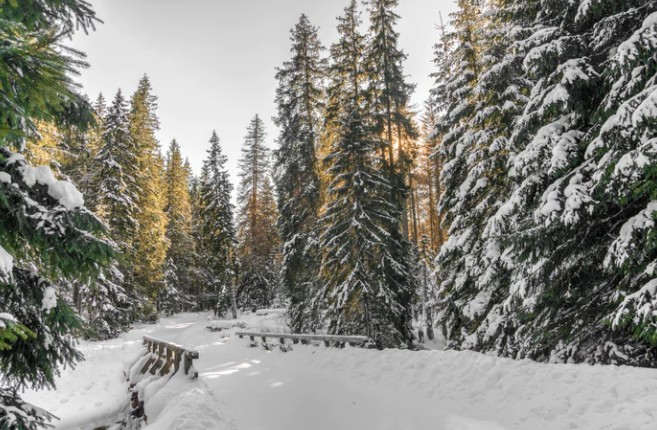
Winter.
What is the best thing about winter?
What is your earliest winter memory?
Or:
Most memorable thing that happened in winter.
Winter.
What is the best thing about winter?
What is your earliest winter memory?
Or:
Most memorable thing that happened in winter.
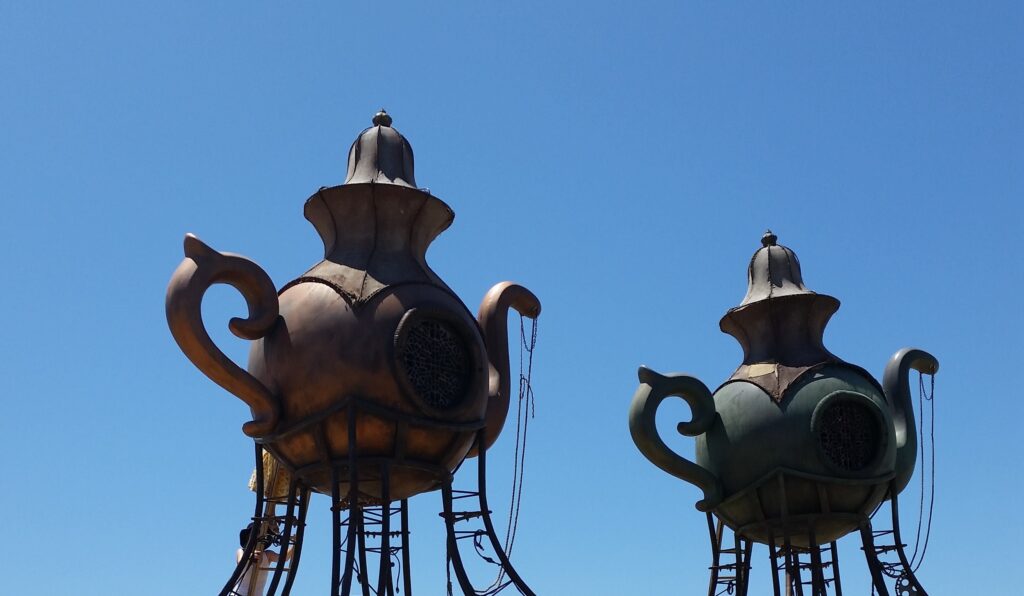
Think about a relative or an ancestor who you know very little about. You can jot down names or how the person is related to you if you don’t know their names. Take about two minutes for this.
Choose one person to focus on. Time travel to when that person lived.
Write about that person in a “take me back” way . . . using location or place, date, other characters or people who lived then as details to learn about this person.
You can make things up, imagine conversation, imagine circumstances.
There are no wrong answers. Have fun exploring the possibilities of “what if?”
What if you lived during this time, what would you be doing? Where are you in this scene?
The Free February 18, 2021 Writers Forum event features Kate Farrell, Waights Taylor, Jr., and Bev Scott chatting about how to research family history and shape your story.
Writers Forum Details and Zoom URL
Dawna Markova, PhD:
“I was a six-year-old wild child. My parents tried to tame me by warning me about all the terrible threatening things in the world that could hurt me. On the surface, I ignored or defied them, but late at night their fears took root in my mind and strangled my dreams.
One Friday morning, I asked my precious grandmother, who had escaped from the Cossacks and didn’t seem to be afraid of anything how she had learned to be so brave. She lifted my fingertips to her wrinkly warm lips one by one, kissing them as she whispered, ‘I’ve told you that each print proves what a precious one-of-a-kind being you are, worthy of great care. Never again will there be another such as you. So pay attention to the warnings and protect the miracle of your life.’
Pausing, she stretched out my arm so and pointed it straight ahead.
‘Move away from what you are afraid of if it threatens you, but also remember to move towards what you want to give to the world.’
Before I could unleash a long string of questions, she placed my palm on the center of my chest and said, ‘Think of it as a riddle, my darling, because every riddle is a bridge to what you are here to make possible.’”
Dawna Markova followed her precious grandmother’s footsteps to become a midwife, but rather than babies, she helps birth possibilities within and between people.
She has lived many incarnations in the past seven decades as an author, teacher, psychotherapist, researcher, executive advisor, and organizational fairy godmother.
Dawna’s Poem on The Write Spot Blog: I Will Not Die an Unlived Life.
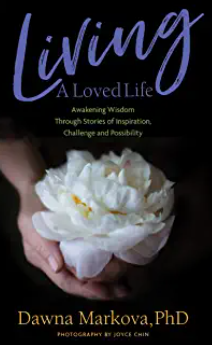
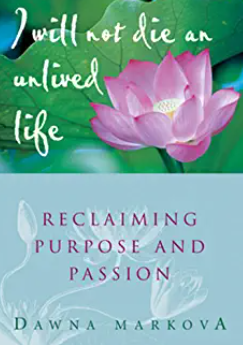
One of the creators of the best-selling Random Acts of Kindness series, Dawna is the author of many other inspirational books, including: Living A Loved Life: Awakening Wisdom Through Stories of Inspiration, Challenge and Possibility; I Will Not Die an Unlived Life: Reclaiming Purpose and Passion; Reconcilable Differences: Connecting In a Disconnected World; Collaborative Intelligence: Thinking With People Who Think Differently; A Spot of Grace: Remarkable Stories of How You DO Make a Difference.
Reprinted with Dawna’s permission.
Flood By Karen Ely
A riddle is a bridge.
A bridge to the truth,
arching over the angry, churning river
that is our nation’s canker.
The howling denials
humiliating trials
of fact versus fiction
0ur country’s affliction.
And the riddle is this:
What lies on the other side?
A people of unity,
Indivisible
or a new status quo
leaving gospel invisible
As we strive
To thrive
Keep hope alive
Compromise.
Calm the beast and keep the peace.
Cross over that muddy sludge
On a one lane bridge
Feet dry
Expectations high.
Looking for the promised land,
The pot of gold,
The rainbow’s end.
Yet the river remains.
Always raging
Turning the soil
Trumpers loyal
Ready to spill over the banks
and flood the fields
of honest, hard-won crops.
The hatred never really stops.
Perhaps we need a dam.
Karen Ely was born and raised in Petaluma, California. Upon graduating from UC Davis, she worked in San Francisco and New York City in corporate finance. After a 30-year career as a mom and “professional” volunteer in Scottsdale, AZ, Karen returned to her beloved hometown in Sonoma County.
She delights in difficult crossword puzzles, the Santa Rosa Symphony, and traveling with her husband (of 35 years) James. Karen has been published in The Write Spot to Jumpstart Your Writing: Discoveries, The Write Spot: Reflections, The Write Spot: Possibilities, and The Write Spot: Writing as a Path to Healing (all available on Amazon).
I Will Not Die an Unlived Life by Dawna Markova
I will not die an unlived life.
I will not live in fear
of falling or catching fire.
I choose to inhabit my days,
to allow my living to open me,
to make me less afraid,
more accessible:
to loosen my heart
until it becomes a wing,
a torch, a promise.
I choose to risk my significance,
to live so that which came to me as seed
goes to the next as blossom,
and that which came to me as blossom,
goes on as fruit.
Prompt: You can write on the mood or the theme of the poem. Or use a line or a word as a springboard for your writing.
Dawna Markova followed her precious grandmother’s footsteps to become a midwife, but rather than babies, she helps birth possibilities within and between people.
She has lived many incarnations in the past seven decades as an author, teacher, psychotherapist, researcher, executive advisor, and organizational fairy godmother.
One of the creators of the best-selling Random Acts of Kindness series, Dawna is the author of many other inspirational books, including: Living A Loved Life: Awakening Wisdom Through Stories of Inspiration, Challenge and Possibility; I Will Not Die an Unlived Life: Reclaiming Purpose and Passion; Reconcilable Differences: Connecting In a Disconnected World; Collaborative Intelligence: Thinking With People Who Think Differently; A Spot of Grace: Remarkable Stories of How You DO Make a Difference.
Reprinted with Dawna’s permission.
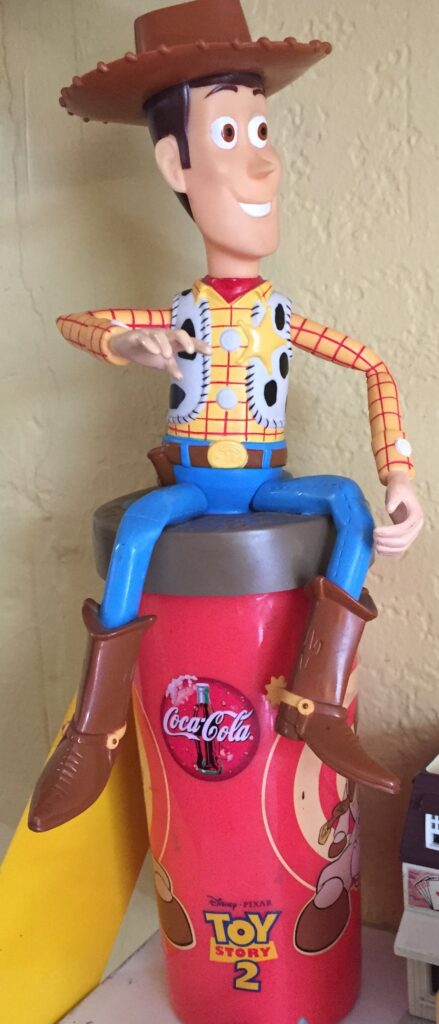
Create a character, or develop a character.
~ The character could be you . . . when you were younger, or looking ahead, you in the future.
~ Someone you know, dead or alive.
~ A fictional character you created.
Give your character a name:
Younger Me.
Older Me.
Someone you know.
Your fictional character.
Woman in 1940s.
Man on a Mission.
Person in a foreign country.
Get up and walk around your space, looking at things, touching things, as if you were that character. Look through the eyes of the character you are writing about. Say, or think, the name of your character as you walk around.
Walk in your character’s shoes.
Spend 3-5 minutes on this.
When you return to your chair, respond to the prompt from your character’s point of view.
Use one of these prompts as a springboard to write about a character of your choice.
What did your character see that interested them?
What does your character want to know more about?
Write from your character’s point of view:
I think . . .
I suppose . . . I remember
Thank you to B. Lynn Goodwin for the inspiration for this prompt.
We read for many reasons and different kinds of pleasures. One of those pleasures is recognition—of a moment, a place, a feeling state. It’s the writer’s job to find language for those moments, those feeling states, that allows the reader to access their own feelings, that makes them think, “Oh, I never thought of it that way before. I could never find the words or the language for that.” Illuminating ordinary life, to me, is one of the most beautiful ways to write and to read. —Dani Shapiro, in conversation with Suleika Jaouad
Sounds Of The Unheard, A Connection To Self
By Joop Delahaye
Silence: The perennial challenge in my meditation practice.
Tara Brach says that that is the real draw for her now in her meditation practice.
I am not sure if that is true for me. I have been attracted to the sounds of the usually unheard things when “normal” sounds are absent. That has been something I have paid attention to most of my life.
No planes overhead, no 101 traffic, no Petaluma Creamery machinery, no dumb drivers going west on B Street. No leaf blowers or power washers! What is there when these are absent?
What is there now? Swaying tree branches, birds in my neighbor’s old tree, the wind. The “thermal compressions” I have heard for years. I have learned to listen for it, to it. This sound became a barometer of my connection to self, to the quiet space inside. How many seconds until I hear it? There it is.
Some might label it “ringing in the ears,” the aftermath of a loud concert at the Fillmore, or Carousel Ballroom on Van Ness, or, later, the Sleeping Lady in Fairfax. Maybe . . . but I like it now. It is an ally, not unpleasant, not hostile.
It is a grounding wire connecting to a more silent world, a world of greater harmony with self and surroundings. This inner sound seems to spread down the body, straightening the spine, energizing the cells. It focuses the attention. I appreciate the silence, the work it takes, the things it brings.
Joop Delahaye is a recently retired healthcare worker, now with time in his life to do some writing. He is grateful to Marlene Cullen and also Lakin Kahn for providing the Zoom setting to explore/free his creative muse.
Guest Blogger Suzanne Murray has this to say:
With anxiety and fear running high in the world these days, I wanted to share how we can make friends with these feelings and use them to our advantage. Anxiety and fear can prevent us from being creative or living a life we love. To live and create fully, we be must be willing again and again to step out of our old comfortable life and into unknown territory. This always feels scary.
Many years ago I read the self-help book Feel the Fear, And Do It Anyway which presents the premise that just because we feel a sense of fear about a project or moving in a new direction in our lives doesn’t mean we are supposed to stop ourselves from proceeding.
More recently I’ve been fine-tuning my understanding of what this really means and feels like, how to best use it in my life and creative work, and how it fits the idea of following my internal guidance of my intuition and heart to bring my soul and creative gifts into the world. Any time I stretch in a new direction in my writing or my personal and professional life I have to step out of my comfort zone which gives rise to a feeling of anxiety.
I’ve found it’s important to learn to distinguish between the kind of anxiety that represents our bodily intuition signaling a real threat (like don’t walk down that dark alley or that new relationship really isn’t good for you or that’s really not the best art project for you to pursue) versus the kind of anxiety we feel when we step out of our comfort zone in a way that stretches our capacities, capabilities and sense of self. The anxiety that is genuinely trying to warn us off feels heavy with fear whereas the anxiety that simply marks stepping out of our comfort zone has a sense of exhilaration to it.
When I’m at my desk writing and I start to feel a lot of resistance, if I make myself sit in the chair and keep writing, (even when I desperately want to get up and make phone calls or clean the refrigerator), I find that I will usually move through the anxiety into what I really want to say and find myself very excited by the work that results. The same is true every time I do anything new in my life that feels like a stretch. I feel nervous and excited whenever I push past the feeling of fear and take action to make the new idea or vision happen.
When you are trying to decide what the fear or anxiety is trying to tell you, just take some deep breaths and get clear on the exact quality of the feeling in your body: whether you feel contracted or expanded by the thought of what you desire. If you feel expanded then you need to “feel the fear” that comes with it and begin to take action however small toward achieving your desire. Also new neuroscience shows that the simple act of naming or labeling a negative emotion like fear calms the brain which makes it easier to get clear on what to do.
Wishing you many blessings and creative flow, Suzanne
Check out Suzanne’s coaching opportunities:
Creativity Coaching, Creative Life Coaching, Writing Process Coaching & EFT Sessions
EFT (Emotional Freedom Techniques)

Write about an idea you have. Something you have thought about doing.
You can also write from your fictional character’s point of view.
Perhaps something on your wish list. A dream.
I want to . . .
~ write about . . .
~ create an art project about . . .
~ a gardening project . . .
~ something that will help me . . .
~ help my community . . .
~ help the world . . .
~ this is what I want to accomplish . . .
~ my dream is . . .