Wordrunner echapbooks wants emotionally complex and compelling writing. This could be from you.
Submissions for the Wordrunner echapbooks anthology series are open January 1-February 29, 2020.
Submit your best fiction, creative non-fiction or poetry to Wordrunner’s
10th Anniversary issue, to be published in April 2020.
There is no theme. “We want emotionally complex and compelling writing about whatever strikes your fancy, be it serious or humorous or both. Please look in the Archives at previous anthologies to get an idea of what we like to publish.”
Anne R. Allen’s post about commenting on blogs elicited 100 comments!
Anne writes about commenting on blogs to build your author’s platform:
I’ve seen a steep decline in the number of people commenting
on blogs over the past few years. I’m not sure why that is. But commenting on
blogs is still an easy, painless way to get your name into search engines and
build an “author platform.”
I realize I’m partly preaching to the choir here. We have wonderful commenters on this blog. But I see a lot of great blogs devoid of comments these days.
And there are lots of people who seem to prefer to respond
to the link to a blogpost on Facebook or Twitter rather than on the actual
post.
Unfortunately, sometimes they haven’t read the post, but are
responding to the header, which isn’t a good idea. That’s a good way to look
like a doofus, especially if the blogger’s title is ironic or it’s a question
that’s answered in the post.
But a thoughtful comment on a high-traffic blog is a smart
way to get your name in the public eye. And it’s easy.
Commenting on Blogs is a Powerful Tool.
First of all, commenting on blogs that are already on
Google’s radar will help get your name onto that valuable Google SERP (Search
Engine Results Page.)
A comment on our blog can put your name in front of 20,000+
people in a week. It could take a long time to reach that many people with a
brand new blog or a social media account. Most of my early mentions on Google
came from commenting on other writers’ blogs. It’s also how I started
networking in the writing community.
Also, discussions on high-profile blogs can lead to
discussions on your own blog or social media. If you find yourself making a
long comment—that’s your next post on your own blog or Facebook author page.
Invite people over to discuss it further. Or support somebody’s argument
on a blog and you’ve made a blog friend. That’s how I got my first followers.
But I’m not just talking about writing blogs like ours. A
comment on any blog that interests you—and your potential readership—will work.
Plus interacting on blogs is a great way to make friends. In
the end, that’s what a platform really is: how many people feel they “know” you
well enough to want to buy one of your books.
In fact, my blog first took off because I commented a lot on Nathan Bransford’s blog, and that won me a guest blogging spot.
But I know writers new to the world of social media and
blogging have lots of reasons for not commenting. I hear them a lot.
“I can’t even find the comments!”
A lot of older writers find the whole concept of blogging
weird and unfathomable. I remember being frustrated when I first started.
Sometimes I’d find comments, and sometimes I wouldn’t.
Sometimes I’d land on one post with a thread of comments after it, but
sometimes I’d get a whole string of posts with nothing but a thingy at the end
saying “37 comments”.
Here’s the little trick “everybody knows” so they don’t
bother to tell you—
Click on the “37 comments” (or whatever number) and that
will open the post in a new page where all the comments appear at the end of
the post. Some blog formats make you hunt around in the sidebar for the
“comments” link, but it’s there. Keep looking.
Some blogs, like ours, will allow you to reply to a
particular comment if you hit the “reply” button under that comment.
Or you can leave a general comment if you hit “Leave a
Comment” at the bottom of the whole thread. (On some WordPress and Weebly blogs
the comment button is at the top of the thread.)
“I prefer to send the blogger a DM or email.”
Sure. That’s fine. Email marketing is the big thing these
days. Sometimes a blogger or well-known author will have time to give you a
personal answer. I try to answer all our readers’ emails, even though I
sometimes confront so many emails in the morning that I want to go back to bed
and cry.
But my e-mailed answer is no more personal than my answer in
a comment thread, and nobody will see it but you and me.
Every week, people send me personal emails saying they liked
a post from me or Ruth or one of our guests, and of course we appreciate it. We
always like to hear that people are benefiting from our posts.
But many writers mention their own books and pitch them to
me.
So let’s stop a minute and think about this: what’s better
for you, the author?
1) Getting your book title in front of me, the world’s
slowest reader, who has over 500 unread books in my TBR list, and probably
doesn’t read your genre?
2) Getting your book title in front of the thousands of
people who read our blog?
Are you seeing why it’s better to put your feedback (and
name) into a comment?
Plus, if you have a question, you can be pretty sure other
readers have it too. If I answer in the comments, rather than in a personal
email, that’s helping all our readers, not just you.
“I can’t figure out how to post a comment.”
Okay: this is a biggie. Tech can be daunting. Nobody likes
to be rejected, especially by some stupid machine. If you don’t have a blog or
website of your own, sometimes a blog won’t accept your comment.
Or if you have a blog on the Blogger platform, you may not be allowed to comment on other Blogger blogs. Blogger has been developing lots of glitches lately that they have no desire to fix. That has happened to Ruth. She has a Blogger book blog and that means she can’t comment on my Blogger book blog. (Go figure.) Blogger may also not let you respond to comments on your own blog. That happened to audiobook narrator C.S. Perryess, who had to move his Wordmonger blog to Weebly, since Blogger has no tech support.
A solution to all this is sign up for Gravatar. That’s a “Globally Recognized Avatar” and ID. It’s owned by Automattic, the parent company of WordPress, but you don’t need a WordPress blog to sign up. In fact, signing up will automatically give you a WordPress ID.
“I have no idea what to say.”
I understand. Writers are shy persons. I lurked for about a
year before I started commenting on blogs. Do lurk for a while if you’re just
starting in the blogosphere.
But eventually you’ll feel moved to say something.
Most bloggers will put some questions at the bottom of
the post to invite comments. Good questions will invite you to share your own
opinions or experiences with the topic.
Read the comments. You may want to respond to one of them.
That’s a good place to start.
You don’t have to heap praise on the blogger. Bloggers
like praise as much as anybody, but it’s best to say something that adds to the
discussion and shows something about yourself and your work.
Don’t be confrontational or put the blogger down, either.
(That’s a good way to get deleted.) But say something like, “Love these 3 tips
for getting your cat to eat dry food, and I’d like to add #4…”
Or, “I understand what you’re saying about only
blogging nonfiction …but I blog daily cat haikus, and I have 400 followers
who love them.” You can even include a link to the blog. One link is
usually acceptable in a blog comment.
You can even say something like, “I’m glad you say it’s
okay to be a slow writer. It took me ten years to write Love is a Cat
from Hell, but I finally launched it last week.”
Don’t put in a link to your retail buy page—you’ll be
blocked for spam—but a mention of your book and a single link to your website
is fine.
Blog Comments That Get Results.
The most useful comments add something to your “authority.”
So if you can say stuff like, “I was in law enforcement for twenty years and
this is what really happens when somebody reports a missing cat…” Or “I’m
a health practitioner who also writes cat haiku…”
Then that little fragment of text will come up in a search
of your name. It will show your name and “I was in law enforcement for 20
years…” or “I’m a health practitioner…”
This is a huge help to agents, reviewers, and other people
who are trying to find out if you’re a reliable person they want to work with.
You can also say something like, “I love what ScribblerSally
said about Maine Coon cats in her comment.”
Then ScribblerSally might click on your name to find out
about you and your cat. If you’ve joined Gravatar, that will take her to a
profile with an address for your blog and an email address.
Then Sally may follow your blog or even buy your book.
Guidelines for Blog Comments
A good blog comment can be anything from 10 to 300 words. If
you feel the need to go longer, you probably have a blogpost of your own there.
(Write it down and save it!)
Other than that, almost anything goes in a blog comment,
with a few caveats:
1) Skip the spam.
Don’t talk up your book or blog in a comment unless
it’s relevant to the conversation. That’s considered spamming:
“I respect your opinion on prologues, but I’ve got
testimonials from readers who love prologues—the longer the better—over at my
blog today” is great.
“This discussion of Marcel Proust reminds me of my
book, Fangs for the Memories, a zombipocolyptic vampire erotic romance,
$3.99 at Smashwords.” Not so much.
Ditto links to your website or buy pages if they don’t
illustrate a relevant point. If you have more than one link in a post, spambots
will dump you into spam.
2) Don’t drink and post.
Seriously. DON’T WRITE ANYTHING ON THE INTERNET WHEN
YOU’RE DRUNK OR HIGH. Authors should not go online when impaired. Unless your
persona is “rude, moronic lout” don’t drink and post. You could erase years of
work building that platform with one idiotic comment. That’s a rule I follow
myself. If I have wine with dinner, I don’t go on social media in the evening.
Be professional and polite. And do make sure your brain is
in gear.
3) Read the whole post.
We get so many comments from people who have only read the
headers, that I wonder if half the people online are reading-impaired. It only
makes you look like a moron when you tell the blogger, “you should have said
this, that and the other thing” …when they said exactly those things in the
second paragraph.
4) Read other comments.
Be aware of what other people are saying so you don’t repeat
what somebody else has said. Comments are meant for discussion, so remember
you’re talking to everybody who’s reading and commenting, not just the host
blogger.
5) No emotional blackmail.
Don’t say, “I just followed this blog, so now you have to
follow my five blogs, like my Facebook page, follow me on Twitter and get me a
double decaf latte while you pick up my dry cleaning.” If you demand any
kind of quid pro quo for a comment you’ll look like a jerk to the
whole community. As I’m saying here: the comment benefits YOU more than the
blogger.
6) Don’t whine or throw shade.
Dissing Amazon, agents, the publishing business, or
trash-talking a bestselling author will not work in your favor. Ditto
complaining about how nobody buys your book.
If you want to unload about what a crazy, unfair, insane business this is, get that bottle of wine and invite over a couple of friends. Kvetch all you want. You’re not wrong. This business is a roller coaster, as Ruth told us last week.
Click here to read the comments on Anne R. Allen’s Blog . . . with Ruth Harris.
Note from Marlene: You may notice I don’t have a place for comments on my blog. I used to, but sadly received too much spam. It got filtered (comments didn’t get posted, but I had to go through and delete each one = too time consuming).
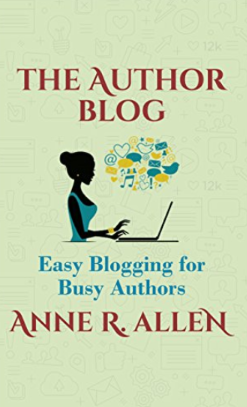
Anne’s book:
The Author Blog: Easy Blogging for Busy Authors: Named one
of the “99 BEST BLOGGING BOOK OF ALL TIME”
Today’s insightful post is by guest blogger, Rebecca Lawton.
I have a dear friend who jokes that, in 2020, we’ll have no need for glasses. A long-time wearer of glasses himself, this friend also loves punning. With or without glasses in 2020, we who love writing and reading want to see clearly in all our endeavors.
For me, seeing clearly means staying grounded and
centered, understanding what I’m observing with all senses. Doing so requires
that I stick with various creative practices, whether in writing,
communicating, playing music, reading the work of others, or learning new
skills and ideas.
Basically, for everything.
I consult writing-related resources as well. This time of year, I offer a list of them on my blog. For the first time ever, I’ve also included a few references for clearing the mind.
May your practice buoy good health and happiness, for you, yours, and those you meet. May the goodwill you generate extend to the well-being of the planet. I join you in working for all of that. Joyful 2020.
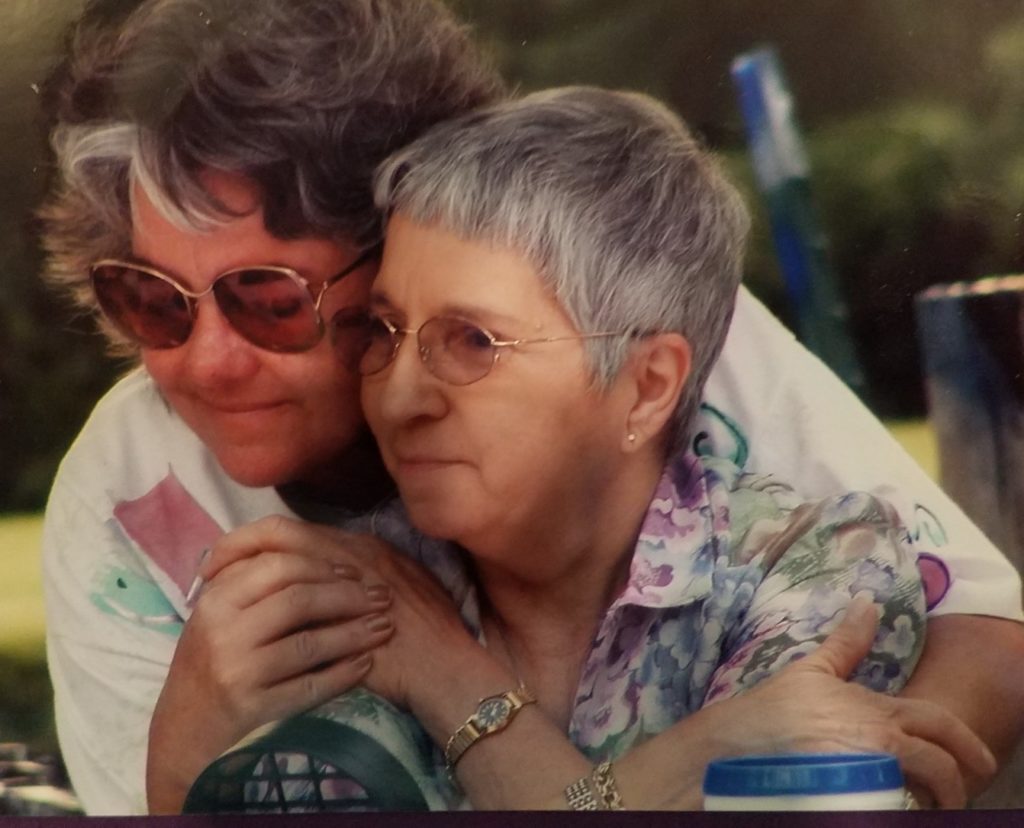
I’ve been thinking about my mom, who passed away in July
2017. Every so often, like today, I want to phone her.
I just want to talk with her.
Prompt: Who do you miss?
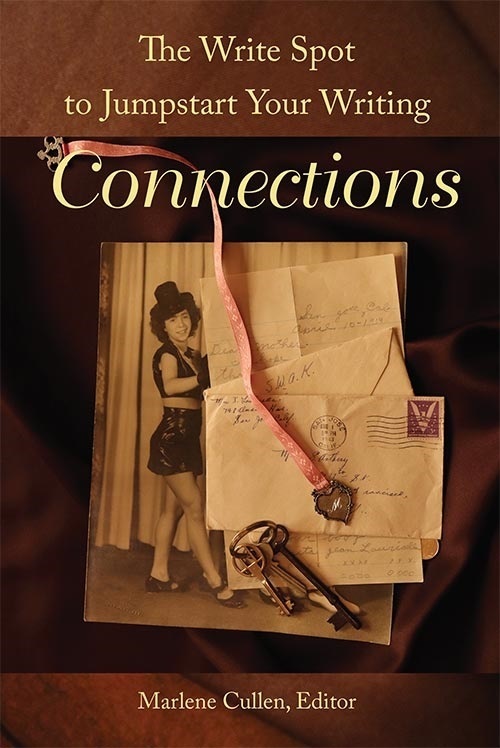
That’s my mom on the cover of The Write Spot: Connections. She was a dancer in her teens, performing at convalescent hospitals in the 1940’s.
Connections is a collection of writing from mothers and their adult children. Some are funny, some poignant, some surprising. All are entertaining. Here’s an excerpt:
Dime Sightings by Pamela Swanson
Although my mother, Ione, could not afford them, she
loved diamonds. Eventually she did save up enough money to buy herself a
diamond ring. She was so proud of that ring. One year, early in November, Ione
died without warning at the age of 54. Suddenly I was traveling the 2,100 miles
from California where I lived to the small town in Minnesota where she had
died. Completely unprepared, I found myself faced with finalizing my mother’s
existence on this earth.
Grand Marais, a small fishing village located on Lake Superior, is where I was
born. It is where my Mom grew up, met my dad, and was married. My roots are
firmly planted there so when I arrived it was to the open arms of my aunts and
uncles. Soon after, family members from other distances began to arrive. I was
cocooned in love and support.
All of the pieces in Connections end with a prompt that readers can use to inspire writing. The prompt for “Dime Sightings” was “Sometimes Magic Happens.”
“Flash Fiction is a story of 750-words or less
that has a protagonist, a conflict, a setting, excellent use of language, and
an ending that we didn’t predict when we read the first line. We enjoy
stories with a discovery, complex characters, lovely language, and a tone that
rings true.” — Writer Advice
B. Lynn Goodwin, founder and proprietor of Writer Advice, suggests a winning formula is “A protagonist we care about, a distinctive voice, and a clear impact. Setting helps. So does conflict and resolution. We enjoy stories with a discovery, a surprise, and a tone that rings true.”
I like Lynn’s attitude: “If the
story feels squeezed at 750-words, don’t force it. There are plenty of journals
where you can send your longer pieces.”
DEADLINE: March 2, 2020.Early submissions strongly encouraged.
PRIZES: First Place earns $150; Second Place earns $75; Third Place earns $40; Honorable Mentions will also be listed.
Bella Mahaya Carter’s title for her early December email caught
my attention, probably because so many times I didn’t want to go but I was glad
I went.
Here’s what Bella wrote:
Dear Friends,
I hope you had a wonderful Thanksgiving and are enjoying the holiday
season!
Today’s post is
about showing up for ourselves and for each other.
This past
Monday night, I did not want to attend Forest Lawn’s annual
“Lights of Remembrance: An Evening of Honoring the Memories of Your Loved
Ones.” I was tired (hadn’t slept well the night before) and felt like I was
getting sick. I also didn’t want to drive twenty miles at night to a place I’d
never been, or go alone (my husband was too tired and my friend declined). I
wanted to stay home, lounge by the fireplace, and watch The Crown.
I also did not want to kick off my holiday season with sadness. I did not want
to do the grief dance. (My mom died seven years ago, in December.) I did not
want to be reminded about the ways I’d failed her.
But Melissa Gould was
the guest speaker. I had to go. Melissa is a former student of
mine, whose memoir Widow. . . ish, is being published by Little A books next
year. Witnessing her journey has been remarkable.
When she first
showed up in my class, Melissa had recently lost her husband and was grieving.
An award-winning screenwriter, Melissa’s inclination was to write fiction, but
she needed to tell her own story. She didn’t yet understand
the value her personal narrative held, nor the healing that would come as a
result of sharing it. But she showed up in a big way (even
when it was scary).
She began her process by writing simple exercises from class prompts, which
over time became seeds from which essays sprung about her life as a young
widow. Her essays have since been published in The New York Times,
the Los Angeles Times, The Washington Post, The
Huffington Post, The Girlfriend by AARP, Buzzfeed, and
elsewhere.
In addition to all the other reasons I didn’t want to go, I told myself it
would be better if I got dressed up. I thought the event was happening at a
sanctuary, which made it feel like an occasion, but the last thing I felt like
doing was putting on heels or makeup.
But then I realized that all had to do was show up. I set
aside the need to “dress” and instead put on comfy leggings, boots, a sweater,
hat, and scarf. No make-up.
When I arrived, I discovered the event was being held outdoors, and saw other
people dressed casually.
A choir sang, Melissa
read her poignant work, poems were shared, and then Melissa led a “silent
reflection,” a guided meditation in which she invited the audience to close our
eyes and imagine ourselves in a room with a deceased loved one.
I was with my mom in New York, in our old living room.
“Can you forgive me?” I asked.
“For what?” she said.
“For not being more present in your life, especially as you aged.”
“There is nothing to forgive,” she said.
I felt the truth of that statement.
Then I heard, “You were there for me in countless ways, large and small. You
were a wonderful daughter.”
I realized that we all do the best we can, given our consciousness and
circumstances—and that this applies to me as well as anybody else. It also
occurred to me that I’d been weaving (and believing) a “not-good-enough”
story in my role as her daughter, and was finally able to release it.
Tuesday morning I put the candle from Monday night’s ceremony on my altar,
placed an empty chair beside it, and invited my mother to join my meditation.
During the journal writing that followed, I wrote her a long letter. And
she “wrote” back. I heard her voice and wrote what she said.
Since then I have felt her presence strongly, but instead of feeling familiar
sadness, regret, and shame, I am filled with love and joy! What a sweet way to
kick off the holiday season!
I keep thinking how I didn’t want to go to the event and the one thing that
dragged me out of the house was that I wanted to show up for Melissa. She had
demonstrated incredible tenacity, courage, persistence, and faith. This is
worth celebrating.
I was also grateful to receive an email from her saying that she was moved to
see me there and that my presence had been a gift. She told me how writing
continues to heal her and is yet another gift.
What strikes me is that gift-giving is fluid and creative, and we sometimes
don’t even realize what we’re giving—when or to whom. But also, we never know
when we’ll receive a gift.
I showed up for Melissa, and she showed up
for me—and for everyone gathered to honor memories
of loved ones. The gift I received from her was both unexpected and priceless.
This is what’s possible when we show up for ourselves and for each other.
Stories nourish, heal, and uplift us all. Monday night reminded me that we rarely know the power of our own stories—until we share them!
If you have a story you’d like to share, or if you’d like to explore what’s possible for you through writing, check out Bella’s upcoming writing circles. Start the new year (and decade!) with the gift of creative expression and healing.
Blessings and gratitude, Bella
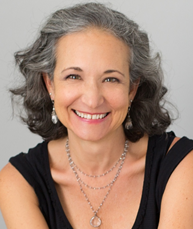
Bella Mahaya Carter is an author, creative writing teacher, and empowerment coach, who helps writers (and others) experience greater freedom, joy, and peace of mind. Her winter writing circles (online and on-site) begin January 29, and are filling up fast! Grab your seat while there are still openings. Bella is be happy to speak with you to answer any questions you may have.
Bella believes in the power of writing to heal and transform lives.
As I write this, it’s early Christmas morning, 2019. It will be a quiet day here at Chateau Cullen, except for the swishing of a broom while I sweep the porch and the hum of the washer and dryer, getting ready for our holiday party this weekend and for my granddaughter’s third birthday.
Today will be a busy day for some, filled with happy feet and sparkling eyes as young and old open presents under a decorated tree. For others, it will be quieter.
Today’s guest blogger, Bella Mahaya Carter shares her holiday thoughts.
Dear Friends:
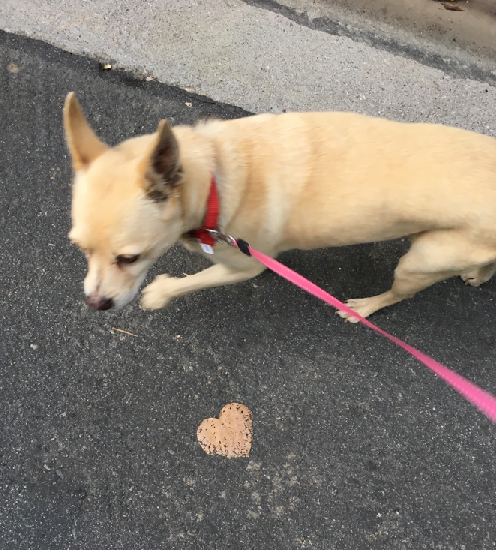
I hope you’re enjoying the holiday season—or getting through it with as much grace and ease as possible. One thing that helps keep me calm is walking our dog, Katie, who insists upon frequent and leisurely outings. I don’t mind (usually), because they provide exercise, time outdoors, and inspiration.
Instructions for living a life: Pay attention. Be astonished. Tell about it.
I feel like I don’t do these things often enough. But it’s what I love most about my creative life.
Now that the holiday season is in full swing, a snarky inner voice says, “Yeah, right. Get real. You don’t have time for this.”
But I’m learning to ignore this voice, which I know is stale, conditioned thought, and instead listen to my wisdom. My wisdom reminds me that my sense of joy and well-being goes up exponentially when I follow Oliver’s instructions, and also, my busyness is up to me.
I’m at a place in my life where much of what I do is by choice, and not a requirement. Even when I was younger, a lot of what I thought I had to do came from within. It seemed like I had to achieve certain things, or behave (or appear) a certain way, but I realize now that I was taking orders from an inner voice that wasn’t particularly kind, expansive, or helpful. It sounded more like a drill sergeant than a wise guide. Mary Oliver is a nourishing companion. Her “instructions” are both simple and complex. Let’s take a closer look.
Pay attention.
We are designed to pay attention. But we forget and become distracted. If you’re like me, you might spend too much time judging, expecting, evaluating, proclaiming, analyzing, defending, and protecting, which is the opposite of paying attention. However, the instant we remember to pay attention, everything changes. A world of possibility opens to us and we are free to observe (and relate to) what’s here in new ways.
Be astonished.
Life is astonishing—especially when you’re able to see the beauty around you (particularly during busy or turbulent times). Allowing yourself to be astonished might mean shifting from a fearful perspective to a loving one. And we cannot be astonished if we’re not paying attention, which happens when we’re hijacked by our thinking. We also cannot experience astonishment when we think we know what to expect. In this context uncertainty is a gift–if we can embrace, rather than fear it.
Tell about it.
Even after thirty-plus year’s writing I still have inner voices that heckle, taunt, and say things like: Don’t write that. Don’t share it. It’s no good. You’ve said this all before. Who cares? Who do you think you are?
Many writers worry about speaking their truth. They don’t want to make waves, or they’re afraid of hurting someone they love, or they believe old, limiting, fearful beliefs that stifle or even paralyze them. Many don’t realize that their vulnerability is their strength and also their gateway to creative freedom. When you relinquish your illusion of control you invite something large and luminous to come through you. Your job is to get out of your own way and share it.
I have my own instructions for living a life. They were given to me over time, in small doses, during meditations, when I needed help in my life. I had to get out of my own way and become quiet to hear them.
Bella’s Instructions for living a life (especially during the holidays):
Slow down. Stop fighting. Let go. Trust life.
I will unpack these “instructions” in a future post.
Meanwhile, I began this one saying that I feel like I don’t pay attention, allow myself to be astonished, or tell about it often enough. I’m realizing that the key is to make room for these opportunities, to give ourselves these gifts daily, if only for a few moments.
If you’re ready to explore what’s possible in terms of “pay[ing] attention, be[ing] astonished, and “tell[ing] about it,” check out my upcoming writing circles (online and on-site), which are almost full. I have two openings in my online class and three in my on-site class. Happy to answer any questions you may have. Start the new year (and decade!) savoring your life, speaking your truth, and sharing your wisdom!
I also have two private coaching openings if you’d like to work with me one-on-one. Contact me if you’re interested.
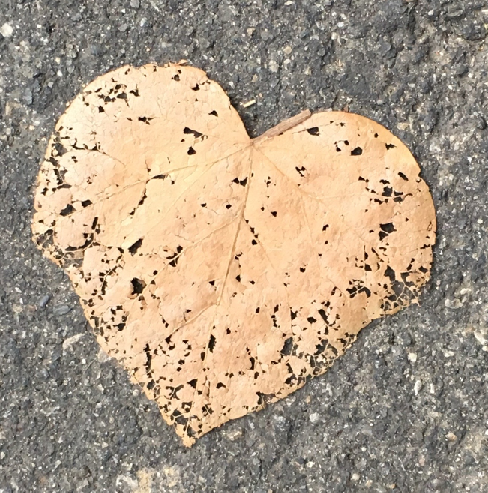
Here are two bonus photos from this morning’s walk.
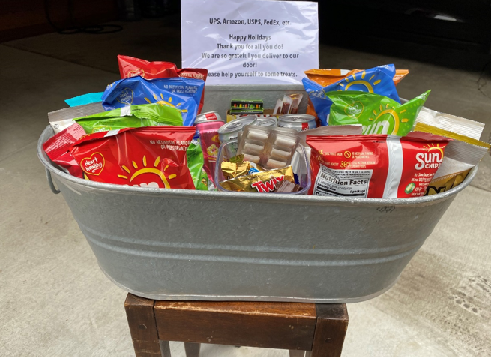
A neighbor left these treats out for UPS, Amazon, FedEx, and USPS employees to thank them for their fine work delivering packages. It inspired me to ask, How can I be more thoughtful and generous this holiday season?
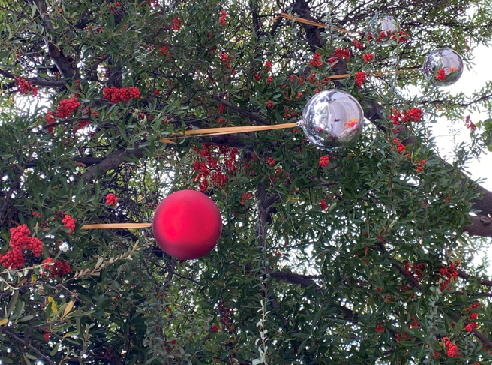
This made me smile. I love these trees, and have used their berries to make wreaths and floral arrangements throughout the 20+ years we’ve lived in Studio City.
I appreciate having neighbors who bring beauty and joy to our neighborhood—and I appreciate you for being part of my journey!
The definition of marketing is connecting with people in a human way and doing it as authentically as possible.
Writing can heal and transform lives.
Guest blogger Bella Mahaya Carter shares her
epiphany about newsletters and marketing.
Sometimes I want to lay down my ambition, hit cruise control, and glide through life. But as an author (and human being) there’s so much I don’t know and want to learn. Case in point: I had a wonderful experience publishing my memoir with She Writes Press. I’ve come close to selling out my 1000-book print run—except for a few boxes left in my garage, which remind me of this important fact: books don’t sell themselves.
The realization that I (along with most authors today) need to take responsibility for the business part of my writing life has been sobering—but also, surprisingly fun. I’ve been reading marketing books the way I used to read craft books as a young writer—inhaling them with wonder and awe. But these days, more than ever, authors are expected to sell their books, no matter how they publish. Knowing as much as we can about publishing and book promotion is essential for success, not to mention peace of mind.
Dan Blank, author of Be the Gateway, has been on my radar for years. His book sat on my shelf unread. When I finally picked it up a few weeks ago, I couldn’t put it down. Just as I was beginning to become curious about blogging and newsletters and wanting to understand these tools better, Dan offered a four-week workshop on this subject, so I signed up.
I didn’t expect what came next.
Dan had me evaluate my priorities, craft a mission statement, and get clear about what I was doing and why.
And then he challenged—disrupted—my ideas about author marketing.
Disruption is your friend.
I don’t know about you, but when someone tells me something that contradicts what I believe to be true, my default position is to become defensive. This makes learning difficult. But the reason we hire coaches and teachers is to learn from them. It made sense to set my ego aside and listen to, and at least try, Dan’s suggestions.
This instruction challenged me most:
Dispense with your fancy designed newsletter and send out a plain text email. Reach out to the people on your email list as a person, not a brand.
Publishing and book promotion are opportunities to deepen self-awareness, nourish meaningful connections, and delight in peak experiences while being of service.
I thought about how I paid my web designer to create a spiffy Mail Chimp template that reflected my brand, complete with banner, logo, and author photo. Dan said that I didn’t need these advertising bells and whistles.
But the thought of showing up without them—just me (as if I’m not enough without my “brand”)—made me nervous. I didn’t feel completely naked, but I definitely felt vulnerable—and scared.
That’s when I realized it was easy to hide behind the window-dressing of my newsletter/brand.
I asked myself: What do I like to see in my inbox? I had to stop and think about this. I knew what I didn’t like: anonymous advertising and people overwhelming me with information, offers, and promotions. By contrast, I realized that I looked forward to Dan’s emails, as well as others who regularly offer valuable insights (and free) advice and suggestions that enrich my life and work. People writing from their hearts about what they’re seeing and learning, and sharing their hard-earned discoveries with me. I savor this type of human connection. And then this became clear:
The definition of marketing is connecting with people in a human way and doing it as authentically as possible.
Many authors don’t realize that marketing can be as innovative and raw a process as writing. The difference is that instead of communicating just with yourself (and your higher power), you’re communicating with others. Sixteen (instead of the usual five or six) people on my email list replied to my first (experimental) plain text email. They responded with great ideas, conversation, and support. More people opened that email, too. And a few people even shared it with others! Hearing that made my day. Someone enjoyed what I wrote so much they felt compelled to share it! Amazing. I felt rewarded for my courage and grateful to Dan.
The deeper reason I hired him is that I’m working on a proposal for my new book, and although I have confidence in the material, I realize that my author platform may not be robust enough to attract a traditional publisher. And, regardless of how I publish, I want to learn more about finding and building an audience for my work.
The title of my new book is Where Do You Hang Your Hammock: How to Find Freedom and Peace of Mind While You Write, Publish, and Promote Your Book. Between the books I’m reading, the Nonfiction Writers Conference I attended last week, and the work I’m doing with Dan, my mind is flickering with marketing ideas. For example, I heard that there’s a “National Hammock Day,” which “commemorates the universal symbol for relaxation.” Who knew? Perhaps publishing my book on or near this date might provide publicity opportunities.
Although my book is geared toward writers, its message of resilience, flexibility, and cultivating freedom and peace of mind extend well behind this niche. Several ideas come to mind: I could write and pitch stories about relaxation to media outlets when my book launches—and every year after on my book’s “birthday.” I could reach out to special sales clients for bulk sales. Maybe writing associations, organizations, nonprofit groups, or even writers’ clubs might want to purchase copies to give to their author-members as a welcome or thank you gift. The possibilities are fun to consider.
I’m not saying I’ll never send out another designed newsletter, but for now I’m challenging myself to show up “plain”—just me and my thoughts about my unpredictable journey, in conversation with beloved readers and friends. One of the things I discovered while speaking to a writing colleague recently is that I’ve spent too much of my life hiding and trying to look good and it’s time to stop and just be me.
Here’s the mission statement I wrote for Dan’s class:
I believe in the power of writing to heal and transform lives, and I view publishing and book promotion as opportunities to deepen self-awareness, nourish meaningful connections, and delight in peak experiences while being of service.
Dan also encouraged me to get clear about my blog’s subject matter, which wasn’t hard to nail down. My blog explores intersections between the writing life, spirituality, and personal transformation and growth. That’s what my new book is about, too. I want to give this project its due. I want to give it space, let it breathe. I’m not in a hurry.
Is this easy? No! Does it diminish your overall creativity and writing output? No! Does it make you immune to vulnerability? No! But, honestly, I wouldn’t want to live any other way. I’m human. I vulnerable. I’m afraid. I take chances. And I sometimes fall on my ass.
There’s no one right way for authors to market their books. What works for one person may not work for another. The key, as I’ve said, is to come from your heart and to be authentic.
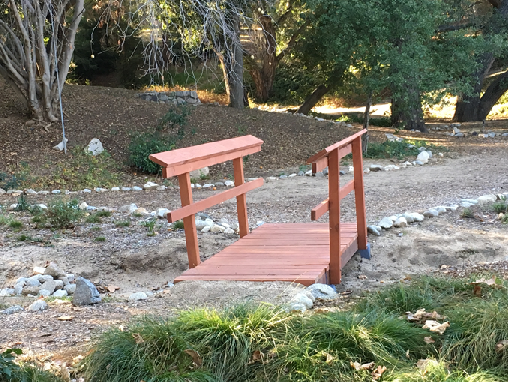
While visiting the Descanso Gardens, I took this photo. Bridges literally connect us from one place to another. They are also great metaphors for psychologically transporting us from where we are to where we’d like to go. People can be bridges. So can unexpected situations or sudden insights. While writing this post, it occurred to me to do some additional, authentic marketing by putting my memoir on sale for the holidays.
My memoir, Raw: A Midlife Quest for Health and Happiness, is available for $9.99 (no tax and free shipping)—if you buy it directly through my website. I’d be happy to sign the book to you or a friend or family member before mailing it. This offer is good through December 21. If you haven’t ordered a copy yet, please do. And if you read and enjoyed Raw, please consider buying a copy as a holiday gift. Your support means more than I can say.
[Note from Marlene: Raw is excellent. I have learned from it personally and have given it as gifts.]
Bella Mahaya Carter is a poet, author, teacher, and coach. In 2008 Bombshelter press published her poetry book, Secrets of My Sex. Her poems, stories, essays, and articles appear in dozens of print and online journals. A practicing Spiritual Psychologist, whose mission is to heal herself and others through creative work, Bella serves clients around the world with her transformational classes, workshops, and coaching.