Tag: How To Write Without Adding Trauma

  • Sleep

    So, you had trouble falling asleep. Again.

    Or, you woke up and couldn’t get back to sleep.

    Or both.

    Why does this happen and what to do about it?

    The following is excepted from “Up at 4 A.M.?” by Amy Spencer, in the magazine, Dr. Oz The Good Life, Jan-Feb 2015 (an oldie, and hopefully a goodie).

    What happens

    If we’re not sure how something will play out, our primitive mind prepares us for the worst possible outcome.

    Survival

    Back in our cave days, our ancestors needed to be prepared to fight or flee to survive.

    Key

    The primitive part of the brain—the amygdala—thinks our idle ruminations are urgent matters that need to be dealt with right away, as if they are real emergencies.

    Wide Awake

    And there we are, wide awake, ready and alert, to battle the catastrophe that we have imagined.

    What To Do

    Take some deep, relaxing breaths.

    Get out of bed, walk around a little, look out a window, read something light.

    Write down what is bothering you, or make a to-do list. Get it out and onto paper.

    Take a mental vacation. Visualize a relaxing place, recreate a fun memory, take a trip down Happy Memory Lane.

    Soothe and Calm

    Listen to soothing and calming music, white noise, or a sleep app.

    Get Checked

    If sleep continues to elude you, seek professional help to rule out medical conditions to get to the cause of your sleeplessness

    And, of course . . . .

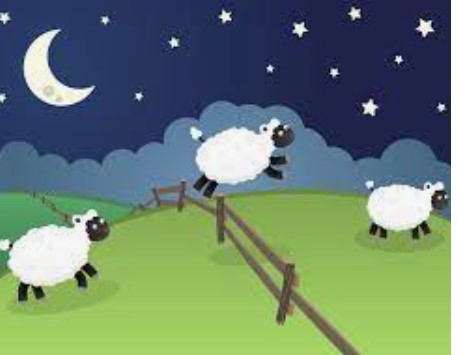
    Count sheep!

    ACTIVITIES TO CALM MIND AND BODY

    Qi Gong To Calm the Mind by Lee Holden

    The mind’s natural tendency is to ruminate on thoughts that produce stress or anxiety.

    Qi Gong provides powerful tools for calming the mind and returning to peace.

    Why is it that humans tend to think about things that cause stress and anxiety? Why can’t we naturally gravitate toward thoughts that bring us to a place of joy?

    Back when humans faced life-threatening situations on a regular basis, it was helpful to have a mind that could quickly identify unwelcome circumstances. The mind evolved to constantly look for signs of danger and plan for the worst. 

    The Mind Can’t Tell the Difference by Brad Yates

    In spite of all the encouragement to live in the present or focus on the future, most of us are likely to still spend a fair amount of time reviewing the past. And, more often than not, the moments we dwell on are not necessarily the highlights.

    It’s normal … but it isn’t without cost. Because the mind can’t tell the difference between something that is real and something that is imagined, just thinking about past troubles triggers the same chemical reactions and the same uncomfortable feelings.

    How to Write About Difficult Topics

     And so, we lose sleep over troubling events and difficult people. We can’t change people and we can’t change what has already happened. We can only change our own thinking. We can write about them to “give them air,” and release these thoughts onto paper (or computer monitor).

    But how to write about these difficulties without adding trauma?

    Perhaps one of these writing prompts will help:

    How to Write Without Adding Trauma

    Write What is Hard to Admit

    Does Your Heart Hurt?

    More ideas to write without adding trauma are in “The Write Spot: Writing as a Path to Healing.” Available from your local bookseller and as both a print and ebook from Amazon.

    Just Write!

  • Use your writing to heal.

    bookshawlUse the difficulties in your life and represent them in your writing.  Describe the difficulties as if writing a scene in a novel. Look at your situation from a different point of view – from that of a character in a story.

    Take A Break

    When your writing becomes too difficult, stop. Take a break. Take a walk. Treat yourself to a glass of iced tea or hot apple cider. Wash your hands with special scented soap. Do something physical to relax your mind.

    Use a focal point as a reminder to relax and breathe deeply. A focal point is anything you like to look at: in your home, your writing environment, or outside.

    Have A Plan

    Have a plan for when you are feeling overwhelmed and need relief from emotional tension while you are writing.

    Prepare a healthy snack before you begin to write. When the writing gets difficult, take a few minutes to nurture yourself, whether it’s food, or a visual treat – look at a pleasant picture or a memento that has good memories for you, or being physical  – Go for a walk, a run, move around.

    Empowering

    This type of self -care can be very empowering and gives you some control in your present situation where you didn’t have control in a past experience.

    Use your writing to heal, being careful to not re-traumatize yourself.  This way, you can benefit from the healing potential of telling your story.

    Practice writing about your past without it overwhelming you.

    “If we write about our pain, we heal gradually, instead of feeling powerless and confused, and we move to a position of wisdom and power.” — Writing As A Way of Healing by Louise DeSalvo 

    How to write without adding trauma.

    The Healing Power of Images Prompt #139

    Transforming Depression Into My Writer’s Muse — by Teresa LeYung-Ryan

    Does your heart hurt? Prompt #269

  • Does your heart hurt? Prompt #269

    Broken heartDoes your heart hurt?

    I’ve been hearing “My heart hurts” from  several friends these past few days. And when I hear their stories, my heart hurts, also.

    What to do?

    I believe in healing through writing. So, let’s write.

    Write about: Does your heart hurt?   Write all the details you can about this.

    What happened?  Write all the details that you know. If you were directly involved: Be as detailed and as explicit as you can.

    When did it happen?  Day of week? Time of day? Where did it happen? Who was involved?

    What were you wearing? Were you standing or sitting?

    If you weren’t directly involved: Write as many details as you know. Then, focus on why you are affected. What connects you to what happened? Why are you affected so strongly?

    Read the next part after you have written about why your heart hurts and how and why you are affected.

    Okay, I know, if you are like me, you will read the whole thing now and write later. That’s fine. Go ahead and read the next part.

    Louise De Salvo, Writing As A Way of Healing, says by writing our stories fully, we can begin to understand what was formerly unclear.   By writing, we can understand what we didn’t previously understand. What we’re writing is called a narrative.

    In order to come away with this as a learning experience and with a good feeling, we need to make this writing a healing narrative.

    A healing narrative is a balanced narrative.

    This type of narrative uses negative words to describe emotions and feelings …. Probably what we just did in our writing about a hurting heart. A healing narrative also uses positive words.

    Take a minute now to rethink your experience that you just wrote about and see if you can find something positive and hopeful about your encounter.

    Even if your event was traumatic and extremely unpleasant, is there anything positive you can add to your narrative?

    Write: Take a few minutes to write about something good — anything — that came from that experience.

    For example, after writing about my difficult situation, I realized I was right to pay attention to my intuition.

    How are you feeling now? Take a few minutes to jot down what you are feeling now.

    Go ahead. Write down your feelings. Even if you didn’t write on the prompt. . . take a few minutes to jot down your feelings. Later, when you write on the prompt, compare your feelings then with now.

    You can use writing to shift your perspective. Sometimes you can’t change the situation that’s causing you pain. You can change how you look at it.

    The key is to write about events and the emotions surrounding those events.

    James Pennebaker describes this in his book, Opening Up.  Healing starts when you write about what happened and how you felt about it then, and how you feel about it now.

    And in order for our writing to be a healing experience, we need to honor our pain, loss and grief.

    As we write, we can become observers. It is not what you write, or what you produce that is important. It is what happens to you while you are writing that is important.

    So, that’s why we write . . . to understand ourselves, our emotions and our world.

    Please, if you are feeling completely overwhelmed, seek professional help.

    For more details on how to write about difficult topics: please click on How to write without adding trauma.

  • Use emotional experience for fiction

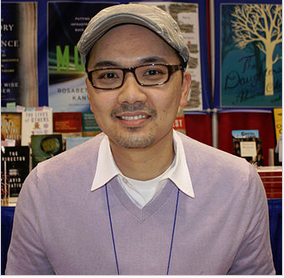
    Vu Tran“Vietnamese American Vu Tran says when he writes fiction, he is less concerned about using any ‘factual experience’ he has had, but instead seeks to relate the ’emotional experience’ he has lived.” — The Writer Magazine, December 2015

    When I read this, I sat up and paid attention.

    “Aha,” I thought, “Brilliant idea to tap into the emotional element of an experience and bring that into fiction writing.”

    Vu Tran used a traumatic event in his life to explain a pivotal character in his fiction.

    “. . . fiction writers can often have more impact if they draw on their emotional experiences rather than just relating what actually happened.”

    Vu Tran used this philosophy when writing Dragonfly (set in Las Vegas) while in Chicago. “. .. the distance from Las Vegas worried me at first. But I decided the emotional memory of Las Vegas  . . . allowed me to recreate the city in a more realistic way than if I was taking notes in front of the casino doors.”

    Your turn. Write about an emotional experience. For ideas, click on Write Authentically About Difficult Subjects and How To Write Without Adding Trauma.

    Use the details from that writing to develop character and scene when writing fiction.

    File all of this writing where you can access it when you are ready to use it in your writing.