Tag: just write

  • What Got Taken Away From You?   Prompt #335

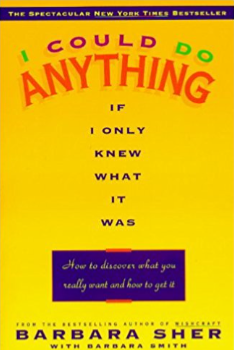
    The following is from I Could Do Anything If I only knew what it was, by Barbara Sher.

    Once someone I cared for deeply did something very unethical, so I tried to totally revise my feelings about him. “He’s not a good person,” I said. “I don’t know how to love him anymore.”

    And a very wise woman told me, “Your love belongs to you. You mustn’t let anyone touch it, not even him. You can keep away from him, but don’t try to destroy your love. That love is yours. Keep it.”

    It won’t really break your heart to remember something that got snatched away from you, even though it may feel that way.

    Prompt:  What got taken away from you?

    New York Times Best Seller author Barbara Sher believes we each have a genius inside us, our Original Vision, and we’ve had it since birth. Our culture tends to discourage that vision, but it remains within us, waiting to be fulfilled.

  • Revive Your Past . . . Prompt #334

    Revive Your Past

    Something inside you is too loyal to permit you to turn your back on everything you loved and simply walk away. No matter how many times people tell you to let the past go, it’s never possible. You’ll never move wholeheartedly into the future unless you take your beloved past with you.  And that’s exactly as it should be.

    There’s no reason to turn your back on a happy past. Sometimes we try to turn away from the past because we feel it somehow betrayed us. It’s as though we loved our past, but our past didn’t love us. So we go on strike and pretend we don’t care, as if to punish fate for being unkind. Fate never cares, of course, so we only hurt ourselves.

    Prompt:  What do you . . . or what does your character pretend to not care about?

    Today’s prompt is inspired from I Could Do Anything If I Only Knew What It Was by Barbara Sher.

    For more prompts about writing about your past, click on:

    Praise Your Past

    How To Write A Memoir—Part One

    How To Write A Memoir—Part Two

    How To Write Without Adding Trauma

  • Praise Your Past . . . Prompt #333

    You can use these prompts to write about something that happened to you or something that happened to someone you know. You can also use these prompts to develop your fictional characters.

    Prompt: Praise your past. Write a few sentences about the best time in your life. What did you love about that time?  What did your work, or life, at that time, look like, smell like, taste like? Could be a big thing or small things.

    Letting yourself describe every lovely detail will give you back something you lost, a precious time you put out of your mind. When you remember that time by praising it, you’ll have rescued it. You’ll have pulled it out of the corner where you threw it a long time ago.

    Prompt: What did you, or the character you have created, throw into the corner?

    Inspired from I Could Do Anything If I Only Knew What It Was by Barbara Sher.

  • Write about an encounter . . . Prompt #332

    Write about an encounter with a stranger.


    Photo by Jim March


  • The real summer vacation. Prompt #331

    Write about your summer vacation.

    Not the “My Summer Vacation” essay you wrote in school in September.

    Write about what really happened.

  • Go on a rant . . . Prompt #330


    What are you mad about?  Write about it. Let off steam . . . Pour out your emotions on paper.  I suggest using pen and paper for this one rather than computer. Okay, use a computer if that works better for you.

    Plan to destroy your writing after. Crumble the paper and toss it . . . throw it into the trash. Burn it. Or, keep it, if you want.

    Get the angries out . . . Just write.

    Definition of rant:  To speak or write in an emotionally charged manner.   Source: The Free Dictionary

    Photo by Karen Bobier.


  • Go With The Flow

    What do you call it when your creativity just seems to flow?

    Alison Luterman had an epiphany:

    I was singing in a little pop-up chorus this past month. It was a tricky classical piece, and the other women were all looking intently at their sheet music. I don’t really read music, so I ignored the paper and gazed at our teacher, trying to meld my brain with hers. Okay, I know this is going to sound woo-woo, but that night in chorus, watching the teacher’s hands on the keyboard, hearing her sing the parts, my body understood the music on a level my mind couldn’t.

    In Interplay we call this “ecstatic following” and we often do it as a group in dance. I remember being introduced to the concept and having an immediate suspicious reaction to it: “Ecstatic following– you mean you surrender your critical thinking? That’s how we end up becoming good Germans and supporting Fascism!” I’m very attached to my critical brain that helps me do crossword puzzles, solve murder mysteries, and participate in spirited debates.

    But when I go to sing or to dance or play theater improv games, if I worry too much about what I’m doing, or try to figure it out ahead of time with that same busy brain, I freeze up. I’ve seen some of my students try to scheme and strategize their writing and in the process block their own flow. The writing becomes stiff and wooden, and it feels like a burdensome task rather than an exploration.

    On the other hand, it’s good to know some technique. Thanks to an extremely patient musician husband, I can now find middle C on the keyboard and navigate around from there. I know what a scale is. I know the difference between a third and a fourth and a fifth, and on a very good day I can sing them. And all of that is helpful.

    So it’s not like Intuition Good, Technique Bad. It’s more like Left Foot and Right Foot, and then Left Foot and then Right Foot again. We need them both.

    In many ways I’m a left-brained nerd who loves crossword puzzles, dramatic structure and logical arguments. But that evening in chorus I remembered that my intuition is a resource that I can call on when I need it. I actually do this all the time with poetry, where the leaping and magic that the unconscious supplies are an essential part of the magic. I just didn’t realize that I could also do it with music which I think of as “hard” and something I’m not good at.

    We all have this ability to let the energy of doing the thing we love lead us, and that, combined with a deep abiding commitment to love and clarity and truth, can create great work. I just don’t know how to put Intuition on a syllabus or a lesson plan along with handling dialogue or story structure, or metaphors and similes and figurative language. But it is part of the package.


  • The deepest level of desire . . . Prompt #329

    You have probably heard this: Stories are about a character desiring something and the things that prevent character from getting what he or she wants. This is true for both fiction and memoir.

    Another word for desire is yearning, suggesting the deepest level of desire.

    “Fiction is the art form of yearning.”

    “Plot is simply yearning challenged and thwarted.”

    — Ryan G. Van Cleave, “The Art of Yearning,” May 2017 The Writer magazine

    How to write fiction or memoir

    Give your character a problem, add some obstacles. How does the character overcome problems? Mix and stir.

    Get started by interviewing yourself (for memoir) or interview your fictional character by answering the following questions.

    You can answer every question briefly, or go into detail using one or two questions to focus on.

    Something most people don’t know about you.

    If you could change some things in your history, what would you change?

    Describe a perfect day.

    What makes you happy?

    What prevents you or your fictional character from:

    ~Having a perfect day

    ~ Doing what makes you happy

    ~Getting what you desire

    More prompts to inspire deep writing that might get to the art of yearning, the deepest level of desire.

    The Trouble Started When, Prompt #3

    Your Character Has a Surprise Secret, Prompt #7

    I am From, Prompt #52

    Who Will You Interview?  #320


  • Finding Magic in the Mundane . . . Prompt #328

    Today’s writing prompt and title for this post is inspired by Suzanne Murray.

    “I have many favorite poets but, the Nobel prize winning Chilean poet, Pablo Neruda tops the list in his elegant celebration of common things. These poems help me find beauty and wonder in the everyday and give me a fresh perspective in the face of the difficulties in the world.

    Early in his writing life wrote serious political poems . . .  One line from his poem I’m Explaining a Few Things written in 1935 during the Spanish Civil War has long stayed with me capturing the intensity of Neruda’s work, …and the blood of children ran through the streets/without fuss, like children’s blood…

    Later in his life, as if weary of the burden of protesting atrocities and political corruption, he began to write Odes about everyday things: salt, cat, dog, dictionary, tomato, to name a few. His Odes celebrate the ordinary in an extraordinary way. I have a hard bound collection of Odes to Common Things . . .  I cherish this book because, beyond the fact that the poems are an exquisite, playful honoring of the everyday, those things we take for granted, the things we no longer really see; they remind us to pay attention and look at common things with new eyes and imagination.

    You could do this too in whatever form your creativity takes. Play with it and see if it doesn’t brighten and expand your world. Consider using poetry as your inspiration, fuel for your creative spirit and to uplift and lighten your life.”

    Writing Prompt, suggested by Marlene:  Look up . . .  write about the first thing you see.
    Or:  Write about something on your kitchen table, or coffee table, or on your desk, or on the wall.  Choose an everyday thing and Just Write.

    Celebrating Common Things Through Creativity,” by Suzanne Murray.  

    Suzanne Murray is a gifted creativity and writing coach, soul-based life coach, writer, poet, EFT practitioner and intuitive healer committed to empowering others to find the freedom to ignite their creative fire, unleash their imagination and engage their creative expression in every area of their lives.


  • Rewrite your past.  Prompt #327

    Today’s writing prompt is inspired by something Susan Hagen wrote.

    “A seminal moment in my life occurred when I was barely three years old. I remember sitting on the kitchen counter, pouring chocolate chips into Mom’s cookie dough. In a nod to our teamwork, my very pregnant mother said, ‘Two heads are better than one.’

    A few months later, she gave birth to twins. All I could see was that they had two heads, and she had told me that ‘two heads are better than one.’ So instead of being happy that I’d gotten a baby sister AND a baby brother, I set myself on a lifelong mission to prove that my one head was as good as their two. That showed up as a double major in college, having two jobs throughout most of my life, and constantly battling an inner voice that said ‘you’re not good enough’ (because I only had one head).

    Then I began to rewrite my childhood.

    The first thing I did was rewrite that memory with one simple change: as I poured the chocolate chips into the cookie dough, my mother said, ‘I love doing things with you. You are so smart and helpful. You will make a great big sister.’ And when I wrote it, I felt it. When I read it out loud to my writing circle, it became my truth. And since then, I’ve been remembering more and more of my childhood as being happy.

    Your mind doesn’t know the difference between what actually happened and what you imagine.

    That’s why this works. Rewriting your story from a different perspective lays down new memories in your brain. When you read that story aloud in a safe, supportive circle of listeners, and we witness it and mirror it back to you, the new story gets installed in your memory and felt in your body as a different, more pleasant experience. You also get to see (and feel) things you couldn’t before. I promise you, there are a lot of surprises. Like compassion. Gratitude. And love.”

    Susan Hagen

    Suggested Writing Prompt From Marlene

    Did a scene from your childhood pop into your head as you read Susan Hagen’s story? If yes, write about what happened as you remember it. Then, write the same story with whatever changes suit you.

    If a childhood vision didn’t emerge, recall a time when you felt put down, frowned upon, scowled at, belittled. . . remember a time when you felt bad because of something someone did or said. Write what happened as you remember it. Then rewrite with tweaks that suit you.

    Susan Hagen is a past contributor to The Write Spot Blog: “What I Want To Tell You.”

    She is co-author of Woman At Ground Zero: Stories of Compassion and Courage