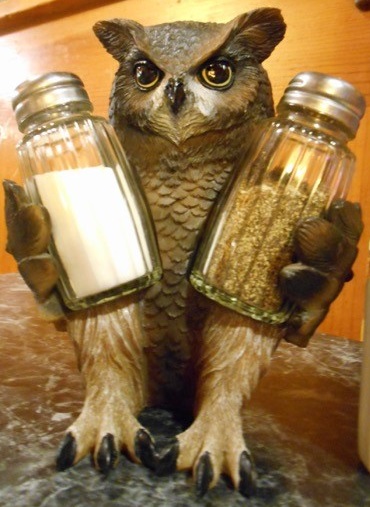
What are you obsessed with?
Write about your obsessions.


“You think you know them,
these creatures robed
in your parent’s skins.”
Writing Prompt: Read the excerpt. Copy it in your notebook, if you want. Then see what comes up for you and Just Write!
Excerpt from the poem, At the Lake House by Jon Loomis

Today’s writing prompt is a poem by Alison Luterman. When the prompt is a poem, you can write on the theme or the mood of the poem. Or use a stanza, a line, or a word to inspire your writing. Just Write! |
At the Ice Rink
I came here to fail
and to fall
but not so well
as that man careening over the ice
sliding into the wall
as if into second base
shambling up, grinning, like a great bear,
and taking off again,
saying, over his shoulder,
“You’ve got it backwards.
Learn to fall first,
then skate.”
I end up clinging
barnacle-like to the sides,
inching around the perimeter like a caterpillar.
Wall-hugger. Nothing has changed since I was eight
and my parents paid for skating lessons
in hopes I would become more balanced.
Now as then I am wobbling, terrified,
feet frozen like blocks of wood at the ankles.
Not loose-limbed and easy like Hilary
who rides the ice like a North wind scouring the plains,
nor deft and graceful like Ruth
picking up her feet and kick-gliding
in time to the ’70’s pop muzak.
But what can we do
when fear throws its rustiest pickaxe
dead ahead in our path?
Mince. Inch. Stumble. Pray
for the grace to fall
and not be rescued, pray for the scramble-up
for the liberating laughter that knowsit is not in our control.
There is the center, gleaming like a fish-eye.
Little girls spin on it, twirling their bright skirts.
It shines under its white scars like a destiny.
| —Alison Luterman
As a child, I used to creep onto the stairs when my parents had guests over and eavesdrop on the grown-ups. A creak of the stairs would invariably give away my position and I’d be chased back to bed, only to reappear at the next opportunity, hiding and listening. I wanted to be where the interesting conversations were happening. I still want that. Only now the conversations happen all over the country, all over the world, with friends, friends of friends, and complete strangers. Our stories rub up against each other and expand and change in ways I could never have imagined when I was young, and they now include rocks, weeds, fruit trees, cats, stars, and myths from all over the world, as well as all kinds of people. |
 Today’s writing prompt is a visualization . . . then the prompt. Set yourself up for an uninterrupted twenty minutes. Get comfortable. Have your writing implements nearby . . . paper and pen or computer.
Settle into your chair. Feet flat on floor. Hands relaxed.
Rotate shoulders in a circle. Reverse direction.
Stretch arms out in front. Arms overhead. Arms to the side.
Take a deep breath in. Hold. Let go.
Feel your feet connected to the floor. And that connection goes down into the earth, way down, deep down, to the center of the earth.
Firmly planted, deeply rooted.
Feel the connection up your legs, through your calves, into your knees.
Feeling connected up into your thighs.
Completely relax into your chair, letting go of all tension that might be in your legs and thighs.
Just let go.
Deep breath in. Deep breath out.
Let your hands go limp. Feel the relaxation travel up your arms and into your shoulders.
Take a nice deep breath in and bring your shoulders up to your ears. And then let them down with a loud hrumph sound. Another deep breath in, shoulders up and down with the outward breath.
Relax deeper into your chair. Let your stomach muscles relax. Let your shoulder relax.
Feeling completely supported in your chair, feel the connection to the earth. Feeling connected to the center . . . the core of the earth. Your connection goes deep.
Relax your neck muscles. Loosen your jaw. Just hang loose.
Let your head drop forward on your chest. Just rest there a moment.
Rotate your head in a circle. Opposite direction.
Deep breath in. And deep breath out.
We’re going to do a bit of exploration now . . . scanning memories.
Sitting comfortably in your chair, scan your relatives for the person who affected you the least.
Next, a relative who affected you the most.
Now, a friend who strongly affected you.
What are some of the emotions that came up for you?
Go a level deeper.
Which friend or relative affected you in a way that surprised you?
Prompt: Write about that time.
 If you had a family motto, what would it be?

Write about something you wish you could un-do or un-see or un-know.
You can use this prompt to write about yourself, someone you know, or write how your fictional character would respond.
Just write!
Whether you tell your story chronologically, or with flashbacks, or with intercutting, it’s important to write your memoir in the voice of the narrator. Examples of these different ways of telling a story are used in The Write Spot Anthology: Discoveries.
“Maintaining a solid narrative structure is critical to ensure readers move in step with the sequence of life events. . . When they [readers] can follow your progression as a character, they can also fully enter your story.” —Dorit Sasson, “Refresher Course,” The Writer, February 2016
 Note from Marlene: When writing about something that happened in childhood, use appropriate age-based language. Show character growth by using adult language when writing about the character as an adult.
Examples of narrative structure, character growth and details on how to use intercutting in your writing can be found in The Write Spot Anthology: Discoveries.
“One reason we choose to write essays instead of another kind of nonfiction piece is because we can use the personal essay as a kind of therapy. Sometimes the act of writing gives us the opportunity to work through the conflict and come up with another way of looking at the situation.
As the writer explores her problem, owns it, and then comes up with a resolution that will change how she relates to her problem in the future, the reader will be looking at her own life and doing the same thing. That’s why the essayist must be committed to the process of discovery and must be as honest as she possibly can be about what she uncovers.
More than any other piece of nonfiction, the personal essay has to be written and rewritten and rewritten, often many times, to get to the heart of what it is we really want to say.” — Gloria Kempton, “Making a Point,” August 2006 Writer’s Digest Magazine
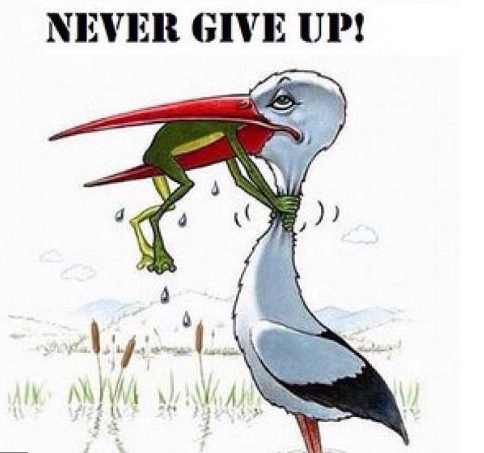
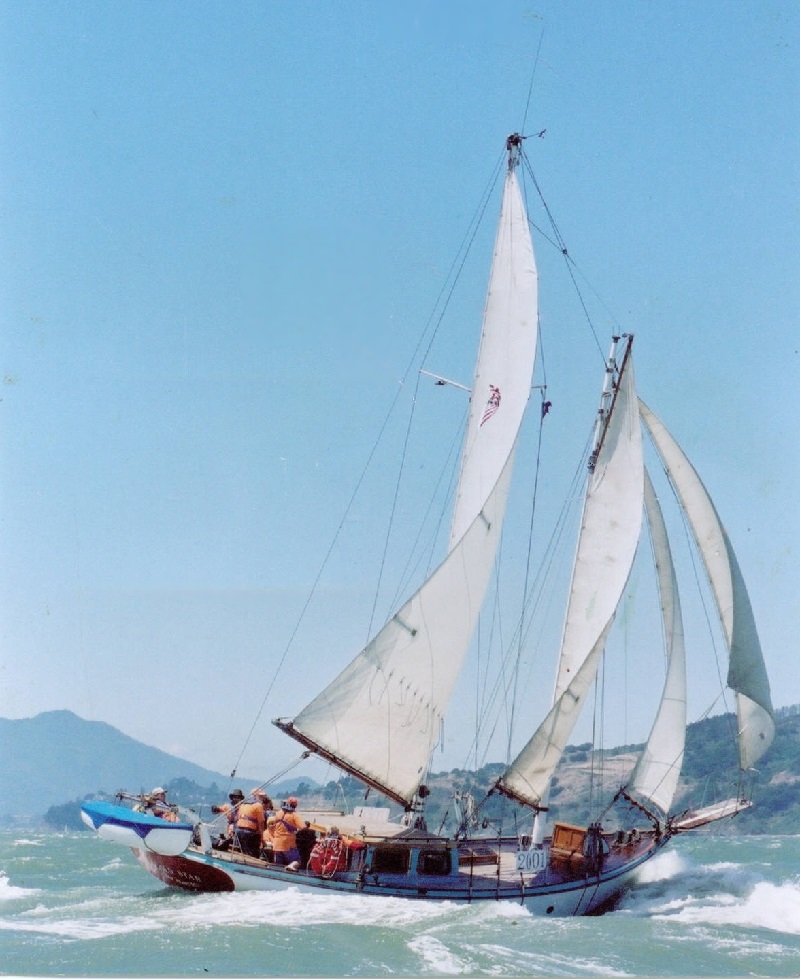 Note from Marlene: So true! Much of writing is re-visioning, re-thinking, re-writing. My essay in The Write Spot Anthology: Discoveries about how I spent my summer in 1974 was originally written that autumn. I spent the next 43 years revamping it. Yeah, that’s a lot of rewriting, but it got better with each twist and turn. It took that many years to fine tune my writing and to realize what the message was. I’m not suggesting you need 43 years to tweak your writing to where you like it. I am suggesting that you Never Give Up.
Just write!
Photo: The Schooner Gold Star, my home for most of the summer in 1974.