Tag: The Write Spot Blog

  • Time . . .

    Waste Not

    By Desiree Cooper

    “Time stretching languid in the humid afternoon tastes like caramel cake. It smells like pine needles in the rain.” —excerpted from “Waste Not,” by Desiree Cooper, River Teeth, Beautiful Things, September 29, 2025

    Desiree Cooper is the author of the award-winning collection of flash fiction, Know the Mother. Her fiction, poetry and essays have appeared in The Best Small Fictions 2018, CallalooMichigan Quarterly Review, The Rumpus, and Best African American Fiction 2010. Her essay, “We Have Lost Too Many Wigs,” was a notable essay in The Best American Essays 2019.

    “Using truth and wit, Desiree Cooper was the perfect conduit for university presses to have larger conversations about diversity and representation through books starting with their covers.

    Cooper, an electric speaker, is a master at navigating the tricky waters of difficult conversations by never excluding failures, but instead owning and learning from them and encouraging others to grow from these lessons.” —Annie Martin, Editor-in-Chief, Wayne State University Press

  • Write It All Down

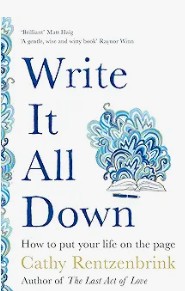
    Write It All Down” by Cathy Rentzenbrink

    Review by Marlene Cullen

    A friendly book encouraging people to write without worries.

    Easy to read with specific suggestions that inspire writing.

    My motto is “Just Write.”

    Cathy’s motto could be “Release your fears. Stay in your chair. Write.”

    #justwrite #iamwriting #iamawriter

  • See The Scene

    body of water across forest
    Photo by Manuela Adler
    Pexels.com

    Kasey Butcher Santana describes a scene about her “outdoor classroom.”

    “My science teacher uses a ruler and twine to mark a square-foot box in the damp blanket of leaves covering the ‘outdoor classroom.’ My task today is to observe this small patch. Part of a log has fallen within the boundaries, and I note the moss that grows on it and the bugs that seek shelter under its flaking bark. We return once a month to note how this woodland square changes with the seasons and maybe even write a poem.

    I do not remember completing this assignment, but I recall the crisp smell of forest floor, the slip of mud beneath my shoes, and the surprise of a roly-poly beneath the log.”

    Excerpted from How a Box in the Woods Taught Me to Write About Nature by Kasey Butcher Santana on the April 2, 2025 Brevity Blog.

    Can you see this scene? The ruler, the twine, the square-foot box, the damp blanket of leaves. Maybe you know that smell of damp leaves, of a crisp forest smell, of mud.

    Notice how sensory detail bring this scene from the page into you sensory awareness, into your memory bank.

    More on sensory detail in writing on The Write Spot Blog:

    Literary Transference

    The Neurological Impact of Sensory Detail

    Sensory Detail . . . Prompt #738

    Details are critical

    Just Write!

  • Armando Garcia-Dávila: Writing With Prisoners

    Something new on The Write Spot Blog: A video!

    Some of us hold our cards close to our chest, reluctant to reveal anything personal. Not Garcia-Dávila. In this video, Armando opens his heart to tell us about his experience with prisoners.

    “I present my experiences volunteering at San Quentin State Penitentiary in Marin County, California. I interacted with inmates over three-day retreats. An unexpected takeaway; there are many decent people, some admirable, that are serving sentences from two years to life. I had an interaction with one particular inmate that was life changing for both of us.” —Armando Garcia-Dávila

    The video is about 50 minutes long. Scroll down for link to video.

    Armando opens with a poem “Keeping Quiet,” by Pablo Neruda.

    Suzanne Murray wrote about “Finding Magic in the Mundane,” referencing Neruda.

    “I have many favorite poets but, the Nobel prize winning Chilean poet, Pablo Neruda tops the list in his elegant celebration of common things. These poems help me find beauty and wonder in the everyday and give me a fresh perspective in the face of the difficulties in the world.

    Later in his life, as if weary of the burden of protesting atrocities and political corruption, he wrote Odes to Common Things, about everyday things: salt, cat, dog, dictionary, tomato, to name a few. I cherish this book because, beyond the fact that the poems are an exquisite, playful honoring of the everyday, those things we take for granted, the things we no longer really see; they remind us to pay attention and look at common things with new eyes and imagination.

    You could do this too in whatever form your creativity takes. Play with it and see if it doesn’t brighten and expand your world. Consider using poetry as your inspiration, fuel for your creative spirit and to uplift and lighten your life.”

    Armando Garcia-Dávila has won awards for his prose and poetry and was named the Healdsburg Literary Laureate for 2002-2003. He refers to himself as the “Blue Collar Poet,” and says, “I am neither an academic nor an intellectual and try to write in the voice of the common man.” Simon Jeremiah lives on the right bank of the Russian River, where he keeps a small retreat for artists and writers. He is a founding member of the Healdsburg Literary Guild and remains active in the local arts community.

  • Writing Your Parents’ Stories

    Guest Blogger Laura Zinn Fromm writes:

    A few days ago, one of my students emailed. She had read an essay I’d just published about my father—dead now 19 years but still giving me plenty of juice to write about.

    The essay was about how volatile my Dad had been, and how loving—a love I rediscovered in letters he’d written to my mother at the end of their marriage. My mother had given me the letters during the pandemic, while she was cleaning out her house. I knew my parents had once loved each other fiercely and unambiguously, but the memory was an ancient one that predated my birth, and by the time I started to pay attention to how they treated each other, it was clear that love had been undone by disappointment and grief. They’d had a stressful marriage, and eventually moved on to other people—my father remarried, adopted a baby, divorced, became engaged to two other women and raised my half-sister alone; my mother moved in with another man for ten years, then left him and married someone else. Scads of boyfriends, girlfriends, semi-siblings and step siblings came and went; the only one I still talk to is my delightful half-sister.

    But my father’s letters to my mother, written in the middle of their marriage and then at the end, showed that there had been layers to their relationship. My father had been bipolar, suicidal and often cruel to my mother, but the letters gave me insight into his loneliness, confusion and remorse over what had happened between them.

    My student wrote:

    I loved your piece about your father. I wish I could get to the point where I can balance my mother’s flaws and good points in a balanced, detached way. Did you achieve your clarity and equanimity mostly through therapy? Any suggestions? When you get a chance. 

    This was an excellent question. Had I actually achieved clarity and equanimity? And if so, how?

    Of course, therapy helped—I’m 59 and had started seeing my therapist when I was 31; we had spoken about my parents at length. But it wasn’t just therapy that allowed me to consider my father from different angles. In addition to the letters, my mother also gave me journal entries my father had left behind, and home movies she had transferred to a thumb drive.

    The movies showed my parents when they were young and carefree, chic on safari in Africa, cavorting on beaches in Tahiti and the Jersey Shore. There was my father in swim trunks, sticking out his tongue and doing handstands on the beach, there was my mother looking like Audrey Hepburn, gorgeous in a red bikini and sunglasses. Long after their divorce, these props allowed me to imagine what they felt as they reveled in each other and the countries they explored together. I could hear my father teasing my mother, and my mother laughing and saying, “Oh, Steve!”

    The letters and movies allowed me to piece together what they had savored and surrendered.

    Some of the journal entries were hard to read (my father had some choice things to say about their sex life) and it took me three-plus years to write the essay I recently published. I would read a journal entry, squirm, then put it away, sometimes for months. When I finally returned to the letters and journal entries, I set a timer and wrote for 15 minutes, just enough time to reread and maybe write a few challenging sentences. Eventually, I was able to write for longer stretches and finish the story. Telling my parents’ story allowed me to exert some control over it, unlike the powerlessness I had felt as a teenager, watching their marriage implode at the dinner table.

    There was something else too that allowed me to write about the difficulties of love: meditation.

    I meditate 30 minutes every morning, sometimes outside. All the volatility I experienced as a kid melts away as I close my eyes, repeat my mantra, and reset my central nervous system. Meditation allows ideas to bubble up to the surface and is the most effective way I know to self soothe. Plus, it’s free. You don’t even need an app. I just set a timer on my phone and silently repeat my mantra (ima, Hebrew for “mother”), while thoughts ricochet around my brain and finally dissolve into something resembling clarity.

    I wrote back to my student:

    Yes, of course, therapy helps, but I think meditation and writing about my parents in a focused way helped even more. Just the process of thinking about them in a calm way (through meditation) allowed me to detach from how I felt about them and let me “observe” them from a safe distance. And then writing about them, and wrestling with their challenges but also forcing myself to find a way to deliver some message of hope and insight for the reader, also helped. So, I guess the short answer is yes, therapy helped, but meditation and focused writing helped even more. 

    My student wrote back: “Thank you for sharing what helped you with your parents. Writing is definitely therapeutic. I still have to try meditation.”

    If you are tackling difficult subjects, I recommend it all.

    Originally posted on August 26, 2024 Brevity as “Writing About My Father.”

    Check out our Substack: Sweet Lab Writing Workshops x Culture Vultures

    Laura Zinn Fromm is the author of Sweet Survival: Tales of Cooking & Coping (Greenpoint Press, 2014). She has an MFA in fiction from Columbia University and teaches fiction and creative nonfiction workshops through her company, Sweet Lab Writing Workshops.

    She has also taught at Columbia, Montclair State, the New York Public Library and through Kelly Writers House at the University of Pennsylvania.

    A former editor at Bloomberg Businessweek, she is a winner of the Clarion Award and the Newspaper Guild’s Page One Award for Labor Reporting. Her work has appeared in The New York Times, Huffington Post, Bloomberg Businessweek, The Forward, the Girlfriend, the Opiate, and elsewhere. 

  • Dorothy Parker’s Ashes

    Dorothy Parker’s Ashes

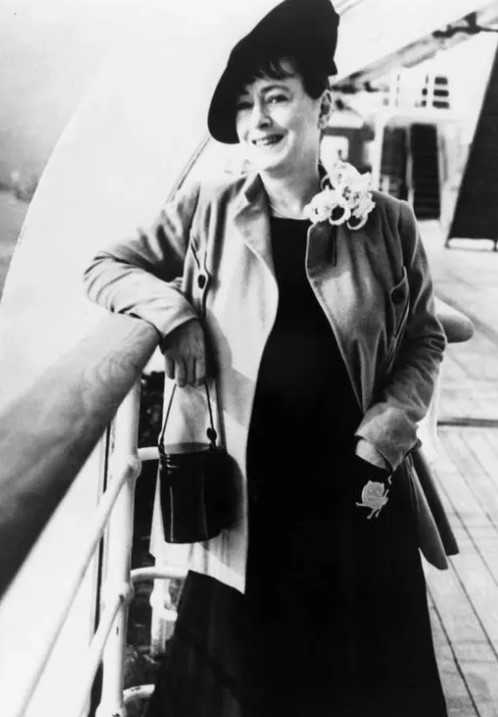
    “Dorothy Parker’s Ashes” is an online magazine that publishes fresh, contemporary first-person essays and art by women and gender non-conforming writers.

    “For our contributors, middle-aged or older women who have seen a thing or two,  the act of writing is the act of living more purely distilled. Many have spent their careers shepherding other writer’s work and now, in their retirement, they’ve got something to say.

    The longer we live, the more memories settle deep within, emitting an invisible, occasionally noxious gas. By giving them form, we set ourselves free. We elongate some things, cut others short. 

    We probe the seams underneath for the weak spot, hoping the puncture of our attention will allow all the pent-up emotion to rush through the hole where it escapes with a long sigh.  In the end, that is the reward. (In other words, we don’t pay.)— Rebecca Johnson and Bex O’Brian

    Submit

    Preferred length. 500 to 2000 words

  • Comfort Food and more  . . . Prompt #727

    Excerpted from the May 2023 issue of the Sonoma County Gazette:

    Research over the past 20 years shows the same result time and time again: when we’re stressed, we want what researchers call high energy and nutrient-dense foods—those snacks, treats and meals that are high in fat and sugar.

    Comfort foods improve mood, reduce loneliness and connect us to cherished memories, often linked to childhood. A craving for comfort food typically stems from an extreme emotion, including happiness, meaning we reach for comfort foods even to celebrate.

    Comfort foods often trigger our reward system by releasing dopamine, a hormone and neurotransmitter. When we take a bite of that comfort food, whether it’s a hot fudge sundae, peanut butter and apples, tikka masala or a double bacon cheeseburger, dopamine floods the brain and gives us a huge boost of pleasure feelings. Any negative feelings we may have been experiencing before—stress, anger, sadness or anything in between—is diminished thanks to that hit of dopamine.

    For more info, you can read the entire article, “Why do comfort foods make us so happy?”  by writer and editor Amie Windsor.

    Today’s Prompts

    Write about food that brought you comfort as a child.

    Write about food that brings you comfort now.

    If you have replaced comfort food with an activity, write about that.

    Stressed is desserts, backwards.

    Have you backed into an activity that offers a hit of dopamine?

    I discovered GROOVE dancing with Diane Dupuis (link to her Facebook Page) and love the endorphins that dancing produces.

    Share your writing on my Writers Forum Facebook page. Note: There is no apostrophe on my Writers Forum Facebook page.

    Posts on The Write Spot Blog about comfort food and activities that produce endorphins:

    Comfort Food and the results of my informal poll.

    Ideas for activities to get a dopamine fix:

    Create a Hygge Calendar or List

    Qi Gong To Calm The Mind

  • Strengthen Your Writing

    Ideas for strong writing.

    Use active voice rather than passive voice.

    ~From www.dailywritingtips.com  –  sign up to receive free daily emails with writing tips:

    English verbs are said to have two voices: active and passive.

    Active Voice: the subject of the sentence performs the action:

    His son catches fly balls. Creative children often dream in class.

    Passive Voice: the subject receives the action:

    The ball was caught by the first baseman.
    The duty is performed by the new recruits.
    The dough was beaten by the mixer.
    The mailman was bitten by the dog.

    ~From Manuscript Makeover by Elizabeth Lyon

    Adjectives: Use sparingly and consciously. Overuse indicates a need to find more precise nouns and to show rather than tell.

    Adverbs: Too often, writers use these to beef up weak verbs. Your goal should be to make verbs strong enough to do the work themselves and kill off your adverbs. You won’t be able to get rid of all of them, but circle each one in your draft and use a thesaurus to find strong verbs that characterize and carry emotions as well as convey action.

    Paraphrased from Victoria Zackheim, author, editor, writing teacher

    An adverb modifies a verb and clarifies the action. Avoid adverbs and use strong verbs instead, because adverbs “tell” rather than “show” the action.

    Example:

    “I don’t understand,” said the man angrily, his hands balled into fists. “Angrily” tells, and “balled into fists” shows that he is angry. So, “angrily” is redundant.

    Avoiding adverbs that end in -ly:  “The boy raced quickly along the sand.” If he was racing, we know it’s quickly.

    Adjectives describe nouns. Try using strong verbs so adjectives aren’t necessary.

    Examples:

    “Tears came to her eyes and she looked away” rather than “Sad tears came to her eyes.”

    “A nerve in his jaw pulsed and his fists were clenched” rather than “He was angry and a nerve . . . “

    Verbs are the action words and can be scene stealers when used well. A verb that is used well rarely needs to be modified.  Example:

    “The bear responded angrily and he dangerously revealed his claws.”

    Delete adverbs for a stronger sentence:  “The bear growled and bared his claws.”

    It’s almost never a good idea to use an adverb when writing dialogue. It takes away the reader’s delight to imagine the scene.

    “Do this or I’ll kill you,” he said menacingly, can stand without that menacing adverb, since his comment is menacing.

    There are times when an adverb enhances and clarifies the sentence. For example:

    “The rain fell intermittently.” The adverb “intermittently” tells us that the rain fell off and on.

    “He paid the bill occasionally.”  In this sentence, occasionally is an important adverb.

    Paraphrased from Writer’s Digest magazine, January 2006, “Pick Up the Pace”

    Quick pacing hooks readers, creates tension, deepens the drama and speeds things along.

    Picking up the pace increases tension. How to quicken the pace:

    1. Start story in the middle of the dramatic action, not before the drama commences.

    2. Keep description brief. This doesn’t mean using no description, but choose one or two telling, brief details.

    3. Combine scenes. If one scene deepens character by showing a couple at dinner and a few scenes later they have a fight, let them have the fight at dinner.

    4. Rely on dialogue. A lot of story can be carried by spoken conversation. Readers seldom skip dialogue.

    5. Keep backstory to a minimum. The more we learn about characters through what they do now, in story time, the less you’ll need flashbacks, memories and exposition about their histories. All of these slow the pace.

    6. Squeeze out every unnecessary word. This is the best way of all to increase pace. There are times you want a longer version for atmosphere, but be choosy. Wordiness kills pace and bores readers.

    From Marlene:  Use present tense rather than past tense for “real time” — so the reader travels along with the protagonist as they explore and discover together.

    More on strengthening writing:

    How to be a better writer       

    Vex, Hex, Smash, Smooch by Constance Hale

    Sensory Details – Kinesthetic, motion in writing

    What tips do you have for strong writing? Post your tips on my Writers Forum Facebook Page.
  • I Scream, You Scream

    Memorable writing that sparks imagination. Lean in. Hear the writer’s voice on the page.

    I Scream, You Scream

    By Nona Smith

    It’s been well over a year since I’ve done any grocery shopping at Safeway. Early on in the pandemic, it was Harvest, our other local supermarket, who quickly adopted safety precautions: it made mask-wearing mandatory, limited the number of shoppers inside the store at any given time, provided handwashing stations outside, and offered free Latex gloves. Safeway was slow to adopt protective measures, making me feel unsafe in Safeway.

    Fast forward eighteen months, and I’m fully vaccinated and in need of a cake mix Harvest doesn’t carry. Being as health conscious as it is, the shelves in the baking section at Harvest are laden with organic, gluten-free, paleo, KETO, dairy-free cake mixes. There are only a handful of non-organic, full-on gluten, white sugar mixes on the very bottom shelf. I’m guessing their placement there is to give the consumer time to re-think their unhealthy choice while bending over to reach one of those boxes. So, I’m off to Safeway to find my cake mix.

    Of course, it’s there, nuzzled amongst dozens of others of its ilk, within easy reach. I pluck it from the shelf and decide to do the rest of my grocery shopping while I’m already in the store. I pull out my grocery list.

    When all the items are checked off, I crumple the list and stuff it into my purse. Then I go in search of the shortest check-out line, which––because shoppers are encouraged to stand on the six-feet-apart circles painted on the store floor––brings me half-way down the ice cream section of a freezer aisle. And, because I have nothing else to do while waiting for the line to move, I begin perusing the freezer cases and discover an ice cream trend. The highest end ice creams––Haagen-Dazs, Ben and Jerrys, Talienti––have adopted “layering” as a new marketing gimmick. Only pint cartons are offered this way: four layers of different textures and flavors. I’m imagining plunging my ice cream scoop far enough down into the container to reach all four layers at the same time. Nope, I determine, it can’t be done. One would need a spoon to get the effect the product promises. I suspect the idea really is, to sell more product by encouraging shoppers to have their very own pint to dip their very own spoon into. I can’t imagine this trend will last beyond the summer.

    The line moves, and I find myself in front of a section containing lesser-known brands, such as Fat Boy and Fat Boy Junior. I’m wondering what kind of market research led someone to name their product that when the line shifts again.

     Now I’m in the popsicle section and looking at a product that reminds me of the summers of my childhood. I can almost hear the tinkling notes of the white ice cream truck as it announces its tour through my neighborhood. And here it is in Safeway’s freezer: the Good Humor Creamsicle, orange popsicle on the outside, velvety vanilla ice cream on the inside. I’m tempted to put a package in my shopping cart. The only thing that stops me is knowing the Creamsicles would melt before I got out of the store.

    Another five minutes pass, and I’m now standing in that spot between the end of the aisle and the conveyer belt, leaving enough space for shoppers to pass through with their carts. An idea strikes me, and I reach into my purse for the crumpled shopping list and a pen. Smoothing out the list, I jot some notes about what I’ve just discovered. As a writer of personal essay, I know that anything––and everything––is fodder for a story. Why not ice cream?

    By the time I’m wheeling my cart out of the store, I’ve decided to make a stop at Harvest on my way home and do a little market research of my own.

    Standing in front of the ice cream freezer at Harvest, it’s just as I suspected. Yes, the high-end, four layered, products are there, but there’s no sign of Fat Boy or his son. Instead, there’s a product called Skinny Cow. Also, it appears there’s an equal amount of low fat, sugar-free, nonfat, nondairy ice creams made from soy, almond or coconut milk as those made from actual full-fat cow’s milk. The Rebel label promises “high fat/low carbs” for people on a KETO diet. There’s even an ice cream designed for kids who don’t like vegetables. It’s called Peekaboo and is made with “hidden veggies:” vanilla ice cream with zucchini, chocolate with cauliflower. Who knew? The freezer is filled with organic, health-conscious choices, seemingly designed to keep the Harvest shopper living a nutritious lifestyle.

    I tuck the note-filled grocery list back into my purse and head home. Maybe one day I’ll write a piece about ice cream.

    Nona Smith is the author of Stuffed: Emptying the Hoarders’ Nest and numerous other short stories published in various anthologies, including The Write Spot: Musings and Ravings From a Pandemic Year, journals and the St. Petersburg Times (now Tampa Bay Times.) Currently, she is writing a mystery about a woman named Emma whose dear friend goes missing. In her search for her friend, Emma finds herself. Nona writes personal essays and memoir pieces as well as fiction, always with an eye towards finding the humor in situations. She lives on the Mendocino coast with her husband Art and two mischievous cats.

    Stuffed: Emptying the Hoarders’ Nest and The Write Spot: Musings and Ravings From a Pandemic Year are available at Gallery Bookshop and on Amazon.

  • Dad

    By Susan Bono

    “That’s quite a sack of rocks you’re carrying, sweetie,” my father’s friend Bruce said more than once during phone calls last year. It was his way of acknowledging how heavily Dad’s poor health, hard-headedness and self-imposed isolation weighed on me. But I also took it as a tribute to Dad’s stubbornness and my strength, too.

    “Dumb as a rock” never made much sense to me, since stone strikes me as having its own unassailable intelligence. Its ability to endure illustrates its genius. I have never believed in the ability to factor equations or compose sonnets was proof of brain power, although I shared with Dad the idea that someone with rocks in his head was lacking in foresight and flexibility. Rocks may be smart, but they are slow. Time measured in stone is something else again.

    There were moments during my dad’s dying that were as slow as serpentine, sandstone, rose quartz, chert. His unseeing eyes were obsidian, and the pauses between breaths were long enough to form fossils. But just after that great wave rolled down from the crown of his head, darkening the air around him so his spirit glowed like a white shell at the bottom of a silty river, a tear slid from beneath his closed eyelids. That’s when the sack of rocks fell empty at my feet and I was surrounded by the tumult of released wings.

    Originally published in The Flashpoints 2008 issue of Tiny Lights. This issue was dedicated to the memory of Susan Bono’s father, Morris N. Zahl (12/24/24-3/22/09), whose light guides Susan.

    Susan Bono, a California-born teacher, freelance editor, and short-form memoirist, has facilitated writing workshops since 1993, helping hundreds of writers find and develop their voices. Her work has appeared online, on stage, in newspapers, on the radio, and in anthologies, including The Write Spot series.

    Susan is the author of “What Have We Here: Essays About Keeping House and Finding Home.”

    From 1995-2015, she edited and published a small press magazine called Tiny Lights: A Journal of Personal Narrative, as well as the online component that included quarterly postings of micro essays and a monthly forum dedicated to craft and process.

    She was on the board of the Mendocino Coast Writers’ Conference for more than a decade and was editor-in-chief of their journal, the Noyo River Review, for eight years. Susan often writes about domestic life set in her small town of Petaluma.