Tag: The Write Spot Blog

  • What is on your bucket list? Prompt #212

    This seems to be the time of year to make lists. I am normally a list maker, but I get real serious about it starting mid-December. With all the “kids” coming home for the holidays, I mentally list where everyone will sleep. Then I gather blankets, quilts, comforters and pillows. Some unlucky family members have to sleep on the floor. Can’t be too bad, because they keep coming back.

    Then there are the other lists: shopping (gifts, groceries), meals (breakfasts, dinners. . .I’m not used to cooking for nine), party planning (food, drinks, moving furniture), holiday cards (cards received, cards sent) . . . okay, probably too much information. But yes, I am that serious about making lists.

    I’ve been thinking about bucket lists. You know . . . things you’ve always wanted to do and some day you will.

    Bucket.1I’m wondering, what’s on your bucket list?

    For fiction writers. . . what’s on your fictional characters’ bucket lists? You can use this as a way to get to know them better.

    If you want, you can make an opposite type of list: Things you no longer want to do. Things you never wanted to do. Things you will never do again.

    Helpful lists for strategizing your holidaze: “Rewrite Your Holiday Scene Prompt #210”.

  • What hurts right now? Prompt #209

    BandaidYou! Yes, you. What hurts right now?

    Write about that.

    Or write about what is hurting your fictional character.

    Writing Prompt: What hurts right now?

  • Personal Essay is Memoir in Short Form

    If you have written your memoir, or are in the process, and it’s not shaping into what you envisioned, you could transform it into a personal essay.

    It might be easier, at some point, to concentrate on writing a personal essay, rather than a book-length manuscript.

    There are many posts on The Write Spot Blog about how to write personal essays. (Please scroll down for the how-to posts).

    You may be writing vignettes to satisfy your desire to write family stories. You can publish these with the help of many do-it-yourself publishing companies.

    If you want your personal essays to be published for public consumption, there are many opportunities for submission: Big Brick Review, Chicken Soup for The Soul, The Christian Science Monitor,  Fourth Genre: Explorations in Nonfiction and so many more places. Check the back pages of Writer’s Digest magazine.

    You can submit your writing to be included in anthologies. Conduct an internet search to find anthologies that are currently accepting submissions. An online search for “submit to anthologies” yielded thousands of results. You can also find anthologies that are looking for submissions in the back pages of Writer’s Digest magazine.

    And of course, you can check in at The Write Spot Blog anytime to find publications that accept personal essays, just click on “Places to Submit.”

    How to subscribe.250You can subscribe to The Write Spot Blog and not miss a single post. When you subscribe, posts will be delivered to your email inbox. Just fill out the information on the home page of The Write Spot Blog — Right side, scroll down.

  • Deep but not profound . . . Prompt #208

    The name of the game is: Deep but not profound.

    red apple.80Apples but not bananas  banana.60

    boots.60Boots but not shoes    shoes.60

    Carrots.40Carrots but not potatoes potatoes.60


    DoorDoor but not window  Window.60


    Eggs 70Eggs but not chickens   Chickens.60

    Have you figured out the formula? Here’s a clue:

    Look at the letters in the first words of each line above.

    More clues:

    Sleepy but not tired

    Sleep but not slumber

    Greet and hello and goodbye but neither here nor there.

    Solution to this riddle:

    The first word has double consonants or double vowels. The rest of the words don’t matter.

    Two more:

    Matter but not material

    Correct but not right

    I’m becoming addicted. . .

    Hope you have fun with this little brain teaser!

    What lines can you come up with?

    Writing Prompt:  Choose a line or a photo and write.

  • Tradition . . . Prompt #207

    ~Tradition~

    Quick! What’s the first thing you think when you see the word “tradition?”

    Write about that.

    OR:

    Write about a tradition from your childhood.

    Write about a tradition you gave up.

    Write about a tradition you enjoy.

    Ready? Set your time and write for 15-20 minutes.  Just write!

    Tradition.Change

  • Use photos to inspire your writing. Prompt #206

    You can use photos as writing prompts. Choose one of your photos, or a photo you remember and write about it.

    First, look at the photo (if you can). Write all the details that you see. Write about what happened before and after the photo was taken. Write about your feelings connected with this photo.

    Photos might remind you about activities, important occasions and details that you may have forgotten.

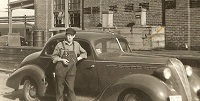
    Larry and Car

    Did Great-grandpa always wear a hat? What was his first car? Where did he work?

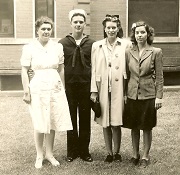
    Siblings. What did Grandma think as her son went off to war?Hyne siblings.Mother

    What did his sisters think? Did they send him off with special remembrances from home? Did they listen to every radio broadcast about the war? Did they watch events play out on television? Are there any letters from that era?

    Margaret.Graduation Day

    Grandma’s graduation day photo doesn’t look like today’s graduation photos. What were Grandma’s plans after graduation? Did they come true? What happened after she graduated? Who was the first one to graduate from high school in your family? The first one to graduate from college?


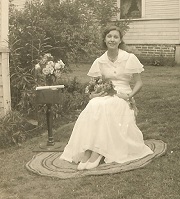
    Brides! Wedding photos! Do these types of formal occasion photos live in your photo album? Bride on her way to getting married.Are they formal photos? Casual photos? Any videos? Tell the backstory of these wedding photos. Tell about the people in the background. How did the bride and groom meet?

    There are over 200 prompts on The Write Spot Blog. Photos accompany every prompt. You can use any of these photos as jumping off points to inspire your writing.

    If you see a missing photo, please let me know. Some of them have mysteriously disappeared.

  • How to Write A Memoir— Part Two

    How To Write A Memoir, Part 1 lists a variety of methods for writing personal stories.

    Part 2 continues with revision and the business of writing.

    Take care of yourself

    Writing one’s life story can be difficult. While writing, take good care of yourself. Anytime you are feeling overwhelmed by this writing process, set your work aside. Take a break, get some fresh air, visit with a friend. Read helpful, supportive material such as Toxic Mom’s Toolkit.

    Organize

    When editing, save your “cuts” in separate files (either paper file folders or on computer files). You might be able to use these darlings in another personal essay.

    Use manila file folders to store print material: newspaper articles, photos, handwritten notes, letters, brochures, etc.

    Revising

    In the revising stage, delete what might cause embarrassment. Fine tune for accuracy.
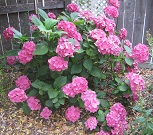
    HydrangeaShape like a gardener pruning a hydrangea. Take a few snips here, cut a little there. Stand back, look over your work.

    Revise until you are satisfied. Or, you may reach a “good enough” stage and let it go. Most writers are never completely satisfied with their writing.

    While in the editing stage, read your manuscript as if you are an impartial observer. Look at how the cast of characters are portrayed. Check if their privacy has been respected. Read with empathy toward the characters who inhabit this story. Frances Lefkowitz believes “. . . empathy is so crucial to a good memoir—and to good relationships, and to family Thanksgivings in which everyone comes out alive.” —Frances Lefkowitz, “Are Your Parents Still Speaking to You?” December 20, 2013, The Write Spot Blog.

    Permission from cast of characters?

    Should you let your cast of characters read your manuscript?

    There is no correct answer. Some people say yes. Others say no. My suggestion is if you think something will be offensive, consider if these particular details need to be in the story. If not, omit them. If the details are crucial, leave them in, knowing it might offend someone who may cut off contact with you. If you want to continue contact with that person, ask him/her to read. If he/she is uncomfortable with some passages, you may be able to tweak to everyone’s satisfaction.

    This is your story and you have a right to write it, but do you have a right to publish it? Be mindful of defamation (libel for written material). Carefully consider the risks of writing your personal story for publication.

    “Writers face three big risks when using real people in their writing: defamation, invasion of privacy, and misappropriation of the right of publicity. Yet every fiction writer bases characters on real people. Memoirists and nonfiction writers identify people by name. How can writers use real people in their work without risking a lawsuit?”   —Helen Sedwick, “How to Use Real People in Your Writing Without Ending Up to Court,” September 13, 2014

    Beta Readers

    Part of your editing process might be to have others read your manuscript. These early readers (also called beta readers) might find scenes that don’t make sense or need clarification. Only ask people you trust and who will give you honest appraisals. Choose these readers very carefully. Give them specific things to look for (continuity, repetition, unclear areas, sections that could be condensed or expanded, etc).

    Why Write This Story?

    After you have written all that you want to write, while your manuscript is “resting,” take time for contemplation. Why are you writing this story? And why do you want to publish it (if you do)? If you are writing to share what you have learned on your journey and think it will be helpful to others, wonderful. If you are angry and want revenge, consider the consequences.

    Upon reflection, you may realize that some healing happened during the process of writing and you released the pain. Maybe you will find there is no longer a desire for revenge.

    “Honesty. Compassion. Forgiveness. Hold these words in your mind as you write about your family.” —Kerry Cohen, “How to Write About Family in a Memoir” by Kerry Cohen, author of The Truth in Memoir, [excerpted from “The Writer’s Dig,” column by Brian Klems , Writer’s Digest, January 22, 2015]
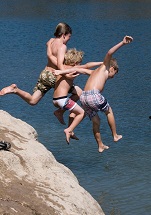
    Boys jumping into water. SorensenAfter typing “The End”

    Celebrate! You achieved your goal.

    But, what if your memoir isn’t quite working?

    You may decide to publish your work as fiction rather than memoir. The option of revising your memoir into fiction is explored in How To Turn Memoir Into Fiction.
     Celebration  Photo by Kent Sorensen
    Hydrangea photo by Marlene Cullen
  • What challenged you as a . . . Prompt #203

    Today’s writing prompt:  What challenged you as a fifteen-year-old?

    Marlene.Tonga RoomWhen the prompt is a number or an age, you can adjust to whatever calls to you.  For example, with this prompt you can write about what was challenging when you were thirteen, or fourteen, or sixteen.  The exact age doesn’t matter. I chose fifteen because that is a pivotal year for some people.

    Marlene, Tonga Room, Fairmont Hotel, San Francisco, Junior Prom, 1965.

  • What’s under your bed? Prompt #202

    frog2-150x150Today’s prompt: Write about the monsters under your bed.

    Oh, you don’t  have any monsters under your bed?

    Well then, what’s in your closet?