Tag: Writing freely. Just write. Writing Prompts. The Write Spot Blog.

  • The Inner Critic Tar Pit of Doom and Despair

    By Su Shafer

    Beware the trap that writers often fall into: The Inner Critic Tar Pit of Doom and Despair—the black hole of fear in your head that says you have nothing new or exciting to say or that even if you are personally excited by what you’ve written, it’s not good enough for someone else to read or hear. 

    The Tar Pit of Doom and Despair is a creative quicksand that will sink the soul right out of your writing, further feeding the fear of mediocrity. The only way to escape this pit is to get out of your head. 

    I’ve found doing timed free writes is a great way to do this. When your time is restricted, you don’t have time to obsess over a word or a phrase and there simply isn’t enough time to polish. There is something freeing and reassuring about that. 

    And having a time limit ensures that you can’t get too invested and that what goes on the paper is raw, organic, and unraveled from the sinister inner critic with its conformist ideals.

    Play, don’t be afraid to experiment. Use creative prompts to catapult you out of your comfort zone. Don’t try to control or stop what wants to come out. It’s surprising and delightful what valuable nuggets and insights show up. 

    Be brave and share your work with others. Other people come to your writing with their own perspectives and will often pull things from your writing that wouldn’t otherwise occur to you. Sharing your work is the only way to get over your fear of sharing your writing. And when you’re not too invested, you can accept both complements and criticism and learn to use them constructively.  

    Most importantly, just keep writing.  Do whatever it takes—invent ways to keep your pen scribbling on paper. 

    Just keep writing. 

    Su Shafer is a creative writer and sometime poet who lives in the Pacific Northwest, where flannel shirts are acceptable as formal wear and strong coffee is a way of life. There, in a small Baba Yaga house perched near the entrance to The Hidden Forest, odd characters are brewing with the morning cup, and a strange new world is beginning to take shape . . .

    Note from Marlene: There are over 568 writing prompts on The Write Spot Blog.

    Choose one and Just Write!

  • Tiny Love Stories

    Modern Love is a weekly New York Times column, a book, a podcast — and now, in its 16th year, a television show — about relationships, feelings, betrayals and revelations.

    What kind of love story can you share in two tweets, an Instagram caption or a Facebook post? Tell us a love story from your own life — happy or sad, capturing a moment or a lifetime — in no more than 100 words. Include a picture taken by you that complements your narrative, whether a selfie, screenshot or snapshot. We seek to publish the most funny and heart-wrenching entries we receive. We call them Tiny Love Stories. They are about as long as this paragraph. They must be true and unpublished.

    Love may be universal, but individual experiences can differ immensely, informed by factors such as race, socio-economic status, gender, disability status, nationality, sexuality, age, religion and culture. As in the main Modern Love column, we are committed to publishing a range of experiences and perspectives in Tiny Love Stories. We especially encourage Black and Indigenous people and other people of color to submit, as well as writers outside of the United States and those who identify as members of L.G.B.T.Q. communities.

    Share your story today.

    To read past Tiny Love Stories, go to nytimes.com/modernlove. There is also a book of some of our favorite Tiny Love Stories.

    Click here to read our reader submission terms.

  • Real Names in Memoir?

    When writing memoir, the question often comes up, should you use real names?

    There are no cookie-cutter answers. No one-size-fits-all.

    In “Between Two Kingdoms” Suleika Jaouad handled the situation by stating in the front of the book, “To preserve the anonymity of certain individuals, I modified identifying details and changed the following names, listed in alphabetical order: Dennis, Estelle, Jake, Joanie, Karen, Sean, and Will.”

    Tara Westover, author of “Educated,” changed the first name of her parents and siblings.

    Phuc Tran, author of “Sigh, Gone: A Misfit’s Memoir of Great Books, Punk Rock, and the Fight to Fit In” decided to keep “the real names of all adults and changed the names of minors not related to him and adult names he forgot. He said his ‘tenuous’ relationship with his parents meant he didn’t care about their opinions and made his book easier to write, noting, ‘I wrote without worrying about trying to preserve the relationship, and wasn’t sure if they’d read it. I felt unencumbered and free to be incredibly truthful.’” —March/April 2021 Writer’s Digest magazine

    Write whatever you want to write. Later, if you publish your memoir, you can decide what to do about names. But before that, free yourself to write your truth. Write your story without worries about what anyone else might think.

    Tell what happened. Write Your Story.

    Just Write.

  • But Why . . . Prompt #568

    I’m working on a short piece of writing about a childhood tradition to submit to an anthology. It’s done, except I feel I’m not conveying the heart of it. This afternoon, I asked myself “Why was this so special?” After this blog post, I’m going to look at my story again, and try to dig up the “but why” that made this tradition so meaningful.

    Writing Prompt: Using something you have written, pull out an excerpt, and answer the question, “But why?”

    Just write and see where this takes you.

    But, why?

  • Scene Checklist

    Photo by Deborah Diem

    Every scene should be told through a character’s point of view. You can have more than one pov character in a book, (but no more than you need).

    One reason for this type of focusing is so that we feel the character struggle with a scene goal. The struggle takes place through action and dialogue with little internalization/exposition.

    A scene is a dramatic unit that includes scene goal, conflict (through action and dialogue) and resolution.

    What does your protagonist want in the story? This is the external plot.

    The external plot could be as simple as: Will Jane find the killer?? It is not something like: Will Jane find true happiness? This is internal conflict and may even be a subplot.

    What does your pov character want in this scene (scene goal)? Without a clear scene goal, you will not have a scene; you will have an event.

    What’s at stake? What will happen if the character doesn’t reach the desired scene goal?

    Where is the scene taking place?

    Scenes in most coffee shops and bars are weak. Take that scene in the bar and put it on a ski slope, on a sailboat, or in a factory that manufactures frozen enchiladas.

    What time is the scene taking place and what month? This will determine how the characters dress.

    Antagonist in this scene?

    What does character want in this scene?

    What does character do to get his/her way in this scene?

    Have you incorporated action in the scene?

    Have you incorporated dialogue?

    What is the emotional state of the protagonist?

    Resolution: How does scene end? Does character achieve scene goal?

    Adapted from outline by Bonnie Hearn Hill from a lecture by Cindy Wathen.

  • Clichés

    By Camille Sherman

    What is the scientific process

    Of transforming a thing

    Out of reverence and relevance

    And into cliché


    Is it a simple question of quantity

    The stomach ache that follows

    Empty candy wrappers

    Fanned out before tiny costumed bodies


    Is it great expectation

    A push for originality

    An inner motor disdained

    By what’s been done before


    Perhaps boredom or impatience

    A haughty bristle at the suggestion

    That there is something new to gain


    We’ve seen it all before

    Said it all before

    Thought it all before


    But when no one is looking

    And we sneak a furtive glance at the stars

    Or steal the scent of a passing flower

    Or well at the first notes of a love song

    Our sweet clichés will rise again

    Unoffended that we were too cool

    To remember why they were worthy

    Of perpetual repetition

    To begin with

    Camille Sherman is a professional opera singer from the Bay Area. She trained at The Boston Conservatory and the San Francisco Conservatory of music, and served as an Artist in Residence at Pensacola Opera and Portland Opera. She currently lives in Portland, where she continues to sing and develop artistic projects with local artists.

  • Goodbyes

    By Julie Wilder-Sherman

    Goodbyes can come in so many forms. 

    There’s the long goodbye. The short goodbye. The swollen goodbye and the thin goodbye. The brittle goodbye and the overwrought goodbye.

    Short goodbyes can be quick for so many reasons. You don’t like someone, so you want to get away. You love someone too much and each moment of your parting makes you feel worse. Short goodbyes can occur because you’re ready to move on. Or you’re afraid. Or you’re late for an appointment. Or you just don’t like situations that drag on and on. Short goodbyes can be a brisk hug, a handshake, or even dropping someone off at the curb at the airport.

    Long goodbyes can be swollen with tears. They can get wet and messy and sweaty. Long goodbyes can leave puffy eyes and red noses. Long goodbyes can have kids tugging at their parents’ coats, rolling their eyes because the adults are taking too long. Or they can be kids grasping at their parents’ coat, clinging, begging and screaming to not be let go.

    Goodbyes to friends as we move away. Goodbye to children as they grow up and step away from you and into adulthood. Goodbye to parents as their souls complete their journey on earth and leave the dimensions we understand to go on to the ones we don’t.

    Goodbye to dishes and dining room sets that were purchased for weddings then sold after divorce.

    Goodbyes to pets who trusted their lives to you, then went over the rainbow bridge to dog heaven. Or the kitty ranch. Or the goldfish ocean. Or hamster haven.

    Goodbyes to what we know, what we want and can no longer keep. To what we no longer love or use or need. Goodbyes are realizing that when it was with you, it served its purpose and its work is done.

    San Francisco native Julie Wilder- Sherman is a long-time resident of Petaluma, California. She began reading books at an early age, encouraged by her mother, who would allow her to take books to bed when she was as young as two-years- old. Julie would “read” them until she was ready to go to sleep. To this day, Julie reads every night before turning out the lights.

  • What? . . . Prompt #567

    Just some things to think about and explore through writing.

    What isn’t working in your life? What is working?

    What are you resisting?

    What needs to change?

    What really matters?

    What do you want?

  • Writing Personal Essays

    Make a list of issues and experiences, important and trivial, in your life right now.

    What frustrated you in the past month?

    What made you laugh or cry?

    What made you lose your temper?


    What was the worst thing that happened?


    The best?

    The most disturbing and weird?

    Write:  Choose one thing from your list and write about it.

    Write whatever comes to mind.

    Write what you would really like to say to the other people involved.

    Write what happened from your point of view.

    Prompt inspired from, “On Writing Personal Essays,” by Barbra Abercrombie, The Writer magazine, January 2003

    Barbara Abercrombie teaches creative writing in the Writers’ Program at UCLA Extension, and a master class in memoir and personal essays via Zoom and Canvas.

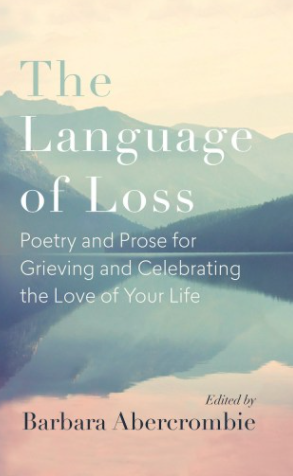
    “We write the book we need to read and The Language of Loss is the book I needed when my husband died six years ago. It’s an anthology full of the very best poems and prose that I could find about losing the love of your life. These are the writers and poets who got me through my own grief. If you’re going through a loss right now, or know someone who is grieving, I hope this book will help.” —Barbara Abercrombie

  • Color Play

    By Cheryl Moore

    I had been looking forward to the beginning of 2021; 2020 had been such a sad year, then January 6th happened. Chaos and uncertainty filled me.

    Since the trouble at the nation’s capital, I’ve made an abrupt change in my paintings. Instead of the landscapes and fanciful trees from a nearby park, my usual work, I’ve been painting abstracts to capture the oddity life has taken.

    I start by drawing straight lines across a canvas then I add curves. I step back and study these charcoal marks and try to find some pattern, some way of organizing the geometric spaces I have created. It may take a day of looking.

    My color palette is usually blue, blue-violet, and purple with accents of peachy orange and pink. The contrast of light and dark pattern is important.

    I am not interested in making great art; I don’t expect to like every piece. My goal is to have fun, to play, to forget the troubles of the world and just spend an hour or two enjoying myself.

    Cheryl Moore grew up in the Midwest, then lived in San Francisco to finish high school and attend college where she studied biology. During the late sixties and into the mid-seventies she lived first in Sweden for a year, then for four years in Iran where she served as librarian in a small research library for wildlife biologists.

    Nature and science have always been among her interests. After returning to the U.S., she moved to Petaluma and has dabbled in writing stories.

    Since retiring from employment at Sonoma State University, she has taken up painting.