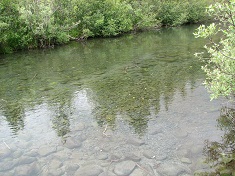
Rebecca Lawton writes about conflict . . . the kind writers want to have in their writing.
Recently I read an article by a bestselling novelist who claimed she didn’t follow the well-worn advice to include conflict in story. “I hate conflict,” she wrote. “I don’t like to read it, and I don’t like to write it.” Wondering what techniques she did use to captivate her devoted followers, I turned to my bookshelf and opened one of her latest works to the first page.
The initial paragraph set a sunny, peaceful scene in which couples and families strolled and played outdoors; the second paragraph described a situation only blocks away where a crowd was experiencing danger that had “turned their perfect Saturday into a nightmare.”
Bingo. Conflict. The word is via the Latin conflictus, meaning contest. My good old Oxford English Dictionary describes conflict as “an incompatibility between two or more opinions, principles, or interests” (There’s a conflict between his business and home life) or “a clash of opposing wishes or needs” (My heart is in conflict with my brain).
Our writing instructors tell us that we’ll engage our readers if we start our works with some sort of clash in our opening sentence or paragraph and keep it coming throughout our stories. We’re directed to embed it in every page to engage our readers nonstop.
It’s good advice. In his fabulous manual, Writing the Breakout Novel Workbook, Donald Maass describes the many levels of conflict that can be integrated into our stories. There’s Inner Conflict (the clash of desires within a character), Bridging Conflict (temporary conflict or mini-problem), Inherent Conflict (a world of conflicting forces), and Main Conflict (main problem in the story). And those are just a few examples.
There’s a connection between writing conflict and building story tension. The two words are inherently opposites, but they work together to hold the interest of our readers (I’ll say more about how conflict and tension are related at the June 19, 2014 Writer’s Forum hosted by Marlene Cullen.
Even before I knew how to weave conflict into a story, culture clash inspired me to write my novel Junction, Utah. From experience I knew communities were disagreeing over resources in the oil-rich American desert, where the story is set, and I wanted to explore that clash. There was much to tell, and as I wrote and rewrote, I discovered new opportunities to bring the opposing forces to light.
Here are ten of the many opposites I identified in my characters and settings in Junction.
- Dry versus Wet
- Settled versus Nomadic
- Hawk versus Dove
- Solo versus Communal
- War versus Peace
- Wild versus Tame
- Wounded versus Healed
- Shadow versus Light
- Lost versus Found
- Death versus Life
But don’t take my word for the universality of conflict. Go to your own bookshelf and do a survey of your own beloved stories. I did, and found opposing wishes or needs woven into the fabric of these favorites:
- North versus South in Gone with the Wind (Mitchell)
- Free versus Enslaved in Huckleberry Finn (Twain)
- Light versus Dark in Moby Dick (Melville)
- New versus Old in The Great Gatsby (Fitzgerald)
- Truth versus Lies in To Kill a Mockingbird (Lee)
- Mice versus Men in Of Mice and Men (Steinbeck)
- Establishment versus Renegade in The Monkey Wrench Gang (Abbey)
- Refined versus Rough in Angle of Repose (Stegner)
- Masculine versus Feminine in The Green Hills of Africa (Hemingway)
- Domestic versus Wild in The Yearling (Rawlings)
Like it or not, conflict is a constant presence in our lives. Fortunately, it also beats the heart of truth in stories and keeps readers engaged to the last page. Don’t think you like to write and read conflict? Think again.
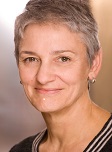
Rebecca Lawton’s work has been published in Orion, THEMA, the San Francisco Chronicle Magazine, Shenandoah, Sierra, More, and other magazines. Her essay collection about the guiding life, Reading Water: Lessons from the River, was a San Francisco Chronicle Bay Area Bestseller and ForeWord Nature Book of the Year finalist.
With her agent, Sally van Haitsma, Rebecca published a debut novel, Junction, Utah. Her collaboration with photographer Geoff Fricker, Sacrament: Homage to a River, is just out from Heyday, and her first short story collection, Steelies and Other Endangered Species (Little Curlew), is due out in June. Her literary honors include the Ellen Meloy Fund Award for Desert Writers and three Pushcart Prize nominations—in fiction, poetry, and nonfiction—and residencies at Hedgebrook and The Island Institute. In fall 2014, she will be working on her second novel while serving as Fulbright Visiting Research Chair in Humanities, Social Sciences, and Fine Arts at the University of Alberta.
For up-to-the-century news, visit Rebecca at the below links or send her email at becca (at) beccalawton (dot) com to receive her monthly writer’s postcard.
Lots of ways to connect with Rebecca Lawton:
Website
Blog
Twitter
Facebook
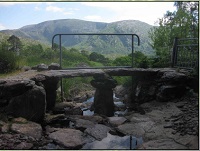 Old bridge meets new. Photo by Jim C. March.