“Show” Using Dialogue . . . Prompt #271

  • “Show” Using Dialogue . . . Prompt #271

    Today’s writing prompts are about “showing” through dialogue.

    Show what characters are thinking, show their personalities, their quirks, move the story forward through dialogue.

    Remember, with freewrites, the writing is spontaneous. There is no crossing out.  This could be called “practice writing,” as Natalie Goldberg says.

    With dialogue we can show character, scene and drama.

    Use these prompts for practice writing. Respond as your fictional characters would respond.

    Or, respond in the first person, “I,” with yourself as the primary character . . . You playing the character of you.

    Prompt: Write a scene, where two characters talk about what they are afraid of.

    Prompt: Same or different characters. One confesses “I’ve lied about . .  .”

    Prompt: Same or different characters: “I wish I would not have . . . ”

    Taylor. Cat On a Hot Tin RoofYou can have a turning point – where the drama takes an unexpected turn, excitement mounting.

    Throw is some twists, turns, surprises. After all, people are surprising, aren’t they? You expect one thing and something else pops up.

    Use this writing for fun . . . “What would happen if. . . ”

    Use this writing to understand what happened in your life.

    Just write!

    Elizabeth Taylor and Paul Newman in Cat On A Hot Tin Roof.

  • Just when the caterpillar thought her life was over . . . Prompt #270

    Monarch butterfly Just when the caterpillar thought her life was over, she began to fly.

    If you have been following the prompts on The Write Spot Blog, you know what to do.

    If you are new to freewriting: set your timer for 15-20 minutes and just start writing. Write whatever comes up for you. Shush your inner critic, invite your internal editor to sit outside the room. This is your time to write freely and openly. Just as the caterpillar’s cocoon morphs into a butterfly, let your writing become whatever it wants to be. Just write.

  • Does your heart hurt? Prompt #269

    Broken heartDoes your heart hurt?

    I’ve been hearing “My heart hurts” from  several friends these past few days. And when I hear their stories, my heart hurts, also.

    What to do?

    I believe in healing through writing. So, let’s write.

    Write about: Does your heart hurt?   Write all the details you can about this.

    What happened?  Write all the details that you know. If you were directly involved: Be as detailed and as explicit as you can.

    When did it happen?  Day of week? Time of day? Where did it happen? Who was involved?

    What were you wearing? Were you standing or sitting?

    If you weren’t directly involved: Write as many details as you know. Then, focus on why you are affected. What connects you to what happened? Why are you affected so strongly?

    Read the next part after you have written about why your heart hurts and how and why you are affected.

    Okay, I know, if you are like me, you will read the whole thing now and write later. That’s fine. Go ahead and read the next part.

    Louise De Salvo, Writing As A Way of Healing, says by writing our stories fully, we can begin to understand what was formerly unclear.   By writing, we can understand what we didn’t previously understand. What we’re writing is called a narrative.

    In order to come away with this as a learning experience and with a good feeling, we need to make this writing a healing narrative.

    A healing narrative is a balanced narrative.

    This type of narrative uses negative words to describe emotions and feelings …. Probably what we just did in our writing about a hurting heart. A healing narrative also uses positive words.

    Take a minute now to rethink your experience that you just wrote about and see if you can find something positive and hopeful about your encounter.

    Even if your event was traumatic and extremely unpleasant, is there anything positive you can add to your narrative?

    Write: Take a few minutes to write about something good — anything — that came from that experience.

    For example, after writing about my difficult situation, I realized I was right to pay attention to my intuition.

    How are you feeling now? Take a few minutes to jot down what you are feeling now.

    Go ahead. Write down your feelings. Even if you didn’t write on the prompt. . . take a few minutes to jot down your feelings. Later, when you write on the prompt, compare your feelings then with now.

    You can use writing to shift your perspective. Sometimes you can’t change the situation that’s causing you pain. You can change how you look at it.

    The key is to write about events and the emotions surrounding those events.

    James Pennebaker describes this in his book, Opening Up.  Healing starts when you write about what happened and how you felt about it then, and how you feel about it now.

    And in order for our writing to be a healing experience, we need to honor our pain, loss and grief.

    As we write, we can become observers. It is not what you write, or what you produce that is important. It is what happens to you while you are writing that is important.

    So, that’s why we write . . . to understand ourselves, our emotions and our world.

    Please, if you are feeling completely overwhelmed, seek professional help.

    For more details on how to write about difficult topics: please click on How to write without adding trauma.

  • You have survived. Prompt #267

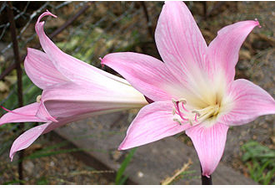
    Pink LadiesThe pink ladies are about to bloom in Northern California where I live. Their proper name is Amaryllis belladonna.

    “A plant gone wild and therefore become
    rugged, indestructible, indomitable, in short: tough, resilient,
    like anyone or thing has to be in order to survive.”   —  The Ubiquitous Day Lily of July by David Budbill


    This last sentence in The Ubiquitous Day Lily of July reminds me of our pink ladies and is the inspiration for today’s writing prompt.

    Write about something you have survived.

  • Something you will never forget . . . Prompt #266

    Today’s prompt is inspired by Hal Zina Bennett, Write From The Heart

    Pink lemonadeFor some people, summer means sipping cool drinks. For others, summer might mean sitting around a campfire after a day of hiking, swimming, exploring. Summer might mean telling stories —tall tales or short ones— while lounging on a porch, a patio or a boat deck. There is a rhythm to summer, unlike any other time of year.

    Summer ’round the campfire brings out story tellers. The shaman storyteller of ancient times, embraces his own life experience, tells stories to the community that gathers in a circle around him, a fire blazing at its center. In the telling of what most deeply touched his life, the shaman helps others to see that they are not alone. And in the process both storyteller and listeners are healed.

    Imagine now, that you are sitting ’round a campfire, very comfortable with the folks you are sitting with. It’s story telling time. Each person tells a story about a time that was so meaningful, it is something they’ll never forget.

    Prompt: Write about something you will never forget.   Remember: first thoughts are where the energy is. If you can, start writing where your first thoughts take you. If that becomes difficult, write about another time, another story. And when you are finished writing, please take a few minutes to do some clearing (described below).

    Right after writing: Take a deep breath in. Hold for a moment. Let it out. Shake out your hands. Another deep breath in. Let it out.

    Again: A deep cleansing breathe in. Hold and release.

    If you wrote about something that leaves you feeling wonderful, keep it. Hold it close to your chest.

    If you wrote about something that leaves you feeling uncomfortable . . .  release it. Gather your thoughts and your words. Send them up in the campfire smoke. Send those thoughts up with the smoke.

    We’re going to replace the space that those thoughts occupied with an image that comforts you.

    Choose an image that is comforting to you. Any image you like, as long as it soothes. Give it a color.

    Fill the space in your heart with this image and the color.

    Take a deep breath in. Hold for a moment. Let it out. Stretch. Another deep breath in. Hold and release. Congratulate yourself. Even if you didn’t write, you may have thought about what you could have written. Maybe, when you have time, you will write on this topic: Something you will never forget.

  • Note to your younger self . . . Prompt #265

    Before you start writing on this prompt, how about a little relaxation?

    Sit back. Relax into your chair. Both feet flat on the floor. Hands resting lightly.  Take a deep breath in. Relax it out. Roll your shoulders in a circle.  Other direction.  Drop your chin to your chest and roll your head in a circle. Other direction.

    Take a deep breath in. Ease it on out.

    Now, We’re going to time travel back in years.

    Time Machine

    Think back to the person you were ten years ago. See yourself as in a snapshot.

    Now go back to when you were 25. Remember what you looked like. What were you doing? Just take a moment to remember yourself at 25.

    Hand writing in journalNow go back to when you were twenty.

    Take a look at yourself when you were 15.  What were you like at 15? What influenced you?

    When you’re ready, write a note to your younger self.

  • Antique inspires transportive writing . . . Prompt #257

    Singer Sewing MachineChoose an old object from your home. If you don’t have one, find a picture of an antique.

    Imagine that when you touch the object, you are transported to its original time and place.

    Where are you? What happens? How do you interact with the object? What emotions does the object evoke?

    Prompt inspired from Rochelle Melander, excerpt in The Writer Magazine, February 2012

  • Glimpse through the fog. Prompt #256

    FogWriting Prompt:  Glimpse through the fog.

    Set your timer for 15-20 minutes. Write whatever comes up. Keep writing until the timer rings, or until the fog lifts.  Yeah, that might take awhile.

  • Know your characters intimately. Prompt #255

    renoir-dancing-150x150How to flesh out fictional characters . . . Give them depth . . . Get to know them intimately.

    Let’s say your fictional character has just received devastating news such as a job loss, death of a family member or close friend.

    How does he react?

    What are her immediate thoughts?

    What actions does he take next?

    Imagine your fictional character had an epiphany about a betrayal, a loss, an old grievance. . . something new has been revealed. What does he or she do?

    Take a few minutes to write about the purpose this character serves in the story.

    Ready?  Just write!

  • No one knows . . . Prompt #254

    ledger.ink wellToday’s prompt:  No one knows. . .

    You can write from real experience, or respond as your fictional character would respond.

    No one knows . . .