An apology. . . Prompt #197

  • An apology. . . Prompt #197

    Who do you want — or need — to apologize to?

    Or maybe it’s a “thing” you need — or want — to apologize about.

    Write an apology note, something you never need to send nor give to anyone.

    Write it for yourself, to cleanse your palate, to lift the burden from your shoulders, to start from a new beginning.

    I'm sorry red heartPrompt: Write a note of apology.


  • Something borrowed or loaned. Prompt #196

    Write about something you have borrowed or loaned.

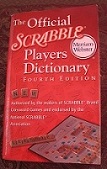
                        bicycle wooden mallet                        Scrabble Dictionary

    Photos of bicycle and mallet by Jeff Cullen. (Click on Jeff Cullen to see his Fotolio photos)

  • Winner! Winner! Chicken Dinner. Prompt #195

    AwardWriting Prompt: Tell about an award or a prize you won.

    You can write about what really happened, or write as if your fictional character won a prize.

  • How to flesh out villains.

    Do you have a villain in your story? Is this scoundrel executing gruesome acts? Is it hard for you to get into the head and heart of the “bad guy?” Does he or she have a heart?

    Here’s an idea about how to flesh out your baddie. . . so that he/she is someone you can live with for the duration of your writing.

    Do a freewrite. The antagonist was once a child. What were his/her passions as a teenager? What games did they play as children? What delighted this child? Write about his/her first car.

    Choose a prompt and write as if you were answering from the villain’s point of view. Imagine you are a neighbor or a relative of the undesirable person. Write about the mean person from someone else’s point of view.

    What is the turning point, or the chain of events that changed this innocent toddler into a dreadful creature?

    Probably not much of this brainstorm writing will make it into the final cut, but it will help you understand this despicable creature and make him/her come alive.

    Remember: There usually is a wicked character in stories. . . that’s what gives stories their heft, their meatiness.

    An example is Anna Quindlen’s “Every Last One.” We meet an individual who is charming, likable . . .lovable. Then an event changes everything and everyone. Use a book of your choice as your textbook. Study how the author developed the character of the “bad” guy.

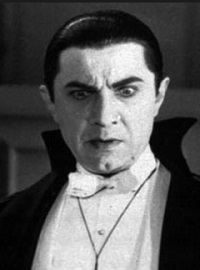
    Count DraculaNo one was born bad. How did they get that way? You are the puppet master . . . create and control your characters, even the evil ones. Just write!


  • The Zipper . . . Prompt #193

    “When we seek closure, we reach out to the zipper. it keeps us warm, prevents things from falling out of purses and lets us cram way too much into our suitcases. When it gets stuck, so do we. Without it, life would be filled with the endless ennui of buttoning and snapping.” — Helen Anders

    Today’s writing prompt:  ZipperZip it

  • Vary sentence structure

    Have you heard about varying length of sentences?

    Here’s what Mary Gordon says about that:

    “One of the things that I try to do is to have a paragraph that begins and ends with a sentence of approximately the same length and verbal structure. . . . in the middle, the sentences tend to be longer and more complex.

    It allows for a kind of velocity to happen . . . A shorter sentence you actually have to read more slowly . . . If you are a writer, you have more power than the greatest tyrant in the world because of punctuation. You get to tell people how to breathe . . . a sentence that has very little punctuation, you actually have to read more slowly because you’re not stopping to breathe. So it’s a slowing down and then a kind of build up – a crescendo and then a decrescendo . . . ”

    Excerpt from The Liar’s Wife by Mary Gordon:

    “The late sun sparkles on the river. She has not given up the habit of trying to find the right words for the color of the sky. Pearl grey, she thinks, and then changes from pearl to oyster, the inside of an oyster shell. And all at once, there is something like a rip in the matte greyness, and light pours through, as if someone had slit a great cloth bag of sugar, and the sugar had spilt out. Only one tree is singled out by the light, and that one called a maple sugar. It amuses her to say to herself, ‘the sugar light falls on the sugar maple,’ and then she wonders if she thought of sugar because of rationing. She believes that she spends an inordinate amount of time thinking about the food she can’t have. She has been told the sacrifice is honorable, and she believes it, and is glad to do it. Only sometimes she yearns, ashamed, for the taste of sugar.

    Mlle Weil says: ‘the tree looks like a torch thrown down by an angel.’

    Once more, in relation to Mlle Weil, Genevieve finds herself abashed and she feels she must accuse herself. She is thinking of angels and I of sugar.”

    From an interview by Alicia Anstead, The Writer, September 2015

     Gordon.Liar's WifeNote from Marlene: I love how Genevieve struggles to find the right word for the color of sky. I ponder the perfect description for stars in the dark sky. I’ve heard “diamonds spilled from a velvet pouch.” I love that. Wish I had thought of it.

    However you parse your words. . . Just write!


  • First car . . . Prompt #190

    Write about your first car, someone else’s first car, or your fictional character’s first car.

    You can use this as a way to get to know your fictional character better. You probably won’t use this information in your fiction, but you might!

    Pedal carWrite about a first car. See where it takes you.

  • What are you angry about? Prompt #189

    Prompt #1: What are you angry about? Mad about? Annoyed about?

    ArgueComplain! Go ahead and vent. Spit it out.

    You can answer from your experience, or from your fictional character’s point of view.


    Prompt #2: Regarding Prompt #1, is there anything you can do about it?

    Hope & MiraclesIf yes, write possible solutions, compromises, ideas, brainstorm.

    If not, let it go. Write about how you can release it, breathe it away, banish it, whisk it away.

    How can you let go of your fears, worries, annoyances? How can you just let go?

  • Sensory Detail – Taste

    When writing simmers with sensory detail, readers digest the story and perhaps, are satiated with emotionally charged memories.

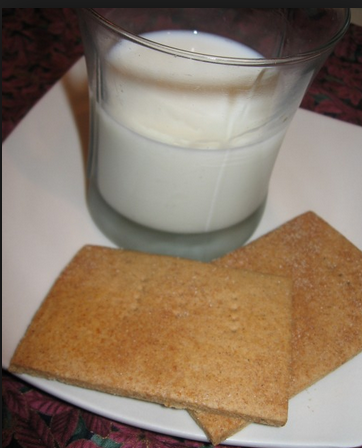
    Do you remember dipping graham crackers in milk and eating it quickly before it broke off and became a soggy mess? You might use something like this in a scene where the hero/heroine has just been dumped by a boyfriend/girlfriend.

    Perhaps your character can’t make decisions. Employ a scene where he taste tests while walking a buffet line; a bite here, a nibble there, unable to settle on a nourishing decision.

    Employ sensory detail to involve readers in the story’s emotional ingredients.

    Match emotions with taste receptors:

    Bitter: She recoiled and didn’t know whether it was from her bitter coffee or his abrupt, “We’re done.”

    Salty: “The oysters were so fresh they tasted like my tears. I closed my eyes to feel the sensation of the sea.” — Laura Fraser, “Food for the Heart,” Eating Well Magazine   Jan/Feb 2007

    Sweet: She lifted the chocolate to her mouth, gazing at the young man across the room. She held him captive and slowly savored the chocolate.

    Sour: “Lemon with your squid?” She pinched her nose, “No, thank you.”

    Umami: Their classroom integrated a variety of cultures, much as umami unites disparate flavors.

    Match emotions with taste:

    Ebullient, getting away with murder:

    ” . . . the fat Georgia man told Big George that it was the best barbecue he had ever eaten, and asked him what his secret was.

    Big George smiled and said, ‘Thank you, suh, I’d hafto say the secret’s in the sauce.’” —Fried Green Tomatoes at the Whistle Stop Cafe, Fannie Flagg

    Emotionally charged:

    “She reached for a cherry tomato and popped it into her mouth. The juices exploded on her tongue. Carly wanted her attention? I’d give her anything she wants.” — A Wedding in Provence, Ellen Sussman

    Hopeful, positive, upbeat:

    “Taste this . . . I swallowed. She had fed me a fluffy cloud, no more than pure texture, but as it evaporated it left a trail of flavor in its wake . . . That’s an amazing combination. The saffron’s brilliant—it gives it such a sunny flavor.” —Delicious! Ruth Reichl

    Comparing food with nature:

    “Moving constantly, she caressed the chocolate like a lover, folding it over and over on a slab of white marble, working it to get the texture right. She stopped to feed me a chocolate sprinkled with salt, which had the fierce flavor of the ocean . . . One chocolate tasted like rain, another of the desert.”—Delicious! Ruth Reichl

    “That’s the spring cheese. . . When I put the cheese in my mouth it was richer, and if I let it linger on my tongue I could taste the lush fields of late summer, just as the light begins to die.” —Delicious! Ruth Reichl

    Taste and texture detail:

    “It was accompanied by lamb cutlets, which Cuneo had passed three times over the open flame, and a snow-white, melt-in-the-mouth garlic flan.” —The Little Paris Bookshop by Nina George

    In previous posts we talked about sensory detail using sight, sound, smell and kinesthetic.

    Taste and memory: Proust’s Remembrance of Things Past:

    “I raised to my lips a spoonful of the tea in which I had soaked a morsel of the cake. No sooner had the warm liquid mixed with the crumbs touched my palate than a shudder ran through me and I stopped, intent upon the extraordinary thing that was happening to me. An exquisite pleasure had invaded my senses, something isolated, detached, with no suggestion of its origin. And at once the vicissitudes of life had become indifferent to me, its disasters innocuous, its brevity illusory – this new sensation having had on me the effect which love has of filling me with a precious essence; or rather this essence was not in me it was me. I had ceased now to feel mediocre, contingent, mortal. Whence could it have come to me, this all-powerful joy? I sensed that it was connected with the taste of the tea and the cake, but that it infinitely transcended those savours, could, no, indeed, be of the same nature. Whence did it come? What did it mean? How could I seize and apprehend it?

    I drink a second mouthful, in which I find nothing more than in the first, then a third, which gives me rather less than the second. It is time to stop; the potion is losing it magic. It is plain that the truth I am seeking lies not in the cup but in myself.” Remembrance of Things Past, Proust
    Graham crackers and milkClick on Prompts, try a freewrite, using sensory detail.  Just Write!



  • Growing up . . . Prompt #188

    Start writing with this phrase:  “Growing up” . . .  and then, just start writing!

    Today’s writing prompt:  Growing up . . .

          Baby feet.small                   Baby feet.medium                        Baby feet.big