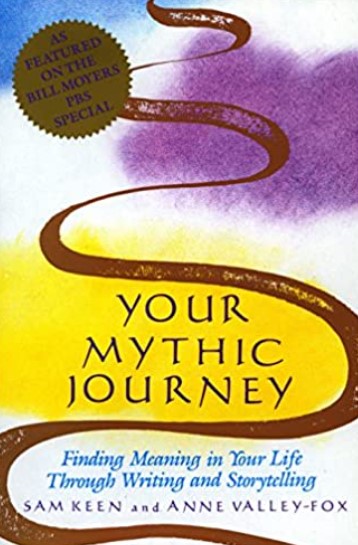
What if we could change the past? According to Sam Keen and Anne Valley-Fox, in “Your Mythic Journey,” we can change the past simply by retelling it differently than we usually do.
“The past is open to revision because memory is a function of present intention. You can turn your story over (and over) and find new perspectives on past events and emotions.” —Sam Keen
Think about some stories you have told over and over again. It could be a little thing or a big thing. It could be something that happened a long time ago, or recently. It can be repetitive thoughts you have.
Choose one story or one repetitive thought.
In your mind, “see” that story you have been telling and re-telling.
Pause, while you choose a story.
See this scene as if you are looking at a wide screen. You can see everything in this scene.
Where are you?
Who is in this scene?
Are you hot or cold or can’t feel a thing?
What is the dominant emotion?
Where do you feel this emotion in your body?
Take a deep breath.
What do you smell?
Scan the entire scene, from left to right, top to bottom
Now, drill down, zero in on one aspect of this scene. It could be a button on someone’s coat, or something someone is holding, or food someone is fixing.
Or someone’s shoes, or an every day useful item.
Prompt: I see . . .
Or: I know . .
Or: I think . . .
Or: I remember . . .
Please practice self-care when writing about difficult topics:
“This book is exemplary in its voice and writing style. It has a unique voice, and the writing style is consistent throughout. The style and tone are also consistent with or will appeal to readers of a variety of genres. Because this is a collection of different voices, the styles and rhythms are unique to each author. Yet they all flow beautifully, conveying their message succinctly and engagingly.”
Note from Marlene: Why yes, I do find prompts in unusual and intriguing places!
“Between stimulus and response there is a space. In that space is our power to choose our response. In our response lies our growth and our freedom.” Viktor Frankl
Prompt: Write about the space between stimulus and response.
Write about a time you recognized it – or you didn’t – and how that impacted your life.
OR: Explore the word or the concept of liminal:
Liminal specifically means relating to the point (or threshold) beyond which a sensation becomes too faint to be experienced.
Liminal: Related to or situated at a sensory threshold; barely perceptible or capable of eliciting a response, things that exist at the threshold (or border) between one thing and another.
Examples of liminal:
The liminal stage is the middle stage, the in-between period during which a person has not yet fully reached their new status in whatever rite of passage they are going through.
~ Being “the new kid” at school before being fully incorporated into a new group of friends.
~ After graduation, before being fully established in a workplace.
~ After retirement . . .
To be in a liminal space means to be on the precipice of something new but not quite there yet. You can be in a liminal space physically, emotionally, or metaphorically.
A liminal state of mind
A period of transition where normal limits to thought, self-understanding, and behavior are relaxed — a situation which can lead to new perspectives.
Prompt: Write about a liminal space.
“Burgeoning” by Su Shafer shows a unique spin using this prompt.
The idea of using prompts is to inspire writing in a freeform style.
There are no rules, except to write without too much thinking.
Let your thoughts flow and capture them in writing.
Give your inner critic time off during this writing.
The challenge of freewriting is getting Self out of the way.
With freewrites, you are writing for yourself, not for an audience.
Give yourself permission to be open to whatever comes up while you are writing.
Writing Prompt: How do you handle adversity?
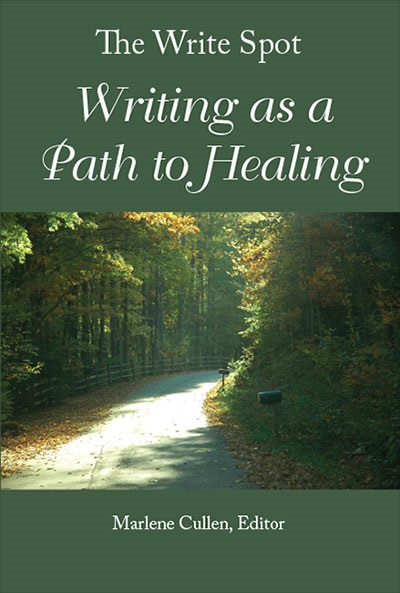
There are several prompts, ideas about freewrites, and resources about how to write without adding trauma in “The Write Spot: Writing as a Path to Healing,” available from your local bookseller and as both print books and ebooks on Amazon.
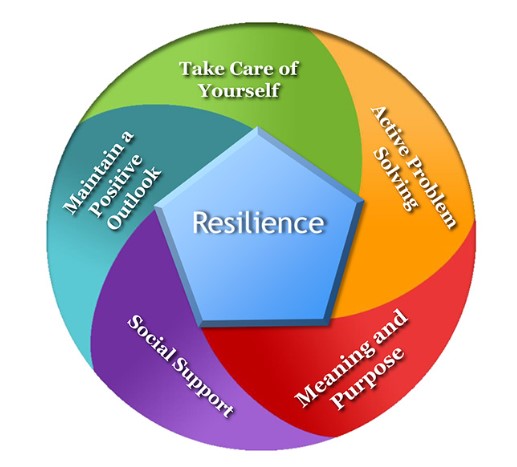
“Resilience is the ability to scrape yourself off the floor relatively quickly after a giant trauma, medium-size setback or everyday disappointment.
Resilience is a set of coping mechanisms we develop over time. This quality is determined by how we take care of ourselves, the people we surround ourselves with and what we do to find meaning and purpose in our lives.”
— “How to Bounce Back From Anything,” by Elaine Chin, M.D. and William Howatt, PH.D, Good Housekeeping magazine, July 2018
Writing Prompts
How do you define resiliency?
What are your coping mechanisms?
What do you do to take care of yourself?
Is there someone in your life who hinders your ability to be resilient?