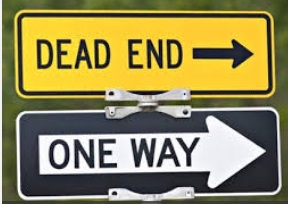
 Today’s Writing Prompt:
Dead End
OR:
One Way
Today’s Writing Prompt:
 This has been Rachael Herron Week on The Write Spot Blog. It’s been fun highlighting her and her work.
Today’s writing prompt is inspired by her latest book, The Ones Who Matter Most.
“What begins as one woman’s search for truth becomes a deep bond forged between the unlikeliest of people. Their surprising journey reveals how strangers can quickly find themselves to be family, and how kindness can bridge even the widest of gaps.”
Choose something from this synopsis, or elevator pitch, to write about. Perhaps:
Write about a kindness offered to you, or something kind you did for someone.
Or, write about a surprising journey.
Or, write about a stranger.
Write about what a search revealed.
Write about family.
Note: An “elevator pitch” is a short summary of a book or project that can be explained in the time it takes an elevator to go from ground floor to the 30th floor.
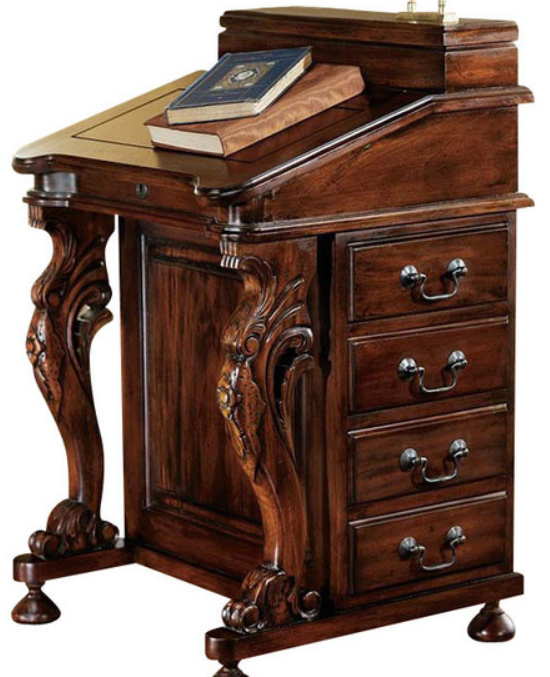 Write about something surprising found in a desk drawer.
Today’s writing prompt is inspired by the catalyst for Rachael Herron‘s latest book, The Ones Who Matter Most. A secret in a rolltop desk drawer leads a woman on a search that changes her life and the lives of another family.
“What begins as one woman’s search for truth becomes a deep bond forged between the unlikeliest of people, and the discovery that there are many ways to make a family—as long as you take care. . . ”
— quote from the back cover of The Ones Who Matter Most.
I met a new friend recently. As we emailed back and forth, I felt as though it was destined for our paths to cross. So far, ours is an internet relationship. No, we didn’t hook up via Match.com. Rather, I found Author, Blogger and Ghostwriter, Holly Robinson, while researching another author.
Today’s writing prompt is inspired by the glorious feeling of making a new friend.
Writing Prompt: Write about making a new friend.
Or, write about someone you have known for awhile. A friend you can call night or day. A friendship that is as comfortable as a pair of soft jeans. Someone who has been with you through thick and thin.
Write about your new, or old, friend.
Make new friends, but keep the old. One is silver and the other is gold.
 And now, I’d like you to meet my new friend, because her writing journey might encourage you to keep writing.
Holly Robinson’s Unofficial Biography
I never meant to be a writer. I studied biology in college because I either wanted to be a veterinarian or a doctor – preferably one of those doctors who’s always jetting off to villages in Africa or Tibet to save thousands of lives while wearing one of those khaki vests that’s mostly pockets. But life intervened during my last semester of college, when I had to take one more elective and I chose a class in creative writing with a professor who started out by telling us that writers are born, not made.
I believed him. I was sure that I couldn’t have been born to be a writer, because I’d never imagined myself as one. In fact, I had never even met a writer. The only thing I knew about most famous writers was that they were unhappy, drank themselves into oblivion and eventually stuck their heads in ovens, shot themselves, or got run over by streetcars. Who would want to be a writer, if that’s what happened to you?
Yet, from the moment I sat down to write, I became completely absorbed in my work. Unlike my clock-watching sessions trying to learn physiology or organic chemistry, whenever I was writing seven hours could pass like seven minutes. To the horror of my parents, I abandoned the idea of medical school. I promised them that, if I didn’t get to be rich or famous (preferably both) in one year, I would let common sense rule and find a real career, something that required an advanced degree and letters after my name. Something with a steady paycheck.
Of course, none of that happened. A year went by. Two. Three. As I became even more engrossed in the writing process, I did what all writers do to support my secret habit: I worked a thousand odd jobs, from proofreading telephone books (really) to construction. Along the way I earned an MFA in creative writing at the University of Massachusetts in Amherst. Some of my classmates there were talented, even brilliant writers, but not all of them became successful. In fact, as I look back on it now, I realize that the most successful writers to emerge from my program were the ones who were scarcely noticed at the time. They weren’t necessarily the flashy ones at parties or the award winners. They certainly weren’t the ones who sat around in pubs chatting about the cabins they would build in the woods with the advances from their first novels. No, the success stories were the hard workers, the writers who spent a lot of time alone, churning out rewrites and new pages every week.
After finishing my MFA, I meandered into journalism, marketing, and teaching jobs. Most were enjoyable, but none were as deeply satisfying as writing on my own. I kept at it, filling up the corners of my life and lots of paper with words and more words. Every now and then I sent something out and got rejected.
I got married, had children, got divorced, got remarried, had another child. I worked, too. All of that took time. A lot of time. Still, I kept writing: at night after the kids were asleep, on weekends at the playground while my kids were eating sand. Years slipped by with nothing published other than a couple of literary stories and a few newspaper articles, but I was happy. Writing for me had become an escape, not away from my life, but into myself, in a life where family responsibilities and work deadlines tried to jimmy themselves into every free minute.
And then a funny thing happened: as I navigated the strange process of getting divorced and getting married again, all while trying to stay friends with my ex-husband, I read an essay by Joyce Maynard in Redbook magazine about being a single mom. And I thought: Hey. I’d like to write something like that. So I did, in response to a literary contest.
To my surprise, I won an award in the contest. This gave me the courage to pluck the name of an editor off the masthead of Ladies’ Home Journal magazine — something the writers’ guides tell you never to do – and send it to her. The editor bought it.
Note from Marlene: A similar thing happened to me. Won a writing contest, which inspired me to continue writing. You can read the rest of Holly’ story here.
To sum up:
Your [writing] success will be determined not by some miracle of genetic inheritance, but by your own persistence. We each find our own paths. Believe in yourself and put in the hours. The rest will follow.
Today’s writing prompt: What did you expect?
Don’t think about it. Write about it.
As soon as you can, write your response, your first reaction to What did you expect?
If you have been writing for awhile, you might notice that you keep writing about the same things over and over again: how Aunt Luella always sticks her nose in everybody’s business; how Uncle Ray tells those awful jokes and doesn’t seem to notice that no one laughs; how Nonna’s getting on everybody’s nerves, should Aunt Silvie be put in assisted living and what the heck is up with Joey’s latest tattoo?
 We all have our stable of characters that we dwell about incessantly. Here’s an opportunity to look at old things in new ways. Inspired by the poem, The visible and the in- by Marge Piercy
Read the stanza below (or the partial stanza), then quickly make a list of everybody this reminds you of. No prolonged thinking. You can always add names later.
Ready? Go!
First stanza of The visible and the in-:
Some people move through your life
like the perfume of peonies, heavy
and sensual and lingering.
This reminds me of:
Some people move through your life
like the sweet musky scent of cosmos
so delicate if you sniff twice, it’s gone.
This reminds me of:
Some people occupy your life
like moving men who cart off
couches, pianos and break dishes.
This reminds me of:
Some people touch you so lightly you
are not sure it happened.
This reminds me of:
Others leave
you flat with footprints on your chest.
This reminds me of:
Some are like those fall warblers
you can’t tell from each other even
though you search Petersen’s.
This reminds me of:
Some come down hard on you like
a striking falcon and the scars remain
and you are forever wary of the sky.
This reminds me of:
We all are waiting rooms at bus
stations where hundreds have passed
through unnoticed and others
have almost burned us down
This reminds me of:
and others have left us clean and new
and others have just moved in.
This reminds me of:
That’s it. You can leave this as-is. Or the next time you write about Sophie and how she stole your lipstick in seventh grade. . . use some of these descriptions to expand upon her character, to draw out this experience with specific detail.
Of course this will work for fictional characters, also.
Have fun with this. Recreate the characters (real and imagined) who populate your real estate.
Today’s prompt is inspired by Poet Georgia Heard, who suggests the following as a way to create a poem from the inside out.
Choose something on your body: a strand of hair, a nail, a ring, glasses, a belt, a necklace, an item of clothing, a freckle . . . anything!
Take your time with this. Read what you have written. Add anything that comes up while reading.
Take a few moments to reflect. Settle in with what you have written. When you feel done with this part, go on to the next, the poetry part.
You don’t have to rhyme, or follow any rules when writing your poem. You simply need images and inspiration and emotions. Anger, pain and bursts of joy are perfect material for poetry.
Do not strive for perfection. This is still the freewrite phase of writing.
When you are done and completely satisfied, then . . . set your writing aside for a day or two.
Come back to it when you are ready to revise and polish. Then set it free: Share with a friend, submit to a journal, post on The Write Spot Blog. We would love to read your inside out poem.

Girl with watering can and daisy, beaded pin by J. Pierce.
Have you heard of imagist poetry?
“Imagism called for a return to what were seen as more Classical values, such as directness of presentation and economy of language, as well as a willingness to experiment with non-traditional verse forms. Imagists use free verse.” Wikipedia
The Red Wheelbarrow, by William Carlos Williams (1883 – 1963) is an example of an imagist poem.
so much depends
upon
a red wheel
barrow
glazed with rain
water
beside the white
chickens.
There have been many discussions and theories about this simple little poem. Was it meant to be simple, or is there hidden meaning, plumbing the depths of our sub-conscious?
“I was fumbling around, looking for a way to make sense of my life, and seized on William Carlos Williams’s poems . . . His poems were experimental yet safe—a combo I craved in my extra-dark teenage years.” Craig Morgan Teicher, Poetry Foundation
One teacher describes imagist poems as “use of exact words, avoid clichés, create new rhythms, freedom of subject choice, presents an image, is tight/distilled/concentrated, and uses suggestion rather than stating things directly.” This teacher said, “Post WWI, people lost a lot of hope in religion and Williams was commenting on this. ”
The teacher elaborated:
“So much depends
The use of 3 words in the beginning is a reference to the holy trinity.
a red wheel
barrow
The second stanza: barrow is separated from wheel. “Barrow” is a large mound of stones, which symbolize Christ’s burial. “Red” represents the blood of Christ.”
The teacher continues: “A wheelbarrow is used for hauling things, much like Christ carried mankind’s burden on himself. There’s transmogrification happening (unusual transformation). The wheelbarrow becomes Christ, the rain water symbolizes Holy water, and the white chickens represents angels.”
Or, as another teacher said, “Williams, a country doctor, had been up all night with a sick child. He may have looked out the farm house window and saw this scene.”
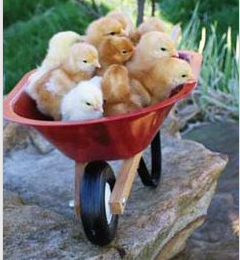 What do you think? Is The Red Wheelbarrow full of hidden meaning, or is it a simple American haiku?
Today’s Writing Prompt: Write an imagist poem. Use any or all of these words: tricycle, put, truly, blue, roll, next, afraid, upon, shape.
 heavy linger delicate
 First lines from books can be sparks for freewrites.
Read the sentence and then write whatever pops into your mind. Don’t over think it. Go with the flow and just write.
Here are a few for you to play around with.
“Some time ago, when I was 6 or 7 or 8 years old, it would occasionally happen that I’d walk into a room and certain people would begin to cry.” The Lost by Daniel Mendelsohn
“The phone rang.” Booked by Die by John Dunning
“Footsteps on the forest floor made a noise like paper crumpling in a child’s fist.” The Half-Life by Jonathan Raymond