Blog

  • Describe colorful character using similes and metaphors. Prompt #362

    Write about a colorful character using similes and metaphors.

    Simile – a figure of speech in which two essentially unlike things are compared, often using like or as, as in “eyes like stars.”

    Metaphor – A figure of speech in which a word or phrase that ordinarily designates one thing is used to designate another; thus making an implicit comparison, as in the evening of life.

    Metaphors are comparisons that show how two things that are not alike in most ways are similar in one important way. Metaphors are a way to describe something. Authors use them to make their writing more interesting or entertaining.

    Unlike similes that use the words “as” or “like” to make a comparison, metaphors state that something is something else.

     Brian was a wall, bouncing every tennis ball back over the net.

    We would have had more pizza to eat if Tammy hadn’t been such a hog.

     Cindy was such a mule. We couldn’t get her to change her mind.

    The poor rat didn’t have a chance. Our old cat, a bolt of lightning, caught his prey.

    Even a child could carry my dog, Dogface, around for hours. He’s such a feather.

    —English Basics, Volume 3, Number 26, March 29, 1999, www.rhlschool.com


  • Stephen Hawking inspires.

    “Remember to look up at the stars and not down at your feet. Try to make sense of what you see and about what makes the universe exist. Be curious. And however difficult life may seem, there is always something you can do, and succeed at. It matters that you don’t just give up.”—Stephen Hawking

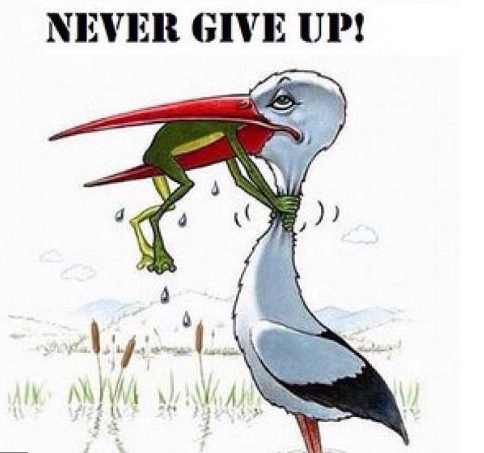
    “Don’t ever give up.”

    That’s the message here on The Write Spot Blog.

    Just Write. And keep writing.

  • I never planned to . . . Prompt #360

    Today’s prompt:

    I never planned to  . . .

  • National Day of . . . Prompt #361

    Imagine a conversation between two people of different backgrounds talking about March 13, National Day of . . .

    Explain National Day [choose one from the list below] as if these two people were talking in person, over the phone, or via emails. They could be friends. Or perhaps they have never met in person.

    Look for the twist in red below.

    National Elephant Day – Thailand

    Coconut Torte Day – Australia

    National Good Samaritan Day – United States. A day for unselfish actions to help those in need and to celebrate kindness.

    National Earmuff Day – United States, in honor of the 1873 invention of earmuffs. At the age of fifteen, Chester Greenwood of Farmington, Maine was credited for inventing the winter wear out of necessity—his ears were cold.

    National K9 Veterans Day – United States

    A lot of things changed after the bombing of Pearl Harbor in 1941. Oil, leather and rubber were rationed. Men were drafted. Women rolled up their sleeves and built war supplies. And dogs were called to duty. During the first World War, the United States took notice of the European use of canines as sentries, message carriers and several other functions.

    National Open an Umbrella Indoors Day There is a superstition that opening umbrellas indoors will bring bad luck. National Open an Umbrella Indoors Day encourages you to do just that and note if you have any bad luck.

    Here’s the twist:  Use foreign phrases in your writing, such as:

    Amber fluid = beer

    Ankle biter = small child

    Bikkie = biscuit (also “it cost big bikkies” – it was expensive)

    Billy = teapot

    Bonnet = car hood

    Boot = car trunk

    Brolly = umbrella

    Cooker = stove

    Drink with the flies = to drink alone

    Dummy = pacifier

    Holiday = vacation

    Jumper = sweater

    Lift = elevator

    Mobile = cell phone

    Nappy = diaper

    Nick = steal

    Ring = call

    Rubber = eraser

    Tap = faucet

    Trainers = sneakers

    Ready! Set! Just Write!

  • Childhood ritual when you were sick. Prompt #359


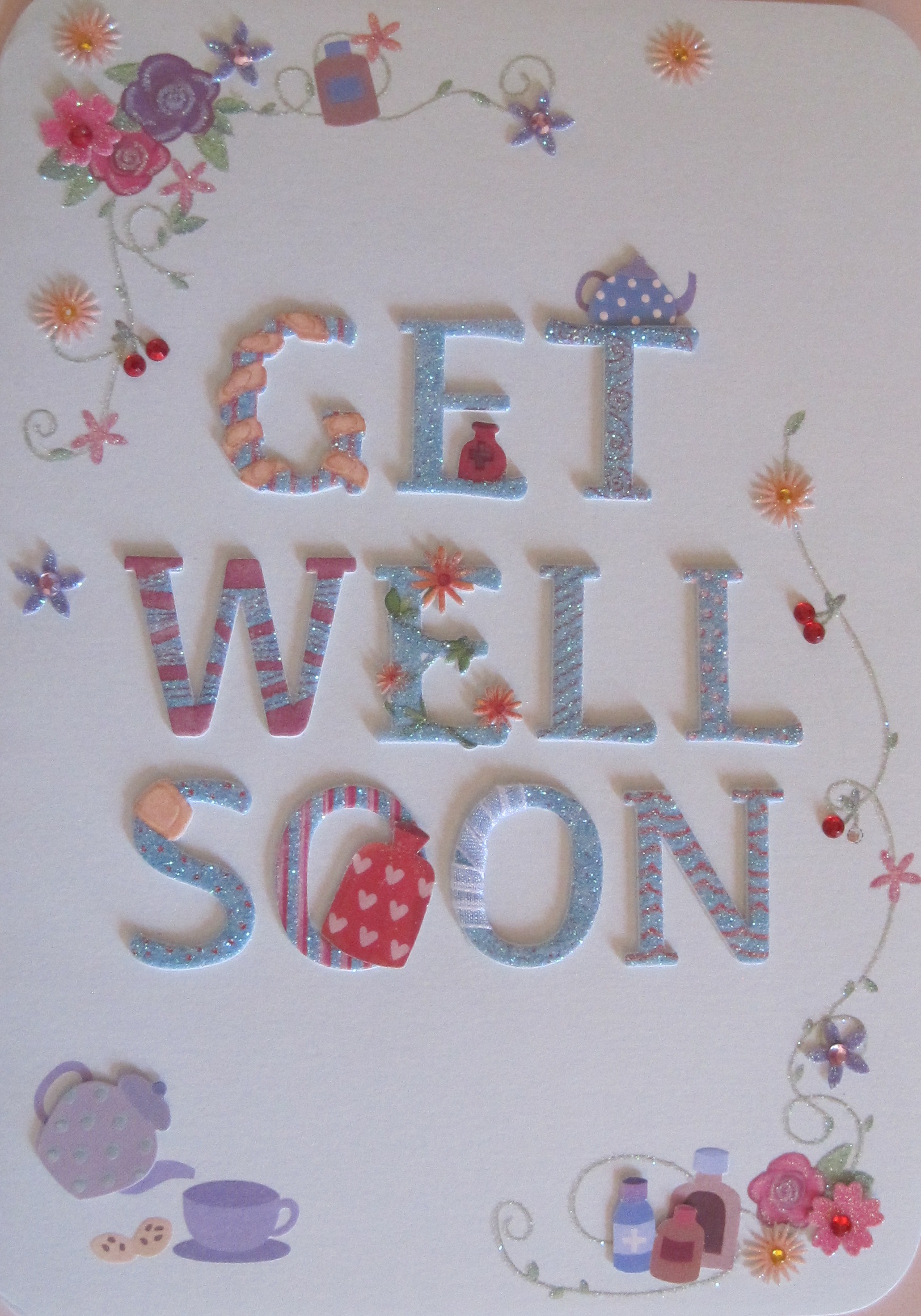
    Write about a childhood ritual when you were sick. If there were no childhood rituals when sick, what would you have liked to happen? How would you have wanted to be treated when sick as a child?
    Or write about a time you were sick.

    Or write about any ritual from your childhood.

    You can write about what really happened, or make something up.

    You can answer from your fictional character’s point of view.

  • Guest Blogger Susan Hagen: Birthdays, cupcakes, and healing through writing

    Note from Marlene: Guest Blogger Susan Hagen encourages us to have fun. And shows us how we can heal through writing . . . one of my strong beliefs, also.

    I hope you enjoy Susan’s post:

    To celebrate our 62nd birthdays, my best friend and I recently spent the weekend in Disneyland. Despite creaky knees and stiff backs, we were ready to party like … well, like eight-year-olds.

    We had great fun on the (not-too-wild) rides and enjoyed being playful and somewhat silly. But in that space of awareness about our childhoods, what arose in both of us were memories of disappointing birthdays of the past.

    It’s never too late to have that birthday cupcake.

    For me, it was 1963, the year I turned eight. My mother was supposed to bring chocolate cupcakes to my third-grade class at the end of the school day.

    But a few days before my birthday, President John F. Kennedy was shot. Guess what day his funeral was? That’s right. My birthday. No school, no cupcakes, no party. I was too young to understand why everything shut down that day. All I knew was that my birthday was ruined, and I was devastated.

    Disneyland was my cupcake.

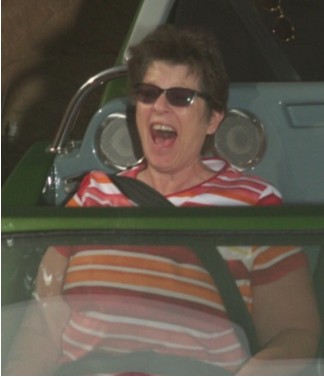
    So at age 62, I made Disneyland my cupcake. I screamed like an eight-year-old on the roller coaster. I ate the ears off more than one Mickey Mouse confection. I even climbed aboard a few kiddie rides with my BFF, who found a way to heal her own birthday traumas, too.

    When the weekend was over, we declared it all complete. We’d both had the best birthday EVER in the Happiest Place on Earth.

    You can heal that stuff through writing, too.

    Sometimes it takes putting your story down on paper to see how you can heal things from the past. Writing helps us bring ourselves current. We write a story about some part of our lives, and then we see how we’ve grown—not only since that time, but maybe even because of it. Writing helps us illuminate the dark places. It helps us bloom into greater self-awareness and self-acceptance. And it helps us make sense of our lives: how we got to here from there.

    So go ahead. Have that birthday cupcake, even if it is 54 years old! 

    Susan Hagen’s writing career began in the 1970s as a newspaper reporter in Northern California. She later served as editor of employee publications. She has since worked as a freelance writer for more than 100 corporations and nonprofit agencies across the country.

    In 1994, Susan became a firefighter and emergency medical technician in rural Sonoma County, California, where half the members of her firehouse were women. Following the September 11, 2001 terrorist attacks on the World Trade Center, she and her colleagues were acutely aware of the absence of women in media portrayals of rescue workers at Ground Zero.

    Susan combined her knowledge of the fire service with her experience as a writer to conceive of the idea for the book, Women at Ground Zero: Stories of Courage and Compassion, with co-author, Mary Carouba.  She and Mary traveled to New York City to find and interview female first responders for their award-winning book, which was published by Penguin Putnam in 2002.

    Since the publication of Women at Ground Zero, Susan has seen firsthand the power of sharing one’s story. Many of the women featured in her book believe that telling their stories was the first step in healing from the tragedy of 9/11. Susan draws on these experiences, along with those from her own life-changing journey, to help others give voice to the stories of their lives.

    Note from Marlene: Women at Ground Zero is one of my favorite books. A fascinating story of remarkable courage . . . the courage that took Hagen and Carouba from their comfortable home in Northern California to New York City to learn more about the first responders for the attack on New York City. They interviewed 30 women whose stories are told in detail in this riveting book that reads like a novel.

  • Your First Job . . . Prompt #358

    Write about your first job, or a job you had as a teenager.


  • Guest Blogger Rachael Herron invites us to meander, wander, PLAY!

    Today’s Guest Blogger is Rachael Herron, one of my favorite writers. Read one of her books and you’ll know why. More on that later.

    For now, you get to sneak a peek into how she gives priority to the problem, rather than to the answer.

    Hi Writers,

    I spent yesterday morning in the tub, thinking about writing. It wasn’t procrastination, I promise. It was actually the most delicious thing ever.

    Usually, I get up and have coffee and do yoga and write in my journal, and then I jump into work. I work all morning on writing and revision, and I use my afternoons to answer email, record my podcasts, teach, and coach.

    Yesterday, my “writing” took the form of thinking.

    And I was cold.

    So I got in the tub at ten in the morning.

    I lit a candle to help me think, for something to stare at. I brought in with me a notepad and a pencil (I love the Aquanotes waterproof writing pad) but I turned to my phone instead, making voice memos in Evernote. I didn’t look at Twitter or Facebook, I just thought. I allowed myself to go down deep internet rabbit holes (when was the last orphanage in Venice closed? What’s a debilitating disease that requires care but doesn’t immediately kill?).

    I paddled. I splashed.

    It was, pretty much, heaven.

    And it was part of the job.

    I want right now to remind you of that. If you’re stuck in the middle of something, PLAY.

    Write out all the frustrating questions you can’t figure out answers to and get in the bath with them. No bath? Go (alone!) to a hot tub place, bonus points if it’s outside and you can see the sky. Or go to the beach or lake, bundling up if it’s cold. Get your favorite splurge-y coffee drink and drive to the best view you can find. Tilt the seat back and just think.

    Meander in your mind. Wander around. If the answer stumps you, go in a different direction.

    Give priority to the problem, and not to the answer. I felt that yesterday — I kept trying to latch on to the “right” answer until I realized there wasn’t one, not really. I can write a book about anything. Poking around and trying to grab the “correct” book idea wasn’t going to work, but letting myself play with the problem did work.

    What you’re doing when you do this is priming your mind to keep working on it in the background, while you go to work or feed the kids or sleep at night. Your brain will keep working on this, the more you play with the ideas, and then one afternoon while you’re searching for the Tom’s of Maine that doesn’t suck (spearmint), the answer will drop into your mind. A flash of inspiration, yes, but it’s a flash that you set yourself up for.

    Remember to play. Writing is hard work, yes. I spend a lot of time acknowledging that it’s often a painful thing to push yourself to do. So if it’s been awfully hard lately, or if you just haven’t been getting anything done, give yourself permission to play.

    See what happens.

    Onward! Rachael

    Rachael’s Bio includes my favorites of her books.

    Rachael Herron is the bestselling author of the novels The Ones Who Matter Most (named a 2016 Editor’s Pick by Library Journal), Splinters of Light and Pack Up the Moon (all from Penguin), the Darling Bay and the Cypress Hollow series, and the memoir, A Life in Stitches (Chronicle).
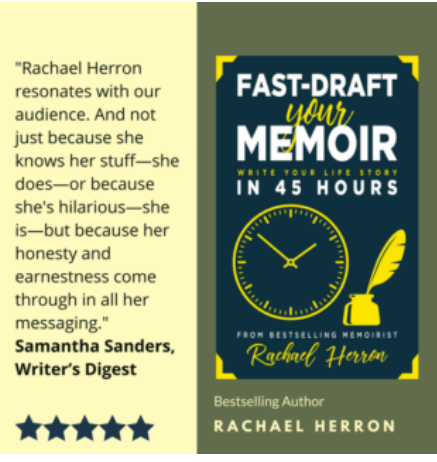
    Rachael’s latest book, Fast-Draft Your Memoir: Write Your Life Story in 45 Hours, is about writing quickly while still creating a compelling narrative arc out of the story only YOU can tell.


    She received her MFA in writing from Mills College, Oakland and she teaches writing in the extension programs at both UC Berkeley and Stanford. She’s proud to be a New Zealander as well as a US citizen, though her Kiwi accent only comes out when she’s very tired. She’s honored to be a member of the NaNoWriMo Writers Board. She is currently a Writer in Residence at Mills College.

  • Write A New Story . . . Prompt #356

    Ready to explore? Today’s writing prompt invites you to look at your old stories in new ways. Perhaps you can rewrite your story.

    Excerpt from October 2016 Reader’s Digest, “Down Off The Cross,” by Debra Jarvis, a chaplain and cancer survivor.

    “Let’s say I meet you on a bus. We really hit it off, but I’ve got to exit soon, so you’re going to tell me three things about yourself that help me understand who you are, that get at your essence.”

    Note from Marlene: Prompt:  List three things that define you.

    Back to the article:

    “Of those three things, is one of them surviving some kind of trauma, like being a cancer survivor, a war survivor, or an abuse survivor?”
    Note from Marlene: Or perhaps you are currently experiencing a difficulty or a trauma.

    Back to the article:    “Many of us tend to identify ourselves by our wounds.

    Claim your experience; don’t let it claim you.

    The way to cope with trauma, loss, or any other life-changing experience is to find meaning. But here’s the thing: No one can tell us what that meaning is. We have to decide what it means. And that meaning can be quiet and private—we don’t need to start a foundation, write a book, or work on a documentary. Instead, perhaps we make one small decision about our lives that can bring about big change.

    If you find yourself repeating your survivor story: Get down off your cross.

    When you repeat your survivor story, you aren’t processing your feelings—you are feeding them.

    Let your old story go so that a newer, truer story can be told about who you are.

    Claim your trauma as an experience instead of taking it on as your identity.

    It could mean the end of being trapped by your wounds and the start of defining yourself by who you are becoming.

    We’re all on this bus together. What story are you going to tell?”

    Note from Marlene: Prompt: Write a new story about what defines you.