Blog

  • Vegetables – Not Just For Eating . . . Prompt # 276

    What are vegetables good for, besides eating?

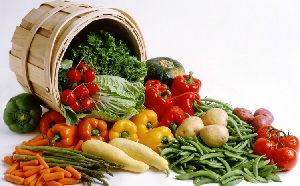
    vegetablesSome gardens are bursting right about now with zucchini, green beans, summer squash, cucumbers, yellow squash, kale, rhubarb, patty pan squash, lettuce, have I mentioned squash?

    Here in northern California, growing squash is easy and so abundant that we don’t leave our car doors unlocked, or we might find a bushel of zucchini on the seat.

    Write about other things that vegetables can do.

    Inspired from Adair Lara‘s writing workshop.

    Write about new uses for vegetables.

  • Grist, The Journal For Writers

    Grist

    From the Grist Website:

    Grist seeks high quality submissions from both emerging and established writers. We publish craft essays and interviews as well as fiction, nonfiction, and poetry—and we want to see your best work, regardless of form, style, or subject matter.

    We read between June 15th and September 15th. Please note that we do not accept snail mail submissions. Simultaneous submissions are acceptable as long as we are immediately notified if the piece has been accepted elsewhere. Please do not mix genres in the same submission. We do not consider previously published work.

    Our submission fee (waived for current and new subscribers) is $4 for three to five poems, for one work of fiction up to 5,000 words, or for one work of non-fiction up to 5,000 words. The bulk of our reading fee goes to paying our writers; the rest covers our Submittable fees and a portion of our print publishing costs, which helps us to make a high-quality home for a wide variety of the best national and international creative and literary work available to us. We hope that you will regard this fee as an investment in you, the writers who keep us going, while also serving as a sign of your support for the literary art we all value so much.

    Average response time is 2-4 months.

    Submissions will be considered for publication in either the print issue or Grist Online. Payment is $10 per poem or 1 cent per word for prose up to 5,000 words as well as two contributor copies. Additional copies are also available at a reduced cost for contributors.

    To submit your work to the journal, please read guidelines.

    To pitch ideas or submit reviews, craft essays, or interviews to our blog, The Writing Life, please read guidelines.

    Section Guidelines:

    Fiction: Submit one story up to 5,000 words.

    Poetry: Submit 3-5 poems.

    Non-fiction: Submit one essay up to 5,000 words.

    The Writing Life: To pitch an idea for a craft essay, interview, or other piece you think would be a great fit for our blog, please contact Managing Editor for Online Content, Jeremy Michael Reed.

    ReviewsGrist seeks reviews of books published by small and independent presses in the genres of fiction, poetry, creative nonfiction, essays on craft, and books about the creative process as it relates to all artistic mediums, including visual art. While most reviews follow the standard model, experimentation with the review form is also welcome, with the understanding that clarity is always a virtue.

    We focus on small, independent, and university presses because we think there are already plenty of other outlets for books by major publishers. And while we believe that all books deserve serious, critical commentary, we don’t see much value in wasting our time (or our readers’!) on a review of a book we don’t recommend. So: as a reviewer, we want you to be honest, but we also want you to highlight the books you’re excited about, and leave aside the others.

    We look for approximately 700 words, are happy to request books for you, and will work with you on establishing a timeline that works for you (although we usually ask reviews be completed in 4-8 weeks).
  • I just don’t feel like it. Prompt #275

    ledger.ink wellWrite about something you do not want to do.

    Will you end up doing it anyway? Will you be bitter, annoyed, resentful?

    Will you do it with grace, composure? Or will you rant and rave the whole time?

    Maybe you just won’t do it.

    Maybe it’s too silly to even think about. Or too petty, not worth your time.

    Write . . . just write about something you don’t want to do.

  • What do you pretend to not care about? Prompt #274

    Excerpt from I Could Do Anything . . .  If I only knew what it was, by Barbara Sher

    Sher. I could do anything I wantRescuing Your Past

    Something inside you is too loyal to permit you to turn your back on everything you loved and simply walk away. No matter how many times people tell you to let the past go, it’s never possible. You’ll never  move wholeheartedly into the future unless you take your beloved past with you.  And that’s exactly as it should be.

    There’s no reason to turn your back on a happy past. Sometimes we try to turn away from the past because we feel it somehow betrayed us. It’s as though we loved our past, but our past didn’t love us. So we go on strike and pretend we don’t care, as if to punish fate for being unkind. Fate never cares, of course, so we only hurt ourselves.

    Prompt:  What do you pretend to not care about?


  • Carve Magazine offers a unique take on declined submissions.

    Carve Magazine Submissions Guidelines sound pretty friendly, like they are just waiting for your manuscript which they might read over blackberry pie and coffee.

    “We accept short story, poetry, and nonfiction submissions year-round and from anywhere in the world. Send us your best work. We’d love to read it.”

    A partial list of Submission Guidelines:

    FICTION

    Carve seeks good honest fiction in the form of short stories, with emotional jeopardy, soul, and honesty.
    POETRY

    Carve seeks poetry that is both quiet and expansive; elicits an authentic emotional connection. Every word should purposefully add to the voice, sound, and imagery.

    NONFICTION

    Carve seeks nonfiction that reflects the honest place of literature in our lives with experiential reflections and literary overlays, inlays, or even underlays. ‘Tell us what happened and how we, as literature lovers, connect to it.”

    Unique to Carve:  DECLINE/ACCEPT 

    We want to support all writers, even the ones we don’t publish. If we decline(d) your story and it’s accepted elsewhere, let us know. We might ask to feature an excerpt and a recap of your experience in our Premium Edition.

    Complete Submission Guidelines for Carve.

    Consider using Carve’s Editing Services to get a professional critique direct from the editor.

    Carve


  • Our Tribes . . . Prompt #273

    I’m thinking about our connections with one another. This excerpt seems timely.

    Your Mythic JourneyExcerpt from Your Mythic Journey by Sam Keen and Anne Valley-Fox

    “Pre-modern people didn’t think of themselves as individuals — they were members of a tribe as well as of a family. Ancient philosophers knew that human dignity begins with ‘We are a people, therefore I am.’ Modern people are tribal too but we call our tribes by different names —  churches, corporations, states, nations. Each of us was nurtured within and shaped by several corporate bodies, voluntary organizations and professional corporations that molded our values and behavior — schools, athletic teams businesses, clubs, temples, and local, national, and international governments.”

    Prompt:  I am from . . .

    Or: What uniforms or emblems have you worn?

    Or: What groups have you been a member of?  Brownies, Blue Birds, Daisies, Girl Scouts, athletic groups, sorority, secret clubs.

  • Threads Connect Generations Prompt #272

    I’m thinking about ancestors this week and how we inherit some of their traits, like threads weaving from one generation to the next, connecting us.

    For this prompt, remember your grandfather, your father or an uncle doing something he likes, or liked to do, whatever it is or was.  If they built something or maintained something . . . picture what that looks like.

    Take a deep breathe in. Let it out.

    Now, think about your grandmother, your mother, or an aunt, doing something she likes, or liked, to do,  whatever it is or was.

    If she built something, or made something, picture what that looks like.

    Go back a generation or two or three, before electricity, before modern conveniences, pioneer days.

    Picture your grandfather or grandmother or great-grandparents. If you know how they spent their time, picture that.

    If you don’t know how they spent their time, use your imagination.

    Perhaps someone chopping wood for the fireplace.

    Maybe great-grandmother is sitting by the fire, with her needlework on her lap. Perhaps she wears a contented smile as she darns, or knits, or crochets.

    Deep breathe in. Let it out.

    Maybe she reflects on her ancestors, those who told stories either orally or through their needlework.

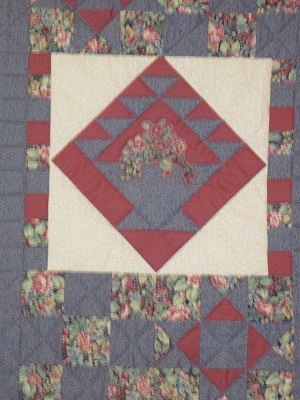
    Heart quilt wall hangingMaybe you remember a special quilt, or a tablecloth or a doily—something your grandmother, or her mother, or her mother made—maybe an embroidered pillowcase or a sampler.

    This is where we come from—these ancestors. We are hand-me-downs of these people. We have their characteristics, their traits, their mannerisms.

    Writing Prompt: When you’re ready, write about something an ancestor made.

    Wall hanging quilt made by Marlene’s sister, Janet.

  • Creative Nonfiction literary magazine

    Creative Nonfiction Literary magazine publishes nonfiction prose such as “long-and-short-form nonfiction narratives [and] columns that examine the craft, style trends and ethics of the nonfiction writing life, [as well as] interviews with established writers.”—Writer’s Digest, July/August 2016 issue.

    Lee Gutkind, Founder and Editor of Creative Nonfiction:

    “In some ways, creative nonfiction is like jazz—it’s a rich mix of flavors, ideas, and techniques, some of which are newly invented and others as old as writing itself. Creative nonfiction can be an essay, a journal article, a research paper, a memoir, or a poem; it can be personal or not, or it can be all of these.

    The words ‘creative’ and ‘nonfiction’ describe the form. The word ‘creative’ refers to the use of literary craft, the techniques fiction writers, playwrights, and poets employ to present nonfiction—factually accurate prose about real people and events—in a compelling, vivid, dramatic manner. The goal is to make nonfiction stories read like fiction so that your readers are as enthralled by fact as they are by fantasy.”

    “We look for a balance of style with substance—suspenseful, information-rich, well-written, lively narratives that tell us something and that might help change the way readers understand the world. . . We would love to see more diverse voices, reflecting a wider variety of experiences. We’re also happy to see work with strong research or elements of reportage.” —Writer’s Digest excerpt from Standout Markets, July/August 2016 issue.

    Writer’s Digest Exclusive Online Tips for Submitting to Creative Nonfiction features tips such as: Keys to breaking in: Try our daily Twitter challenge: we feature the best #cnftweets in the print magazine and online.

    Creative Nonfiction


  • “Show” Using Dialogue . . . Prompt #271

    Today’s writing prompts are about “showing” through dialogue.

    Show what characters are thinking, show their personalities, their quirks, move the story forward through dialogue.

    Remember, with freewrites, the writing is spontaneous. There is no crossing out.  This could be called “practice writing,” as Natalie Goldberg says.

    With dialogue we can show character, scene and drama.

    Use these prompts for practice writing. Respond as your fictional characters would respond.

    Or, respond in the first person, “I,” with yourself as the primary character . . . You playing the character of you.

    Prompt: Write a scene, where two characters talk about what they are afraid of.

    Prompt: Same or different characters. One confesses “I’ve lied about . .  .”

    Prompt: Same or different characters: “I wish I would not have . . . ”

    Taylor. Cat On a Hot Tin RoofYou can have a turning point – where the drama takes an unexpected turn, excitement mounting.

    Throw is some twists, turns, surprises. After all, people are surprising, aren’t they? You expect one thing and something else pops up.

    Use this writing for fun . . . “What would happen if. . . ”

    Use this writing to understand what happened in your life.

    Just write!

    Elizabeth Taylor and Paul Newman in Cat On A Hot Tin Roof.

  • Joys and discoveries when re-reading books.

    Do you feel guilty when you re-read a book (on purpose, not because you forgot you previously read it)?

    Juan Vidal wrote a thoughtful essay about the joys and discoveries one makes when re-reading.

    “Returning to a book you’ve read multiple times can feel like drinks with an old friend. There’s a welcome familiarity — but also sometimes a slight suspicion that time has changed you both, and thus the relationship. But books don’t change, people do. And that’s what makes the act of rereading so rich and transformative.

    The beauty of rereading lies in the idea that our engagement with the work is based on our current mental, emotional, and even spiritual register. It’s true, the older I get, the more I feel time has wings. But with reading, it’s all about the present. It’s about the now and what one contributes to the now, because reading is a give and take between author and reader.”

    Excerpted from: “You Can Go Home Again:  The Transformative Joy Of Rereading,” by Juan Vidal, NPR, April  17, 2016 NPR. KQED Public Radio.

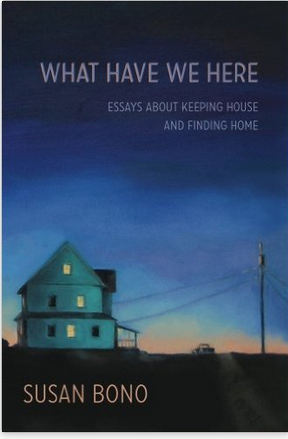
    Bono.What Have We Here

    What books have you re-read?

    Note from Marlene:

    I have re-read so many favorites, it would be a long list.

    One of my all-time favorites to re-read is What Have We Here,  by Susan Bono.