Blog

  • Apple Valley Review – ready for your submission

    The Apple Valley Review

    The Apple Valley Review is an online literary journal, published twice annually.  Each issue features a collection of poetry, short fiction, and essays.
    Submissions for the Spring 2016 issue ends March 15, 2016.

    Some of the submission guidelines:

    Submissions accepted year-round.
    Writing needs to be mainstream with literary appeal.
    Original, previously unpublished, and in English.

    Prose submissions may range from approximately 100 to 4,000 words.
    Shorter pieces stand a better chance of being published. Longer pieces will be read and considered.
    Novel excerpts must be self-contained.
    Preference is given to short (under two pages), non-rhyming poetry.
    This is not currently a paying market.  However, all work published in the Apple Valley Review during a given calendar year will be considered for the annual Apple Valley Review Editor’s Prize.  From 2006 to 2015, the prize was $100 and a gift of a book of poetry or fiction.

  • Surprise Party . . . Prompt #232

    Capture


    Write about a surprise party you have been to.

    Or a surprise party you have given.

    Write about a time you were surprised at a party.

    Today’s Writing Prompt: Surprise Party

  • Where Do You Get Your Story?

    Leslie Larson (2)Guest Blogger Leslie Larson gives us the scoop on where stories come from.

    Writers on reading tours can be pretty sure that as soon as it’s time for Q & A, someone’s going to ask them where they got the story. That’s the word that’s usually used, got, as if the author might have picked up the story in the maternity ward at San Francisco General Hospital, or found it in the frozen food aisle at Safeway. The question might be offhand, as in, “Where’d you find those chenille throw pillows? or it may be asked with the earnestness and urgency of a child questioning the existence of God. It’s often followed by a swarm of spinoff questions. Did the story come to you all of a sudden? Did you just start writing and see what happened? Did you start with an outline? Did this happen to you?

    Some writers give sly responses to the inevitable question of where they get their ideas.

    “I steal them from girls,” Dorothy Allison quipped at a reading I attended. Robin Hemley, who wrote Turning Life Into Fiction answered, “Joyce Carol Oates gives me her extras.”

    No matter how many times I’m asked this question (and it ranks right up there with “How did you decide to become a writer?” and “What is your writing routine?”), I still don’t know the answer. I suspect that most writers spend a fair amount of time wondering where their stories come from, though they probably spend more time worrying about where their stories are going.

    “Where a story begins in the mind I am not sure,” Annie Proulx said in an interview in The Missouri Review. “A memory of haystacks, maybe, or wheel ruts in the ruined stone, the ironies that fall out of the friction between past and present, some casual phrase overheard. But something kicks in, some powerful juxtaposition, and the whole book shapes itself up in the mind.”

    Personally, I don’t care so much where stories comes from, as long as they come. One of the most exciting times for me is the state of fidgety nervousness, or perhaps excitement, that signals something’s out there, something’s taking shape. I begin to hear whispers. I catch glimpses of shapes I can’t quite make out. Characters materialize in bits and pieces, beginning perhaps with only a bitten-down thumbnail, a lisp, or a weakness for salty foods. It might be a scene: an old kitchen or a vacant lot, a place where something happened or is about to happen. As these tantalizing fragments begin to surface, I start looking everywhere for the story: in dreams, in the newspaper, on the bus. The next bit of conversation I overhear or the discolored scrap of notebook paper I find on the sidewalk may be exactly what I need to launch my story. There’s no telling where it might crop up.

    In the interview mentioned above, Proulx said her character Loyal Blood, from Postcards, leaped complete and wholly formed from a 1930s Vermont state prison mug shot. And there’s the famous case of Thomas Hardy who, while pruning his fruit trees, conceived from start to finish the plot of the greatest novel he would ever write. Unfortunately, he forgot it by the time he finished the job, so he pocketed his shears and went inside for dinner.

    Certain activities are conducive to finding stories. For me it’s walking, weeding, popcorn eating, and personal hygiene—particularly nail clipping and eyebrow tweezing. And reading, that’s a big one. When I’m looking for my story, I sense the presence of untold or abandoned stories in other writers’ books. The roads not taken, the bones and corpses that fertilized that novel, the shoots nipped off before they could bloom. Something might get knocked loose in my head. A cast-off stalk that didn’t find the right soil in one writer’s story might take root in mine and surprise me with a magnificent blossom.

    I’ve found that you can’t force a story to come; you can’t get one—like a new car—just because you want it. But you have to be ready for it: waiting, watching, listening. In this condition, you’re likely to get too many ideas, because everything takes on meaning. You realize how ripe our everyday lives are with intrigue, insanity, loopy characters, hilarity, irony, and twists of fate. We’re surrounded by stories, our own and other people’s. Family secrets, childhood traumas, persistent fantasies. All fair game.

    Do we find the story, or does it find us? Is it already inside us, just waiting to be told? Why do we write about some things rather than others? More than once, I’ve started what I thought was my novel, armed with notes, character sketches, rudimentary scenes, outlines, only to find myself—after ten, or fifty, or two hundred pages—putting it aside so I can crank out what I think will be a short piece, a piece that turns out to be the novel itself—the real story, or at least the story that gets told. The original becomes yet one more stack of aging papers, another dead-end reproaching me from the shelf in my closet.

    Someone else’s story, perhaps, waiting to be found.

    Leslie Larson’s critically acclaimed first novel, Slipstream, was a BookSense Notable Book, a Target Breakout Book, winner of the Astraea Award for Fiction, and a finalist for the Lambda Literary Award. Her second novel, Breaking Out of Bedlam was an AARP Hot Pick and a finalist for France’s Chronos Prize in Literature, awarded by the National Foundation of Gerontology. The New York Times called Breaking Out of Bedlam, “A kick.” Publishers Weekly said, Delightful…Plenty of heart and humor.” And the Boston Globe called it, “A funny, touching novel.”

    Leslie’s work has appeared in O (The Oprah Magazine), Faultline, the East Bay Express, More magazine, Writer magazine, and the Women’s Review of Books, among other publications. She is an editor at North Atlantic Books and a former senior writer at the University of California Press.

    Leslie has taught creative writing workshops across the country, was a writer-in-residence at Hedgebrook, and has been a member of the Macondo Writer’s Workshop since 1995. She was born in San Diego and lives in the Berkeley.


  • I opened the door . . . Prompt #231

    doorway.BreanaToday’s writing prompt:  I opened the door . . .

    I’m looking forward to reading your writing on this one. So many possibilities.

    I opened the door . . .

    Photo by Breana Marie

  • Booth ~ A Journal looking for nonfiction, comics, lists and more.

    BoothBooth ~ A Journal publishes one new piece or author every Friday, front and center, on their home page.

    Booth is now reading new submissions. All accepted work will appear on their website.

    Two print issues are published yearly, usually in winter and summer.

    To submit work, please visit  submission manager.

    Booth publishes 50 pieces a year online. Twice a year they release print issues, curated from material that appeared on their website.

  • I am still waiting for . . . Prompt #230

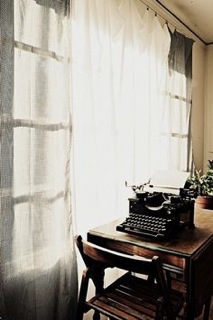
    typewriter nead window I am still waiting for . . .

    Or . . .

    I have stopped waiting for.

    Write for 15-20 minutes. Post your freewrite on The Write Spot Blog.

    Prompt:  What are you still waiting for?

    What have you stopped waiting for?

  • Guest Blogger Rob Koslowsky explains future verbage

    Koslowsky_headshotGuest Blogger Rob Koslowsky writes about how . . .

    Mathematicians Address Verb(al) Decay

    Regular verbs feature a past tense that ends in “ed.” Words like brush or bump become brushed and bumped in the past tense. But what do you do with those irregular verbs that don’t follow such an easy rule?

    Arise becomes arose (past simple) or arisen (past participle) while find becomes found in both cases of past tense. English students need not despair. Two mathematicians recently collaborated and uncovered the fact that irregular verbs will convert to a regular form. It just takes time.

    The principle of atomic half-life is invoked. Erez Lieberman and Jean-Baptiste Michel’s formula suggests that the more popular the verb the longer the time it takes to be reduced to a regular form in its past tense. For example, have will become haved instead of had—in 38,800 years—and hold will become holded instead of held, but in a much shorter 5,400-year timeframe. Note that have is used 100 times more frequently than hold, a characteristic leading to its longer half life.

    Erez Lieberman says, “Mathematical analysis of this linguistic evolution reveals that irregular verb conjugations behave in an extremely regular way—one that can yield predictions and insights into the future stages of a verb’s evolutionary trajectory.”

    Their mathematical formula was based on the analysis of a 177-word long list of Old English irregular verbs that have been regularized over time. The extrapolation of the English language that has evolved over time is one that will take time to prove.

    Jean-Baptiste Michel says, “Before, language was considered too messy and difficult a system for mathematical study, but now we’re able to successfully quantify an aspect of how language changes and develops.”

    I suppose we’ll continue speaking and monitoring which verbs become regularized. I suspect my descendants will one day comment with wonder on this article that they seed (formerly saw) and readed (formerly read).

    Rob Koslowsky has spent 34 years in the high technology field of optical fiber transmission systems and solar energy systems. His early writings were based on personal experiences and historical non-fiction in the areas of science and technology. This work built upon his first book entitled A World Perspective through 21st Century Eyes (2004) and provides stimulating content for his monthly newsletter A World Perspective, now in its twelfth year of publication. His second book, The Upstart Startup: How Cerent Transformed Cisco, was published in 2014.

    Rob has served as an officer of the Redwood branch of the California Writers Club and has written numerous short stories, song lyrics, and poems.

    Breach of Trust: A Laura Paige Murder Mystery (2015) is his first novel.

    Rob is a member of the IEEE, Sonoma County Astronomical Society, and the Northern California Science Writers Association.


  • Surprise! Prompt #229

    Surprise

    Write about a time you were surprised . . . or caught off guard.

    What happened? How did you react?

    Writing Prompt: Surprise!

    Type your freewrite and post on The Write Spot Blog.

  • Write to please yourself.

    Stan LeeStan Lee, creator of Marvel Comics superheroes, was interviewed by J. Rentilly for the December 2015 issue of The Costco Connection.

    Rentilly asked, “There are infinite theories about where creative ideas come from. Where do you think Ant-Man, Scarlet Witch or even the Destroyer, your very first comic book hero, comes from?”

    Stan Lee answered, “. . . you just think about it! You just sit down or walk around and probably have a big, dumb look on your face and you wonder, ‘What would I like to read? What kind of character would interest me?’”

    I like this part of his answer the best:

    “Please write stories that you think are great. Write to please yourself. That’s how I’ve always done it—not because I’m so desperate to please other people, but because I feel very genuinely that if I really love a story, then there must be a few other people out there who would love it too.”

    Marlene’s Musings: There you have it. From the Master. Just write!

    Valentine’s Day Blog Hop created by Francis H. Powell

    valentines day blog hop 2016

    Hop, skip, jump or fly on over to the Valentine’s Day Blog Hop. Scroll down, click on a blogger’s name and you will be transported into a new dimension.

  • Tulip Tree Review

    valentines day blog hop 2016

    Please join a variety of bloggers participating in The Valentine’s Day Blog Hop. Scroll down the Blog Hop Roll Call, click on a name and be entertained with new thoughts, fresh ideas and other worlds. Hosted by Francis L. Powell.


    Saturdays are “Places to Submit” Days. . . Watch the deadlines. They sneak up on us.

    The Tulip Tree Review is now seeking submissions.

    “Tulip Tree is just a little sprout in terms of how long it’s been in the world, but already its branches are finding their own way toward the sun, and the organization is becoming what it needs to be.”

    Stories That Need To Be Told

    Contest Deadline:  September 16, 2016

    Contest Theme:  [Not] The End: Prison Stories

    “This is a collection of stories and poems about life in and after prison, that will remind readers of the humanity of people who are incarcerated, and the fact that we really are all in this together. We are mainly looking for stories from prisoners themselves, although submissions from family members and loved ones will also be considered.”

    See the Contest page for more details (scroll down).