Blog

  • Behind the shutters. . . Prompt #218

    Shuttered window on concrete buildingYou can respond to this prompt, using your personal experience, or write from your fictional character’s point of view.

    Writing Prompt:  Behind the shutters.

    I would love to see your writing, using this prompt.

    Posting is kinda simple:  If you aren’t registered on The Write Spot Blog. . . go ahead and register. Wait for a password.  Then Log-on and post your writing.

    Photo Credit: Pro_Deluxe Photography by Jeff Cullen

  • It was a dark and stormy night . . . Prompt #217

    iron fence in front of cemeteryWrite about a time you were scared.

    Share your writing here, on The Write Spot Blog.

    First time posting: Register. Look for your password in your email. Then, log-in and post your writing.

    Photo Credit: Pro_Deluxe Photography by Jeff Cullen

  • Alaska Quarterly Review encourages new and emerging writers

    Alaska Quarterly ReviewAlaska Quarterly Review is a literary journal devoted to contemporary literary art, publishing fiction, short plays, poetry, photo essays, and literary non-fiction in traditional and experimental styles. The editors encourage new and emerging writers, while continuing to publish award winning and established writers.

    Guidelines

    FICTION: Short stories and novel excerpts (generally not exceeding 50 pages).

    POETRY: Poems (up to 20 pages).

    DRAMA: Short plays (generally not exceeding 50 pages).

    PROSE: Literary nonfiction (generally not exceeding 50 pages).

    PHOTO ESSAYS: Query before submitting.

    All manuscripts must be typed and accompanied by a self-addressed, stamped envelope (SASE).

    Unsolicited manuscripts are read between August 15 and May 15.
    AQR responds to e-mail queries, but cannot review electronic submissions.
    Identify simultaneous submissions in cover letter.

  • Portals, Dreams and Promises. . . Prompt #216

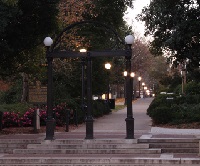
    Last night I dreamt about the University of Georgia Arch. My son gave me a selection of photos he took in 2015. He and his fiancée now live in Athens, Georgia, supplying him with a variety of photo opportunities. Thus, the arch.

    I dreamt about the arch as a portal—a path—to writing. How we can walk through the portal, like walking through an airport screening arch, and come out on the other side with ideas for writing. It felt like walking towards inspiration—being open to new ideas.

    In my dream I saw words over the portal, curving like a rainbow, “This is where dreams are made.” And “Promises are kept or broken.”

    Either way, I see these words, these concepts, as inspiration for writing. Okay, I see almost everything as inspiration for writing: song lyrics, opening sentences in books, first lines of poetry. I see interesting items and think “writing prompt.”

    Today’s Writing Prompt: Write about your dreams. Or, write about promises made. Or write about the idea of being changed after walking through a portal.

    UGA ArchThe University of Georgia Arch photo by Pro_Deluxe Photography by Jeff Cullen

    “Commissioned in 1856, the Arch was built sometime between then and 1858, but no one can say for sure the exact year it was constructed. It was part of the iron fence erected to secure the campus. Gates were part of the structure, closing off the passageway beneath the Arch at night. The gates disappeared sometime in 1885, likely the victim of a midnight prank.

    For most graduates, visiting the Arch after commencement is a rite of passage. Since the 1900s, tradition has held that students may not pass beneath the Arch until they have received a diploma from UGA. Legend has it that the tradition began when Daniel Huntley Redfearn (BL ’09, BS ’10) arrived as a freshman and vowed not to pass beneath the Arch until he had graduated. One of Redfearn’s professors heard the vow and repeated it to his class, and the story stuck.

    If only that Arch could talk.

    It could tell of political protests and silent vigils, memorials to deceased students, and long lines of happy new graduates waiting to pose for a family photo beside the three pillars of the Arch, which stand for wisdom, justice and moderation.

    For 150 years, the black iron arch—fired at the old Athens foundry—has served as the University of Georgia’s most visible symbol. Yet it is cloaked in intrigue, its past a mystery even to the most educated scholars.”

  • A Business Model to Avoid

    Guest Blogger Sandy Baker talks about first time publishing.

    The thrill of publishing one’s first book is joyful, a dream come true, right? Oh, the anticipation of getting my children’s picture book into print and out there in the marketplace! I attended lectures, workshops, and conferences to acquire the information I needed to become an indie publisher. I’d heard horror stories from authors who’d been scammed by vanity presses, paid too much for a web design, or didn’t know an ISBN from the BOE or a DBA, POD or LCCN. That would not be me.

    I bought a block of ten ISBN numbers. After all, if one costs $125, ten at $250 is more than a bargain. I set up my own Butterfly Books imprint and obtained a resale license from the state Franchise Tax Board. I was now a sole proprietor ready to do business and offer the world my first children’s gardening book, Mrs. Feeny and the Grubby Garden Gang. This of course was after I’d hired an illustrator and book designer whose charges will remain undisclosed.

    Late in the game, I discovered Butterfly Books already existed. Actually, that imprint became official the very same week mine did. What are the chances? (It takes a lot of sleuthing on the Internet.) That owner was a lawyer; therefore, I wisely decided to avoid an infringement or conflict of interest lawsuit by quickly choosing another imprint name: Black Garnet Press, of which there are no duplicates!

    My book was to be a typical children’s picture book: full color, 32 pages, 8” x 10”, and hardbound. I priced it at $15.95, in the mid-range of this genre. I found a company here in the U.S. that would print them, one, ten or 100 at a time. This is called Print On Demand (POD), and the company I chose after much research and advice was Lightning Source International (LSI), an arm of the huge Ingram distribution company.

    The company would take only 20% of the selling price. Wow, and I would get 80%. We’ll round up to $16 for the ease of it. So 20% of that price is $3.20, and my 80% is a whopping $12.80.

    However, the cost of printing the book was and still is $9—which of course comes right out of my 80%. So, $12.80 – 9 = $3.80, my “royalty” on the book. That’s actually not unlike the BIG publishing companies’ payouts. Not bad, so far.

    Say I consign the book, an agreement that is typically 50-50: the shop nets $8 on a $16 sale and so do I. That means I receive $8 for a book that costs $9 to print and forget the royalty. How’s that for a business model?

    I decided not to purchase 2000 books from a printing company in Korea or China—I know authors with 1800 of them still in their garage. It really is less expensive to print overseas, but who needs that many books?

    Granted, children’s full color, hardbound picture books are among the most expensive to produce. Turns out that LSI doesn’t offer dust jackets nor does it print the title and author on the spine. Arrrgh! Are there lessons to be learned here?
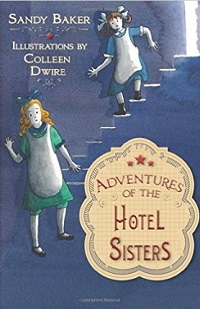
    Adventures of the Hotel SistersNote from Marlene: It seems Sandy did learn a thing or two about publishing. Since Mrs. Feeny and the Grubby Garden Gang was published, Sandy has produced and published eight books.

    SANDY BAKER’S passions are gardening, writing, reading, and traveling. Sandy recently published Adventures of the Hotel Sisters, fictionalized 1920s short stories about her maternal grandmother and her eight children. Sandy’s interest in this era harkens back to 9th grade when she wrote an extensive term paper on 1920s’ clothing, dances, Prohibition, gangsters, Stock Market Crash, and Women’s Suffrage. In between writing and reading, her major gardening project entails removing her front lawn and replacing it with mulch and 24 Provence lavender plants. Sandy is a Sonoma County Master Gardener and president of Redwood Writers, the largest branch of the California Writers Club.

  • Spoof a book . . . Prompt #215

    Writing Prompt: Choose a book, write a spoof and submit to Writer’s Digest Reject a Hit.

    “In each issue of Writer’s Digest magazine, we ask one reader to step into the role of the unconvinced, perhaps even curmudgeonly or fool-hearted editor. . .

    If you’d like to be the one doing the rebuffing, channel the most clueless of editors by humorously rejecting a hit in 300 words. . .

    Reject a Hit is humorous, but not mean-spirited. It is not the place to list all the reasons you hate a particular book. To help you understand the spirit of Reject a Hit, browse through the archives of published rejections.”

    Books that have been spoofed in the Writer’s Digest Magazine, Reject a Hit column (last page of the magazine):

    Note: Amy Marincik (March/April 2013) and Daniel Ari (July/Aug. 2014) are Sonoma County writers (home of The Write Spot Blog). Amy has participated in writing workshops facilitated by Marlene Cullen (host of The Write Spot Blog) and Daniel has been a Writers Forum presenter twice. We liked him so much, we asked him back.

    2013

    January           Charlie and the Chocolate Factory

    March/April    Great Expectations, spoofed by Amy Marincik

    May/June        Burning Down My Masters’ House: My Life at the NY Times

    July/August    The Exorcist

    October           The Lorax

    Nov/Dec          The Hobbit

    2014

    January           The Road

    February         The Old Man and The Sea

    March/April    Good Night Moon

    May/June        Tess of the D’Urbevilles

    July/Aug         Tulips & Chimmeys, spoofed by Daniel Ari

    September       The Shining

    October           Hitchhiker’s Guide To the Galaxy

    Nov/Dec          Runny Babbitt: A Billy Sook

    2015

    February         Our Mutual Friend

    Mar/April       Middlemarch

    May/June        A Series of Unfortunate Events: The Bad Beginning

    July/August    First Blood

    September       The Bonfire of the Vanities

    October           Inferno

    Nov/Dec          Winnie-the-Pooh

    2016

    January           The Scarlet letter

    Your Turn:  Come on now, you can do this.  Choose a book, write a humorous rejection and submit to Writers Digest Reject a Hit.

    Reject A Hit.Daniel Ari

  • A fresh start.

    The following excerpt is from Simple Abundance by Sarah Ban Breathnach.

    New Year’s Day. A fresh start. A new chapter in life waiting to be written. New questions to be asked, embraced, and loved. Answers to be discovered and then lived in this transformative year of delight and self-discovery.

    Today carve out a quiet interlude for yourself in which to dream, pen in hand. Only dreams give birth to change. What are your hopes for the future as you reflect on the years that have passed? Gradually, as you become curator of your own contentment, you will learn to embrace the gentle yearnings of your heart. But this year instead of resolutions, write down your most private aspirations. Those longings you have kept tucked away until the time seems right. Trust that now is the time. . .

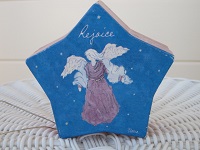
    Rejoice.AngelTake a leap of faith and begin this wondrous new year by believing. Believe in yourself. And believe that there is a loving Source —a Sower of Dreams—just waiting to be asked to help you make your dreams come true.

  • How many povs can be in one scene?

    The question often pops up: How many points of view can be in one scene?

    The easy answer: One point of view per paragraph.

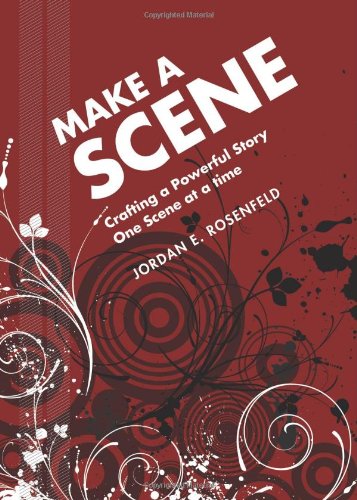
    The expanded answer: “If you have more than one character within a scene whose points of view are relevant, then you’ll need to use the omniscient pov.” Jordan E. Rosenfeld, Make A Scene.

    The omniscient narrator is all-knowing, able to move in and out of the thoughts of all the characters and to comment on events before and after the scene has happened.

    Jordan, an authority on writing,  expands upon the idea of changing pov within a scene: “. . . you must make omniscient clear right away from the first paragraph in the scene. If the readers believes that he has only been able to see inside character A’s head, and then you suddenly leap into character B’s head, the reader will feel confused and possibly irritated.”

    For a reminder about what a scene is, Jordan says, “A scene should largely take place in one location.”

    When you use omniscient pov and hop from one character’s head into another character’s head, you are able to describe the scene (action, thoughts, feelings) from different characters points of view. This can be tricky. Just make sure the reader knows which character is observing the scene.

    First: Just Write. Then, during the revising/editing stage, check that points of view are clear and consistent.

    Make A Scene.RosenfeldFor more details about scene, points of view and examples, check out Make a Scene: Crafting a Powerful Story One Scene at a Time, by Jordan E. Rosenfeld.

  • The Sun Magazine

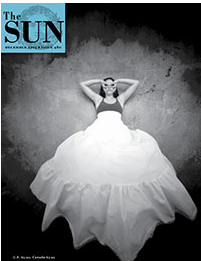
    The Sun magazineThe Sun is an independent, ad-free magazine that for more than forty years has used words and photographs to evoke the splendor and heartache of being human. Each monthly issue celebrates life, but not in a way that ignores its complexity. The personal essays, short stories, interviews, poetry, and photographs that appear in The Sun’s pages explore the challenges we face and the moments when we rise to meet them.”

    “We publish essays, interviews, fiction, and poetry. We tend to favor personal writing, but we’re also looking for provocative pieces on political and cultural issues. And we’re open to just about anything. Surprise us; we often don’t know what we’ll like until we read it.

    We pay from $300 to $2,000 for essays and interviews, $300 to $1,500 for fiction, and $100 to $200 for poetry. We also give contributors a complimentary one-year subscription to The Sun. We purchase one-time rights. All other rights revert to the author upon publication.”

    Submission Guidelines

  • Yes, Virginia . . . Prompt #214

    TheSunThe Sun

    New York, New York

    DEAR EDITOR: I am 8 years old. Some of my little friends say there is no Santa Claus. Papa says, ‘If you see it in THE SUN it’s so.’ Please tell me the truth; is there a Santa Claus?

    VIRGINIA O’HANLON.
    115 WEST NINETY-FIFTH STREET

    VIRGINIA, your little friends are wrong. They have been affected by the skepticism of a skeptical age. They do not believe except they see. They think that nothing can be which is not comprehensible by their little minds. All minds, Virginia, whether they be men’s or children’s, are little. In this great universe of ours man is a mere insect, an ant, in his intellect, as compared with the boundless world about him, as measured by the intelligence capable of grasping the whole of truth and knowledge.

    Yes, VIRGINIA, there is a Santa Claus. He exists as certainly as love and generosity and devotion exist, and you know that they abound and give to your life its highest beauty and joy. Alas! how dreary would be the world if there were no Santa Claus. It would be as dreary as if there were no VIRGINIAS. There would be no childlike faith then, no poetry, no romance to make tolerable this existence. We should have no enjoyment, except in sense and sight. The eternal light with which childhood fills the world would be extinguished.

    Not believe in Santa Claus! You might as well not believe in fairies! You might get your papa to hire men to watch in all the chimneys on Christmas Eve to catch Santa Claus, but even if they did not see Santa Claus coming down, what would that prove? Nobody sees Santa Claus, but that is no sign that there is no Santa Claus. The most real things in the world are those that neither children nor men can see. Did you ever see fairies dancing on the lawn? Of course not, but that’s no proof that they are not there. Nobody can conceive or imagine all the wonders there are unseen and unseeable in the world.

    You may tear apart the baby’s rattle and see what makes the noise inside, but there is a veil covering the unseen world which not the strongest man, nor even the united strength of all the strongest men that ever lived, could tear apart. Only faith, fancy, poetry, love, romance, can push aside that curtain and view and picture the supernal beauty and glory beyond. Is it all real? Ah, VIRGINIA, in all this world there is nothing else real and abiding.

    No Santa Claus! Thank God! he lives, and he lives forever. A thousand years from now, Virginia, nay, ten times ten thousand years from now, he will continue to make glad the heart of childhood.

    Dear Reader Here And Now,

    Virginia O'Hanlon.2You probably know the story:   Eight-year-old Virginia O’Hanlon wrote a letter to the editor of New York’s Sun, and the quick response was printed as an unsigned editorial Sept. 21, 1897. The work of veteran newsman Francis Pharcellus Church has since become history’s most reprinted newspaper editorial, appearing in part or whole in dozens of languages in books, movies, and other editorials, and on posters and stamps. Newseum

    Writing Prompt: Write about something you believed in and later discovered it wasn’t true. Or, write whatever comes for you after reading this story.