Blog

  • Fourth Genre: Explorations in Nonfiction

    The editors of Fourth Genre: Explorations in Nonfiction invite you to “submit writing that is lyrical, self-interrogative, meditative, and reflective, as well as expository, analytical, exploratory, or whimsical. They encourage submissions across the full spectrum of the genre. The journal encourages a writer-to-reader conversation, one that explores the markers and boundaries of literary/creative nonfiction.”

    Personal essay subjects can be about nature, environmental, travel, memoir, and more.

    General submission dates: August 15 – November 30.

    Fourth Genre Steinberg Essay Prize submission dates:: January 1-March 31

    Click here for guidelines.

    Fourth Genre


  • An apology. . . Prompt #197

    Who do you want — or need — to apologize to?

    Or maybe it’s a “thing” you need — or want — to apologize about.

    Write an apology note, something you never need to send nor give to anyone.

    Write it for yourself, to cleanse your palate, to lift the burden from your shoulders, to start from a new beginning.

    I'm sorry red heartPrompt: Write a note of apology.


  • Guest Blogger Pat Tyler: About writing, a writer, and freewrite workshops

    Guest Blogger Pat Tyler: About writing, a writer, and freewriting workshops

    For me, writing is like a shot in the arm. When I write alone, my mind becomes infused with new ideas. When I write with others, I’m included in a circle of writers who inspire me, enlighten me, challenge me, beckon me to take up the gauntlet, put on the gloves, step away from the ropes, dance my strategic dance of words, and punch my critic until he stays down at the count of ten, knocked out by my knuckle-punch of powerful, gutsy words.

    In recent years I became interested in publishing, but I soon learned that it’s not publishing that makes a writer – it’s writing that makes a writer.

    It may sound over-simplified, but I know this for sure: it’s the physical act of placing pen to paper and refusing to remove it until blood seeps from my pores and I’ve said something – hopefully something important. That’s what makes a writer.

    I’ve learned that if some particular subject is important to me, it can be, and probably will be, important to somebody else – perhaps lots of somebodies.

    But physically writing is only part of the writerly equation. Other factors include reading my words aloud, and listening to the words my fellow writers have written. We write to be heard.

    When I first attended Marlene Cullen’s Jumpstart writing workshop in Petaluma, CA, I had hoped to carve some publishing notches into my writer’s gun barrel. I wanted to review and edit pieces that had sprouted cobwebs at the back of my musty, dusty filing cabinet. But that didn’t happen. What did happen was far different from what I’d expected.

    Jumpstart wasn’t a spit-and-polish workshop. There were other times and places to spit- and-polish my words. This was a bim-bam-thank-you-mam workshop; the kind I love most.

    In Jumpstart, our simple outpourings of heartfelt thoughts, glimpsed moments from the past, glimmers of future dreams, sprinkles of laughter and tears, and tidbits of joy and sorrow were freely shared, but with one caveat; they were not to be shared outside the classroom. [Note from Marlene: It’s fine for writers to share their own work; but not discuss the writing of the other participants outside of the workshop group.]

    After participating in Jumpstart, I created a similar freewriting class called Quick Start, in Rohnert Park, CA, closer to my home in Cotati. Different venue. Different participants. But the same enthusiasm and appreciation for sharing each other’s words in a safe environment.

    I have enjoyed the experience of seeing my polished prose appear in several publications during my lengthy writing life. However, the writing I still enjoy most is the rough, raw, beginning of a new writing-in-progress. Like a newborn infant, each new writing must be cleaned up, severed from its umbilical cord, and nurtured toward maturity where it can finally stand on its own, ready to compete in the writing world.

    But until my work is ready, I’ll just take another deep breath and keep writing my words. When I’m finished I’d like to read them to you. Then I’d like to hear what you’ve written. I’m hoping our words will increase and multiply, much like the family of writers who wrote them.
    Pat TylerAt 81, Pat Tyler continues to be warm, vertical, reading, writing, publishing short works, self-publishing long works, painting, crafting, and most of all – retired! (on the only quiet corner in Cotati, CA)

    Pat received her Master of Arts degree from Sonoma State University.  Pat’s writing has been published in Good Housekeeping Magazine, Fate Magazine, and numerous anthologies. She is an award winner of four Writers Digest Competitions. Pat Tyler is the author of The Impossible Promise and her memoir, 2014 Moments Remembered. Pat’s next novel, Forgive Us Our Trespasses, will be available in 2016.

  • Something borrowed or loaned. Prompt #196

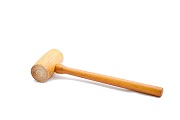
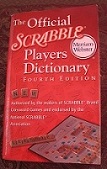
    Write about something you have borrowed or loaned.

                        bicycle wooden mallet                        Scrabble Dictionary

    Photos of bicycle and mallet by Jeff Cullen. (Click on Jeff Cullen to see his Fotolio photos)

  • Fourteen Hills Press ready for your submission


    Since its inception in 1994, Fourteen Hills: The SFSU Review contributes to a vibrant literary tradition on the West Coast centered in the San Francisco Bay Area. Its commitment to presenting a diversity of experimental and progressive work by emerging and cross-genre writers, as well as by award-winning and established authors, has earned it a reputation for literary excellence. Being independent means its aesthetic is dynamic and fluid, ever changing to meet the needs of the culture and the historical moment as the staff perceive them. As an international literary magazine, Fourteen Hills has developed a reading audience that goes beyond the San Francisco Bay Area to the international community.

    Staffed exclusively by graduate students in the creative writing program at San Francisco State University with the oversight of a faculty advisor, Fourteen Hills publishes original poetry, fiction, literary nonfiction, and cross-genre work created by writers in the US and abroad. It also welcomes and prints representative contributions from visual artists.

  • Winner! Winner! Chicken Dinner. Prompt #195

    AwardWriting Prompt: Tell about an award or a prize you won.

    You can write about what really happened, or write as if your fictional character won a prize.

  • Become The Writer You Want To Be

    “Writing is an act of courage.” — Ta-Nehisi Coates

    “I always consider the entire [writing] process about failure, and I think that’s the reason why more people don’t write.” — Ta-Nehisi Coates

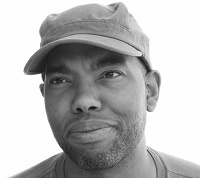
    Ta-Nehisi Coates’s latest book, Between the World and Me, is a “searing meditation on what it means to be black in America today.”  The New York Times Review

    Upon receiving the 2015 MacArthur ‘Genius’ Award Winners, Coates said, “When I first got the call from the MacArthur foundation I was ecstatic. . . if anybody even reads what I’m doing, that’s a great day.”

    Between the World and Me is a finalist for the Kirkus Prize for nonfiction.

    Between the World and Me is in the form of a letter to Ta-Nehisi’s 14-year-old son. He speaks of the dangers of living in a country where unarmed black men and boys are dying at the hands of police officers.

    His evocative 2008 memoir, The Beautiful Struggle, is a “. . . compelling a portrait of a father-son relationship . . . and a showcase for his emotional reach as a writer and his both lyric and gritty prose.” – The New York Times Review

    Ta-Nehisi CoatesTa-Nehisi’s chatty and thoughtful video drew me in. He said the key to writing is perseverance. He talks about learning to be a writer and that being stressed led to writing that had much more power. “Repeated practice to become the writer you want to be. Revise over and over until [your writing] goes from really bad to okay to acceptable.

    Ta-Nehisi Coates writes from the heart. My favorite kind of writing.

  • Essential Wound Prompt #194

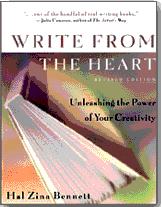
    Write From The Heart by Hal Zina Bennett is one of my all-time favorite books on writing.

    The following is an excerpt from Write From The Heart.

    “I am convinced that every essential wound, by its very nature, has the potential for opening each of us up to the full potential of our very soul. I do not mean to be Pollyannaish about it, either. It’s not a matter of the universe providing us with the challenges we supposedly need for our spiritual growth. I tend to believe in the universe’s ‘benign indifference,’ as Camus once put it, and that God is something like a courageous and loving parent who gives us all we can take in, then lets us go on to live our lives the best we know how. I think that must have been what Joseph Campbell was talking about, too . . . ‘the world is a match for us and we’re a match for the world. And where it seems most challenging lies the greatest invitation to find deeper and greater powers in ourselves.’

    Our own perceptions of the world, the inner vision of what we think life is about, gets challenged in every essential wound. Our true creativity comes about when we think life is about, get challenged in every essential wound. Our true creativity comes about when we start trying to sort all that out, asking what the wound mirrors back to us, what it tells us about ourselves, what we need to let go of, and what we need to learn to embrace. When we do that, we take ourselves out of the role of victim. We see that there’s an alternative to the way we ordinarily look upon our grievances — that we can literally mine even our worst errors for the treasures they contain. When we look at our wounds in this way, we invariable discover turning points, breakthroughs that carry us beyond the limits of everyday thinking. And we can go forth to tell the stories that are truly important to tell, that reveal the hidden truths of our lives and the lives of others, thus building spiritual bridges between our own consciousness and theirs.

    write from the heartThe essential wound is a particular kind of experience that happens off and on throughout our lives and goes to the very core of our being. These wounds are important to writers for the same reasons that peak experiences are — they are the resources that lend authenticity to our writing. Essential wounds have an added element in that they reveal our humanness. They reveal that we each create our own inner worlds, mental models of the way we believe things should be. The wound occurs when something happens to reveal the difference between how you see the world and the way the world really is. You may feel shattered, hurt, disappointed, or depressed, but if you keep your eyes open those moments can lead to dramatic revelations.”

    Prompt: Write about an essential wound.

  • Everybody Is Talented, Original and Has Something Important to say.

    So says Brenda Ueland and I agree with her.

    Her book, If You Want to Write, is one of my all-time favorite writing books. She is practical, straightforward and delightful.

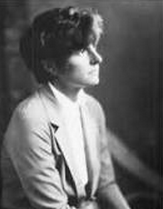
    Brenda UelandFrom the preface:

    For many years I had a large class of people at the Minneapolis YWCA. I think I was a splendid teacher and so did they.

    My teaching differs from that of others in this way: I am blessed with a fascinated, inexhaustible interest in all my pupils — their thoughts , adventures, failures, rages, villainies and nobilities, “Tell me more. Tell me exactly what you feel when you tried to kill the man.” . . . “You say his muscles rippled through his shoulders.” Did they really ripple? Did you really see that?” Then the young novelist’s excited defense: “Yes, they did! His muscles were so big they seemed to burst the seams of his coat!” Myself: “Well say that! Hurrah! Put it that way. That’s alive, great!”

    Marlene’s Musings: Write your story as you remember it. Tell the tale as it wants to be told. Truth? Yes, sometimes you will write the truth, other times just write whatever you want.

    Think of yourself as a story teller. . . whether you are writing about something that really happened or fiction. . . you are telling a story.  Tell it however you want . . . just write!  Seems like Brenda and I think alike. Click here for another of her quotes.

  • How to flesh out villains.

    Do you have a villain in your story? Is this scoundrel executing gruesome acts? Is it hard for you to get into the head and heart of the “bad guy?” Does he or she have a heart?

    Here’s an idea about how to flesh out your baddie. . . so that he/she is someone you can live with for the duration of your writing.

    Do a freewrite. The antagonist was once a child. What were his/her passions as a teenager? What games did they play as children? What delighted this child? Write about his/her first car.

    Choose a prompt and write as if you were answering from the villain’s point of view. Imagine you are a neighbor or a relative of the undesirable person. Write about the mean person from someone else’s point of view.

    What is the turning point, or the chain of events that changed this innocent toddler into a dreadful creature?

    Probably not much of this brainstorm writing will make it into the final cut, but it will help you understand this despicable creature and make him/her come alive.

    Remember: There usually is a wicked character in stories. . . that’s what gives stories their heft, their meatiness.

    An example is Anna Quindlen’s “Every Last One.” We meet an individual who is charming, likable . . .lovable. Then an event changes everything and everyone. Use a book of your choice as your textbook. Study how the author developed the character of the “bad” guy.

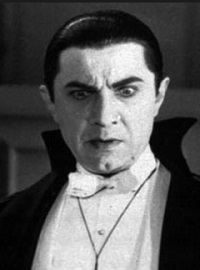
    Count DraculaNo one was born bad. How did they get that way? You are the puppet master . . . create and control your characters, even the evil ones. Just write!