Readers want to see the action and feel emotions. Readers want to be transported into other worlds. In a way, we want magical things to happen when we read: to be carried away, transformed. Writers can achieve these seemingly wondrous events by using sensory detail in writing.
When including sensory detail, think of body parts: eyes, ears, nose, tongue, body and some add a sixth sense: mind.
Verbs that describe the senses: see/sight, hear/sound/auditory, smell, taste, feel/touch, intuit.
The sixth sense can be described as telepathy, intuition, perception, imagination. . . those traits that use the mind to create and understand. Some people believe the sixth sense is the ability to problem solve; using our minds to read and interpret signals, to pick up or sense energy.
You can access any of these sensory details in your writers tool kit to create vivid and memorable writing.
For the next few weeks, we will explore sensory detail on The Write Spot Blog.
Sight. . . Seeing . . . is perhaps the most common sensory detail to write about. It’s easy to describe physical details: blue eyes, brown hair. So, how about going a little deeper? Perhaps more specific, or unusual. . . something the reader isn’t expecting, but believable. Something to make the reader sit up and take notice:
She had bright auburn hair, pink cheeks, and wore crimson fingernail polish. She also wore high-heeled pumps and a red-and-white-striped dress. She looked and smelled like a peppermint drop. —To Kill a Mockingbird, Harper Lee
You can use simile to create memorable details, like Sandra Cisneros does in Caramelo:
Doubt begins like a thin crack in a porcelain plate. Very fine, like a strand of hair, almost not there. Wedged in between the pages of the sports section, in the satin puckered side-pocket of his valise, next to a crumpled bag of pumpkin seeds, a sepia-colored photo pasted on thick cardboard crudely cut down the center.
Do you see the crack in the plate?
There is also texture in this excerpt: porcelain, the fine strand of hair.
With the mention of “sports section”. . . can you see the newsprint and feel the weight of the newspaper?
The puckered side-pocket invites a visual image as well as texture. Can you “see” (imagine) the color of the satin side-pocket even though it’s not mentioned?
Being specific with details adds to the ability of the reader to see the activity/action (scene).
Cisneros could have written “a crumpled bag of chips,” but that’s vague. I bet you can feel that crumpled bag and maybe you can hear it. You can probably see the pumpkin seeds. Perhaps you salivate at the thought of what the pumpkin seeds taste like.
Even if you have never seen a sepia-colored photo pasted on thick cardboard, you can imagine it. You can see this specific color (sepia) and feel the texture of the cardboard. In your mind’s eye, you might even imagine who is in the photo.
Cisneros covered all the senses: sight, sound, taste, feel, and if you are extraordinarily sensitive, you might smell the salt in the seeds, or you might smell the musty valise, you might even imagine/smell the paste that was used to stick the photo onto the cardboard. I think she includes the intuitive sense with the word “doubt” and “wedged” (what does this hint or say to you?) and the cut cardboard (perhaps cutting someone out of the photo?).
Simile — A simile is a figure of speech that compares unlike things by using the words like or as:
Doubt begins like a thin crack in a porcelain plate. Very fine, like a strand of hair . . .
Your turn: Notice sensory detail in what you are reading. Post your findings here, on The Write Spot Blog. And try using sensory detail in your writing. Just Write!

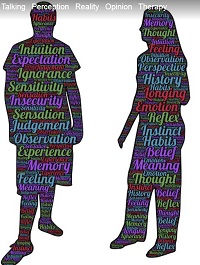 Wikipedia definition of sixth sense: a supposed intuitive faculty giving awareness not explicable in terms of normal perception. “Some sixth sense told him he was not alone.”