Blog

  • The Bohemian’s Challenge

    BohemianThe Bohemian invites you to “Step Up to the Mic.”

    The Bohemian is “an award-winning alternative newsweekly serving Sonoma, Napa and Marin Counties [in Northern California].”

    However, you don’t have to live in Northern California for this challenge.

    The Bohemian wants to hear from you!

    From The Editors:

    “Ah, the Open Mic. This is the one space in the paper, besides the letters section, where we don’t just want your input—we rely on your input. It’s a space we leave open and free to all comers, where a fiery and well-turned argument will always find a home.

    Please don’t take this as a threat, but—you really do not want the Bohemian staff to start filling the Open Mic with half-baked opinions about everything and everything.”

    Click here to read the challenge from the editors in its entirety.

    The Bohemian wants to “hear from our readers—all of our readers—who have an opinion to share, and the ability to do so in 350 words more or less. We want fresh perspectives on hot-button issues, well-turned screeds and savage indictments of the odious and the corrupted.

    So next time you’re about going to go on a ranting spree at Craigslist, check those contrails, adjust your tinfoil hat and crank it out for the Bohemian instead.

    We’ll run it, unless you stray from common decency and into libelous waters. We’re trying to keep an open mind—and more to the point, trying to keep the Open Mic true to its original vision.”

    Open Mic is a weekly feature in the ‘Bohemian. To have your topical essay of 350 words considered for publication, write openmic@bohemian.com.

    Note from Marlene: This is your chance to be heard! Go for it.

  • Own up to it. Prompt #135

    regret1Write about a time you swallowed your pride and admitted to something you did that you regret. . . or a time you wish you had spoken up.

    You did it, now feel free to own up to it. . . . you don’t have to actually tell anyone what you did or didn’t do . . . just write about it here and now.

  • Special object to give. Prompt #134

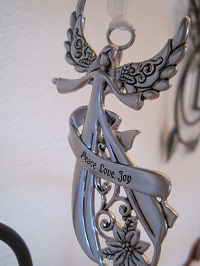
    Angel.SilverWalk through your house, apartment, garage, barn . . . look at your knick-knacks, trinkets, souvenirs, keepsakes, treasures. . . pick one item to pass on to someone, perhaps a grandchild, or great-grandchild, or a beloved friend. Write about a special object you want to give to someone in the future.

    You can respond to this prompt as your fictional character would respond, or write as if you are going to give this item to someone.


  • Roseanne Cash—feeling alive when immersed in her work

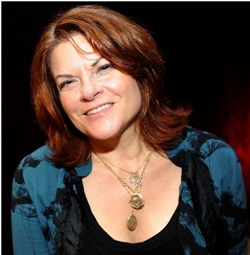
    Roseanne Cash1

    ” . . . [my] profession, like anyone’s, requires constant innovation if it is to remain fresh. I feel alive when I’m immersed in my work—when I’m fully employed, as Leonard Cohen says, as a songwriter, ‘You have to keep cracking yourself open or you become a parody of yourself. ‘” —Roseanne Cash in an interview by Geoffrey Himes, “The Long Way Home, Smithsonian, November 2014

    Note from Marlene: How about you? What keeps you immersed in your work? If your writing has hit the doldrums, how about mixing it up? If you usually write memoir, try fiction. If you are a fiction writer, try poetry.   If you want ideas for freewrites, click here for writing prompts.

  • What does your character want? What gets in the way? Prompt #133

    We’ve been working on character development on The Write Spot Blog. Your character could be fictional, based on a real person or someone in your memoir.

    Kurt Vonnegut says to “make your character want something.” There are several ways to go about this.

    Have your character do something unexpected . . . something that surprises everyone and weave in a problem.

    You can put your conservative character in an improv situation where he/she has to rap or act in a scene.

    Your male character might find himself on stage, learning how to hula or belly dance.

    Your female character might find herself in a lumberjack contest.

    Have your wild character volunteer to help with bingo in an assisted facility.

    Have your character do something unusual.

    Remember these are freewrites, where you write freely for 12 to 15 minutes. This doesn’t mean you have to use these character vignettes in your novel, essay or memoir. Have fun playing around with characters.

    Have fun making your character uncomfortable, make him or her squirm.  Worms on a fishing pole come to mind.

    Now, here’s how to really get into the heart of your character:

    Moose.1What does your character want? What gets in the way?

    For prompts on character development, take a look at:

    Character development, discovering characters, prompt #132

    Flesh out your character, prompt #131

    Other character’s point of view, prompt #109

    Grow your characters, prompt #48

    You can also type “character” in the search box on the Write Spot Blog for posts about character.

    Photo by Breana Marie
  • “The key to a good essay is conflict, and . . . Victoria Zackheim

    “The key to a good essay is conflict, and the story’s (and character’s) arc. People have to change during the story, whether fiction or non-fiction. — Victoria Zackheim, interviewed by Chris Jane in JaneFriedman.com.

    Victoria Zackheim is the author of the novel The Bone Weaver and editor of six anthologies:

    He Said What?

    Women Write About Moments When Everything Changed

    The Other Woman

    Twenty-one Wives, Lovers, and Others Talk Openly About Sex, Deception, Love, and Betrayal

    For Keeps: Women Tell the Truth About Their Bodies, Growing Older, and Acceptance

    The Face in the Mirror

    Writers Reflect on Their Dreams of Youth and the Reality of Age

    Exit Laughing: How Humor Takes the Sting Out of Death

    and the upcoming FAITH: Essays from Believers, Agnostics, and Atheists (Feb. 2015).

    Victoria’s play, The Other Woman, based on her first anthology, will be featured in OneNight/OnePlay, and her play Entangled, an adaptation of the memoir Entangled: A Chronicle of Late Love, is in development at Z Space in San Francisco.

    Victoria’s first screenplay, MAIDSTONE, is now in development. She is story developer and writer of Where Birds Never Sang: The Story of Ravensbruck and Sachsenhausen Concentration Camps, aired nationwide by PBS.

    Victoria teaches Personal Essay in the UCLA Extension Writers’ Program. Victoria was a 2010 San Francisco Library Laureate.

    Note from Marlene: I have taken classes by Victoria. She is an amazing teacher, well worth the price (and it wasn’t that expensive!).

    Want to challenge yourself?  Take one of your characters (fiction or non-fiction) and do what Victoria suggests . . . give him or her a conflict.  Spend thirteen minutes on a freewrite. See what happens.  Need a boost?  Take a look at Prompts 132 and 133 for ideas on character development.

  • Guest Blogger Jane Merryman titillates with ‘What’s in a Title?’

    Jane MerrymanWhat’s in a Title by Guest Blogger Jane Merryman

     Naked Lunch

    A Crack in the Edge of the World

    The Borrowers

    Book titles. Delicious. They provide entertainment in themselves, never mind what’s between the covers. The words on the front offer promise, titillation, or confusion. Of course, some titles are strictly workaday: Wildflowers of North America; The History of England from the Accession of James II; Math Formulas and Tables. But other titles are delightfully misleading, some are curiously ironic, others are satirical or even nonsense.

    A Moveable Feast

    Fezzes in the River

    Manhattan Transfer

    The title may or may not be an exact pointer to what’s inside, but it’s definitely a label that fixes itself in mind and memory. Take Pride and Prejudice—it has a lilt to it. But do you really want to plod through several hundred pages of unillustrated text enumerating the consequences of a couple of vices, or would you rather read about landing a husband? From its title, you don’t know how much you might or might not enjoy reading this book.

    As a librarian I’ve spent many hours “reading the shelves,” an actual entry on the official list of library chores. I select a block of shelves and check every book, making sure it’s filed correctly by Dewey Decimal Number, author’s last name if it’s fiction, or subject’s name for biographies. This exercise affords plenty of time to savor the mystique of the title, pushing aside what I know of the work itself. I’ve read The Great Gatsby, but to someone who hasn’t (yet), what is a gatsby? No matter, the alliteration is the hook.

    One Hundred Years of Solitude sounds as if it could get soporific really fast, but it doesn’t. Men Are Like Streetcars, Memoirs of a Geisha, and The Plague all live up to their promise. War and Peace appears to have taken on too much. A Thousand Acres seems more do-able. Nine Stories is something I could definitely finish.

    Some titles tell you right away that Things Fall Apart, The Mambo Kings Play Songs of Love, and Friday the Rabbi Slept Late. At times they advise you to Play It As It Lays, to Go Tell It on the Mountain, or that You Can’t Go Home Again.

    My Family and Other Animals, Chocolat —these titles make us smile in agreement. The Lexus and the Olive Tree, A Clockwork Orange, Up the Down Staircase, A Wrinkle in Timethese fill us with consternation.

    The Naked and the Dead is one of those titles that leads us somewhat astray since it’s about the fully clothed and the living. Seeing Through Clothes might disappoint some readers with its lengthy footnoted discussion of the history of garments and fashion. Some books seem to be wanting to tell us about royalty—The African Queen, All the King’s Men, and The Prince of Tides—but they never make it to the palace.

    Authors can lift their titles from other works, such as the Bible, Shakespeare, and famous and not-so-well-known poets, and give them a resonance that sticks with us. We have East of Eden and The Sun Also Rises, For Whom the Bell Tolls, The Winter of Our Discontent, and The Grapes of Wrath. In nursery rhymes writers found When She Was Good and When the Bough Breaks. A book of travel essays went to a play to find its title, The Kindness of Strangers, which helps explain its contents, but are the others so transparent?

    Birds figure in many titles: The Maltese Falcon, The Painted Bird, Lonesome Dove, and Wild Swans. And of course mockingbirds, eagles, swallows, and blackbirds are all roosting on the library shelves, too. Little Birds, though, is not at all about ornithology.

    Titles beckon—invite us to go on a Forbidden Journey, to take The Road from Coorain, to venture Beyond the Khyber Pass, and catch The Polar Express. They offer to take us to a special place, anywhere from The House on Mango Street, to Under the Volcano, to Hiroshima, or suggest that we stroll down Revolutionary Road, Half Moon Street, and Lonely Avenue. Bridges turn up uncommonly often in titles—bridges to Terabithia, of San Luis Rey, at Toko-Ri, over the River Kwai, and on the Drina—and lead us on fraught, hardly light-hearted journeys.

    Need I go on? Haven’t you been tempted to read a book just because its title played with you? There’s a world—a universe—out there in books. Their titles might tell us exactly what is inside, what information we will tap into, what kind of adventure we will take off on. Some merely hint at the experience to come. Others don’t give us a clue, even after we’ve read the whole thing from foreword to appendix. But that doesn’t matter. Reading a shelf of titles is a pleasure in itself without even opening the books. Take Chocolat—’nuf said.

    In my opinion, though, all books should bear the subtitle Great Expectations.

    Jane Merryman specializes in copy editing: correcting grammar, spelling, punctuation, usage, and, as we say in the profession, infelicities.
  • Character development – discovering characters. Prompt #132

    For this two-part prompt, we’re going to develop a character, either fictional or based on reality (especially if you are writing memoir).

    How do writers develop characters?   How do you get to know your character beyond their looks, their desires and where they went to school?

    Step One: Give your character a hobby or an interesting job. The more unusual, the better. Bee-keeping? Needlepoint for a man. Bucking horses, art aficionado, chemist, skywriter, laundromat manager, tornado chaser.  You can look up unusual jobs that pay well by clicking here, such as: Cruise ship entertainer, ice cream taster, human statue, hot dog vender, dog groomer, personal shopper, funeral director.

    Sketch how your character might spend an hour of their work day, or hobby time: gathering honey, purchase yarn and patterns, ranch and corrals, visits to art galleries and museums, mixing potions in the basement.  You might paint a picture what an hour of their job looks like:  what do they see, who do they interact with, what do they think while working.

    Spend some time with this before going to the next step.

    Step Two: Interview your character as a journalist would. Stymied? Look at interviews in magazines, newspaper articles or look online and see what others have done.

    You can interview your character from Prompt #131, or create a new character.

    We’ll continue with character development with the next prompt.

          skywriter.1                             Laundromat.1                     clouds.tornado.1

    Skywriting photo by Breana Marie

  • Make characters want something right away . . . Kurt Vonnegut

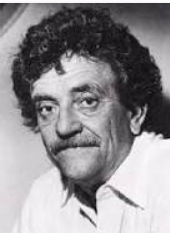
    Vonnegut“Make characters want something  right away — even if it’s only a glass of water. Characters paralyzed by the  meaninglessness of modern life still have to drink water from time to time. …  When you exclude plot, when you exclude anyone’s wanting anything, you exclude  the reader, which is a mean-spirited thing to do.” — Kurt Vonnegut


  • Modern Love, The New York Times

    Heart.black outlineModern Love is an essay column in The New York Times.

    “Modern Love is an ideal place for beginning writers to break in with a piece written from the heart.” — February 2015 issue of Writer’s Digest magazine.

    Click here for how to submit essays to Modern Love.