Today’s prompt: Evening.
Hmmmm. . . I wonder what you will come up with for this freewrite? I look forward to your writing about “evening.”

Today’s prompt: Evening.
Hmmmm. . . I wonder what you will come up with for this freewrite? I look forward to your writing about “evening.”
— Christina Baker Kline, interviewed by Alicia Anstead in the October 2014 issue of The Writer Magazine.
Or, as Dory sings in Finding Nemo, “Just keep swimming. . . swimming. . . swimming. . . ”
At some point in your writing life, you may think your writing is no-good, awful, horrible and no one would want to read it.
Join the Ark. Most writers, I think, are in that boat at least once.
Take the advice of Christina Baker Kline, author of Orphan Train, “Breathe, focus, keep your head down and keep going.”
Click here if you want prompts to jumpstart your writing. Click on “Comments” on any of the Write Spot Blog posts to read inspirational writing.
 And just keep swimming, swimming. . . writing, writing.
What do you want?
Set your timer and write for 15 or 20 minutes. See what comes up for you.
If this prompt is too “open” or vague for you, how about this:
What do you want to do today? If you could do anything you want. . . what would you like to do today?
You can answer for yourself, or as your fictional character would answer. This might be a fun way to get to know your fictional character(s) a little deeper.
Above all, have fun with this prompt!
The Mission of Narrative Magazine is to advance literary art in the digital age. From Narrative’s website:
A 501(c)(3) nonprofit organization founded in 2003, Narrative is dedicated to advancing literary arts in the digital age by supporting the finest writing talent and encouraging readership across generations, in schools, and around the globe. Our online library of new literature by celebrated authors and by the best new and emerging writers is available for free.
Vision: to connect writers and readers around the globe.
Narrative welcomes submissions of previously unpublished manuscripts of all lengths, ranging from short short stories to complete book-length works for serialization. Narrative regularly publishes fiction, poetry, and nonfiction, including stories, novels, novel excerpts, novellas, personal essays, humor, sketches, memoirs, literary biographies, commentary, reportage, interviews, and features of interest to readers who take pleasure in storytelling and imaginative prose.
Narrative looks for quality and originality of language and content. In addition to submissions for issues of Narrative Magazine itself, we also encourage submissions for our Story of the Week, literary contests, and Readers’ Narratives. Please read Submission Guidelines for all information on manuscript formatting, word lengths, author payment, and other policies.
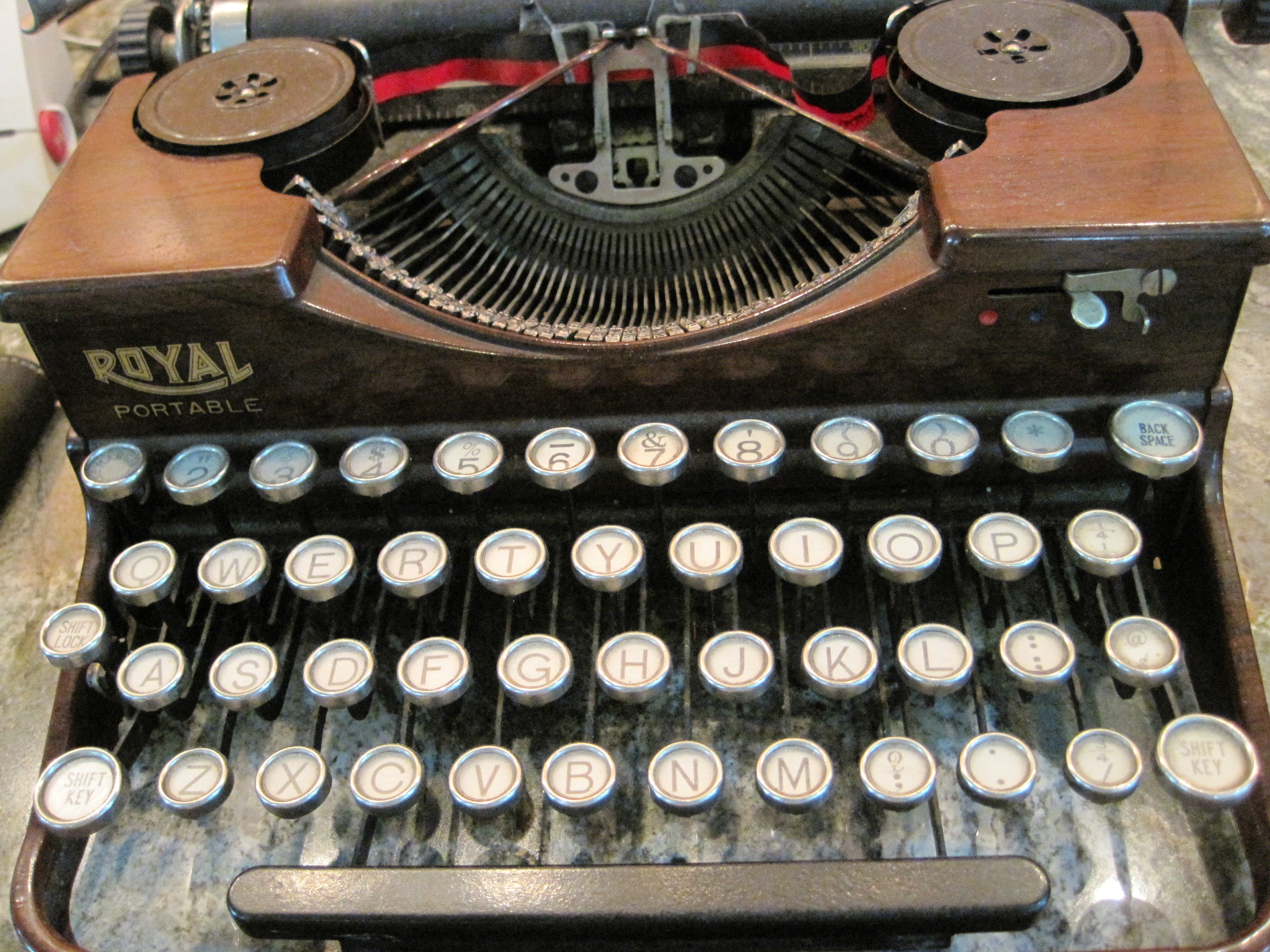 Marlene Musings: It occurs to me, my dear writing friends, that your writing just might qualify for publication in Narrative Magazine. What have you got to lose? Submit!
 Here’s what Guest Blogger Angela Ackerman has to say about writing physical descriptions.
I’m going to be totally honest here. There is little I detest more than trying to describe how my character looks. The reasons are numerous. I think it sounds boring. It slows the story. It reads like a list or sounds clichéd, etc, blargh de blargh.
I write in first person, to boot, making it even more difficult to create natural-sounding character description without using the dreaded MIRROR technique. After all, every time a writer uses a mirror to describe their character’s physique, somewhere in the world a zombie dies. Think about that. Right now, Zombies are dying. I can’t add to this terrible crime. Can you?
But then I read Word Painting and realized I was looking at it all wrong. Physical description doesn’t need to be a dry, tasteless blob of facts to help the writer see our character. It can be seasoned and textured, and doled out bite by savory bite.
Let’s Get Physical–The Problems
When introducing a character, there are a few basics most stick to: sex, hair, eyes, build. Which is fine to start, depending how you go about it. A description like Melvin the bellhop had brown hair, green eyes and was a bit on the skinny side can be summed up in one word: BLAND. This is the ‘just the facts’ approach, and can often read like a list.
Another common mistake is the ‘throw in some adjectives’ approach: Melvin the attentive bellhop from our luxury hotel, had gleaming, oiled brown hair, haunting green eyes and a crisp uniform that fit his lean frame perfectly.
Oh dear. Can you hear the zombies screaming, Clarrise? The issue with relying solely on modifiers to liven up the physical description is that they often end up hitting on clichés or sounding overwritten.
Let’s Get Physical–The Solutions
1) Choose description that is apt and characterizes rather than conveys information.
The bellhop’s well-oiled brown hair suggested an abundance of cowlicks needing to be tamed.
This here not only paints a picture, it tells us something about Melvin. He takes pride in how he looks, and will go to lengths to appear professional.
2) Select a few attributes that stand out and work together to create a full picture.
The bellhop approached us with steps as crisp as his starched maroon uniform. His gold nametag, exactly level with his lapel, announced his name: Melvin. He smiled as he took our bags, and then with a cock of his eyebrow, enquired if we were ready to go up to our room.
Again, the crisp steps and starched uniform provide an apt comparison. His smile softens the starchiness, and his cocked eyebrow, along with him asking, not telling the hotel guests to come with him, provides the image of a smooth professional who knows how to make customers feel catered too. You’ll notice no hair, no eyes, no build is described. Can you see Melvin anyway?
3) Actions speak louder than words
Which is easier to describe–a character in motion with a goal in mind, or one standing still? The answer is obvious. This ties back to the show-don’t-tell line of thought. A character is defined by what he does, and through those actions, the reader can begin to understand what it is that he wants, needs and feels. By showing a character interacting with the setting, we understand more about who he is and can ‘see’ him better.
A Melvin scanning the lobby for debris, returning empty glasses to the bar and offering help to a flustered businessman wrestling with his oversized laptop case will be seen differently than a Melvin standing near the elevator, eyes straight ahead, waiting for his name to be called to the front desk for assistance.
4) Create a realistic, personal environment
Good character description does not rest on the character alone, but also through the places they spend their time and the objects they surround themselves with. Know the setting well and spend time building it, because characters don’t exist in white boxes of nothingness. Think of your bedroom or bathroom, and the personal touches that make it different from a friend’s bedroom or bathroom. The things your character touches, the things they view as important…these are also items that will help build a concrete picture of your character.
5) Remember to use more than SIGHT to describe
Sight is only one way to get an image across. The other senses like smells, sounds or touching can also reveal a lot about a character and create intimacy ties between the character and the reader through recognition. Use them to characterize! Our pal Melvin would probably steer clear of heavy scents, careful to always consider both his guests sensitivity to strong colognes and to maintain his background role. Yet I could imagine standing next to him in the elevator and catching a whiff of clean soap, or perhaps a touch of aloe from his hair gel.
6) Description is best in manageable pieces.
A certain amount of detail is needed to intro a character, but really all that is needed is a line or two. Further characterization, tics and mannerisms will be revealed as you show them in action, so don’t hamper the scene with clumps of physical description. Drop tidbits here and there, and remember to allude to important details more than once. If we described Melvin as pale skinned and it’s a defining detail because he’s really a vampire, mention it again in a different way down the road. Does a patron note the whiteness of his arm against his dark uniform as his sleeve rides up? Does his face appear to fade somewhat as he stands in front of the pearl-toned wallpaper? A reminder will reinforce the image we need then to see.
Do you have any tips and tricks that help you describe your characters?
Originally posted April 26, 2010 “Writers Helping Writers“
 “It’s not easy for us to see the world from another person’s perspective, but as writers, we must do exactly that.”
Using the same scene you wrote about for Prompt #108, write from the other person’s point of view. All inner thought, motivation and drama come from the secondary character’s point of view.
Or take any two characters: First write from one point of view, then write from the other person’s point of view.
 Do you think emails and Facebook posts can be considered as “writing?”
I do!
Today’s writing prompt is inspired from “Falling Down the Rabbit Hole” by Emily Hanlon, December 2007 issue of Writer’s Digest magazine.
Using an incident from your life, or your fictional character’s life, write a scene from your point of view (or, your fictional character’s point of view). Use dialogue. Inner thought is what defines point of view. The other character in this scene speaks and acts, but the reader doesn’t know the secondary character’s thoughts. All the inner thoughts belong to the point-of-view character.
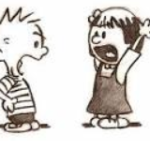 Basically, you are writing about an argument or a fight, or a heated debate between two people . . . yourself or your fictional character, and a secondary character, using dialogue.
 Every Monday, My Gutsy Story® features a short story on “Gutsy Living” about something Gutsy you have done in your life that either:
My Gutsy Story® founder, Sonia Marsh, is looking for:
Submission Guidelines:
Click here to read the winners for August 2014.
Click here for information for My Gutsy Story® anthology contest (different from the Monday short story feature).
Sonoma County author Patrice Garrett was a featured writer in July 2014.