Tag: Adair Lara

  • Books on writing

    There are more how-to-write books than we have time to read. IF we tried, we would spend all our time reading about writing and not writing. But there are a few especially good how-to write books. Here are some of my favorites. What are your favorite writing books?

    Dorothea Brande was an early proponent of freewriting. In her book Becoming a Writer (1934), she advises writers to sit and write for 30 minutes every morning, as fast as they can.

    Peter Elbow advanced freewriting in his books Writing with Power and Writing Without Teachers (1975), and freewriting has been popularized by Julia Cameron through her books The Artist’s Way and The Right to Write.

    A few more writing books:

    Aronie, Nancy Slonim – Writing From the Heart

    Baldwin, Christina – Storycatcher

    Barrington, Judith – Writing the Memoir, From Truth to Art

    Baty, Chris – No Plot? No Problem!

    Bennet, Hal Zina – Write From The Heart

    Clegg, Eileen M. – Claiming Your Creative Self

    DeSalvo, Louise – Writing As A Way of Healing

    Epel, Naomi – Writers Dreaming

    George, Elizabeth – Write Away

    Goldberg, Natalie:   Living Color, Long Quiet Highway, Wild Mind, Writing Down the Bones, The Great Failure

    Heffron, Jack – The Writer’s Idea Book

    Kabat-Zinn, Jon – Wherever You Go, There You Are

    Keene, Sam and Anne Valley-Fox – Your Mythic Journey

    Kelton, Nancy Davidoff – Writing From Personal Experience

    King, Stephen – On Writing

    Lauber, Lynn – Listen to Me

    Lamott, Anne – Bird by Bird

    Lara, Adair – Naked, Drunk and Writing

    Nelson, Sara – So Many Books, So Little Time

    Rosenfeld, Jordan – Make a Scene

    Saltzman, Joel – If You Can Talk, You Can Write

    Schneider, Pat – Writing Alone And With Others

    Smith, Michael C. and Suzanne Greenberg – Everyday Creative Writing

    Ueland, Brenda – If You Want to Write

    Walker, Christine – A Painter’s Garden

    Walton, Todd & Toomay, Mindy – The Writer’s Path

    Zimmerman, Susan – Writing to Heal The Soul

    Just a few of my books on writing. Yes, I have two copies of Jordan’s Make A Scene: One for my personal use and one for lending.

                               writing books 1                                writing books 2

  • You’re doing what? Magazine submissions.

    Adair Lara talked about publishing in magazines during her Summer 2009 Writing Class, giving me the idea for this blog post.

    1. Research . . . really research. . . where you could send your writing. Make sure the publication you have in mind publishes the type of writing you want to submit. Read the magazine you hope to be published in cover-to-cover, including the ads. Notice the tone of the articles/essays. Research the demographics . . . make a list of who the ads are geared towards (age, gender, lifestyle, socioeconomic). Make sure your article/essay fits those demographics. You can research magazines at libraries and ask for magazines from: hairdressers, medical offices, etc. Of course, buying magazines is good. We want to support our local vendors, but sometimes we need to use free resources.

    2. Look at the magazine’s masthead. . . this is in the first few pages of the magazine where the names of editors and contributors are listed. Flip through the magazine, making a list of writers’ names. Compare that list to the names in the masthead. . . If the ratio is high, in favor of the editors, then the magazine uses their own writers, rather than freelancers.

    3. Article written? Check. Research done? Check. Now what? Go to the publication’s website to find the name and email of the appropriate editor for the column/feature/where you want to submit. You can type “Submissions + name of publication” into the search engine of your choice (Google, Firefox, Internet Explorer, etc) to research submissions information.

    You can also type “How to publish in magazines,” using the research tool of your choice, to read about publishing in magazines.

    Think about specialized, or “niche” markets: Your alumnae news, or a specialized newsletter in a field that would be interested in your article/essay. For example, an article about relaxation, stress reduction techniques might work in Autism Parenting Magazine.

    Check out writing magazines (Writer’s Digest, The Writer, Poets & Writers, etc.)  for places to submit articles.  Look into Writers Market for information on “where and how to sell what you write.”

    You can also write posts for blogs.

    Sweatpants & Coffee: “A bastion of comfort and sanity in an often uncomfortable world” is looking for writers.

    The Write Spot Blog is looking for guest bloggers and book reviewers.

    Essays. . . how to write them. . . take a class from Adair Lara.

    One of my all-time favorite essays by Adair Lara is “Reconciling Tastes.

    Adair.at adair's house book“You’re doing what?

    So you do a simple everyday thing like you and your husband moving in with your ex, and people raise their eyebrows.”

    Adair’s funny and poignant story about their domicile arrangements was published in California Magazine, 2011.

    “Literary magazines, even ones that do not offer payment, can bring great value to your writing career. Publication adds to your credibility when applying to MFA programs or querying agents and editors.” — June 2014 The Writer Magazine lists literary magazines accepting submissions.

    Do you have a recommendation of magazines to write for? Share your ideas in the comments section below. First, you need to register, then it’s a simple log-in to The Write Spot Blog.


  • Guest Blogger Adair Lara talks about her latest obsession.

    Guest Blogger Adair Lara writes:

    Voice in writing is my new obsession. I’ve been talking nonstop to my memoir students about it until they all look at me cross-eyed. “You must think of your experiences as material! And of yourself as a character!” Many of them have been taking the workshop with me for years, climbing the three flights of steps every Saturday to the redwood attic of the Victorian house I live in.

    I was all about identifying the emotional beats of the arc when some of them started. They must have been sick of hearing me say, “What’s the beat?” (The wine Lee Anna brings helps). And they must have been surprised –why had I not mentioned this new approach before, if it was so important?

    Well, I didn’t because even though voice is the most obvious thing in the world, we don’t see it.

    It’s also all agents and editors care about in the memoirs they are sent these days. They’re looking for a vivid, quirky narrator with an engaging voice. The subject? Comes in second. You think you’re the only one who fell out of a prop plane in the Andes and captured by a lost tribe, and go online and find it happened to six other people, all of whom have written memoirs and already have agents. With a great voice, though, you can write about that or any other damned thing you please and get into print. For example, the agent who received a manuscript of a memoir called Candy Girl by a former stripper-for-a-year named Diablo Cody said:

    “I wasn’t interested based on the subject matter alone. Stripping had been covered before (no pun intended), and I didn’t think the author was likely to add much to an already crowded market. But then there was the voice. After just one paragraph, I was a) completely convinced that stripping was the solution to all of her problems, b) laughing uncontrollably, and c) definitely interested in being along for the entire ride, or at least 250-plus pages.”

    “Personality” is another word for voice, really. If you don’t like a person’s personality, you don’t want to hang out with them. If you don’t like a book’s personality, you don’t want to hang out with it, either. I know that the number one reason I pick up a book or put one down is because I like the voice or I can’t stand the voice. There doesn’t seem to be much in between for me. The subject is not a factor. I can happily read Anne Lamott talking about Jesus—not an interest I share –because she is so funny and smart and self-deprecating.

    Adair.Bill

     Note from Marlene:  Adair Lara is also smart and funny . . . take a class with her to learn more about “voice in writing.” This post is an excerpt from Adair’s book in process. I’ll post a book review as soon as the book is published and I have read it.  If you would like to be a Guest Book Reviewer for The Write Spot Blog . . . Let’s talk! Send me an email.  mcullen@comcast.net

    Adair and Bill on San Francisco Bay, Alcatraz in the background.

  • I read it on Facebook.

    Thursday is Quote Day on The Write Spot Blog. I like to post something interesting someone has said, or pithy or memorable. Adair Lara’s writing matches all three.

    Adair Lara comments, lifted from Facebook:

    “Facebook is destroying small talk. You open your mouth, and they say, ‘I know, I read it on Facebook.’” — January 24, 2014

    Adair on Passwords: “I recall, children, a time when you didn’t have to spend part of each day trying to remember passwords, looking them up in your password file cleverly called something else, like sammy’s dog, putting them in wrong, having to get the password from the site which entails remembering whether you said the name of your maternal grandfather was Tom or Thom, and then having your new password being called weak or strong, and capitalizing the “H” to please them (you’ve employed a variation of the same password since you were 36) and repeating this fricking exercise ten times a day, when who cares whether somebody can get into your toon photos account or not?” — February 6, 2014

    Want Adair humor in person? Take her class, information posted on Facebook, May 8, 2014:

    Shouldn’t you finish that book?

    You put a lot of work in on it, and then laid it aside, or got too busy at work, or lost faith in it.

    Before that, though, you put a lot of time and talent into it.

    You might enjoy a day at my house entirely devoted to writers with stalled projects. I’ll help you decide whether to take it up again, and providing you by the end of the day with a specific plan for doing just that –and perhaps a writing partner, or writing group, to boot. You might decide to at least try to carve some sellable essays out of it.

    Also I’ll give you some killer voice exercises I’ve been developing. You will certainly enjoy meeting your fellow writers. For those who have a completed draft, we’ll talk about publishing/self-publishing.

    Get ready for the workshop by: a) assembling your manuscript and reading it b) researching the competition on Amazon.

    Limited to 15. $175 Sunday June 22 9-4:30 45 minutes off for lunch

    Adair.FB.1


    Contact Adair:
    Adair.lara@gmail.com

  • Details prove it happened. Prompt #71

    In her book, Naked, Drunk and Writing, subtitle: Writing Essays and Memoirs For Love and for Money, Adair Lara talks about details.

    “The terms ‘image’ and ‘detail’ are often used interchangeably. A concrete detail, for example, is said to be one that appeals to one of the five senses.”

    “Details prove it happened. If you say you are late because you hit traffic, the boss may squint at you, but if you say some bozo in a Mini-Cooper tried to drive along the margin of the road on the Waldo Grade and hit a gravel truck, spilling rocks across the road and blocking all the lanes in both directions, you have a shot at being believed.”

    Today’s prompt, from Naked, Drunk and Writing:

    “Write a list of details from your childhood.” Being about the same age as Adair, my list contains items on her list: milk delivered in glass bottles, metal ice cube trays with levers, cap guns, hula-hoops.

    My list also includes hair dryers with hoses attached to giant shower caps, empty and clean orange juice cans used as hair curlers, manual typewriters, carbon paper, white-out for typing errors.

    “Select a memory from your childhood. What did you feel at the time of the event? Go through the senses of touch, smell, sight, hearing, and taste. Describe the colors you remember and how the event made you feel. What impact has this memory had on you? Invent the details you don’t remember.” (One of the things I love about Adair . . . her free spirit . . . her go-for-it attitude.)Adair. gold star

    Prompt: Write about a memory from childhood using detail (detail = things that can be seen, felt, heard, smelled, tasted).   Use information from Prompt #70 for pacing.

  • Want to be a writer? Just write!

    In Naked, Drunk, and Writing, Adair Lara writes “I grew up in the San Geronimo Valley . . . a bookstruck little kid sitting on a stump writing stories.”

    She continues with “Writing was easy then. I used my dad’s square carpenter pencil to cover sheet after sheet with stories of dogs that rescued families from a flood or a fire.”

    Note the details: Can you see the carpenter pencil? I see a yellow pencil and I can see that little girl hunched over, earnestly scribbling.

    Adair began her writing career as copyeditor at San Francisco Focus magazine. Her friend Cynthia, the production editor, also wanted to be a writer. They started partner writing, swapping freewrites and returning them with the good stuff highlighted in yellow. “That first writing club, as we called it, changed my life. It made me a writer by giving me the confidence to be one.”

    Adair has published “some ten books or so, including several collections of columns.” Her work has appeared in many other magazines and newspapers, both in print and online.  She is currently a columnist for Grandparents.com

    Adair teaches writing workshops, which I had the good fortune to attend in the summer of 2009. What a treat!

    How about you? Do you want to write but don’t know how to get started? You can join a writing group in your community, find a partner to exchange writing with, or join an online writing community like this one, The Write Spot Blog.

    LolaJust write!

  • Find the right pace. Prompt #70

    In Adair Lara‘s book, Naked, Drunk, and Writing, she talks about pace.

    “Add more images where you want to slow us [the reader] down, fewer when you want to speed up. This is called pace.”

    In a writing workshop, Adair said, “To slow down, give more detail, give unexpected detail, detail that moves story forward.”

    Today’s writing prompt is either, or, or both.

    Either take one of the story starts below (these are from Adair’s writing class) and keep writing, using detail to slow the story down or minimize detail to speed the story up.

    As Adair writes in her book, “The more important a scene or character, the more image and detail it gets.”

    OR: Have fun writing a scene with too much detail. Tell us way more than we need to know. Write a spoof on how to write too much detail.

    Use any of these lines to get started:

    I had to try something different so I . . .

    All the time I was thinking that . . .

    The turning point came when . . .

    BOTH: Write using too much detail. Rewrite the same scene with much less detail.

    Photo of a collection of aLara.Students books smallish grouping of a partial compendium of a few of the print books using the paper method of publishing that have been produced by proud and able and hard-working students of classes of the writing kind taught by the amazing Adair Lara.

    Books published by Adair Lara’s students.

  • In this photo . . . Prompt #55

    This is a two-part prompt.

    Part 1:  Get a photo of yourself.  We’ll wait.

    Toe tapping . . . humming.  Photo in hand?  If not . . . close your eyes for a moment and picture a photo of yourself.

    Write,  starting with:  “In this photo . . . ”

    Go! Now! Write before reading Part II.

    Wait. . . did you write on the prompt?

    If yes . . . proceed to the next part.  If not, take 10 or 15 minutes to write, “In this photo . . . ”

    We’ll wait for you to catch up.  Maybe we’ll hum a little tune. . . la. . . de. . . dum. . .

    Ready?

    Part II:

    Add three sentences after every sentence you have just written.  Start first additional sentence with “I felt” and then add two sentences after that.

    Example of adding three sentences to what you have already written.

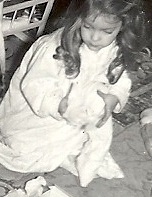
    Original Sentences:  In this photo, I’m opening a present. I’m four years old. It’s Christmas.

    Original sentence #1 plus three sentences:  In this photo, I’m opening a present. I felt happy. I loved being surrounded by my parents, grandparents, aunts and uncles. I’m excited to open this present.

    Original sentence #2 plus three sentences:  I’m four years old. I felt happy.  I am older than my sister. I liked playing with her.

    Original sentence #3 plus three sentences:  It’s Christmas. I felt content. I liked being in Nana’s living room. She made the nightgown and robe that I’m wearing in the photo.

    This is one way to go deeper in your writing.

    I first experienced this writing prompt with Adair Lara, at a writing class in her home, Summer 2009.  She teaches classes in her home. If you live in the San Francisco Bay Area and are interested, contact her. Click here for information about Adair Lara.

    scan0001